
Tanbreez, Greenland Delivers the Heavy REE Proof Point
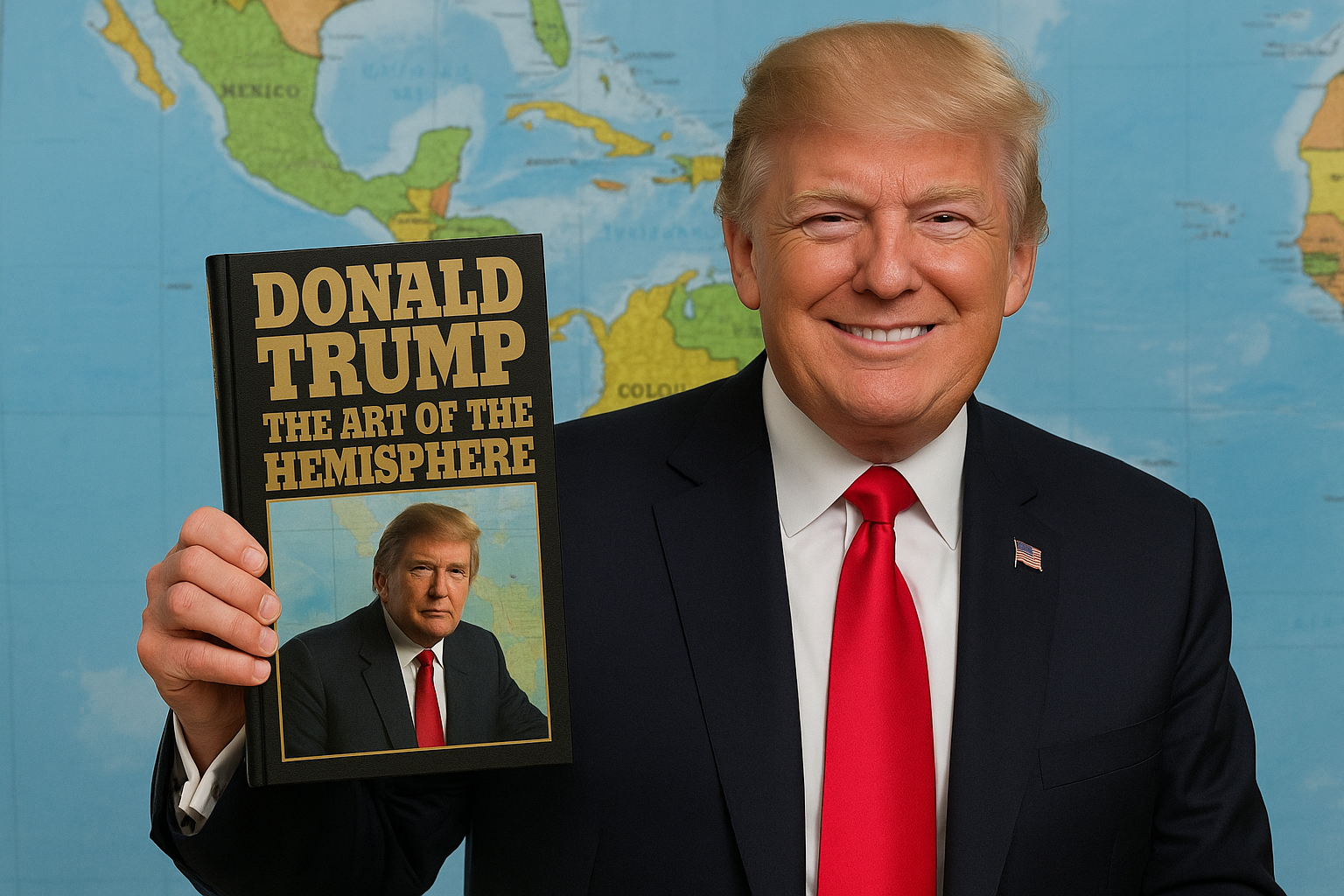
When I launched The Art of the Hemisphere last December, the core argument was straightforward: 21st-century American statecraft must treat the Western Hemisphere, not as a polite neighborhood watch, but as a strategic operating theater. Geography is leverage. Proximity is power. And in the great-power contest for critical minerals, “hemispheric hustle” beats distant dependencies every time.
Four months and four installments later, the thesis is no longer theoretical. It is playing out in southern Greenland, where a U.S.-listed company has just secured operational control of one of the world’s largest and most strategically valuable heavy rare earth element (HREE) deposits outside China. The development is not just good mining news. It is the Greenland chapter of the Hemispheric REE-naissance I outlined in December—written in real time, with real stakes, and real tonnes of dysprosium, terbium, and yttrium headed for American supply chains.
From Gambit to Ground Truth
Recall the earlier pieces in this series. In Trump’s 21st-Century Real Estate Masterstroke (January 6) and Trump’s Greenland Gambit (January 18), I argued that Greenland is not a remote Danish outpost but a North American strategic asset: geographically adjacent, defense-critical (Thule Air Base), and mineral-rich. I laid out the realpolitik playbook: use economic leverage, alliances, and deal-making to shift the balance of control without old-world conquest. The goal was never flags on maps. It was secure, near-shore access to the materials that decide who builds the magnets for tomorrow’s F-35s, EVs, and grid-scale turbines.
Fast-forward to May 2026. American mining company Critical Metals Corp (NASDAQ: CRML) has received formal Greenland government approval for its acquisition of a 70% stake in 60° North Greenland ApS, accelerating development of the Tanbreez project. This builds directly on the April 2026 approval that took CRML to 92.5% ownership of Tanbreez Mining Greenland A/S (with European Lithium retaining 7.5%). The company now holds clear operational control of a deposit whose host rock unit is estimated at 4.7 billion tonnes of rare earth-bearing material—conceptual, yes, but with an already-defined compliant resource that places it among the largest undeveloped HREE assets globally.
The numbers are staggering in their asymmetry. Tanbreez’s rare earth mix is approximately 27% heavy rare earths (dysprosium, terbium, yttrium), the exact elements China has weaponized through processing dominance. For context, California’s Mountain Pass clocks in at roughly 0.49% HREE; China’s Bayan Obo at 1.13%. Tanbreez is in a league of its own. It also boasts exceptionally low uranium and thorium content (10–20 ppm U, <100 ppm Th), the very radioactive elements that have torpedoed other Greenland projects in environmental reviews. And it already holds a full exploitation license (MIN 2020-54) valid until 2050: one of only a handful issued on the island.
Production targets are aggressive but credible after CRML’s $30 million acceleration program: first ore targeted for Q4 2028 or Q1 2029, with initial output of 85,000 tonnes of rare earth oxides per year, scalable to 425,000. The plan is clean: extract in Greenland, process downstream in the United States through offtake partners, and feed American defense and advanced manufacturing. This is not aspirational rhetoric. Construction has already commenced on Arctic-grade multi-use facilities and a pilot plant in Qaqortoq.
The Hemispheric REE-naissance in Action
This is precisely the architecture I sketched in the REE-focused installments of the series: America’s REE-naissance (December 9), Utah’s Hidden Vein (December 11), Tennessee’s Smelting Rise in the REE-naissance Saga (December 16), and Uyuni’s Southern Pivot. The strategy has always been layered: upstream domestic breakthroughs, midstream hemispheric partnerships, and ruthless focus on the heavy end of the rare earth spectrum where China’s monopoly is most acute (roughly 85–90% of global processing capacity).
Tanbreez slots in as the Greenland heavy-hitter. Utah supplies light and medium REEs from ionic clays. Tennessee is building out the smelting and separation backbone. Bolivia’s Salar de Uyuni is pivoting lithium toward Western Hemisphere battery integration. And now southern Greenland (technically part of the Kingdom of Denmark but geographically and strategically North American) delivers the HREE payload. The supply chain logic is elegant: extract near-shore, refine onshore, secure the defense-industrial base.
Critics will note that CRML is a public company, not a direct U.S. government operation. Exactly. That is the beauty of the Art of the Hemisphere. It leverages private capital and market discipline under a policy umbrella that favors Western Hemisphere development. No taxpayer-funded boondoggles. No begging Beijing for magnets. Just pragmatic deal flow: Greenlandic approvals, existing licenses, low-radioactivity metallurgy, and American downstream capacity. This is statecraft that understands incentives.
Realism, Not Hype: The Work Still Ahead
Depth requires candor. Tanbreez is permitted and de-risked relative to greenfield peers, but execution in the Arctic is never trivial. Infrastructure, logistics, and skilled labor in a remote region will test the team. Global REE prices remain volatile, and full separation capacity in the U.S. must scale in lockstep. The project’s value has been estimated in the $3 billion range in preliminary assessments; realizing that depends on offtake agreements, financing, and sustained policy tailwinds.
Yet the Greenland government’s repeated green lights (first in April for the 92.5% stake, now in May for the 60° North acceleration) signal something deeper: a recognition in Nuuk that pragmatic partnership with Western capital serves Greenlandic interests better than perpetual dependence or environmental standoffs. That alignment did not happen by accident. It is the downstream result of the very economic leverage and strategic signaling this series has chronicled.
Why This Matters Beyond the Balance Sheet
Heavy rare earths are not academic curiosities. Dysprosium and terbium enable high-temperature permanent magnets essential for compact, powerful electric motors in fighter jets, submarines, drones, and next-generation vehicles. China’s dominance here has been a quiet choke point. Tanbreez disrupts that calculus at scale and with geographic sanity.
This development also reinforces the broader Arctic dimension of hemispheric strategy. Control of Greenland’s resources strengthens the U.S. position in the opening high-latitude theater (shipping lanes, defense posture, and resource sovereignty), all without new bases or treaties that trigger European heartburn. It is the Art of the Deal applied to geography.
The Series Continues
The Art of the Hemisphere was never meant to be a static manifesto. It is a living framework for American leadership in an era of supply-chain warfare. Tanbreez is not the finale. It is empirical validation that the playbook works: identify the strategic asset, apply calibrated leverage, align incentives, and execute.
The next installments will examine the downstream integration: how Tennessee smelters and U.S. magnet makers absorb Greenland concentrate, how policy can accelerate permitting and financing across the hemisphere, and how this model can be replicated in other critical mineral plays from the Arctic to the Andes.
For now, credit where due: the Greenland government for pragmatic approvals, CRML for relentless execution, and the broader policy environment for creating the conditions where hemispheric resource security moves from op-ed to operating mine.
The tonnes are coming. The renaissance is real. And the Art of the Hemisphere just gained another proof point: written 4.7 billion tonnes deep in Greenland kakortokite.
Further reading from the series:
The Art of the Hemisphere, Part I, Part II, Part III, and Part IV.
Stay tuned. The map is being redrawn: one strategic deposit at a time.
