
They Still Think We’re Waiting
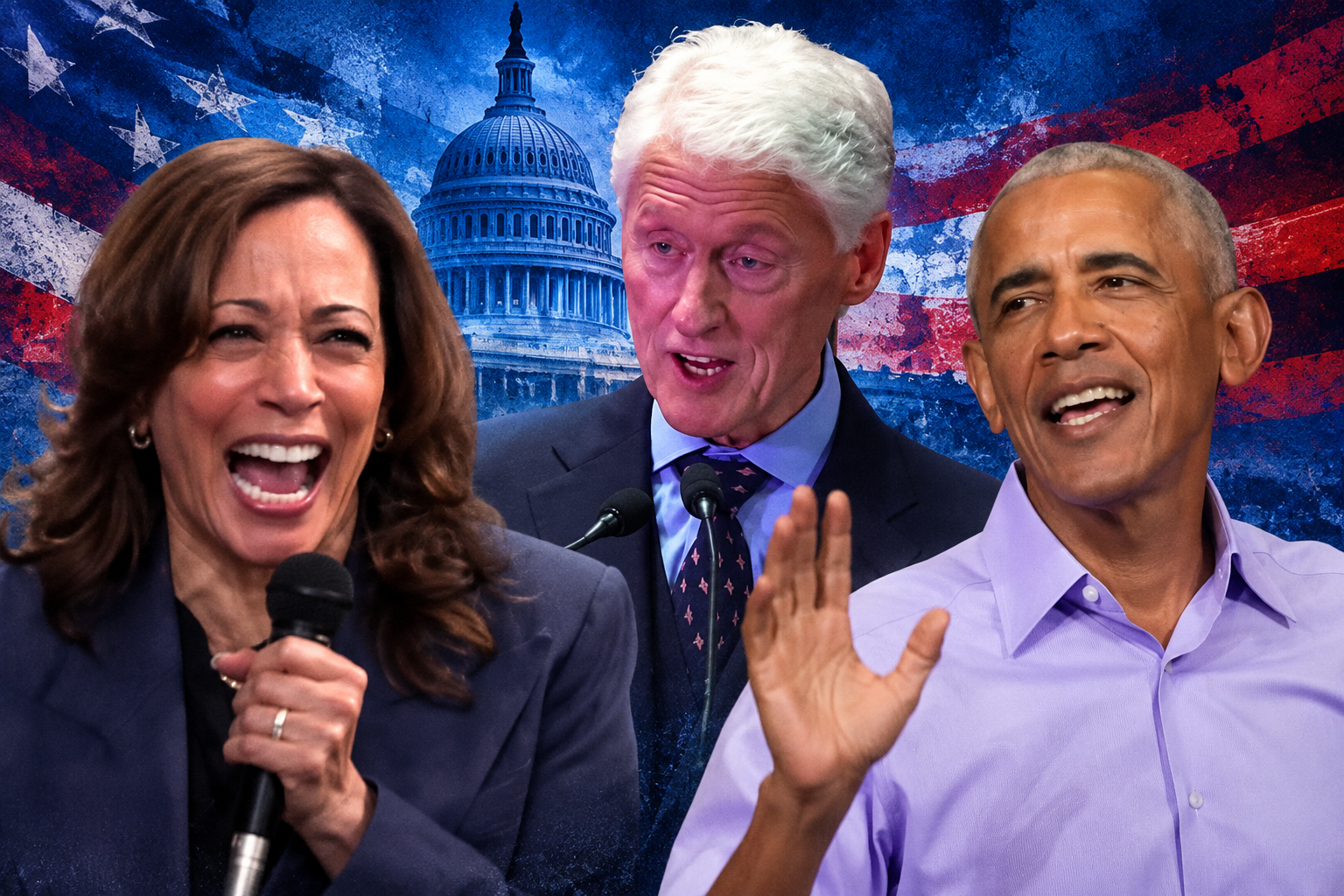
Three rooms, one week, and the quiet part said out loud
The three showed up this week and said the quiet part out loud. They still believe the country is waiting for them to explain what happened.
Obama on taste, Iran, and the unfinished bill
Barack Obama stood in Cleveland and Detroit and treated the last decade as an interruption of his plan. On the White House he offered the line that landed: the current president “seems very focused on home renovations. He should be on HGTV,” and “He’s got the White House looking like Saddam Hussein opened a Cheesecake Factory.”
The joke was an all too revealing attack on the middle class, whom Obama despises. Meanwhile, the people who live outside those rooms already know what the rooms look like. They also know who spent eight years telling them the recovery was real while jobs were shipped overseas and policies like Cash for Clunkers gutted the used car market, and Obamacare made healthcare and higher education more expensive.
On Iran he spoke directly. “Iran didn’t have nuclear weapons because I had put a deal in place that everybody acknowledges kept them from getting nukes, and I didn’t have to fire a missile to do it. I just had to engage in diplomacy. He pulled out of it, starts this war.” He added that Iran is now “in a stronger strategic position” and has “veto power over the Strait of Hormuz.” His claim asserts that the prior deal solved the problem and the current war created it.
Because nothing says "stronger strategic position" like losing your navy and air force and having your vital shipping route blockaded and your economy in free fall.
— Brit Hume (@brithume) October 25, 2026
In response, Brit Hume answered with the facts on the ground: “Because nothing says ‘stronger strategic position’ like losing your navy and air force and having your vital shipping route blockaded and your economy in free fall.”
Obama fortified Iran as the world’s largest state sponsor of terror. Trump cleaned up his mess & destroyed them. So now Obama has to tell a complete and total lie.
— Scott Jennings (@ScottJenningsKY) October 25, 2026
Likewise, Scott Jennings put the sequence in plain terms: Obama fortified Iran as the world’s largest state sponsor of terror; Trump cleaned up the mess. The regime lost most of its navy, watched its oil exports drop to zero, saw its currency collapse, and lost senior leadership. As a result, it does not hold a stronger position. Obama’s version requires the audience to ignore what is visible. That is the version he offered. He does not explain how the deal he negotiated left the problem for someone else. Instead, he asks the audience to treat the failure as the baseline.
On healthcare he returned to the unfinished work. In Michigan he said the Democrat candidate would finish what the Affordable Care Act started. The people who still open the bills from that law already know the finished product: higher premiums once the subsidies shift, narrower networks, and the promise that they could keep their plans. Obama does not revisit the results. Rather, he revisits the credit. The question he refuses to answer is why the policy he passed produced the costs he now assigns to someone else.
Clinton and the cheap pander
Bill Clinton stood in Florida and delivered the line that fits the man. “I think Congress made a mistake not protesting turning the Rose Garden into what looks like the entrance to Liberace’s bathroom.” The room laughed. The man who said it is the same man whose own conduct inside the White House produced an impeachment and a permanent stain on the public record. The joke targets décor. In contrast, the record shows what happened in the building. One does not erase the other. The capacity that once produced the Oklahoma City speech is no longer the capacity on the trail. What remains is the cheap pander. The audience still laughs. That is the remaining range.
Harris and the adjusted cadence
Kamala Harris appeared in Mississippi and then in New Hampshire. The accents did not match. In Columbus she spoke to a gymnasium and offered a mentoring line she then repeated because the first version drew silence: “Never let someone else’s limited ability to see your capacity be a limitation on your ambition.” She continued into the familiar construction about not being limited in ambition or the ability to see what is possible. Coverage noted the shift in delivery toward the room.
Later, in New Hampshire she sat for a live recording of an abortion podcast and spoke in the register she uses for national audiences: “This is that moment when the people get to speak, the people show their power, and they make clear: we’re never gonna let anyone take our power from us.” The two versions do not use the same voice. She adjusts one for the Southern gym. She adjusts the other for the abortion recording and the phone bank. Neither supplies a concrete proposal on the cost of diesel, the border, or the fraud voters already see in their own communities. Both supply the word salad and the claim that the next election restores what was lost. Ultimately, there is no substance under the cadence.
The same offer
In the end, the three appearances do the same work. Obama begs the question with the failures of his own policies and treats the results as someone else’s interruption. Clinton panders cheaply with a joke about taste from a man whose own record inside the building is not in dispute. Harris offers word salads with no substance, adjusted by room, that never name a cost, a border, or a fraud.
None of them offered a solution. They offered themselves. The country has already declined.
