
Republicans Can Win New Hampshire
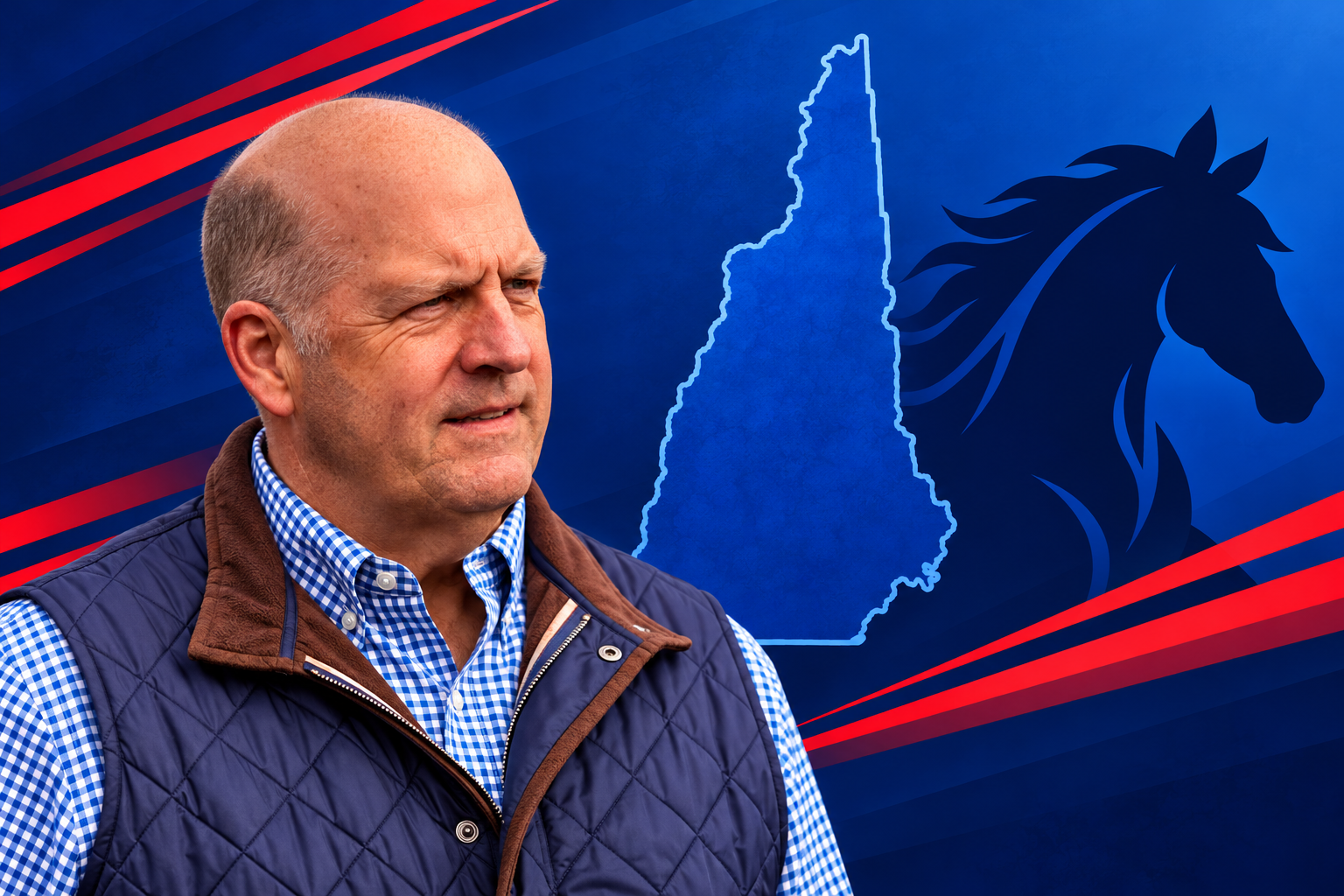
New Hampshire is not Massachusetts. The independent lane, the ground game, and the race that can flip the map.
New Hampshire is the dark horse Senate race of 2026. I have had my eye on it for months. The campaign is playing out as I expected and it remains a very winnable race for John Sununu.
Public polls still show Chris Pappas ahead by mid-single digits. Ratings have drifted toward Lean Democrat. Those instruments have misread this state before. They miss the independent and undeclared voters who decide races here, and they miss the non-response pattern that undercounts Republicans when the middle of the electorate is large. New Hampshire has not elected a Republican senator since 2010. It is also not Massachusetts or Vermont. It has a Republican governor, a Republican legislature, and an independent streak that does not treat every federal race as a pure presidential referendum. That combination makes this the seat that can flip the narrative as results move west on Election Night.
Both candidates spent the October 13 debate in Conway speaking to that independent bloc. The hour was not the collision course some local coverage described. There were normal clashes on the hot spots and the usual moments of going over time. Those were the exceptions. The rule was two candidates making the arguments they believe win New Hampshire. Sununu opened and returned to the constitutional fact that a Senate term is six years, not the remaining two years of any presidency. The seat is about the next six years of voice and leadership for the state. Pappas spent the hour arguing that he is the one who will actually check the president. Each was trying to occupy the independent lane. That is the correct play for this electorate.
Sununu’s record matches the claim. He left the Senate after the 2008 loss to Jeanne Shaheen and has been out of elective office since January 2009. The private-sector years in technology, manufacturing, the family ski resort, and teaching are the distance he offers from the last eight years of House votes. From his earlier term he can point to specific breaks: the Patriot Act, the marriage amendment, Medicare Part D, and an 84 percent party-unity score. The chronology is not rhetorical. Pappas has been the incumbent congressman for eight years. He voted for the American Rescue Plan on a party line in March 2021. He voted for the House version of Build Back Better. He voted for the Inflation Reduction Act in August 2022 and issued a press release saying he fought to pass it. Those votes are the legislative basis for the inflation argument Sununu made on the stage. Reckless spending under the Biden administration produced roughly 20 percent inflation over three years. Pappas supported that spending. He has been there for eight years. He is part of the problem. On the terms of the hour I watched, that contrast favored Sununu. The outsider language from the candidate who cast those votes read as disingenuous.
The Big Pharma exchange was a clean illustration. Pappas’s ads and primary-night remarks had used the broad charge that Sununu cashed in with special interests, including Big Pharma, and that the personal financial disclosure showed $35 million. On the stage Sununu demanded a company name. Pappas did not supply one. The $35 million figure is largely family assets in the Waterville Valley ski resort, not pharmaceutical income. The specific assertion that Sununu worked for a Big Pharma company did not survive the demand for a name. Local reporters treated it as a moment that went to Sununu. It was.
The next day’s forums continued the same contest in a more restrained setting. Candidates appeared separately at the AARP New Hampshire event at Saint Anselm and later at the Southern New Hampshire Chamber in Salem. Pappas began his AARP segment as a Mister Rogers figure talking to preschoolers. The tone was overly gentle, possibly nerves or an over-prepped effort to appear nice. He smoothed out and found a rhythm. It was not a lasting negative because it did not continue that way for the full segment. His standout move was the attack on Sununu for declining to offer specific Social Security changes in the Conway debate. Sununu had said he would not lay out proposals that Pappas would then demagogue. Pappas’s own position is to oppose any cuts to benefits and to raise the payroll tax cap on high earners. That position limits him as a leader on the issue. Raising the retirement age and means-testing are the steps that will be demagogued as benefit cuts, yet they are likely necessary. A candidate who rules them out in advance cannot lead the hard conversation. He may vote for a final package. There is a difference between contributing policy ideas that can win the day and merely voting for something at the end.
If Democrats win the House, the 120th Congress creates the structural conditions for a generational Social Security fix of the kind Reagan and Tip O’Neill achieved in 1983: a Republican president and Senate with a Democrat House. That window will require members willing to put ideas on the table that can attract votes from the other side. Pappas is not that figure. His presentation otherwise remained measured in a Democrat flavor of appealing to New Hampshire independents.
Sununu’s AARP segment was very good. It was genuine and not overly polished. He spoke in a professorial tone and used note pages to stay on his points. I did not realize he holds a Master’s in Mechanical Engineering from MIT in addition to the Harvard MBA. He spoke of engineers solving problems, and that connected. The story of his mother’s service on the school board as the lesson in public service that shaped him was compelling. His close tied it back: he is not going back to Washington. He is going to represent New Hampshire in Washington.
The most compelling part was the discussion of caregivers. He focused on making it easier for people to get services for their loved ones. Streamlining eligibility criteria, the forms that have to be filled out, and the wait times for help would lift a real burden. I was a caregiver for my mother for three years when she could no longer live alone but was not yet ready for a nursing home. I became an expert in paperwork and phone numbers out of sheer necessity. Anyone who has done that work recognizes the weight of it. Sununu’s approach, including support for measures that would allow caregivers to use health savings accounts or flexible spending accounts and that would improve training for Medicare and Social Security staff, addresses the practical problem rather than the abstract one.
His Social Security discussion was spot on. Any fix must be bipartisan. It must follow the AARP guiding principles, starting with transparency, a deliberative process, and a permanent solution with no gimmicks. He referenced the plan he supported two decades ago that the actuaries said would make the system sound, and he said explicitly that the plan would not work now because circumstances have changed. That is a candidate meeting the moment rather than attempting to implement the past for the future. On a bipartisan fix in the next Congress I would be more interested in the senator who proposes policy changes and legislation than in the one who seems more likely to follow whatever leadership needs him to do.
New Hampshire races are won by who knocks on the doors in the towns that move. The independent arguments from the debate and the concrete notes from the AARP segment (caregiving streamlining, a transparent bipartisan process for Social Security, an engineer’s approach to problems, representing the state rather than returning to Washington) are the arguments that travel. If the ground operation carries them into the final three weeks, the close race favors Sununu. The Senate Leadership Fund and the NRSC have shown interest. Democrats are defending an open seat they expected to keep. Money never lies, but in this state the doors still decide.
New Hampshire reports early. A Sununu win, even a narrow one, signals that the independent and ground-game dynamics are running ahead of the national models. It is the race that tells the rest of the map this is not a conventional midterm. I have watched this one for a long while. The campaign is playing out as I expected. Ground game and doors will make it. I feel good about Sununu’s chances to win a close race on Election Night. This is the dark horse.
