
The Noriega Playbook Executed – Maduro’s Extraction and the Dawn of Realignment
N.B. Read part 1, part 2, and part 3 of this series.
The operation-dubbed “Operation Absolute Resolve” by the Trump administration-unfolded with clinical precision in the pre-dawn hours of January 2: elite Delta Force operators, supported by DEA attachments and backed by precision airstrikes on key regime nodes-Fuerte Tiuna barracks, La Carlota airbase, and Miraflores security perimeters-extracted Nicolás Maduro and Cilia Flores from the presidential palace. Within hours, the couple was airborne, en route to federal custody in the United States aboard the USS Iwo Jima to face the newly unsealed superseding 2020 narco-terrorism indictment, its bounty recently doubled to $50 million. No U.S. casualties were reported, though some injuries occurred, in what Trump called “one of the most stunning, effective, and powerful displays of American military might” since World War II.
This was the kinetic finale to the asymmetric pressure campaign this series has chronicled since early December. The strategy-low-cost, high-leverage-began with the calculated pardon and flipping of Juan Orlando Hernández to secure Honduras, followed by Operation Southern Spear’s interdictions of narco-vessels, tanker seizures, electronic warfare disruptions, and a creeping oil export blockade. The intent was always to force the regime to “run the numbers”: choke revenue, isolate diplomatically amid a rightward regional shift, and dangle a face-saving exit-exile with partial asset unfreezing and immunity for the inner circle-in exchange for monitored elections, closure of Russian/Iranian/Hezbollah footholds, and oil concessions heavily favoring U.S. majors like Chevron and Exxon.
Maduro’s refusal to take the deal-despite personal calls from Trump offering safe havens like Belarus-closed the window. Rather than accept a negotiated departure-perhaps a flight to Dubai or Ankara-the Trump administration opted for the Noriega playbook: surgical removal framed as law enforcement against an indicted fugitive. The superseding indictment, unsealed today, expands charges to include Maduro’s wife Cilia Flores, son Nicolás “Nicolasito” Maduro Guerra, and Tren de Aragua leader Héctor “Niño Guerrero” Rusthenford Guerrero Flores, detailing overt acts of cocaine trafficking partnerships with FARC, ELN, Sinaloa Cartel, Zetas/CDN, and TdA-groups designated as FTOs in 2025. The result, though more dramatic than the slow-strangulation scenario once considered optimal, achieves the strategic objectives faster and with even greater clarity. Chavismo’s vertical command structure, always dependent on Maduro’s personal authority, is decapitated. Vice President Delcy Rodríguez and strongman Diosdado Cabello lack the charisma or cohesion to rally the fractured elite. Early reports indicate cascading military defections, colectivos in disarray, and state media off-air. The brittle edifice, starved of cash and abandoned by conservative neighbors, collapsed the instant the head was severed.
María Corina Machado’s Path to Power
The beneficiary is unmistakable: María Corina Machado. The opposition’s most authentic and popular leader-winner of the 2023 primaries with over 92 percent, unifier behind Edmundo González in the stolen 2024 election, and 2025 Nobel Peace Prize laureate-now possesses unrivalled legitimacy. Polls through late 2025 consistently showed 70-80 percent of non-Chavistas viewing her as the rightful president. Her pro-market orientation, uncompromising stance against Russian, Iranian, and Hezbollah penetration, and openness to rapid resource reopening align seamlessly with Washington’s priorities. In statements today, Machado declared, “Venezuelans, the hour of freedom has come-we are ready to take over government.”
Trump, in his Mar-a-Lago presser, emphasized U.S. oversight: “We will run the country until such time as we can do a safe, proper, and judicious transition,” leaving Venezuelans to decide next steps without forcing an installation. Machado is expected to return to Caracas imminently under U.S. protection. A transitional council-likely with her as interim president, flanked by González and respected moderates-will assume authority, avoiding the structural flaws of the 2019 Guaidó model by operating inside a post-Maduro vacuum. Monitored elections within 6-12 months are the stated goal; Machado enters as the overwhelming favorite. Her platform-radical economic liberalization, family reunification incentives for the diaspora, dismantling of state controls, and exploration of charter-city models in underpopulated regions like Guayana-offers the clearest path to recovery.
Challenges remain formidable: pockets of loyalist resistance, institutional rot after decades of misrule, and the sheer scale of reconstruction needed for PDVSA and the judiciary. Yet the underlying assets-vast Orinoco heavy-oil reserves, a young and educated exile community eager to return, and pent-up international investment-provide rocket fuel unavailable to prior transition attempts. Trump pledged U.S. oil firms will invest billions to repair “badly broken” infrastructure, reversing nationalizations and generating revenue to make Venezuelans “rich, independent, and safe.”
Cuba’s Lifeline Severed
The fallout extends immediately to Havana. Venezuela’s remaining subsidized shipments-30,000-55,000 barrels per day in recent years, once as high as 120,000 under Chávez-kept Cuba’s antiquated grid and economy on life support. That flow ends overnight, with the ongoing oil embargo straining the regime further. Blackouts, already averaging 8-12 hours daily, will soon become near-total. Transport paralysis, agricultural collapse, hospital fuel shortages, and surging epidemics are inevitable. This is the “Special Period 2.0” many feared, arriving without Soviet or Venezuelan cushions and after a million-plus Cubans have already voted with their feet through recent emigration. Speculation mounts that Cuba could be the next domino.
Díaz-Canel’s regime will respond with familiar tools: intensified repression, internet throttling, and appeals to “anti-imperialist resistance.” Token Russian shipments or Chinese loans may materialize, but nothing on the scale required. The security apparatus remains formidable, yet sustained deprivation at this level risks protests that even iron control struggles to contain. Cuba’s collapse may not be tomorrow, but the clock is now ticking louder than at any point since 1991.
Message to Beijing and Tehran
The operation’s timing carried deliberate symbolism: mere hours after China’s special envoy Qiu Xiaoqi concluded a highly publicized Miraflores visit proclaiming “unbreakable brotherhood,” Maduro was gone. Beijing’s billions in loans-for-oil, digital surveillance exports, and diplomatic shielding proved insufficient to deter action in Washington’s backyard. Tehran, which relied on Venezuela for sanctions-evasion routes, Hezbollah facilitation, and a symbolic Western Hemisphere presence, loses its most viable outpost without a shot fired in defense. Iran’s Ayatollah Khamenei tweeted a defiant message, but alarm bells are ringing in both capitals.
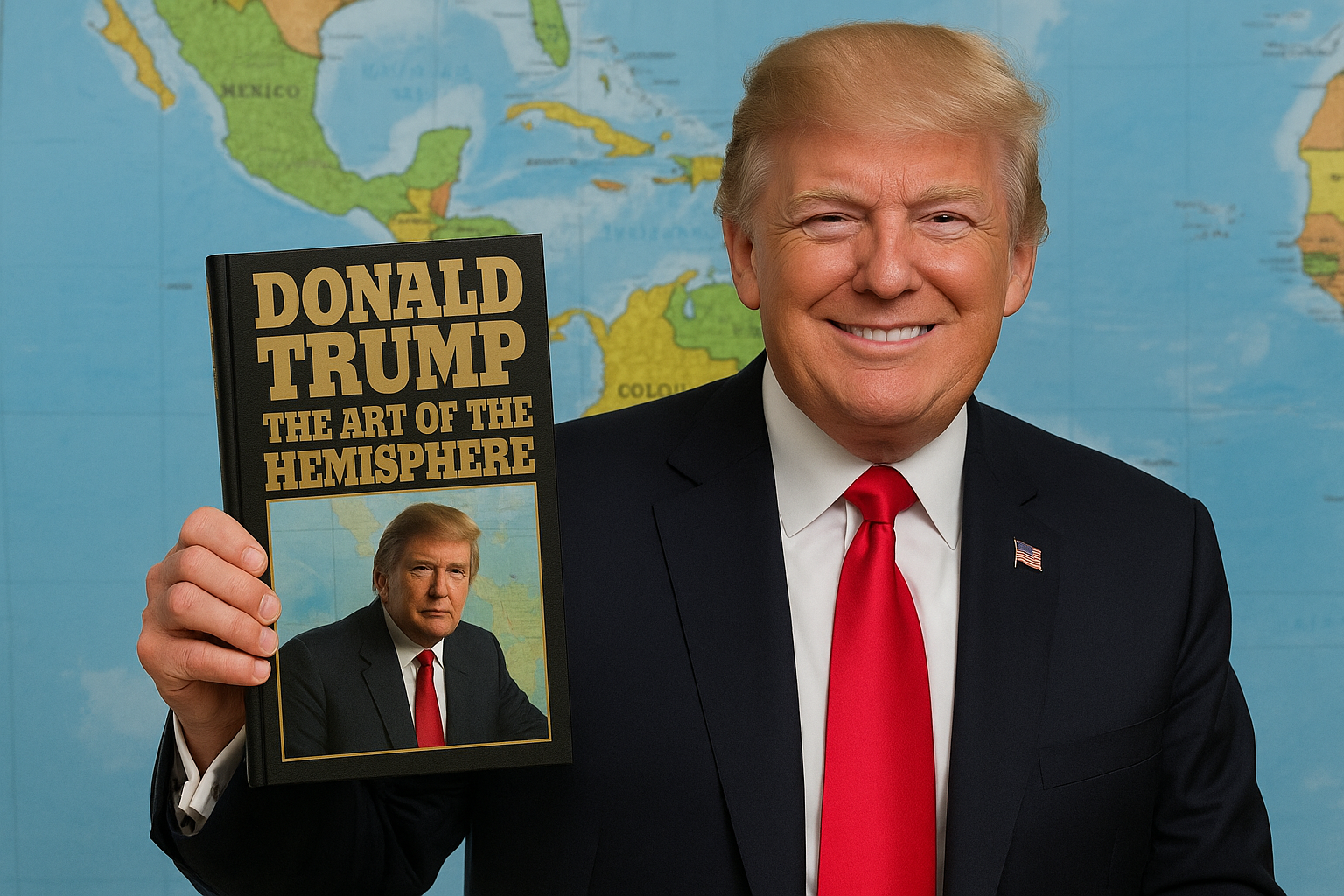
The “Trump Corollary” to the Monroe Doctrine-first sketched in these pages-is now operational doctrine: extra-hemispheric powers seeking proxy footholds in the Americas will find them dismantled, kinetically if necessary. China’s response will be rhetorical thunder (UNSC complaints, statements on sovereignty) followed by pragmatic damage control-debt renegotiation with the incoming Venezuelan government and deeper courtship of regional conservatives like Milei and Bolsonaro’s successors. Escalation would only compound the public loss of face. Iran, increasingly isolated even in Latin America’s dwindling left-wing governments, watches in silence.
Hemispheric Realignment Complete
The broader thesis of this series stands vindicated. Through calibrated leverage rather than large-scale invasion, the United States has reasserted the Western Hemisphere as its strategic backyard in 21st-century terms. Conservative governments from Buenos Aires to Bogotá applaud or stay quiet; no major power rushes to defend Chavismo’s remnants. Venezuela’s resources will realign toward market partners. Charter-city prospects brighten. Nicaragua’s Ortegas and Cuba’s leadership confront a transformed regional landscape. Trump warned of readiness for a “second, larger attack” if resistance persists.
History, as it often does, moved in a single night. The kinetic pivot delivered what sustained pressure had prepared: rapid, brittle collapse without broader war. The hemisphere turns a decisive page.
