
The Paper Trail They Tried to Bury
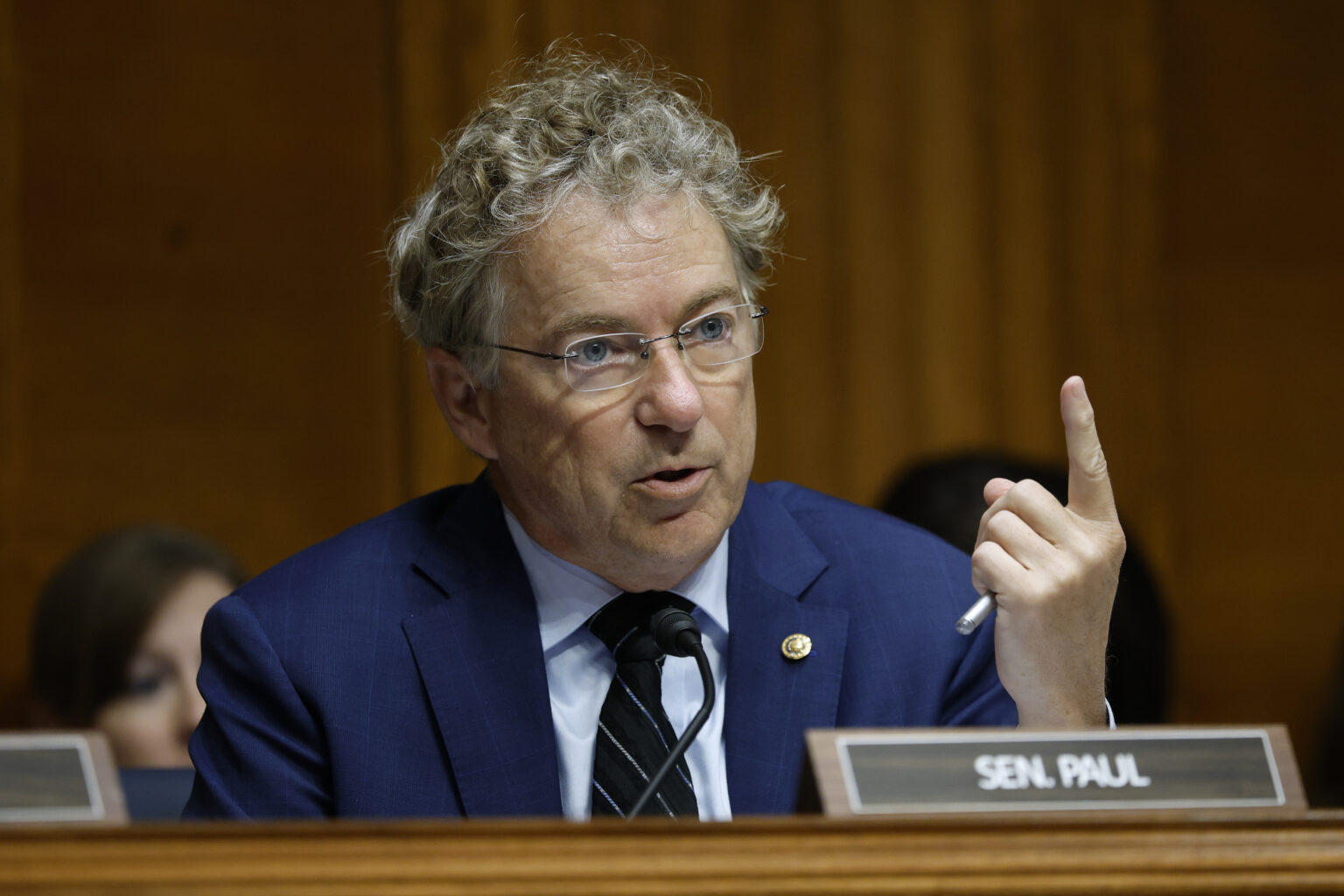
Rand Paul does not traffic in vibes. He collects documents.
While most of Washington moved on, while the same officials who shaped the COVID response collected awards, wrote memoirs, and settled into think-tank sinecures, Paul kept prying open the record. One FOIA fight, one transcribed interview, one redacted package at a time. The result now sits in his Senate Homeland Security “Reading Room”: a growing archive that maps the distance between what the public was told and what the people in charge actually knew, funded, and protected.
Follow the money. Follow the research. Follow the narrative. Follow the enforcement. The trail does not require conspiracy theories. It requires reading the paper.
The Network They Built
Start with the biology.
In 2018, Customs and Border Protection intercepted undeclared vials of coronavirus-related material at Detroit Metro Airport. The courier said they came from Yusen Zhou of China’s Academy of Military Medical Sciences and were headed for Fang Li, a University of Minnesota virologist whose lab worked closely with Zhengli Shi—the Wuhan Institute of Virology’s “bat woman.” Lab personnel in Li’s circle included researchers with PLA-affiliated educational backgrounds who had not disclosed those ties on their visa applications. One had trained under Shi on bat coronavirus receptor analysis.
This was not abstract dual-use risk. Physical material was moving outside transparent channels years before anyone outside Wuhan had heard of SARS-CoV-2.
Then came Ralph Baric’s April 2026 transcribed interview. Baric, the UNC coronavirologist at the center of U.S.–China collaboration, confirmed under oath that the DEFUSE proposal’s plan to insert a furin cleavage site into a viral backbone “would be done by me.” He stated flatly that the DARPA solicitation requiring analysis of species-jumping “down to the nucleotide level” was gain-of-function. “There’s no other way to think about it.” He admitted sending his taxpayer-funded humanized mouse model to Shi at the WIV while serving as a paid advisor to the U.S. Intelligence Community’s Biological Science Expert Group. He also described an unpublished experiment showing that excessively tight receptor binding can reduce transmission—directly undercutting one of the central scientific claims in the 2020 “Proximal Origin” paper that officials and media treated as settled science.
Funding acknowledgments on key papers were delayed for years. When NIH officials asked for their own prior gain-of-function review records in early 2020, they could not find them.
The United States helped build the research capacity. American money and expertise flowed into a high-risk network that included the laboratory at the geographic center of the outbreak. That is not speculation. It is the documentary record Paul forced into daylight.
The Narrative They Sold
While that network operated, a different story hardened in public.
The March 2020 Nature Medicine paper “The Proximal Origin of SARS-CoV-2” became the scientific cudgel used to declare laboratory involvement impossible or fringe. Yet the private Slack messages of its authors, Kristian Andersen, Eddie Holmes, Andrew Rambaut, and Robert Garry, tell a different tale. Andersen privately put the odds of a lab origin around 30 percent. Holmes estimated 20 percent, later revising to 10. They continued debating the furin cleavage site and other anomalous features. After the DEFUSE proposal leaked, the group discussed staying off email and carefully curating messages “for the FOI records.” They coordinated with intelligence channels and NIH leadership while the public paper was promoted as definitive.
NIH’s own social media channels used keyword filters that treated comments about the Wuhan Institute of Virology and ivermectin as “off-topic.” Officials discussed broader “neutral” filters capable of suppressing conversation about COVID vaccinations generally. The same institutions that funded the research managed the information environment that protected it.
The Response They Enforced
Deborah Birx sat at the operational center of the White House response. As Coronavirus Response Coordinator she controlled much of the data flow that reached the President and shaped the daily briefings. She pressed governors for tighter restrictions, supported prolonged school closures, and maintained a high-alarm framing long after age-stratified risk data and other mitigating evidence were available. Critics inside the process, including Scott Atlas, described a sustained emphasis on worst-case presentations. Birx later complained of “parallel” data streams reaching Trump. Both accounts reveal the same reality: the dominant channel prioritized broad, costly interventions and treated competing risk assessments as secondary or suspect.
Federal scientific leadership set the frame. State and local governments enforced it. Platforms amplified the official line and constrained dissent. The result was a response that protected institutional credibility and the prior research paradigm more reliably than it protected open inquiry or proportional policy.
The Rewards They Collected
While the public absorbed lockdowns, school closures, and mandated medical interventions, the senior officials who shaped the response collected substantial cash prizes and honors. Paul’s July 2026 awards package shows Fauci navigating ethics clearances for prizes totaling hundreds of thousands of dollars during the COVID period, including a roughly $900,000 foreign award. Taxpayer-funded staff assisted with nominations. NIH’s number-two official helped manage the process. The system that funded the risky research and managed the narrative also distributed recognition to its stewards.
What the Trail Reveals
An accidental laboratory-associated origin requires fewer additional assumptions than a purely natural spillover once the research program, the geography, the missing intermediate host, the early information control, and the private-versus-public gap are taken together. Deliberate release remains a higher bar with weaker current evidence. That distinction matters. What no longer holds is the claim that the natural-origin case was ever as open-and-shut as officials presented it, or that the suppression of alternatives was simply the organic working of science.
The deeper failure is institutional. High-risk work proceeded with inadequate oversight. Inconvenient hypotheses were foreclosed. Data and risk were selectively presented. Accountability was deferred while rewards flowed.
Paul’s method, patient accumulation of primary documents rather than reliance on secondary summaries, has changed the public record. Each release tightens the connections: research network to narrative management to operational response to personal and institutional protection. The trail does not yet end in courtroom convictions. It ends in a documented pattern that makes continued claims of rigorous oversight and open scientific process increasingly untenable.
The remaining work is not more theory. It is forcing the last records into the open and applying to the decision-makers the same standard of evidence that was demanded of the public for years. The paper trail is there. The question is whether anyone in power still has the will to follow it to the end.
