
Obamacare’s True Costs Exposed
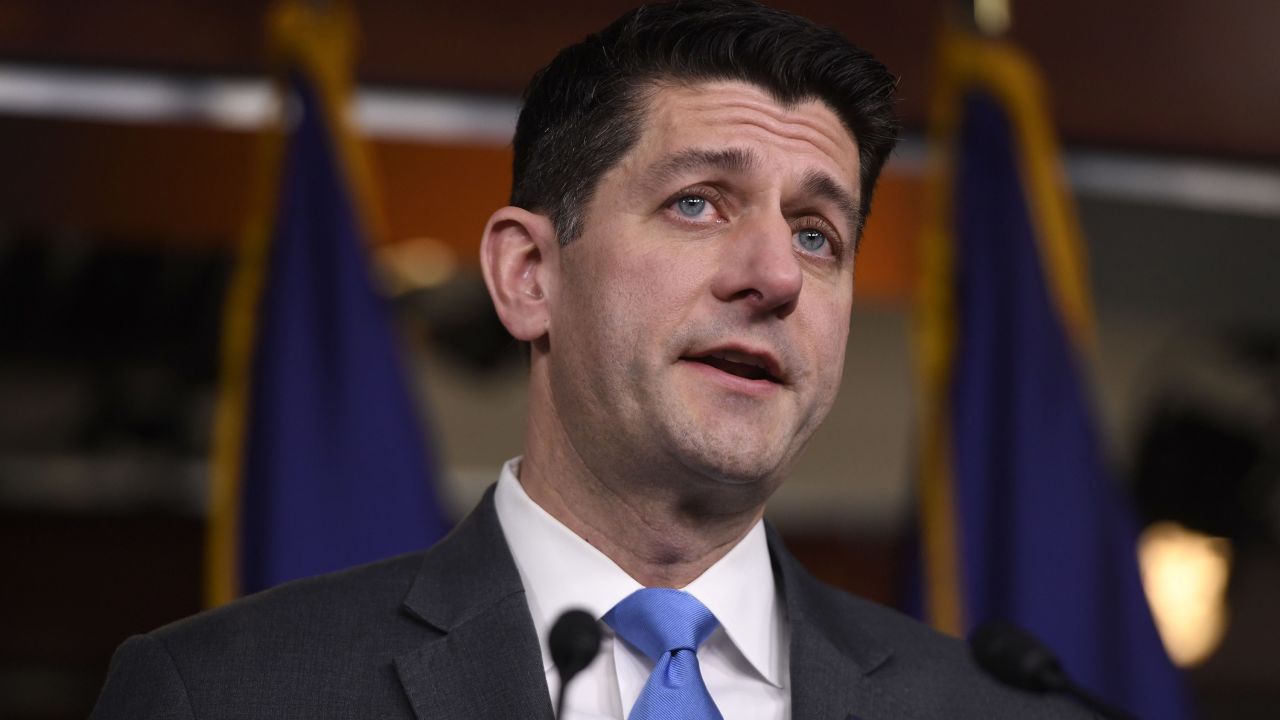
In my July 20, 2025, column, “Joe Wilson Was Right,” I argued that Rep. Joe Wilson’s infamous 2009 outburst-“You lie!”-during President Obama’s address to Congress captured a prophetic truth about the Affordable Care Act (ACA), or Obamacare. While Obama’s claim that the ACA wouldn’t cover undocumented immigrants held true in the law’s text, the reality of fungible federal funds enabled states to extend billions in coverage to non-citizens, a dynamic unmasked by the 2025 One Big Beautiful Bill Act (OBBBA). But Wilson’s raw cry was not alone in its foresight. Rep. Paul Ryan, then a rising star on the House Budget Committee, issued equally prescient warnings during the ACA’s passage, sounding alarms on its unsustainable costs, degraded coverage quality, and market distortions that would enrich insurers. As OBBBA slashes $1 trillion from Medicaid and 2025’s expiring subsidies threaten premium spikes, Ryan’s critiques-rooted in fiscal discipline and market principles-have proven eerily accurate. This follow-on synthesizes the ACA’s legislative journey with Ryan’s warnings, validated by soaring costs, poorer coverage outcomes, and insurer profits, as evidenced by recent analyses.
The Legislative Odyssey of Obamacare
The ACA’s passage was a turbulent, partisan saga, marked by intense debate and GOP skepticism, led by figures like Ryan. In June 2009, Democrats, leveraging majorities in both chambers, introduced H.R. 3200, the “America’s Affordable Health Choices Act,” in the House, featuring a public option, individual mandate, and subsidies. The Senate, via the Health, Education, Labor, and Pensions (HELP) and Finance Committees, crafted parallel bills. Summer town halls erupted with opposition, fueled by Tea Party activists decrying “death panels” and government overreach-sentiments Ryan amplified in hearings, warning of fiscal gimmicks and eroded freedoms.
By November 7, 2009, the House passed H.R. 3962 (220–215), with only one Republican vote. The Senate, needing 60 votes to avoid a filibuster, dropped the public option to appease moderates and passed H.R. 3590, the “Patient Protection and Affordable Care Act,” on December 24, 2009 (60–39), with zero GOP support. After Sen. Ted Kennedy’s death and Scott Brown’s 2010 election ended the Democrats’ filibuster-proof majority, they used budget reconciliation to pass amendments. On March 21, 2010, the House adopted the Senate bill (219–212) and a reconciliation package, signed into law by Obama on March 23 and March 30, 2010, respectively. Key provisions included the individual mandate, Medicaid expansion, insurance exchanges, pre-existing condition protections, and taxes on high earners and industries.
Ryan, a vocal critic, called the process a “travesty of democracy,” slamming its rushed, opaque nature and warning that the law’s design-laden with subsidies, mandates, and cuts-would balloon costs, degrade care, and distort markets. Fifteen years later, these predictions resonate.
Paul Ryan’s Warnings: Validated by Reality
Ryan’s objections, articulated in 2009–2010 Budget Committee hearings, the White House healthcare summit, and his “Roadmap for America’s Future,” centered on three pillars: unsustainable costs, diminished coverage quality, and market distortions benefiting insurers. Recent data, including the Paragon Health Institute’s analysis, KFF reports, and OBBBA’s fallout, confirm his foresight.
Big winners from Obamacare & the COVID credits were health insurers. Look at those stock prices soar.
Here's the reality: These subsidies go directly to health insurers.
For a large and growing number of enrollees who do not use any health care. https://t.co/6dmPouTR5b pic.twitter.com/ID8AdIhQbc
— Brian Blase (@brian_blase) October 1, 2025
Unsustainable Costs of Coverage
Ryan’s Warning: Ryan argued the ACA’s $1 trillion price tag was understated, relying on “budget gimmicks” like front-loaded taxes and unrealistic Medicare cuts ($500 billion) that Congress would likely reverse, ballooning deficits. He predicted subsidies would spiral, creating dependency and fiscal strain.
Reality: The Congressional Budget Office (CBO) initially projected deficit reduction, but costs have soared. In 2023, federal subsidies for Medicaid expansion and exchange credits hit $218 billion, per Paragon, with enhanced subsidies from the 2021 American Rescue Plan Act and 2022 Inflation Reduction Act costing $10 billion annually for 15.5 million enrollees in 2024. Extending these subsidies could add $335 billion over 2025–2034, per KFF, with total federal health subsidies projected at $25 trillion by 2033. My column highlighted how OBBBA’s $1 trillion Medicaid cut exposes hidden costs, like California’s $1.3 billion for 700,000 undocumented immigrants in 2022, enabled by the ACA’s 90% federal match. Ryan’s skepticism of CBO’s rosy forecasts was spot-on, as Medicaid expansion costs exceeded projections in many states, and 4–5 million improper $0-premium enrollments added $15–20 billion in waste.
Poorer Quality of Coverage
Ryan’s Warning: Ryan cautioned that ACA regulations, like guaranteed issue and community rating, would destabilize markets, raise premiums for healthy individuals, and reduce access through Medicare cuts, leading to rationed care and fewer provider options, especially for seniors.
Reality: Coverage quality has suffered in ways Ryan predicted. Premiums for benchmark plans rose from $4,500 in 2014 to $8,000 in 2020, per Paragon, with 2026 projections of 15–114% hikes if subsidies lapse, hitting middle-income earners hardest (e.g., $22,600 increases for a 60-year-old couple earning $85,000). Narrower provider networks, a cost-control measure, limit access, with KFF noting 19% of ACA plan enrollees in 2024 faced restricted doctor choices. Medicare Advantage cuts, though partially offset, have strained provider reimbursements, reducing senior access in some regions, as Ryan feared. OBBBA’s eligibility restrictions, cutting 1.4 million from Medicaid, exacerbate gaps, with 800,000 low-income citizens potentially losing coverage, per CBO. The ACA’s focus on quantity over quality-19 million insured but only 2 million via private plans-underscores Ryan’s warning of hollow coverage gains.
Exploding Insurance Company Profits
Ryan’s Warning: Ryan foresaw the ACA creating a government-dependent insurance market, with subsidies and mandates inflating premiums and funneling profits to insurers, crowding out competition and innovation.
Reality: The Paragon Health Institute’s bombshell shows insurer stock prices soaring 1,032% since 2010 and 448% since 2013, dwarfing the S&P 500’s 251% and 139% growth. Subsidies, covering 93% of premiums for some by 2025, incentivize insurers to hike rates, as taxpayers absorb the cost-$218 billion in 2023 alone flowed to insurers, per Paragon. This windfall, coupled with only 1.6 million new private plan enrollees at $36,000 each (vs. CBO’s $6,850 projection), confirms Ryan’s critique of a distorted market. My column’s exposure of fungible funds enabling immigrant coverage further illustrates how the ACA’s structure enriched insurers while masking inefficiencies, as states leveraged federal dollars for unintended purposes.
Conclusion: Ryan’s Prescience, Wilson’s Echo
Joe Wilson’s “You lie!” captured a visceral truth about the ACA’s hidden outcomes, but Paul Ryan’s methodical warnings-on costs, coverage quality, and insurer profiteering-provided the intellectual backbone. The ACA’s legislative sprint, bypassing GOP input, sowed seeds of fiscal and market chaos now bearing fruit: $25 trillion in projected subsidies, degraded provider access, and insurer stocks soaring over 1,000%. OBBBA’s $1 trillion cut and subsidy expirations force a reckoning, exposing what Ryan foresaw-a law that promised affordability but delivered dependency and distortion. As my column argued, Wilson was right on the outcome; Ryan was right from the outset on the mechanism. The question now is whether 2025’s reforms can unwind the ACA’s excesses without sacrificing care-a challenge Ryan’s roadmap still beckons us to meet.
