
November Jobs Report Shows Prioritizing Private, Native-Born Employment

The U.S. labor market in 2025 shows a clear rebalancing toward private-sector and native-born workers. The Bureau of Labor Statistics’ November report, delayed due to the earlier government shutdown, reported 64,000 jobs added, with unemployment at 4.6%-its highest since late 2021. Private-sector gains of 69,000 fully offset public-sector losses, highlighting a shift driven by policy changes. This rebalancing reduces government bloat and redirects job growth to Americans, but low workforce participation and discouraged workers remain concerns that could limit long-term benefits.
The GOP’s Path to Overhauling Democrats Failed Health Legacy
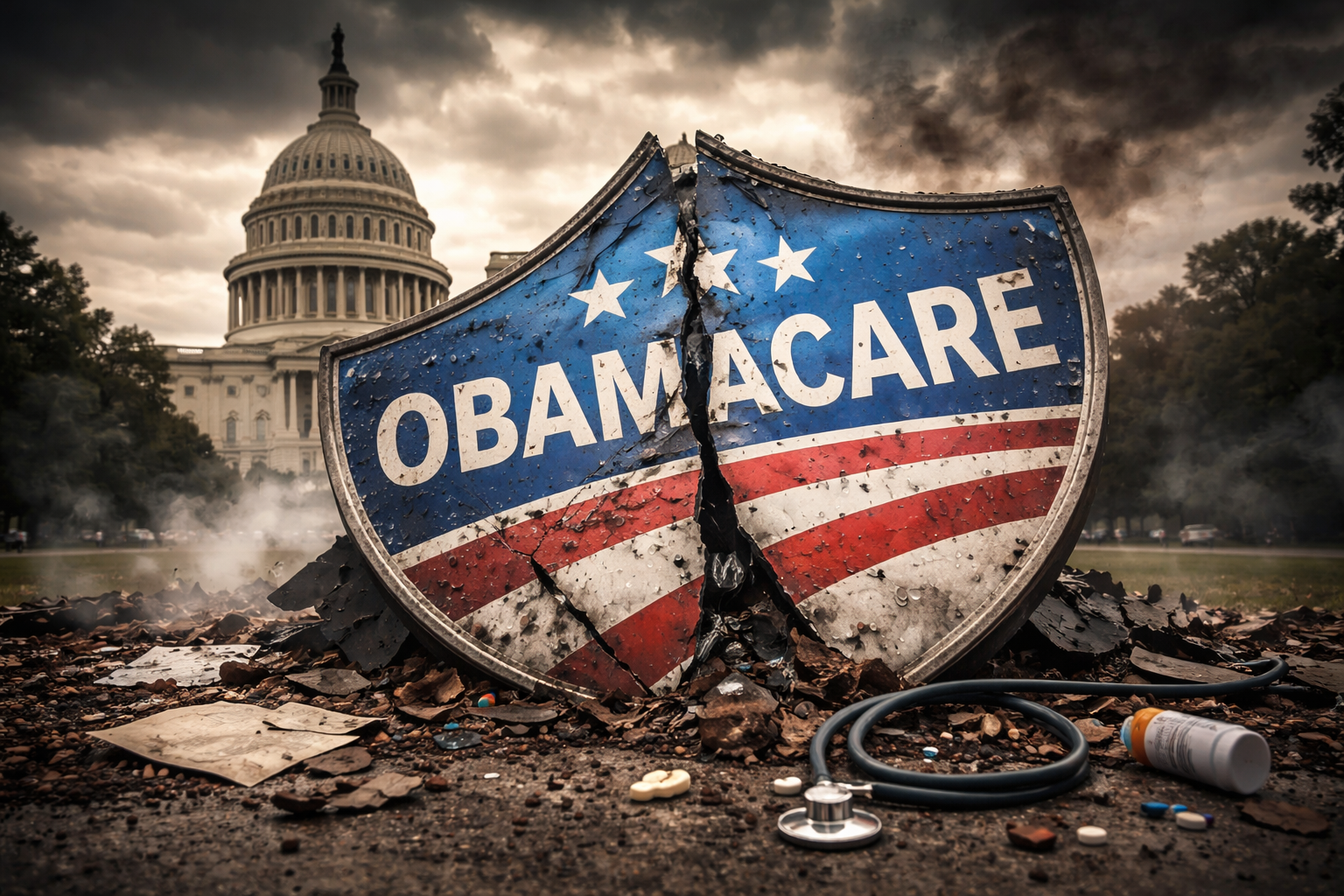
Congress has adjourned for the holiday recess without extending the enhanced Affordable Care Act (ACA) premium tax credits, which expire on December 31, 2025. This locks in a reversion to the original 2010 ACA framework for 2026 marketplace plans, with projected sharp premium increases and potential coverage losses. Republican alternatives-the Lower Health Care Premiums for All Americans Act (H.R. 6703) (passed by the House on December 17) and the Health Care Freedom for Patients Act of 2025 (S. 3386) (stalled in the Senate)-represent market-oriented responses but do not include subsidy extensions. Critically, the ACA itself, its base subsidies, and the temporary enhancements (via the American Rescue Plan Act of 2021 and Inflation Reduction Act of 2022) all passed without a single Republican vote in either chamber, making this a wholly Democrat-created system and cliff. This partisan history is pivotal to the Republican bills’ passage: It allows GOP lawmakers to position their measures as corrections to a Democrat mess, avoiding ownership of the subsidy dependency while advancing deregulation-easing party-line votes without bipartisan compromise on extensions. This analysis synthesizes the bills’ details, compares them, and contextualizes them against foundational critiques of the ACA’s design.
What a Layperson Should Know About Both Bills
Health insurance is getting more expensive for many Americans starting January 2026 because extra government help (enhanced subsidies) that kept ACA marketplace plans cheap is ending-no deal was reached in Congress before the break. About 24 million people buy these plans, and without the boosts, average monthly bills could more than double for many (e.g., from low/no cost to hundreds or thousands).
These two Republican bills were alternatives to just extending the subsidies:
- H.R. 6703 (House-passed): Focuses on helping small businesses and self-employed people get cheaper insurance by letting them pool together, plus cracking down on drug pricing middlemen.
- S. 3386 (Senate, didn’t pass): Offered temporary cash into special savings accounts for people with cheap, high-deductible plans, plus some restrictions.
Neither stops the immediate premium jumps- they’re long-term fixes emphasizing competition over more subsidies. If you’re on employer insurance or Medicare, little direct change. If on a marketplace plan, brace for higher 2026 bills unless something passes later. The partisan origins of the ACA and subsidies (no Republican votes) frame these bills as GOP efforts to fix a Democrat problem without perpetuating the cycle.
Recounting the Failures of the ACA, Which Are Foundational Not Just Structural
The ACA’s critics argue its failures are foundational-baked into the original 2010 design, passed without a single Republican vote in the House (219-212) or Senate (60-39)-rather than merely structural tweaks gone wrong. Key issues:
- Subsidy Dependency and Unsustainability: The law relies on perpetual taxpayer-funded credits (paid directly to insurers) to make plans affordable, without controlling underlying costs. Original scoring front-loaded revenues (e.g., taxes starting 2010) while back-loading spending (full benefits from 2014), creating an illusion of deficit reduction in the first decade. The base subsidies were part of this Democrat-only bill, and enhancements-via the ARPA (passed House 219-212, Senate 50-49, no GOP votes) and IRA (House 220-207, Senate 51-50 via VP tiebreaker, no GOP votes)-were temporary patches that created the current cliff. In the second decade (2020s), costs exploded as predicted-subsidy spending soared to $138 billion in 2025, far beyond projections. Expiration of temporary enhancements now exposes this: Reverting to base rules risks adverse selection (healthier people drop out → higher premiums → more drop-outs), validating warnings of a “death spiral.”
- Failure to Bend the Cost Curve: Promised to reduce premiums and overall spending through competition and mandates, but underlying costs (driven by essential benefit requirements, provider consolidation, and drug pricing) rose steadily. Mandates inflated non-exchange premiums (e.g., employer plans), spreading pain indirectly.
- Redistribution and Inequities: Subsidies effectively transfer wealth (via taxes) to exchange buyers, while others see no relief-critics call this unfair, especially when enhancements benefited some higher-income early retirees.
- Political and Implementation Flaws: Partisan passage led to instability; repeated temporary patches (2021–2025 enhancements) highlight inability to stand alone.
These foundational issues-dependency on endless subsidies, unchecked cost drivers, and market distortions-culminate in the 2026 cliff, seen by critics as proof of spectacular failure. The Democrat-only votes underscore Republican reluctance to extend subsidies, paving the way for their bills as non-subsidy alternatives.
Details About Each Bill
H.R. 6703 – Lower Health Care Premiums for All Americans Act
Passed by the House on December 17, 2025 (party-line vote):
- Expands Association Health Plans (AHPs), allowing small employers and self-employed to pool for large-group rates and flexibility.
- Enhances Health Reimbursement Arrangements (HRAs) for individual plan reimbursements.
- Mandates PBM transparency to expose rebates and reduce drug costs.
- Targets small businesses; CBO estimates deficit reduction via shifts from subsidized plans. Passage was enabled by framing it as a fix for Democrat-created flaws, without extending subsidies.
S. 3386 – Health Care Freedom for Patients Act of 2025
Introduced December 8, 2025; cloture failed-no further action:
- Temporary (2026–2027) HSA deposits for high-deductible plan enrollees.
- Expands catastrophic plans; includes Medicaid/verification restrictions. The bill’s focus on alternatives over extensions aligns with GOP views that the Democrat subsidies are unsustainable.
Comparison Table
| Aspect | H.R. 6703 (House-Passed Dec 17) | S. 3386 (Senate-Stalled) |
|---|---|---|
| Core Approach | Permanent deregulation/transparency | Temporary targeted assistance |
| Key Features | AHPs, HRAs, PBM reporting | HSA deposits, catastrophic expansion |
| 2026 Premium Relief | Indirect (small groups); none for marketplace | Limited (deductibles/plans) |
| Beneficiaries | Small businesses/self-employed | Middle-income individual enrollees |
| Fiscal Impact | Deficit reduction (~$36B) | Temporary spending |
| Status (Dec 18, 2025) | Passed House; awaits Senate | No advancement |
Possible Conference Committee Report
Unlikely in the lame-duck session-Congress adjourned without Senate action on a companion bill. H.R. 6703 is House-passed, but no Senate version exists for conferencing. Time constraints and partisan gaps make reconciliation improbable before January 2026. The Democrat ownership of the ACA/subsidies allows Republicans to resist compromise, focusing on their bills as standalone fixes.
Likelihood of Further Failure to Invoke Cloture, Necessitating Reconciliation in January
High likelihood of stalled regular-order action-lame-duck over, no votes scheduled. The 119th Congress (January 3, 2026) with Republican majorities and incoming Trump administration favors budget reconciliation: Bypass filibuster (51 votes) for budgetary items like health reforms. Elements from both bills (e.g., AHPs + HSAs) could merge into a package addressing the cliff, potentially with partial subsidy tweaks. Including health provisions in reconciliation mirrors exactly how Democrats finalized the ACA in 2009–2010: After losing their filibuster-proof Senate majority, they passed the core bill via regular order but used reconciliation for critical fixes (the Health Care and Education Reconciliation Act of 2010), enabling party-line passage without Republican votes. Historical precedent (2017 GOP attempts, 2022 Democrat IRA) supports this; internal GOP unity and priorities (e.g., deregulation) make it probable, though Byrd Rule limits non-fiscal provisions. The partisan Democrat history bolsters GOP resolve to use reconciliation without extending subsidies.
Conclusion
The impending 2026 subsidy cliff is the direct consequence of a wholly Democrat legislative creation-the ACA and its repeated temporary enhancements, all enacted without a single Republican vote. By allowing the enhancements to expire as written in the 2022 Inflation Reduction Act, Republicans have positioned themselves to expose the foundational fragility of the original design: a system that promised affordability but delivered dependency on endless taxpayer-funded patches routed to insurers, without truly bending the cost curve. Bills like H.R. 6703 and S. 3386 reflect a deliberate choice to pursue market-driven reforms over perpetuating that cycle. As the Congress reconvenes in January 2026, reconciliation-the very tool Democrats used to force the ACA into law-offers Republicans a parallel path to advance lasting changes on their terms. The real verdict will come in 2026: If marketplaces destabilize with surging premiums and coverage losses, it will confirm the ACA’s spectacular failure on its own merits; if they hold, the debate endures-but the partisan origins ensure Republicans enter the fight unburdened by shared responsibility.
Like this post? Become a Citizen Producer!


Private employment drove November’s gains. Health care added 46,000 jobs, construction 28,000, and social assistance 18,000. These sectors demonstrate resilience amid higher interest rates, tariff discussions, and economic uncertainty. Other private industries showed smaller changes, with transportation and warehousing losing 18,000 jobs and manufacturing down 5,000. Federal government employment fell by 6,000, continuing a trend of 271,000 losses since January-averaging 25,000 per month. The Department of Government Efficiency (DOGE) initiatives, including voluntary buyouts and deferred resignations tied to end-of-fiscal-year timing, have transformed government from a major job creator under the previous administration to the largest declining sector. This deliberate shrinkage supports private-sector focus by reducing bureaucratic overhead and freeing taxpayer resources for market-driven growth.
This was the best Nov on record for jobs among native-born Americans and also a record high on a non-seasonally adjusted basis: https://t.co/PUQ9AugNay pic.twitter.com/ifA6a88f4b
— E.J. Antoni, Ph.D. (@RealEJAntoni) December 16, 2025
The shift benefits native-born workers most directly. Native-born employment rose by 2.6 million over the past year, accounting for all net job growth according to analyses of BLS data. Foreign-born employment declined slightly after peaking early in 2025. BLS Table A-7 data shows foreign-born workers dropping from 32-33 million to around 30-31 million. Policy enforcement-605,000 deportations and 1.9 million voluntary self-deportations since January, per DHS figures-has reduced low-skilled immigrant inflows. This reduction has tightened labor supply in sectors previously reliant on foreign workers, such as construction, hospitality, and certain service industries. The result redirects opportunities to natives and supports wage growth of 3.5% annually, with average hourly earnings reaching $36.86 and production workers seeing stronger monthly gains.
The One Big Beautiful Bill Act (OBBBA), effective January 1, 2026, will reinforce this trend. Permanent extensions of lower individual and corporate tax rates, higher standard deductions, and no taxes on overtime pay and tips (through 2028) incentivize additional work and hiring. Workers in overtime-heavy fields like manufacturing, construction, and transportation stand to gain the most from untaxed extra hours. The 1% excise tax on outbound remittances discourages temporary migrant labor while keeping more earnings in the domestic economy for spending and investment. These provisions can boost private-sector expansion and encourage native participation in a market currently described as “low-fire, low-hire,” where businesses maintain existing staff but add new positions only cautiously due to uncertainty.
However, challenges persist. The labor force participation rate held at 62.5%, well below pre-2008 levels of 66-67% and far from the 63.4% seen before the pandemic. This reflects ongoing structural issues: aging demographics, lingering effects of past economic disruptions, and barriers keeping prime-age workers-especially men-out of the workforce. Discouraged workers numbered 651,000 in November, part of 1.825 million marginally attached individuals who want jobs but have stopped searching due to perceived lack of opportunities. Many of these workers cite skill mismatches, regional job shortages, or previous negative experiences as reasons for disengagement.
Involuntary part-time employment jumped by 909,000 since September to 5.5 million-the highest in years-as workers settle for reduced hours due to weak business demand. Broader underutilization (U-6 measure) reached 8.7%, signaling significant hidden slack in the economy. Unemployment among those without high school diplomas stood at 6.8%, compared to 2.9% for college graduates, highlighting educational divides. Teen unemployment rose sharply to 16.3%. Downward revisions to prior months (August and September combined down 33,000) indicate overstated earlier strength and add uncertainty to the overall recovery picture.
These issues risk undermining the rebalance. Tight labor supply from immigration restrictions and government cuts sustains wages but could cause shortages in certain industries, raising costs and potentially slowing overall growth. If private hiring remains below the 80-100,000 monthly level needed to absorb new entrants amid lower immigration and demographic trends, discouraged workers may grow further, depressing participation even more. Persistent low participation limits the economy’s productive capacity, reduces potential GDP growth over time, and constrains consumer spending power.
The 2025 data confirm a policy-driven pivot: trimming public excess and prioritizing native-born opportunities in the private sector. OBBBA incentives offer real potential to increase hours worked and draw sidelined Americans back in through higher take-home pay, business investment, and reduced tax drag on labor. Success depends on addressing participation barriers through targeted training programs, welfare adjustments, and sustained private-sector growth. Without broader engagement and stronger hiring momentum, the gains for native workers will remain limited, leaving too many capable Americans on the sidelines despite the positive rebalancing trend.
