
Tennessee’s Role in Breaking China’s Critical Minerals Grip
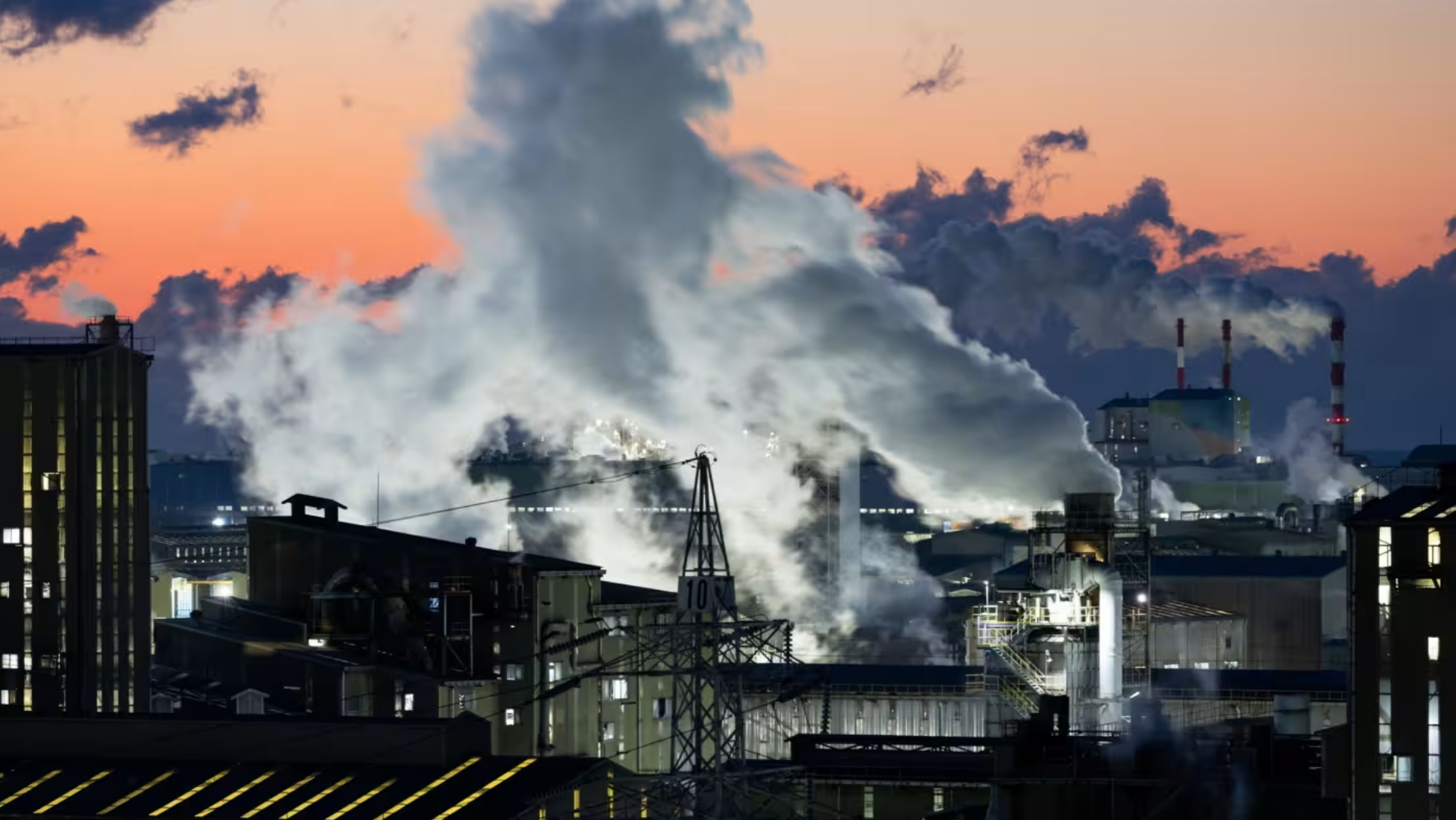
In the arc of America’s REE-naissance-spanning policy blueprints in Saskatoon separators, Utah’s ionic bounty, and Uyuni’s lithium pivot-the missing link has been robust, scalable downstream processing. Enter Korea Zinc’s $7.4 billion U.S.-backed smelter in Tennessee, announced Monday, transforming an operational Nyrstar site into a fortress for 13 critical metals, including 5,100 tonnes of rare earths annually. This isn’t mere metallurgy; it’s the industrial anvil forging hemispheric independence, syncing upstream feeds from Utah clays and Bolivian brines with midstream tech like REalloys-SRC’s AI-driven purity. As China’s rare earth export licenses flow under truce terms, this pivot underscores U.S. resolve: not just extraction, but end-to-end mastery, slashing heavy REE vulnerabilities by another 10-15% by 2030 and fueling everything from F-35 magnets (920 pounds apiece) to AI data centers.
The Forge Takes Shape
Korea Zinc, the globe’s top zinc smelter, is pivoting stateside at Washington’s behest, addressing supply-chain chokepoints exposed by Beijing’s 90% processing grip. The Tennessee facility-rebuilding Nyrstar’s Clarksville site-will churn out zinc (300,000 tonnes/year), copper (35,000 tonnes), lead (200,000 tonnes), and rare earths alongside antimony, germanium, gallium for semis, plus gold/silver and sulphuric acid for chip fabs. This dovetails with OBBBA’s $100 billion DPA loans and NDAA’s $5 billion CRMN push, mandating China-free chains by 2027 per BIOSECURE.
Funding mirrors the series’ playbook: A U.S.-Korea Zinc joint venture raises $2 billion, with the rest via government grants/loans and company equity-part of Seoul’s $350 billion U.S. investment pact for tariff relief. Timeline: Construction kicks off post-2027, operations ramp 2027-2029, aligning with Utah’s 2028 commercial launch and Uyuni’s DLE scaling. Market echo: Korea Zinc shares jumped 27%, akin to BLOX’s 12% surge on REalloys news or MP Materials’ 8% pop post-Utah.
Commerce Secretary Howard Lutnick announced on X:
Statement from Secretary Lutnick:
Big win for America. ⬇️
President Trump just secured a transformational critical minerals deal that strengthens our national security, rebuilds our industrial base, and ends our dependence on foreign supply chains.
Today, we announced a major…
— U.S. Commerce Dept. (@CommerceGov) December 15, 2025
The post continues:
Today, we announced a major investment with Korea Zinc to build a state-of-the-art critical minerals smelter and processing facility in Tennessee that will produce 540,000 tons per year of essential materials right here in America.
These minerals power the technologies that matter most for our future: defense systems, semiconductors, AI, quantum computing, autos, data centers, and advanced manufacturing.
Gallium. Germanium. Indium. Antimony. Copper. Silver. Gold. Zinc-and more-all produced on American soil, supporting everything from fighter jets and satellites to chip fabs and the electric grid.
And it doesn’t stop there: Starting in 2026, the United States will have priority access to Korea Zinc’s expanded global production, putting American security and manufacturing FIRST.
This is exactly how we win: build here, secure our supply chains, create great jobs, and keep America the world’s industrial and technological leader.
Congratulations to President Trump on delivering another massive win for the United States!
Hemispheric Synergy: From Vein to Value
This smelter closes the loop on our REE-naissance narrative. Utah’s 1.2 billion-tonne Silicon Ridge (5,200 ppm TREO, 1.2% lithium) provides soluble feeds for low-impact leaching, while Uyuni’s 23 million-tonne brines yield DLE lithium for batteries. Saskatoon’s REalloys-SRC (30 tonnes dysprosium oxide/year, 400-600 tonnes NdPr) handles separation, feeding Tennessee’s refineries. Brazil’s Araxá (40.6 million tonnes at 4.13% TREO) adds monazite volume, all under Trump Corollary friendshoring-countering China’s BRI grabs in Latin America.
Strategic punch: Covers 20-30% of U.S. defense REE needs, reduces imports to 50-60% by decade’s end, and integrates with Nevada gigafactories for EV chains. Economic ripple: $2-5 billion ancillary investments, mirroring Bolivia’s projected 5-10% GDP lift, with Tennessee gaining 3-5% regional boost via jobs and sulphuric acid for domestic semis.
Policy Hammer and Geopolitical Heat
OBBBA’s Mineral Leasing tweaks fast-track permitting, while NDAA’s Pacific Deterrence ($9.2 billion) ties REEs to hypersonics and renewables. BIOSECURE’s 2027 bans ensure zero Beijing backdoors, echoing Europe’s RESourceEU lags (e.g., Lynas Germany’s 2029 hearings). China’s truce licenses may ease short-term shortages, but Tennessee signals long-game dominance-averting 2010-style price spikes amid BRICS pressures.
Risks persist: Environmental scrutiny on smelting emissions (though Nyrstar’s ops set baselines), Indigenous/permitting hurdles akin to Uyuni’s flamingo habitats, and execution delays in a $12 billion+ funding ecosystem. Yet, with DoD offtake (80% pre-sold, per Saskatoon model), this forge tempers resilience.
Forging Ahead: A Continental Blueprint
America’s REE-naissance is no longer a nascent dream but a maturing continental blueprint, evolving layer by layer from raw discovery to strategic decoupling. It begins with Utah’s hidden ionic veins, rich in dysprosium and terbium at concentrations up to 1,200 ppm, unlocking domestic reserves that could alone satisfy 20% of U.S. defense magnet demands by the end of the decade. From there, it pivots southward to Uyuni’s vast saline expanses, where Bolivia’s centrist shift enables Direct Lithium Extraction to harvest over 100,000 tonnes annually, integrating seamlessly with REE feeds to power the next generation of EV batteries and renewable grids. Saskatoon’s midstream innovations add intellectual muscle, leveraging AI-hydrometallurgy for ultra-pure outputs like 30 tonnes of dysprosium oxide yearly, ensuring efficiency rates exceeding 99.9% without environmental trade-offs. Now, Tennessee’s downstream smelting forge seals the chain, processing these allied inputs into 5,100 tonnes of rare earths alongside base metals, all while generating sulphuric acid byproducts critical for semiconductor fabs.
By 2030, this integrated ecosystem could collectively dent China’s dominant 80-90% market shares in rare earth processing by 20-40%, drawing from projections that see Western reliance on heavy REEs dropping from near-total dependence to around 91% or lower with accelerated diversification-though experts caution that sustained policy momentum is key to closing the gap further. This shift promises to stabilize volatile prices, such as dysprosium oxide hovering around $170-780 per kilogram in late 2025 markets, preventing the supply shocks that have historically inflated costs by 500% or more during geopolitical flares. In turn, it unlocks trillions in economic potential, propelling the global clean tech sector toward a projected $1.8-2 trillion valuation by 2030, fueled by surging demand for EVs, wind turbines, and AI infrastructure that collectively require tripling rare earth supplies to 176 kilotons annually. The Trump Corollary to the Monroe Doctrine transcends mere rhetoric; it’s a blueprint for reindustrialization, transforming overlooked hemispheric resources-from Utah’s volcanic clays to Bolivia’s salt flats-into veins of strategic gold that bolster national security, foster job creation across borders, and position the Americas as a self-reliant powerhouse in the 21st-century materials race.
| Milestone | Upstream (Utah/Uyuni) | Midstream (Saskatoon) | Downstream (Tennessee) | Cumulative Impact vs. China |
|---|---|---|---|---|
| Reserves/Output | 1.2B tonnes REEs/Li; 23M tonnes Li | 400-600t NdPr/yr; 30t Dy oxide | 5.1k t REEs/yr; 300k t Zn | 20-40% US needs covered |
| Tech | Ionic/DLE leaching (70-90% efficiency) | AI hydrometallurgy (>99.9% purity) | Multi-metal smelting w/ acid byproducts | End-to-end China-free chain |
| Funding | $450M DPA; $2-5B EXIM | $21M private + incentives | $7.4B JV/loans/grants | $12B+ policy war chest |
| Timeline | Pilot 2026; Ops 2028/2027-2030 | Full 2027 | Ramp 2027-2029 | 50-60% import cut by 2030 |
This smelting surge isn’t the end; it’s the spark for more-watch for Aussie tie-ins or recycling ramps. Decoupling demands vigilance, but Tennessee proves: America’s forging its future.
