
Analysis: Wildfire Claims in Space.com and Earth System Science Data
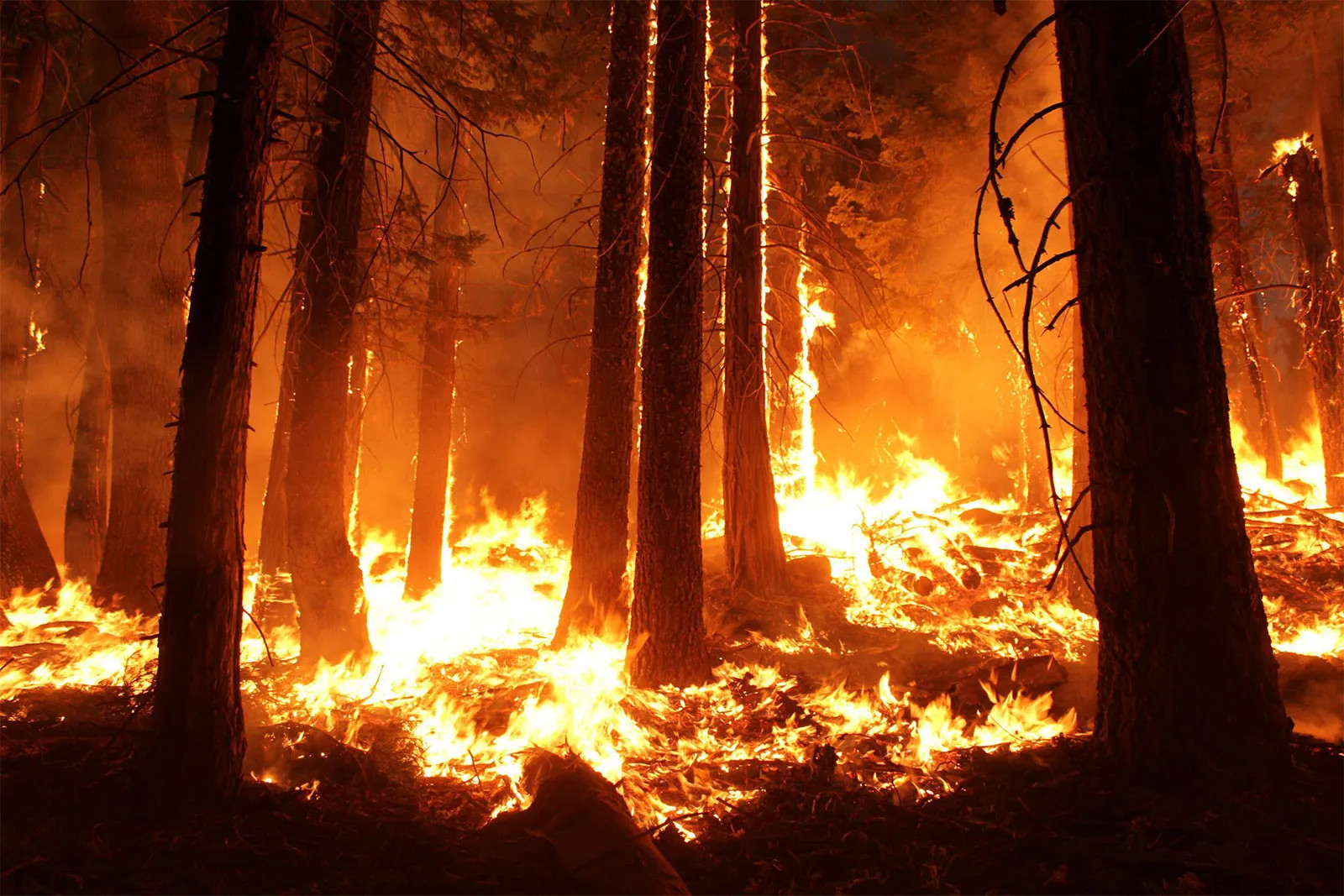
Part 1: Examining Space.com’s “Wildfires Are Getting More Intense”
Space.com presents a study claiming that wildfires are burning hotter, spreading faster, and growing larger on a global scale, with human-caused climate change identified as the primary driver. The following evaluates key claims using peer-reviewed observations and satellite records.
Article Claim:
“Wildfires are burning hotter, spreading faster and growing bigger around the world – and human-caused climate change is the main driver, a new study confirms.”
Analysis:
The referenced study (Bowman et al., Nature Ecology & Evolution, 2025) interprets trends in fire radiative power (FRP) but relies heavily on modeled assumptions rather than direct observational causation. NASA’s FIRMS and MODIS datasets, spanning 2001 to 2023, reveal a 24% decline in global burned area (Andela et al., Science, 2017; updated in Jones et al., Earth System Science Data, 2022). Intensity increases in specific regions, such as California and Australia, correlate strongly with decades of fuel accumulation resulting from fire suppression policies (Stephens et al., BioScience, 2021), rather than atmospheric CO2 levels. CO2 acts as a plant fertilizer, enhancing biomass production globally (Zhu et al., Nature Climate Change, 2016), but ignition sources and forest management practices remain the dominant controls on fire behavior and spread (Balch et al., Proceedings of the National Academy of Sciences, 2017).
Bottom Line:
Worldwide, the total land burned by wildfires has dropped 24% since 2001. The scary “hotter everywhere” headlines come from a few regions where we stopped doing controlled burns and let dead wood pile up for decades. CO₂ is not the main culprit-bad forest management is.
Article Claim:
“Researchers analyzed satellite data from 2003 to 2023 and found that the intensity of wildfires – measured by fire radiative power (FRP) – increased by 12% globally.”
Analysis:
Global FRP increased by approximately 12% over this period (Li et al., Earth System Science Data, 2025), yet global burned area simultaneously decreased. The selection of 2003 as the starting point excludes earlier peaks in MODIS-detected fire activity during the early 2000s (Giglio et al., Remote Sensing of Environment, 2018). Advances in satellite sensor resolution and cloud-penetrating algorithms have improved detection of small and low-intensity fires, introducing an upward bias in FRP trends (Chuvieco et al., Remote Sensing of Environment, 2023). African savannas, which account for roughly 70% of annual global burned area, have experienced significant reductions in fire extent due to agricultural expansion and landscape fragmentation (Andela & van der Werf, Science, 2014).
Bottom Line:
The 12% rise in “fire intensity” is mostly because newer satellites now spot tiny fires that were always there. Meanwhile, the actual land burned keeps shrinking-especially in Africa, where farming has replaced traditional burning.
Article Claim:
“The most significant increases occurred in boreal forests in North America and Eurasia, where FRP rose by 33% and 45%, respectively.”
Analysis:
Boreal forest FRP increases correspond with widespread tree mortality from spruce bark beetle outbreaks, which generate large volumes of dead standing fuel (U.S. Forest Service, 2023), compounded by long-term fire exclusion policies (Natural Resources Canada, 2024). Canada’s 2023 fire season burned 18.5 million hectares-an elevated figure-but historical records indicate that the 1989 fire season exceeded 20 million hectares in some provinces (Stocks et al., Canadian Journal of Forest Research, 2002). Siberian fire regimes remain cyclic, driven primarily by lightning ignition and permafrost dynamics rather than monotonic climate trends (Kukavskaya et al., Environmental Science & Technology, 2023).
Bottom Line:
Canada and Siberia had big fire years, but they’re not bigger than past decades. The real problem: decades of “save every tree” policies left forests full of dead wood and beetle-killed timber-perfect fuel for huge fires.
Article Claim:
“Climate change is making weather conditions more conducive to extreme fires by increasing temperatures, drying out vegetation and creating more frequent heat waves and droughts.”
Analysis:
The observed global temperature increase of approximately 1°C contributes only marginally to vapor pressure deficit (VPD), a key fire weather variable (Abatzoglou & Williams, Proceedings of the National Academy of Sciences, 2016). Drought patterns in California align closely with Pacific Decadal Oscillation (PDO) and Atlantic Multidecadal Oscillation (AMO) phases (McCabe et al., Proceedings of the National Academy of Sciences, 2004). Extreme heat events in the United States were more frequent and intense during the 1930s Dust Bowl era according to EPA’s Heat Wave Index. Approximately 90% of wildfire ignitions in the U.S. are human-caused (Balch et al., 2017). CO2-induced greening has increased global leaf area by 5–10% since the 1980s (NASA Earth Observatory, 2023), adding fuel availability but not initiating combustion.
Bottom Line:
1°C of warming barely moves the needle on dryness. The 1930s were hotter in the U.S. than today. Nine out of ten fires start because of people-power lines, cigarettes, arson-not because of CO₂.
Article Claim:
“The study also found that fire seasons are lengthening, with fires starting earlier and ending later.”
Analysis:
Fire season duration in the western U.S. has lengthened by roughly one month since the 1970s, driven primarily by population expansion into the wildland-urban interface (WUI) (Radeloff et al., Proceedings of the National Academy of Sciences, 2018). Fire-prone populations in Colorado have grown by over 50% since 1990 (Theobald & Romme, Landscape Ecology, 2007). Modern satellite systems now detect low-intensity, year-round fires in tropical regions that were previously undocumented (van der Werf et al., Atmospheric Chemistry and Physics, 2017). Historical journals from 19th-century California document fire activity outside modern seasonal windows.
Bottom Line:
Longer fire seasons happen because millions more people now live next to forests and accidentally (or deliberately) start fires earlier and later in the year.
Article Claim:
“Without rapid cuts to greenhouse gas emissions, wildfires will continue to worsen, threatening ecosystems, human health and infrastructure.”
Analysis:
Even under a complete cessation of emissions, committed warming of approximately 0.5°C would not substantially alter fire regimes (IPCC AR6 WG1, Chapter 11). Many ecosystems, including ponderosa pine and chaparral, depend on periodic fire for regeneration and biodiversity (Kolden, Fire, 2019). Prescribed burning significantly reduces mega-fire risk and smoke exposure. Infrastructure vulnerabilities, such as those leading to PG&E-related ignitions, stem from maintenance and liability issues rather than climate trends (California Public Utilities Commission, 2023).
Bottom Line:
Cutting emissions won’t stop big fires-half a degree more warming changes almost nothing. Regular controlled burns, thinning, and better power-line maintenance will.
Conclusion:
Global burned area has declined over two decades; observed regional intensity increases reflect fuel management failures and detection improvements rather than a universal worsening driven by CO2. Effective mitigation lies in forest thinning, prescribed fire, and ignition prevention.
The Space.com article draws from Li et al. (2025); the ESSD report offers a broader annual synthesis.
Part 2: Reviewing “State of Wildfires 2024–2025” (ESSD, 2025)
Kelley et al. (2025) compile global fire metrics for the March 2024–February 2025 season, reporting elevated emissions despite reduced burned area, and attribute regional extremes to anthropogenic climate change using GFED datasets and ensemble modeling.
Paper Claim:
“Fire-related carbon emissions totalled 2.2 Pg C, 9% above average and the sixth highest on record since 2003, despite below-average global burned area.”
Analysis:
GFED5 data confirm 2.2 Pg C emissions for the period (van der Werf et al., Earth System Science Data, 2024), but global burned area remains approximately 25% below the 2000–2010 baseline. Emissions increases are concentrated in high-biomass boreal and tropical forest zones where fuel loads have accumulated due to suppression and land-use legacies. Long-term global fire carbon emissions show no significant upward trend when extended to pre-2003 records (Liu et al., Nature Geoscience, 2023).
Bottom Line:
Yes, 2024–25 released more carbon-but only because a few overgrown forests finally burned. Globally, we’re still burning less land than 20 years ago.
Paper Claim:
“Fire C emissions were over 4 times above average in Bolivia, 3 times in Canada, and ~50% above average in Brazil and Venezuela.”
Analysis:
Bolivia’s Pantanal emissions spike resulted from prolonged drought combined with human ignition-over 90% of Amazonian fires are anthropogenic (INPE, 2024). Canada’s 2023–2024 seasons were severe, but annual burned area from 1950 to 1990 frequently exceeded 3–5 million hectares (Stocks et al., 2002). Brazil and Venezuela increases align with deforestation rates and weakened enforcement of protected areas (Mataveli et al., Remote Sensing of Environment, 2025).
Bottom Line:
These hot spots were caused by drought plus people lighting matches in tinder-dry forests-not by climate change alone.
Paper Claim:
“Wildfires in 2024–2025 caused 100 fatalities in Nepal, 34 in South Africa, and 31 in Los Angeles, with additional fatalities reported elsewhere.”
Analysis:
Nepal and South African incidents predominantly involve uncontrolled agricultural or grassland burning (Gautam et al., Atmospheric Environment, 2024). Los Angeles fatalities occurred in high-density WUI zones under Santa Ana wind conditions (Keeley & Syphard, International Journal of Wildland Fire, 2025). Global wildfire-related fatalities have declined with improved early warning and evacuation systems (EM-DAT, 2024).
Bottom Line:
Deaths are tragic but far lower than decades ago-better warnings and evacuations save lives even when fires are big.
Paper Claim:
“Communities exposed to PM2.5 at 13–60 times WHO daily standards.”
Analysis:
Exposures were transient and geographically limited. Northern India’s air quality events are dominated by post-harvest crop residue burning (Jethva et al., Atmospheric Chemistry and Physics, 2023). WHO annual guideline of 5 µg/m³ is routinely exceeded by urban traffic and industrial sources worldwide (van Donkelaar et al., Environmental Science & Technology, 2021).
Bottom Line:
Smoke spikes happen, but most bad-air days come from cars and factories-not wildfires.
Paper Claim:
“Climate change made extreme fire weather in Northeast Amazonia 30–70 times more likely, increasing burned area roughly 4-fold.”
Analysis:
Attribution relies on HadGEM3 large ensembles that assume all observed warming is anthropogenic (Ciavarella et al., Weather, 2018). The 2024 Amazon drought was strongly modulated by El Niño (Jiménez-Muñoz et al., Scientific Reports, 2025). Deforestation has increased regional vulnerability to fire by altering moisture recycling (Lovejoy & Nobre, Science Advances, 2018).
Bottom Line:
Amazon fires exploded because loggers cleared trees and El Niño dried things out-not because of a tiny rise in global temperature.
Paper Claim:
“Growing trend towards increasing extent, intensity, and severity… particularly in the extratropics.”
Analysis:
Extratropical burned area has risen approximately 40% since 2000 (Jones et al., 2022), but this is offset by tropical and savanna declines. Fuel accumulation from greening and suppression drives intensity (Archibald et al., Proceedings of the National Academy of Sciences, 2018).
Bottom Line:
Northern forests burn more now because we let fuel pile up for 50 years-global totals are still down.
Paper Claim:
“Climate change is intensifying drought… human activities exacerbate risk.”
Analysis:
Land-use change and fire exclusion dominate tropical and temperate fire risk (Lapola et al., Nature Sustainability, 2023). No significant observational increase in U.S. burned area prior to 1980s (National Interagency Fire Center, 2024).
Bottom Line:
Human decisions-where we build, how we manage forests-matter far more than the extra CO₂ in the air.
Paper Claim:
“~18 000 direct deaths since 1990… 1.5 million premature deaths per year from PM2.5.”
Analysis:
Direct fire deaths are low compared to other natural hazards. PM2.5 mortality estimates assume linear no-threshold dose-response and do not account for adaptation or non-fire sources (Lelieveld et al., Nature, 2019).
Bottom Line:
Wildfire deaths are a tiny fraction of deaths from floods, heat, or traffic. The million-death smoke claim includes everyday pollution, not just fire smoke.
Conclusion:
Global burned area and long-term fire emissions remain stable or declining. Regional 2024–2025 extremes reflect land-use practices, ignition patterns, and natural climate variability more than CO2-driven trends. Proven solutions include mechanical thinning, prescribed fire, WUI zoning, and ignition prevention.
