
The Infinite Life
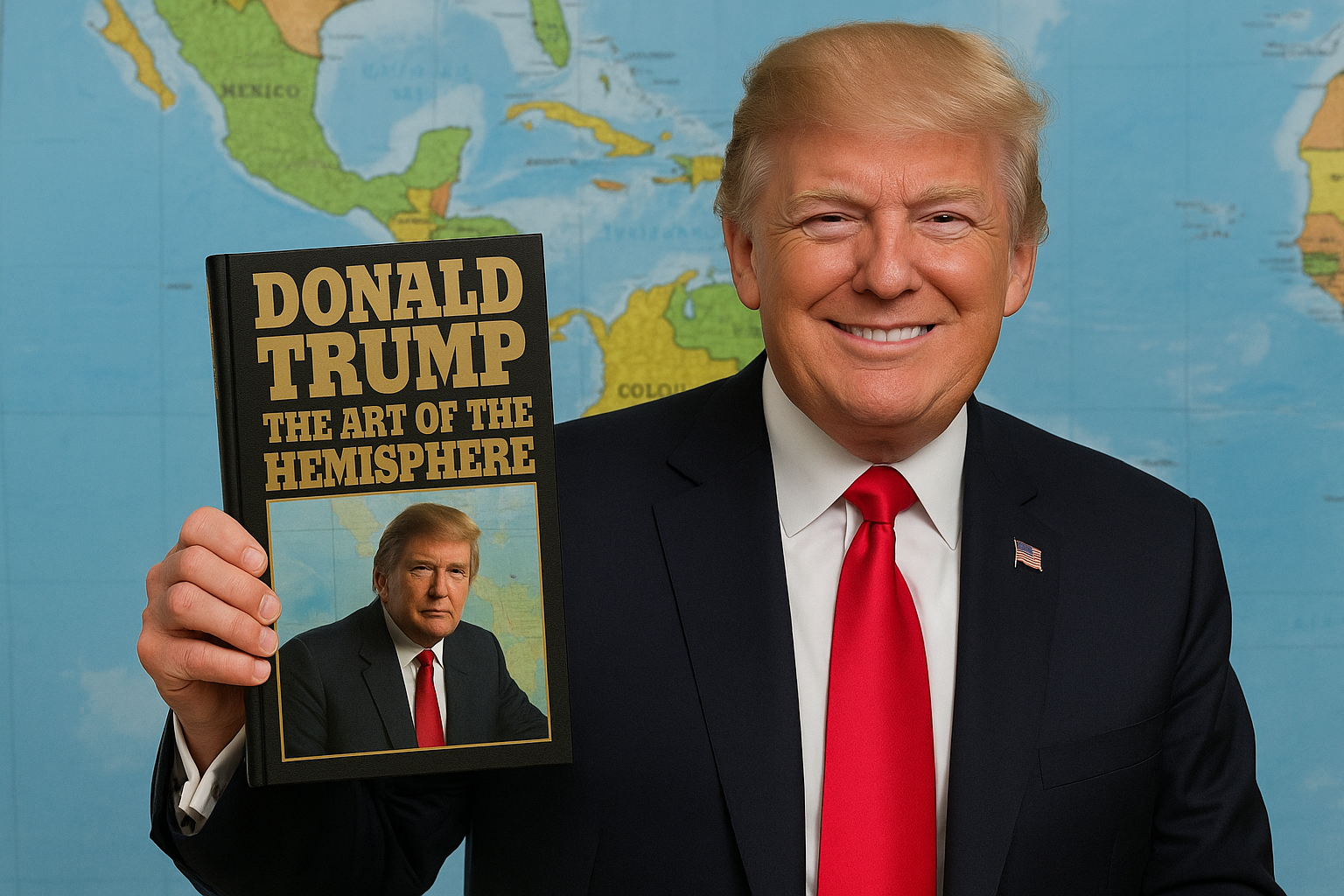
Greenland did not have to change hands. The lock on the door did.
N.B. Read Parts I, II, III, IV, V, and VI of this series. See also Trump’s Greenland Gambit.
May 8 was the mineral proof. August 28 closed the southern flank. Friday recorded the north.
President Trump posted that the United States had entered an “Infinite Life” agreement with the Kingdom of Denmark and Greenland: permanent control over security “and all other needs,” no cost to the United States, no end date, and a rule that no adversary may put a base, a troop presence, or a sensitive investment on the island without written American approval. He said the United States would begin a large military presence in the appropriate parts of Greenland and work with the people who live there on the construction. RedState carried the announcement. Fox News reported the official terms behind it.
Copenhagen and Nuuk did not use those words. They used better ones for a treaty that has to survive two parliaments. In a statement from the Prime Minister’s Office, Prime Minister Mette Frederiksen said the three governments expect to sign next week at the United Nations General Assembly an agreement that strengthens common security in the Arctic and the North Atlantic, is good for NATO and Europe, and recognizes the sovereignty and territorial integrity of the Kingdom and the Greenlandic people’s right to self-determination. Premier Jens-Frederik Nielsen said the same instrument recognizes Greenland’s interests and its place in the cooperation. After signature, it still has to clear national parliamentary procedures. That is the STM file, not a social post.
That gap is the piece. Do not confuse the Truth Social post with the statute. Do not confuse the statute with a deed.
The instrument, not the purchase
This series never needed Greenland to become a star on the flag. It needed Greenland to stop being a vacancy.
The 1951 defense agreement already put an American base on the northwest coast. Pituffik is not a rumor. What it did not put on paper was a permanent American right to add installations without a second permission, a veto that travels with the island if Nuuk ever votes itself out of the Kingdom, and a screen on the money that builds ports, cables, telecom, and mines. Those three sentences are the deal. Senior officials briefed Fox News that way: permanent access, basing, and overflight; the ability to stand up additional installations with consultation, not a Danish or Greenlandic veto; a bar on non-NATO bases and troops; a bar on adversary investment in sensitive sectors; no expiration; no transfer of sovereignty; the paper survives independence.
Monroe drew a line against Europe. The Trump Corollary drew it against the next flag that tries to rent a fjord. Friday is the recording of that line on ice.
“No cost to the United States” is true in the only sense that matters for a doctrine piece. Washington did not buy the rock. It did not write a check to Copenhagen. It exercised an option that has sat in the file since Truman. The right is free. The steel is not. Runways, radars, housing, fuel, and the crews who winter there will show up in a defense budget the way every other American presence shows up in a defense budget. Anyone who treats “no cost” as a construction holiday is selling a speech. Anyone who treats the missing purchase price as proof the deal is hollow is selling the opposite speech. Both miss the instrument.
Title stays Danish, or Greenlandic, depending on what the next referendum does. The security interest does not move with the flag.
What Part V actually bought
Part V was not a travelogue. It was a concentrate. Critical Metals took operational control of Tanbreez. The host rock is heavy where China is heavy: dysprosium, terbium, the magnet metals the Pentagon cannot source from a friendly mill in adequate volume. The plan was extract in southern Greenland, process on this side of the water, feed American defense and the shops that still make things. That was the proof point. It was not a fence.
Friday is the fence.
A rare-earth pit without a security screen is a press release with a Chinese offtake sitting in the next room. The sensitive-investment clause is the sentence that matters for Tanbreez, for Sarfartoq, for whatever graphite and zinc and nickel get out of the ice in the next twenty years. Adversaries do not need a barracks if they own the dock, the cable, and the mill. The deal puts those three behind an American written approval. That is not annexation. That is how you keep a Western mine Western after the ribbon-cutting.
Do not book first ore because a president posted. Tanbreez is still years from a mill. Arctic logistics are still Arctic logistics. The exploitation license to 2050 is still a license, not a shipload. The security paper does not pour concentrate. It keeps the concentrate from walking east.
The partners who can sign
Frederiksen can sign because she kept the Kingdom intact through a year of American theater. Nielsen can sign because he is the premier of a people who have spent two generations saying the island is not for sale and meaning it. Those are not decorative facts. They are why the paper has a chance to last.
Trump spent the winter talking as if the choice were purchase or force. Denmark heard it. Greenland heard it. NATO heard it. The alliance did not fracture. That is not nothing. The price of that year was paid in Copenhagen and Nuuk, not in a speechwriter’s office. Friday is what you get when the threat did the work and the lawyers were then allowed to write.
Watch the sequence next week. Signature at the General Assembly is a photograph. Entry into force is the Folketing and Inatsisartut. If either chamber treats the American veto on investment as a colonial appendix, the clause will be footnoted until it is useless. If both chambers treat it as the rent on an American shield they already live under, the clause hardens. Rodríguez had to sell a renaissance on the Orinoco street. Nielsen has to sell a security rent to a capital of fifty-seven thousand people who know exactly how many flags have wanted the ice.
The opposition line writes itself: he wanted the island and settled for a base expansion. Fine. Seward wanted the island in 1867. Truman wanted it in 1946. The men who built Thule wanted a runway, not a constitution. The United States has been in this file longer than most of the people now shouting about it have been alive. The adult question was never whether America would stay. It was whether China and Russia would be allowed to arrive. Friday answers that question in writing.
China off the block
Beijing does not need a brigade at Nuuk. It needs a port, a research station that is not a research station, a minority stake in a mine, and a cable. That is the method it used from the Canal to the Solomons. Officials briefing the deal named the Panama analogy on purpose, as Fox News reported. The point is not that Greenland is Panama. The point is that a strategic chokepoint left as a commercial vacancy becomes someone else’s lease.
Russia already knows the GIUK gap. A Chinese or Russian presence on the island would turn the North Atlantic from a NATO lake into a monitoring problem. The bar on non-NATO bases and troops is the sentence Europe can live with. The bar on sensitive investment is the sentence Washington actually needed. One keeps uniforms off the rock. The other keeps the balance sheet clean.
Golden Dome talk will attach itself to this announcement because every Arctic story now has to carry a missile. Maybe the architecture uses Greenland. Maybe it does not. Do not let the architecture eat the doctrine. The doctrine is simpler: the approaches to North America are not for rent.
What would make the recording hold
Three documents turn Friday into a northern settlement.
Publish the text. “Permanent control over security, and all other needs” is a presidential sentence. A treaty is articles. The investment screen has to name sectors, a review body, and a clock, or it is a press availability.
Sign it in New York and ratify it in two capitals. An expected signature is not a signature. Parliamentary procedures are not a footnote. They are the difference between a posting and a file.
Put steel behind the right. Consultation-plus-construction is a real grant only if the United States actually builds. An empty option twenty years from now is how you get the next Chinese research station with a deep-water pier.
If those land, this series has its northern chapter and the map is no longer a pair of flanks waiting on paper. The Orinoco still has to pour. Tanbreez still has to mill. Greenland still has to live with an American presence that is larger than Pituffik and louder than a space-force patch. Those are execution risks. They are not reasons to pretend Friday did not happen.
August 28 recorded a claim on the largest oil province in the world without rewriting the Venezuelan constitution on live television. September 18 recorded a claim on the northern approaches without buying an island. Same doctrine. Same method. Title on the rock. Control in the file. Private capital on the minerals. The force on the water and the ice.
The Art of the Hemisphere was never a shopping list. It was a rule about who may operate in this theater. Friday wrote the rule onto the last empty quarter of the map. The tonnes still have to come out of the kakortokite. The barrels still have to come out of the Belt. The paper, for the first time in this series, now runs from the Orinoco to the ice cap with no vacancy in between.
