
Realpolitik in Action – Time to Read The Art of the Deal
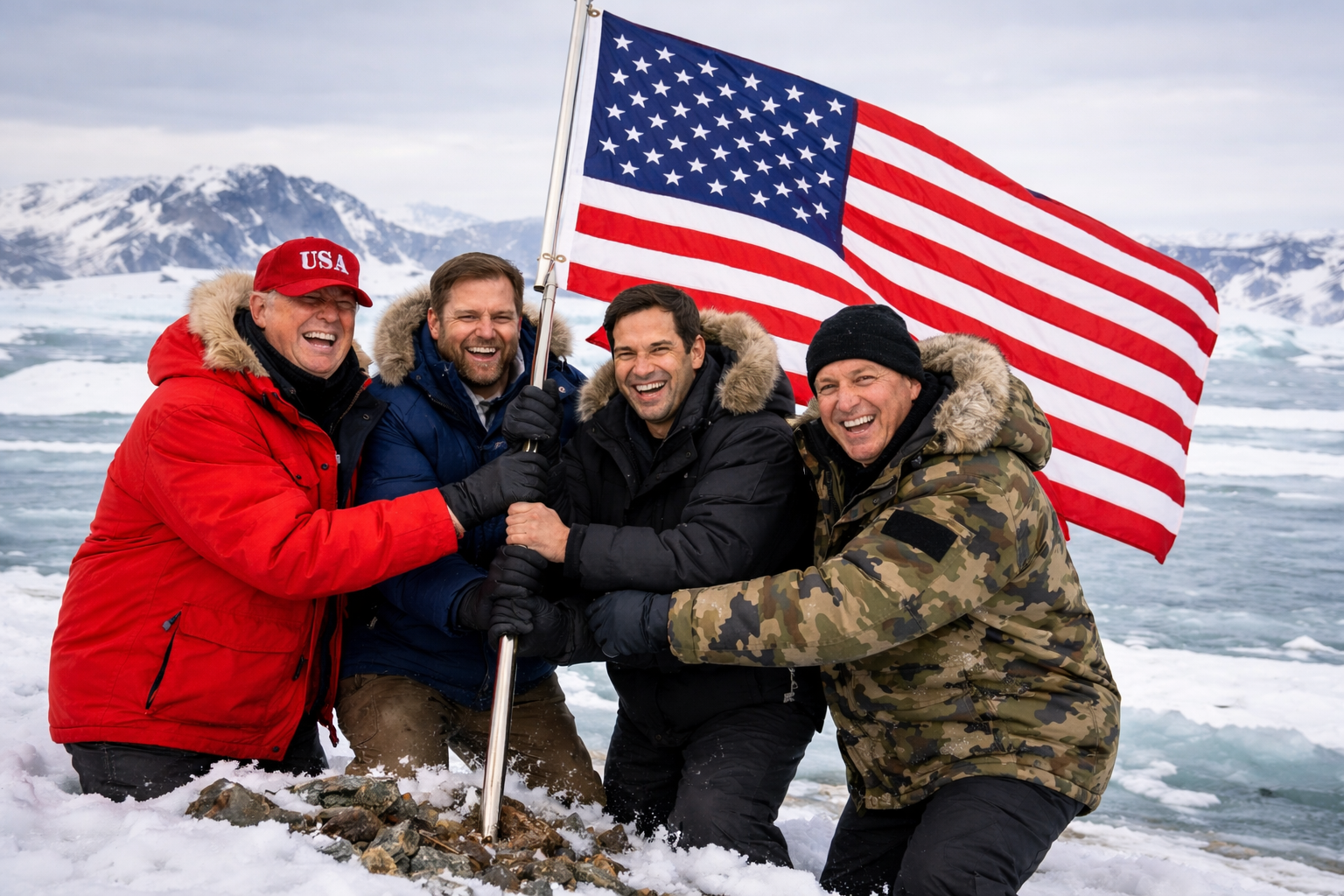
In the high-stakes theater of Davos, President Donald Trump did not arrive to play by the old rules. On January 21, 2026, after a substantive meeting with NATO Secretary General Mark Rutte, he posted on Truth Social:
“We have formed the framework of a future deal with respect to Greenland and, in fact, the entire Arctic Region. This solution, if consummated, will be a great one for the United States of America, and all NATO Nations.”
He immediately canceled the February 1 tariffs that had been set to hit eight European countries-Denmark, Norway, Sweden, France, Germany, the United Kingdom, the Netherlands, and Finland. The framework, described as “infinite” or long-term, encompasses U.S. involvement in mineral rights, small strategic land pockets, integration of the “Golden Dome” missile defense system, infrastructure opportunities, and explicit measures to block Russian and Chinese influence across the entire Arctic theater.
Markets responded with a roughly 1.5% rally. European leaders signaled relief and willingness to engage further. This was not a climbdown. It was the disciplined payoff of sustained leverage: enhanced strategic positioning-rare earth access critical for defense and technology, denial of adversary footholds in the High North, and a fortified NATO posture-achieved without alliance rupture or military escalation.
The result tracks word-for-word with the predictive analysis I published on here jameskay.online in the preceding days: “Trump’s Greenland Gambit” (January 18), “An Offer They Won’t Refuse” (January 20), and “The Post-War Era is Done” (January 20). Tariffs were never the destination; they were calibrated pressure to compel a face-saving resolution-likely a Compact of Free Association–style model or significantly enhanced lease arrangement-securing indefinite U.S. basing rights, resource priority, and Arctic primacy while keeping the transatlantic alliance intact.
The commentariat, however, responded with characteristic tunnel vision. Mainstream outlets framed the announcement as a “head-spinning twist,” a “walking back” of threats, or a vague retreat from bolder initial positions. On the right, some black-pilled skeptics and Panicans dismissed it as overhyped status quo-“concept of a deal” sarcasm-or outright surrender, fixating on the absence of immediate full ownership while ignoring the indefinite strategic breadth now locked in.
A vivid example of detached analysis surfaced briefly with a Deutsche Bank forex strategist’s note suggesting Europe could counter U.S. pressure by dumping $8 trillion in American bonds and equities. The Financial Times and others amplified the threat into panic fodder. Treasury Secretary Scott Bessent shredded it at Davos: the idea came from “a single analyst,” the bank’s CEO personally called to disavow it, Danish exposure was negligible (under $100 million), and the whole notion was irrelevant. Bessent’s verdict-“Denmark is irrelevant,” “not concerned at all,” “sit down and listen”-exposed the one-sided nature of the power dynamic.
Even ZeroHedge, with its signature contrarian edge, posted an “oops” caption and delighted in the analyst’s embarrassment and Bessent’s takedown.
oops https://t.co/dFNI7iR8i9 pic.twitter.com/JUXj7C3AUc
— zerohedge (@zerohedge) January 21, 2026
Realpolitik does not run on paper leverage that harms the wielder more than the target. It runs on structural asymmetries: America funds roughly 70 percent of NATO, absorbs over $900 billion in annual EU exports, and holds decisive strategic cards in the Arctic-securing the GIUK Gap, controlling rare earth supply chains, and denying rivals access to a rapidly opening frontier.
Trump ran the sequence directly from The Art of the Deal:
- Open extreme and think big: Demands for “complete and total” purchase, public rhetoric that left force on the table, and escalating tariffs (10% February 1, rising to 25% in June) generated maximum pressure and revealed vulnerabilities.
- Apply leverage asymmetrically: The threat spotlighted Europe’s NATO free-riding, trade dependence, and Arctic exposure, compelling movement without fracture.
- Pivot to mutual benefit: Rutte’s rapport-building-reaffirming Article 5 commitments and praising Trump’s leadership-created the off-ramp. Trump publicly ruled out military force, dropped the tariffs, and positioned the framework as a shared NATO security win.
- Preserve maximum options and lock in core gains: Deliberate vagueness keeps every path open while cementing indefinite U.S. involvement across the entire Arctic-mineral rights, basing enhancements, “Golden Dome” integration, and adversary denial.
Crucially, American sovereignty is not off the table. Trump reiterated in Davos that the United States requires “legal title” or ownership to adequately defend Greenland and the broader Arctic, dismissing leases or licenses as inadequate for national security. Ongoing negotiations-led by Vice President JD Vance, Secretary of State Marco Rubio, and Special Envoy Steve Witkoff-explicitly include models that could deliver U.S. sovereignty over limited strategic enclaves, potentially patterned on Britain’s sovereign base areas in Cyprus. Denmark and Greenland continue to insist the island is not for sale and sovereignty remains intact, but the framework deliberately leaves sovereignty in play as part of the “future deal.”
Pragmatic European voices reinforced the sensible course. Italian Prime Minister Giorgia Meloni-whose clarity and directness I greatly admire-eviscerated calls to distance from the United States with signature sarcasm: alternatives such as exiting NATO, closing American bases, breaking trade relations, or “storming McDonald’s” were laughable. She insisted Europe must strengthen “this area which is ours area of belonging”-the transatlantic alliance. Slovakia’s Robert Fico similarly commended Trump’s focus on nation-state interests.
The pro-Trump response was exuberant. Beege Welborn’s HotAir column, “Trump and Company Hitting Davos Like a Wrecking Ball,” captured the moment perfectly: Trump’s team crashed the elite gathering like “backup fraternity members in Revenge of the Nerds,” ending the globalist “holiday from history.” She spotlighted the “infinite” Arctic framework as a major U.S./NATO victory, skewered the diminished woke dreamers, and praised Bessent’s “master class” on European defense underspending and Howard Lutnick’s “controlled detonation” against failed globalism (“Net ZERO makes you SUBSERVIENT TO CHINA”).
🚨 IT'S OFFICIAL: President Trump has STUNNED the world by reaching a deal framework on Greenland
ART OF THE DEAL MASTER.
Nobody else like 47! 🇺🇸🇬🇱pic.twitter.com/LS1EAvlfw5
— Eric Daugherty (@EricLDaugh) January 21, 2026
Eric Daugherty declared it “ART OF THE DEAL MASTER,” stating Trump secured “everything we wanted.” The consensus among supporters was clear: this is negotiation executed at the highest level-extreme opening bids force concessions, strategic ambiguity preserves flexibility, and overwhelming dominance renders empty counter-threats irrelevant.
The skeptics who persist in dragging their noses through dismissal will keep at it. When more concrete details surface-enhanced basing rights, mineral access priorities, “Golden Dome” integration, perhaps even sovereign U.S. pockets in key locations-the goalposts will simply move again to “but it’s not the whole island!” The playbook, however, has already prevailed.
People really need to read *The Art of the Deal*. Those who skip it will continue to miss why extreme positions, calibrated pressure, and preserved options reliably produce results. America First statecraft is not chaos; it is calculated, effective dominance.
Receipts are stacking. 🇺🇸
