
The Base Revolts Against the Johns
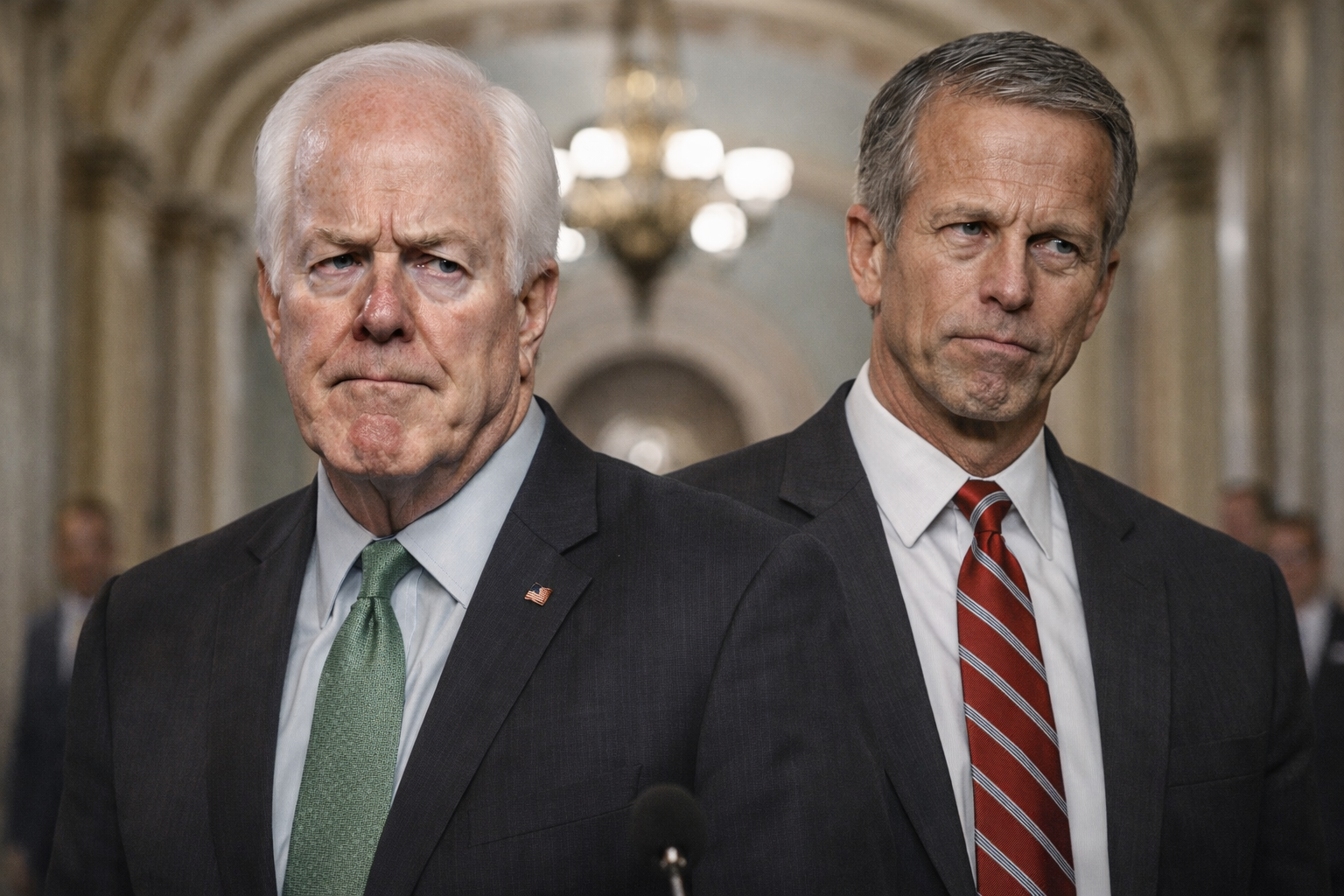
Roughly 60% of Republican primary voters in Texas just told Sen. John Cornyn exactly what they think of him: NOT CORNYN. On March 3, with over 2.16 million GOP ballots cast—a record turnout that crushed historical averages—Cornyn scraped together 41.9% (907,325 votes). Ken Paxton pulled 40.7% (881,192 votes), and Rep. Wesley Hunt took 13.5% (292,682 votes). No one hit 50%, so we’re headed to a May 26 runoff, the day after Memorial Day. But make no mistake: that near-tie wasn’t a fluke. It was a warning shot heard far beyond Texas borders.
The base isn’t just annoyed; it’s flaming pissed. And the anger isn’t aimed at one man—it’s directed at the two most prominent “Johns” steering the Republican Senate ship right now: John Cornyn, the four-term incumbent fighting for his political life in Texas, and John Thune, the Majority Leader in Washington who seems determined to manage the mandate rather than deliver it. One is flailing to survive a primary challenge that’s gone national. The other is gatekeeping like the filibuster and Senate norms are more sacred than the voters’ clear demands on election integrity, border security, and getting Trump’s team in place. Both represent the same tired establishment caution at the moment when Republicans finally have the power—and the mandate—to act.
The unifying thread? A refusal to treat the base’s rage as anything more than an inconvenience to be spun, scheduled around, or politely ignored. The voters handed us the keys. The Johns are still debating whether to turn them.
John Cornyn: The Flailing Incumbent
Look no further than Cornyn’s own behavior for proof he’s in trouble. Would a comfortably ahead incumbent publish a New York Post op-ed on March 11, 2026—just eight days after squeaking through a three-way primary—suddenly signaling openness to changing Senate rules on the filibuster? Hell no.
For years, Cornyn defended the filibuster as essential. He called scrapping it a “wrecking ball” to the institution and warned it would hurt Texas long-term. Yet in this piece, titled “Why the SAVE Act matters more than the filibuster,” he writes: “After careful consideration, I support whatever changes to Senate rules that may prove necessary” to pass the SAVE America Act (requiring proof of citizenship and voter ID for federal elections—Trump’s stated #1 priority) and homeland security funding. He floats a “talking filibuster” as one option to force Democrats to defend their obstruction on the floor.
The timing screams desperation. Pre-primary polls often showed Paxton ahead or tied. Massive establishment spending (over $70 million for Cornyn allies versus far less for Paxton) couldn’t prevent a runoff. Paxton’s near-miss despite the money gap proved the grassroots energy is real and anti-establishment. Now, with Trump’s endorsement still pending (he said the non-endorsed should drop out), and Paxton offering to potentially step aside if leadership actually passes SAVE via filibuster reform, Cornyn is scrambling to reclaim MAGA cred.
This isn’t evolution; it’s damage control. Cornyn frames it as pragmatic adaptation—”when the reality on the ground changes, leaders must take stock and adapt”—but the base sees a pivot born of fear. In a runoff, turnout drops sharply (often 30-50% of primary levels), and the electorate skews toward the most ideological, fired-up voters. Those are Paxton’s people: the ones who view Cornyn as the embodiment of “RINO” caution. By late May, post-Memorial Day, the only voters still showing up will be the ones channeling that “flaming pissed” energy. Cornyn’s op-ed may buy him a headline, but it won’t buy him the base’s trust.
John Thune: The Institutional Gatekeeper
Meanwhile, up in Washington, Majority Leader John Thune is fueling the same fire with a different tactic: institutional preservation at all costs. Since August 2025, the Senate has held pro forma sessions—brief, symbolic gavel-ins with no real business—during recesses and lighter periods to prevent President Trump from making recess appointments. Not a single one has gone through since the practice locked in.
Recess appointments are a constitutional tool presidents of both parties have used to fill vacancies temporarily when the Senate is out for more than about 10 days (per Supreme Court precedent). Thune’s pro forma routine keeps the Senate technically “in session,” blocking that workaround. He floated the idea early on as “on the table” to counter Democratic delays on hundreds of nominees, but internal resistance from moderates and institutionalists killed full adjournments. The result? Trump’s administration stays understaffed on key roles tied to the mandate—draining the swamp, securing the border—while Thune prioritizes Senate “advise and consent” norms that could protect Republicans when Democrats regain the majority someday.
Add to that the SAVE America Act standoff. Thune schedules doomed procedural votes needing 60 votes instead of forcing a talking filibuster (already in the rules) that would expose Democrats publicly and pressure holdouts. He dismisses base anger as “paid campaigns by influencers” or “just math.” David Marcus’s Fox News piece captured it perfectly: Thune has “no idea how mad the GOP base is at him,” treating legitimate voter fury like something to brush off while the Senate plays Waiting for Godot—talking about action but never moving.
The deeper betrayal? Thune’s caution protects future Democratic majorities more than it delivers for today’s voters. The base sees it as feckless leadership squandering leverage on nominees, election security, and results.
Conclusion
The two Johns are different men but the same problem: an establishment mindset that views the voters’ mandate as something to manage, negotiate, or slow-walk rather than execute with urgency. Cornyn flails in Texas to survive a base that’s already rejected him once. Thune gatekeeps in Washington to preserve norms over progress. Together, they embody the caution the base is done tolerating.
Paxton’s surge isn’t just a Texas story—it’s national because it channels the frustration millions feel: we won the elections, gave you the majority, and you’re still making excuses. By May 26, when the runoff hits after Memorial Day weekend, turnout will favor the side with fire. That’s Paxton’s voters—the hardcore activists who show up when others stay home. If the Johns keep treating that anger as an inconvenience instead of a mandate, the reckoning won’t end with one Senate seat. It will spread.
The base is flaming pissed for a reason. It’s time the Johns listened—or got out of the way.
