
Moral Clarity, Historical Truth, and the Longest Hatred
Sam Harris’s essay “Why It’s Futile to Debate Israel’s Enemies” lands with unusual force. I live less than two miles from major mosques and witness daily the rapid demographic, linguistic, and cultural transformations reshaping neighborhoods, parks, schools, and playgrounds. As a father, a conservative commentator, and someone who has spent decades in security and risk analysis, I recognize the patterns Harris exposes. Consequently, the ancient hatred many believed the Holocaust had consigned to history books now walks openly in streets, on campuses, and even in statements from elected officials. Harris, the prominent atheist thinker who built his reputation on reason, evidence, and moral clarity, refuses to indulge bad-faith actors obsessed with Israel as the unique villain. He inspired this column, and I give him full and enthusiastic credit. I strongly recommend you read the entire original piece for yourself.
Harris’s Moral Asymmetry: The Clarifying Question
Harris does not whitewash Israeli society. For instance, he criticizes Prime Minister Benjamin Netanyahu’s political alliances with the far right, condemns settler violence in the West Bank, and mourns civilian deaths in wartime operations. These points matter; however, Harris refuses to let them obscure a much larger truth. Moreover, the ethical gulf between Israel and her enemies remains vast. In addition, the global fixation on the Jewish state, often to the exclusion of far worse atrocities committed by others, reveals something contemptible and perennial.
“There is only one nation on Earth that must continually argue for its right to exist, even when the very survival of its people is threatened by avowedly genocidal enemies.
…
First, my general attitude: I’m not interested in exploring all the ways that Israel has missed the mark—from Prime Minister Benjamin Netanyahu’s corrupt alliance with the far right, to the many crimes committed by settlers in the West Bank, to the deaths of innocent noncombatants in several wars—because none of these failings, however grave, will alter my sense that (1) the ethical difference between Israel and her enemies remains vast, and (2) the global preoccupation with the Jewish state, as though it were the worst villain among nations, is contemptible, being the product of perennial lies and delusions.”
Harris drives home the central diagnostic question that cuts through propaganda, historical whataboutism, and selective outrage.
“If you want to understand my view of this conflict, simply ask the one question that clarifies everything in the present: What would each side do if it had the power to do whatever it wanted?
Though many pretend otherwise, everyone knows the answer to this question to a moral certainty. If Hamas had the power, it would perpetrate a real genocide in Israel. The group has affirmed its commitment to this project on countless occasions, both before and after October 7th. …
If the Palestinians laid down their arms, there would be peace. There could be a two-state solution; there could even be a one-state solution; it wouldn’t matter. If the Palestinians simply stopped killing Jews and stopped building a culture that celebrates pointless murder and martyrdom as its highest values, there could be a diverse, tolerant, and prosperous society between the Jordan River and the Mediterranean Sea. There could have been one eighty years ago.
But if the Israelis laid down their weapons, there would be a genocide. This was obviously true on October 7th, 2023. And for anyone who has been paying attention, it has been true on every other day since the founding of the state of Israel.”
As a result, this asymmetry explains the murderous hatred that fuels rejectionism and the repeated pattern of destabilization. For example, Arab host states have learned painful lessons through direct experience. Jordan crushed the PLO’s attempt at a state-within-a-state during Black September in 1970-71, expelling fighters after assassinations and coup threats. Similarly, Lebanon suffered a brutal civil war after the PLO relocated there and turned refugee camps into armed bases. Kuwait expelled hundreds of thousands of Palestinians after Arafat backed Saddam Hussein’s invasion. Meanwhile, Egypt controlled Gaza after 1948 but never granted statehood. Gulf states offer temporary work but resist citizenship and demographic shifts. Overall, public rhetoric supports the cause; however, private policy prioritizes regime survival and internal stability. Thus, Harris forces readers to confront these realities rather than romanticize grievance.
Extending into History: The Ground Harris Wisely Sets Aside
Harris wisely steps back from exhaustive historical rehashing. In fact, he argues that competing narratives often trap people in an endless, unproductive loop that distracts from present intentions and behaviors. I respect that pragmatic boundary; nevertheless, I believe we must go deeper into the history to counter deliberate erasure, understand the resilience on one side, and explain why rejectionist ideologies persist. Consequently, the “Naked Archaeologist,” Simcha Jacobovici — Emmy-winning filmmaker, journalist, and son of Holocaust survivors — excels at exactly this work. His “Simcha’s Sessions” YouTube series delivers concise, high-energy historical primers that cut through slogans with etymology, archaeology, biblical literacy, and political context. These videos reward repeated viewing. I recommend you watch the full relevant episodes: “Expert Explains Palestine Facts YOU Need to Know!”, “Expert Explains Gaza History YOU Didn’t Know!”, “Palestinian Refugee Controversy”, and “Is Everything You Know About Palestine WRONG?”.
The Name “Palestine” as Roman Psychological Warfare
Jacobovici begins with the name itself. Specifically, the term “Palestine” originates with the ancient Philistines — Aegean Sea Peoples, likely from the Greece-Crete region, who arrived as colonizers and invaders around the 12th century BCE. They settled the coastal area and became biblical adversaries of the Israelites. For example, stories of Samson and Delilah in Gaza, or David facing Goliath, capture this conflict. These Philistines were not Arabs. As a result, they largely disappeared as a distinct people after Assyrian conquests. Centuries later, in the aftermath of the Bar Kokhba revolt (132–136 CE), Roman Emperor Hadrian crushed the final major Jewish bid for independence. Moreover, he deliberately renamed the province of Judea — the heartland of Jewish identity, history, and sovereignty — to Syria Palaestina. This act of imperial psychological warfare invoked the Jews’ ancient enemies to humiliate them and sever their connection to the land. Consequently, Judea became a Roman administrative label that subsequent empires inherited: Byzantine, Arab (after the 7th century conquest), Crusader, Mamluk, Ottoman, and finally British. No independent sovereign “Palestinian” kingdom, state, or polity appears in the Hebrew Bible, the Christian Gospels, or the Quran. In contrast, Jewish kingdoms — Israel, Judah, and the later Hasmonean restoration — exercised self-rule in the land for centuries as the indigenous political entities.
Gaza’s Layered History of External Control
Gaza’s story follows the same pattern of external control and layered history. In particular, this narrow coastal strip, roughly Rhode Island-sized but far smaller in area, sits astride the ancient Via Maris, the vital trade highway connecting Egypt to the empires of the north. Successive powers fought over it for four thousand years: Egyptians during the Bronze Age and Exodus era, Assyrians, Babylonians, Hasmonean Jewish kings who reasserted control, Romans, Byzantines, Arab forces arriving from Arabia more than two millennia after Jewish roots had taken hold, Crusaders, Ottomans, and the British Mandate. Additionally, Jewish communities maintained a continuous presence as merchants, artisans, and spice traders, even under Muslim dhimmi rules that allowed repair of existing synagogues but prohibited new construction. After Israel’s 1948 War of Independence, Egypt administered Gaza but established no Palestinian state and barred large-scale refugee resettlement elsewhere. Similarly, Israel’s 2005 unilateral disengagement handed Gaza to Palestinian control. Hamas seized power in 2007, diverted massive aid into tunnels and rockets, and pursued an Islamic caliphate rather than building a prosperous Mediterranean enclave. Nevertheless, population figures in Gaza grew substantially despite the conflicts, directly contradicting repeated “genocide” rhetoric. Jacobovici emphasizes that Gaza has always been a district in someone else’s empire or mandate — never a sovereign Arab nation.
The Engineered Refugee Perpetuity
The refugee framework reveals engineered perpetuity. For instance, Jacobovici contrasts the unique UNRWA mandate with the global UNHCR standard. UNHCR defines a refugee as someone who crossed an international border fleeing persecution; the status ends when people resettle and gain citizenship. It does not pass hereditarily. In sharp contrast, Palestinian “refugee” status under UNRWA, however, transmits through the male line indefinitely. Consequently, the roughly 700,000 original 1948 refugees have become millions today, including wealthy individuals living comfortably in the West. This system creates a permanent grievance industry with tens of thousands of employees and billions in funding. Thus, peace would put UNRWA out of business. Compare this to the 14 million refugees from India’s 1947 partition who resettled into new lives, or the roughly 850,000 Jews violently expelled from Arab countries after 1948 and successfully absorbed by tiny Israel. Arab refugees from Syria, Sudan, Yemen, and elsewhere follow normal paths. Only Palestinians inherit eternal victimhood as leverage. Furthermore, Arab states, having suffered the destabilizing effects of armed Palestinian factions, refuse full integration while using the issue rhetorically against Israel.
Dismantling the Modern Myths
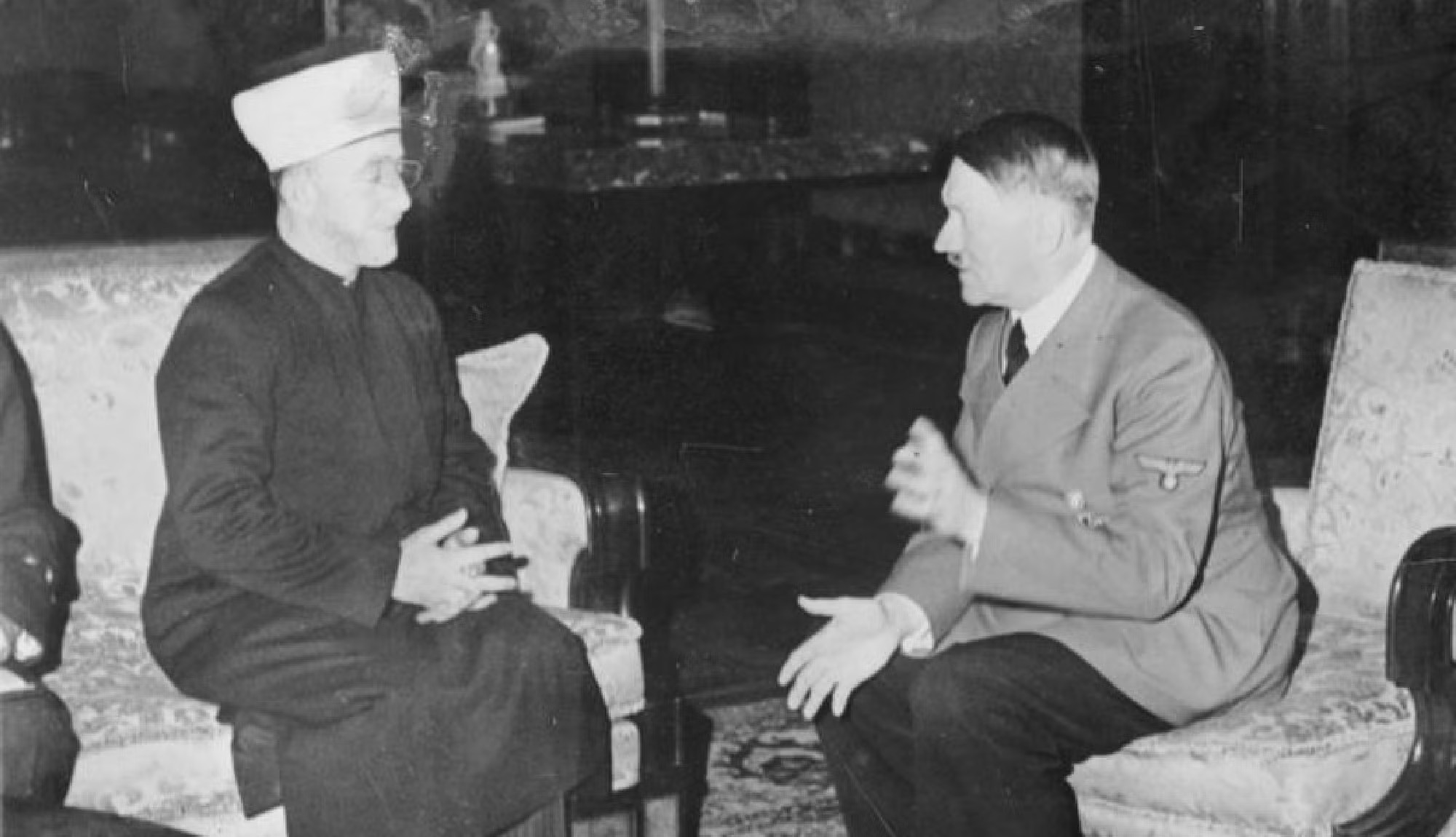
Jacobovici dismantles the dominant myths with equal force. For example, activists display selective outrage over Gaza casualties while tearing down posters of Israeli hostages and ignoring far larger Muslim-on-Muslim suffering. Claims that progressivism requires anti-Israel stances ignore Hamas’s honor killings, death penalty for homosexuality, and ideological fusion of radical Islam with Nazi antisemitism inherited from the wartime alliance between Haj Amin al-Husseini and Hitler. Additionally, accusations of Israel occupying “Palestinian land” conveniently forget that Britain allocated roughly 80% of the Mandate of Palestine to create Transjordan (today’s Jordan) and that Arab leaders rejected multiple viable statehood offers, including the 1947 UN partition and the 2000-2001 Camp David parameters. Racial framing collapses under scrutiny: Israel ranks among the world’s most diverse societies, with Jews from Europe, Ethiopia, Yemen, India, and beyond living together without civil war. Arab societies historically dominated the slave trade, and the Arabic language retains terms linking “Black” with historical servitude. Ultimately, Jews represent the indigenous people with deep genetic, archaeological, and historical continuity in Judea and Israel. Arabs arrived later via conquest. Some Palestinian families carry distant Jewish ancestry from periods of forced conversion.
Pragmatism in Action: Abraham Accords and Trump’s Phased Plan
This rich historical excavation reveals the patterns that sustain the murderous hatred Harris diagnoses. As a result, repeated attempts at disconnection and erasure meet Jewish resilience — one of the longest national liberation movements in human history. Moreover, the same dynamics explain why pragmatic Arab leaders embraced the Abraham Accords starting in 2020. Those agreements marked a historic breakthrough by removing the Palestinians from the decision-making loop. Consequently, the UAE, Bahrain, Morocco, Sudan, and subsequent partners prioritized concrete interests: security cooperation against Iran, technological and agricultural innovation, trade, tourism, and economic modernization. They refused to let maximalist rejectionism veto broader regional progress.
In October 2025 I wrote “The Triumph of Trump’s Moral Compass”, celebrating the early successes of Trump’s 20-point Comprehensive Plan to End the Gaza Conflict. Phase 1 delivered the release of remaining living hostages and remains, partial withdrawals, and a fragile ceasefire. The Board of Peace, backed by UN Security Council Resolution 2803, began coordinating reconstruction and transitional governance. Phase 2, now underway in mid-2026, focuses on Hamas disarmament, further Israeli withdrawals, and the establishment of a technocratic National Committee for the Administration of Gaza. Progress remains uneven. For example, Hamas resists full decommissioning of its military capabilities. Sporadic violence and governance disputes slow reconstruction funding and implementation. Yet the framework endures because it rejects the old linkage doctrine that gave rejectionists a perpetual veto. In summary, it builds on the Abraham Accords model: security and pragmatism first, incentives aligned toward life and stability rather than martyrdom and grievance.
Lessons for America
These Middle East realities carry direct lessons for America and for communities like mine. In particular, I observe cultural and linguistic changes accelerating around us. Successful melting pots require genuine assimilation — a willingness to embrace core values of life, liberty, reason, and integration rather than importing or tolerating supremacist, eliminationist, or perpetual-victim ideologies. We cannot afford selective blindness. Additionally, as a father I teach my son to “follow the money” and examine incentives in every system. The same discipline applies globally: hereditary refugee status, rejection of repeated peace offers, glorification of October 7 atrocities, and diversion of aid into tunnels serve power, hatred, and control, not peace or human flourishing.
Antisemitism never truly disappeared. Instead, it mutated across centuries — from ancient pagan resentment, to religious accusations, to racial pseudoscience, to today’s political and cultural mutations that single out the Jewish state. Harris and Jacobovici together provide powerful tools to confront it. Specifically, Harris supplies the moral asymmetry that clarifies intentions and outcomes. Jacobovici restores the historical grounding that counters erasure and denial. Together they expose why false equivalence fails and why pragmatic realism offers the best path forward.
Carry the Moral Compass Forward
Israel persists and thrives as a vibrant, diverse democracy surrounded by enemies who openly declare their intent to destroy it. Meanwhile, the Abraham Accords continue to expand quietly despite headwinds. Therefore, America must champion the same moral clarity in its foreign policy and domestic culture. We defend open societies that value life, evidence, integration, and human potential. We reject narratives that celebrate death or demand exceptional perpetual status. Above all, we protect the innocence of our children by teaching honest history rather than fashionable myths. Finally, we mentor the next generation to recognize asymmetries that cannot be wished away — they must be faced with courage and clear eyes.
Read Sam Harris’s full essay. Watch Simcha Jacobovici’s sessions. Engage the evidence. Then carry forward the moral compass that distinguishes life-affirming societies from those that glorify martyrdom and erasure. Ultimately, the longest hatred tests every generation. Moral clarity and historical truth still point the way through.
