
Steeling Our Patriotic Reserve on America’s 250th
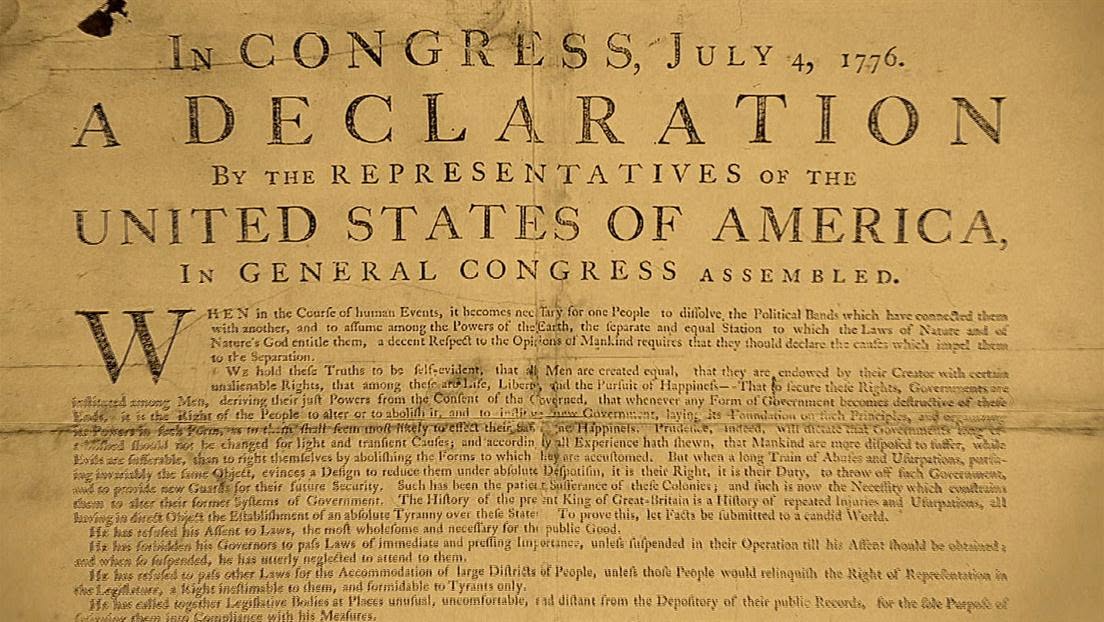
As we mark the 250th anniversary of our Declaration of Independence, Ronald Reagan’s words from more than six decades ago echo with fresh urgency: “Freedom is never more than one generation away from extinction. We didn’t pass it on to our children in the bloodstream. It must be fought for, protected, and handed on for them to do the same, or one day we will spend our sunset years telling our children and our children’s children what it was once like in the United States when men were free.”
This wasn’t mere rhetoric from the Great Communicator. It was a solemn warning rooted in the hard lessons of history and the clear-eyed wisdom of our Founders. Reagan understood, as did Washington, Jefferson, Lincoln, and the patriots who pledged their lives, fortunes, and sacred honor, that liberty is no automatic inheritance. It is a fragile trust: cultivated in the soil of faith, self-reliance, ordered liberty, and a people committed to transmitting it intact.
Tonight, as fireworks light the Texas sky and families gather in backyards across Plano and Collin County, we stand at another “time for choosing.” The revenant spirit of communism—defeated in the last century at such great cost—has stirred once more, cloaked in new rhetoric but carrying the same old poison. Democratic Socialists of America radicals, gaining ground in party primaries and leadership, push ideas the Founders rejected outright. We must teach the rising generation the true story of American exceptionalism and steel our patriotic reserve to defeat it again.
The Miracle of 1776: A Nation Conceived in Liberty
Let us begin where every American story should—at the beginning. On July 4, 1776, in a hall in Philadelphia, fifty-six men signed a document that shook the world. “We hold these truths to be self-evident,” they declared, “that all men are created equal, that they are endowed by their Creator with certain unalienable Rights, that among these are Life, Liberty and the pursuit of Happiness.”
These were not empty words from Enlightenment philosophers in powdered wigs. They were a radical claim rooted in the Judeo-Christian understanding of human dignity: every soul bearing the image of God, accountable first to the Almighty, not to any king or collective. Sam Houston would later channel this spirit in Texas, reminding us that liberty is not license but a moral covenant. The American Revolution was no mere tax revolt. It was a defense of God-given rights against the divine-right tyranny of empires.
George Washington, in his Farewell Address, warned against the “spirit of party” that could fracture this union and the foreign entanglements that might dilute our sovereignty. Thomas Jefferson spoke of “a more perfect union,” acknowledging imperfection while committing to reform through ordered liberty, not violent upheaval. Abraham Lincoln, at Gettysburg, rededicated the nation to “government of the people, by the people, for the people”—not by vanguard elites claiming to speak for the proletariat.
This was the American character: builders and dreamers, men and women of faith who crossed oceans, tamed frontiers, and invented the modern world not through envy or central planning, but through individual initiative blessed by Providence. From the cotton fields my great-grandmother knew in the early 20th century to the engineering labs at UTA where my own career began, America rewarded those willing to work, dream, and pass on what they built.
The American Century: Defeating Totalitarianism
That character carried us through the bloodiest trials in human history. We defeated fascism in World War II not with collectivist decrees but with the ingenuity of free men—Rosie the Riveter on the factory floor, the Greatest Generation storming Normandy. Then came the Cold War. Ronald Reagan stood at the Berlin Wall and demanded, “Mr. Gorbachev, tear down this wall!” He called the Soviet empire what it was: evil. Communism’s body count—100 million dead in the last century alone through starvation, gulags, and purges—proved him right. It was the enemy of faith, family, and freedom. It reduced man to economic fodder in the “ant heap of totalitarianism,” as he warned.
We won that struggle through moral clarity, military strength, and economic vitality—not by adopting the enemy’s methods. Yet today, that defeated ideology returns like a revenant, wearing the mask of “democratic socialism.” Look at the Democratic Socialists of America’s National Political Committee, where self-identified Marxists and communists hold sway. Their platforms call for restructuring our constitutional order, subordinating checks and balances, and expanding state control over economy and culture. Figures like Zohran Mamdani frame America’s 250th as an occasion for grievance—attacking “oligarchs” while ignoring how builders like Elon Musk create the very prosperity that funds opportunity.
This is not progress. It is regression. As Governor Ron DeSantis rightly noted, these are the very ideas the Founders rejected. Bishop Robert Barron reminds us why they fear religion: Faith asserts a higher moral law that limits the totalizing state. In my own life, raising my children amid Plano’s rapid changes, reflecting on the loss of our daughter Poppy and the sanctity of every life, I see the stakes. When adult freedom crowds out childhood innocence or when assimilation gives way to parallel societies, we weaken the cultural glue that holds the melting pot together.
The Revenant Threat: Why Communism Returns
Karl Marx called religion the “opium of the masses,” a critique that demands faith’s demolition before remaking society. Lenin’s vanguard party and democratic centralism, internal debate behind closed doors, absolute unity in public action, prioritize discipline over dissent. We see echoes in DSA caucuses pushing entryism and repealing safeguards against it. History shows where this leads: One-party dominance, suppression of rights, economic misery.
In our time, it manifests as open skepticism of borders without assimilation, merit-based systems, and constitutional limits. “Follow the money,” as Rush Limbaugh taught us: Who benefits from policies that erode self-reliance and expand dependency? Not working families in Plano watching parks and schools transform, but the ideological architects who never built anything themselves.
Reagan warned we could one day tell our grandchildren what freedom was like. In neighborhoods near EPIC and Noori Masjids, or in debates over election integrity and SAVE Act protections, we see the slow erosion. But this need not be our fate.
Steel Our Patriotic Reserve: A Call for This Generation
On America’s 250th, we choose again. Teach the rising generation the full story: not sanitized grievance, but the triumph of liberty against odds. Read the Declaration aloud at family gatherings. Share Lincoln’s Second Inaugural: “With malice toward none, with charity for all.” Recall Reagan at Moscow State University: “Freedom is the right to question and change the established way of doing things.”
In practical terms:
- In our homes and churches: Model the “acquire, experience, teach” cycle. Instill pride in Texas history, the Alamo spirit, and Judeo-Christian roots.
- At the ballot box: Support leaders who reject radicalism—whether moderates finding their footing or bold voices drawing clear lines. Midterms are a rendezvous with destiny.
- In culture and community: Counter division with the melting pot ideal. Defend ordered liberty, fatherhood, and the sanctity of life as bulwarks against totalism.
- Personally: As a father who counted blessings even in loss, I know every life matters. Protect innocence. Build, don’t tear down.
We are heirs to Washington crossing the Delaware, Lincoln preserving the Union, and Reagan facing down the evil empire. This is our county, our hometown too. The Golden Age Reagan envisioned—and Trump invoked—is within reach if we steel our reserve.
Let us resolve, as Lincoln did, for a “new birth of freedom.” Tell our children and grandchildren what it means to be American: Not perfect, but exceptional. Worth fighting for. Worth handing on.
Update… Spencer Pratt delivers an epic Independence Day message. LFG! 🇺🇸
God Bless America pic.twitter.com/RNwbNIGhCs
— Spencer Pratt (@spencerpratt) July 4, 2026
