
A Tale of Polls, Hype, and a Solid GOP Win
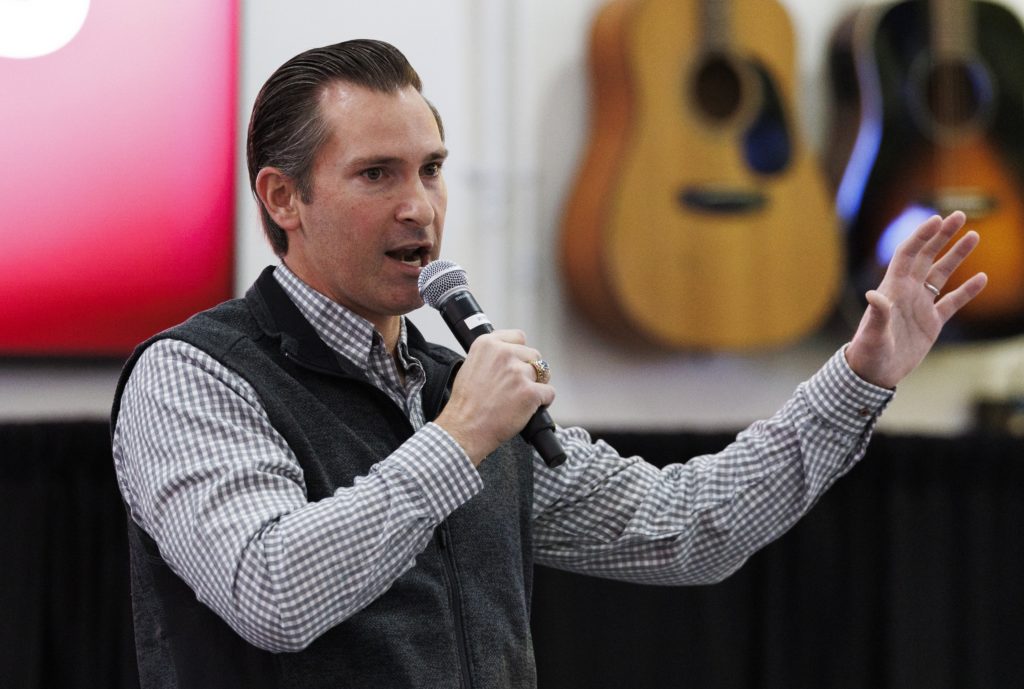
The dust has settled on Tennessee’s 7th Congressional District special election, held on December 2, 2025, to replace Rep. Mark Green, who resigned earlier this year. The result-Republican Matt Van Epps defeating Democrat Aftyn Behn by a solid 8.9-point margin-stands in stark contrast to the pre-election buzz that painted this race as a potential nail-biter or even a Democratic upset. Polls suggested a razor-thin contest, while media outlets hyped Behn’s progressive candidacy as a midterm bellwether. Yet, the numbers tell a different story: a decisive GOP hold in a Trump +22 district, exposing the overreach of polling models and the spin of partisan narratives. Let’s unpack this discrepancy and what it means for the political landscape ahead.
The Pre-Election Build-Up: Polls and Promises
Leading up to Election Day, polls fueled optimism for Behn, a state lawmaker known for her progressive stances, including past “defund the police” remarks. The Emerson College/The Hill survey (November 22–24, 2025, 600 likely voters, ±3.9% margin of error) gave Van Epps a mere 48% to Behn’s 46%, with 5% undecided and 2% for others. Internal Democratic polls, like Impact Research’s 52% to 44% and Workbench Strategy’s 51% to 41%, reinforced the narrative of a winnable race despite the district’s R+10 partisan lean. Ratings from Cook Political Report (“Likely R”) and Inside Elections (“Lean R”) further amplified this, suggesting Democrats could capitalize on national momentum from 2024’s post-election gains.
These projections hinged on turnout models that underestimated Republican strength, particularly among Trump supporters. As David Strom noted in HotAir, pollsters like Emerson assumed fewer Trump voters would turn out, basing estimates on early voting and registration data-a miscalculation echoed in 2024’s polling errors. This led to a skewed sample, overrepresenting Democratic-leaning respondents and setting the stage for hype that a progressive like Behn could flip a deep-red seat.
Media Hype: A Progressive Dream or Democratic Delusion?
The media ran with this narrative, casting Behn as a symbol of Democratic resurgence. CNN highlighted her fundraising haul and surrogates like Kamala Harris and Alexandria Ocasio-Cortez, framing the race as stirring “Democratic hopes and GOP concerns.” Newsweek profiled her as “hoping to prove the blue wave is real,” pointing to urban transplants in Nashville as a potential game-changer. NPR and others noted the post-Thanksgiving timing as a Democratic advantage, citing lower turnout’s historical bias toward the out-party.
The hype wasn’t baseless-Behn’s campaign, backed by $2.3 million in Democratic super PAC spending, focused on affordability (health care, housing costs), resonating in a district where economic concerns linger. High-profile endorsements and ads attacking Van Epps over the Epstein files added fuel. Yet, this coverage often ignored the district’s Republican bedrock, where Trump won by 22 points in 2024 and historical GOP margins hovered around 60%.
MSNBC leading off the noon hour with this latest Epstein nothing burger and burying the Tennessee special election in the very last block at 12:50 or thereabouts tells you all you need to know about how it went compared to what the media was hoping/expecting would happen.
— Varad Mehta (@varadmehta) December 3, 2025
Post-election, the spin persisted. Politico called Behn’s 45% “historic overperformance,” a “flashing warning sign” for Republicans, while NPR noted Democrats “celebrating” the result. Conservative voices on X, like @varadmehta, countered this, accusing MSNBC and CNN of “burying” the story-leading with Epstein and Hegseth distractions-suggesting media disappointment in the non-upset. RedState’s Rusty Weiss mocked Behn as a “nagging Karen,” dismissing the hype as overblown. This partisan divide underscores how media outlets, especially liberal-leaning ones, were primed to spin any result as a Democratic win, regardless of the margin.
The Reality: A GOP Victory That Outpaced Expectations
The actual outcome shattered the close-race narrative. Van Epps secured 96,988 votes (53.91%) to Behn’s 81,044 (45.05%), with 1,867 (1.04%) for independents/write-ins, totaling 179,899 votes-a far cry from the 2-point lead polls predicted. This 8.9-point margin outperformed the tightest surveys by nearly 7 points and averaged 5 points better than Democratic internals. Turnout, at ~180,000, exceeded pre-election estimates (~164,000), with stronger GOP mobilization in red counties (e.g., Williamson at 60.98%, Robertson at 71.07%) offsetting Behn’s urban gains.
Behn did overperform historical benchmarks-her 77.7% in Davidson (part) topped Harris’ 63% in 2024, and her 45.3% in Montgomery beat typical 35–40% Dem shares. In red counties, she hit 30.3% combined, up from 25–35% in past cycles. Yet, this wasn’t enough. Our pre-election math suggested she needed 24–27% in red counties to win with strong purple/blue performances (e.g., 92–95% in Davidson, 58–65% in Montgomery). She exceeded that threshold but fell short due to weaker-than-assumed shares in her strongholds, leaving her ~8,906 votes shy of a majority.
Mark Greene, a popular incumbent with an underfunded opponent won 60-38 in 2024.
Pres. Trump in a solid red state where Dems didn't spend money, won the District 60-38.
Marsha Blackburn won the district 60-38 in 2024 against an underfunded opponent — a State Legislator.… https://t.co/Xx812lJH6l
— Shipwreckedcrew (@shipwreckedcrew) December 3, 2025
The post-holiday timing (sandwiched between Thanksgiving and Christmas) depressed turnout-half of 2024’s 322,000-but didn’t deliver the Democratic surge hyped. Attorney Bill Shipley (@shipwreckedcrew)’s analysis nailed it: Behn’s gains were isolated to Davidson (+3,000 votes vs. 2022), with red areas holding firm. This validated conservative claims of a “handy” win, not the “razor-thin” race media anticipated.
The remainder of Shipley’s post provides more detail.
Tenn 07 is her old district which she consistently won with 70%.
So it has changed.
Yesterday Van Epps in a Special Election against an opponent that the Dems threw money behind because of the polling won 54-45.
Vote Totals in this District:
2016 — 277,000
2018 — 254,000
2020 — 350,000
2022 — 180,000
2024 — 322,000Special — 177,000
@MattBraynard has the best take on this — Dems primary voters riding the wave of progressive nutjobs like Mamdani nominate the craziest possible candidate among 3 State Legislators in the primary, throw all kinds of money at her after Virginia and New Jersey ….
The GOP has a fierce primary that produces a closely divided party in the district with the winner getting only 50%.
With all the attention and money the nutjob can absorb, they got a decent turnout for a Special and she loses by only 9%.
The Dems will pick other districts in 2026 because even with everything going their way they still lost handily.
The nutjob got 77% in the only county she won — Davidson (Nashville),
By comparison, Blackburn’s 2024 opponent got 63% in Davidson and Kamala Harris got 63% as well.
So the nutjob’s improved performance came also entirely in Davidson County.
In a similar turnout (180,000) in 2022, the Democrat against Mark Green won Davidson with 30,000 votes — 73%.
Yesterday the nutjob won Davidson with 33,000 votes — 77%.
Long and short — Dems turned out more voters in the only stronghold they have (Nashville), getting 3000 more votes out of it than the typical low-turnout mid-term of 2022.
They still lost by 16,000 votes.
Van Epps will now be a safe incumbent in 2026.
Dissecting the Discrepancy
The gap between polls, hype, and results stems from flawed assumptions. Polling models misjudged GOP base turnout, a point Strom’s HotAir piece hammered home, calling public polls “entertainment” reliant on “wild-assed guesses.” Media, eager for a narrative, amplified this, overhyping Behn’s progressive appeal and affordability messaging as a 2026 omen. Liberal spin post-loss (e.g., Politico’s “overperformance”) ignored structural factors like low turnout and the district’s R+10 lean, while conservative outlets like RedState called out the discrepancy to mock Democratic delusions.
The hype also reflected national stakes-$5.4 million in super PAC spending and endorsements from Trump to AOC underscored the race’s visibility. Yet, specials’ quirks (e.g., 50% turnout) limited its predictive power, a nuance lost in the frenzy.
What It Means for 2026
For Republicans, Van Epps’ win pads the House majority (220-213, pre-Greene’s January 2026 exit) and boosts incumbency prospects, likely restoring 60%+ margins in 2026 with higher turnout. But the 8.9% margin-down from 22% in 2024-signals vulnerability if base enthusiasm falters or demographics shift further, as Marcus warned about “Californication.” Robby Starbuck’s call for GOP action on promises (quoted by Shipley above) resonates here; inaction could cede ground.
Some will be mad at me for this but I say it out of love for our country… We won the TN special election by less than we should have.
If you’ve been to this area, you know it should have been a blowout. And this isn’t a knock on Matt Van Epps. He had lower name ID to begin with…
— Robby Starbuck (@robbystarbuck) December 3, 2025
He had lower name ID to begin with and did a good job pulling it out. A lesser candidate would have made it a real nail biter.
So why was it close? Many voters are apathetic and have very little enthusiasm on our side. Why? They think our majority in Congress is failing them due to weak leadership, bad priorities & inconsistent messaging.
Before I go further, I don’t say this to punch my own side for fun. I don’t do that. I say this because I want us to dominate for many years to come. Major time was wasted this year that should have been spent IN SESSION solving problems.
We need to right the ship or voters will sink our ship in 2026. Enthusiasm from 2024 is gone. The blind trust is gone. They want action. The people in Congress need to realize that they aren’t Trump and he isn’t there to carry them on the ballot in 2026. They need to deliver now. And even then we likely have to run ‘26 like a Presidential election with Trump going around the country.
I see it on the ground. Voters want to know when promises are going to be kept by Congress. They want a Congress that works as much as they do. They want the agenda they voted for in 2024 passed into law. They want the deep state held accountable. They want transparency. They want full focus on domestic issues instead of foreign issues. They want Congress to improve their lives. They want them to stop trading stocks. And they want to know what the hell Congress is actually doing for them. If our GOP majority doesn’t deliver, many of these people won’t vote, no matter how much they hate Democrats.
I’m hearing from people who I’d describe as the Trumpiest people I met from 2016-2024 who straight up won’t vote in 2026 unless Congress changes to a fighting spirit this year and stacks wins on the board. These people have lost faith and feel like everything is rigged by uniparty puppets for special interests.
Doesn’t matter what I tell these people. I can’t make most of them vote again. Neither can any other big social media account. Only ACTION from electeds will move them at this point to feel that the incumbents deserve their vote. This is exclusively a right wing problem. The left is enthusiastic just about hating us. That animates their base by itself.
And many of the good things that have happened in Congress this year aren’t even reaching the ears or eyeballs of average voters because the messaging is soft and inconsistent. Everyone needs a gut check and to tell the truth NOW to right the ship or they’re going to get a much larger gut check in November 2026 when we lose the House majority and go through another stupid impeachment hoax.
Voters feel like they’ve shown up time and time again for politicians but that politicians aren’t showing up for them by running on the same promises every election but then never delivering them. That goes for both sides but the left has enthusiasm simply from their base hating Trump. Our side needs to actually motivate our people to vote.
Congress needs a hard look in the mirror and to get to work on fixing this NOW. Our majority CAN fix this. Now the question of 2026 is this: Will they? I sure hope so because the alternative is dark. It’s time to get to work.
For Democrats, Behn’s campaign offers a blueprint-affordability focus and rural outreach-but her progressive profile capped appeal in swing areas like Montgomery (45.3%). To flip seats (e.g., TN-05, Trump +18), they’ll need broader turnout and moderate candidates. The spin, while strategic for morale, risks overconfidence if not backed by data-driven adjustments.
Conclusion
The TN-07 race exposed the pitfalls of polling and media hype in low-turnout specials. Behn’s overperformance was real but not transformative, and Van Epps’ win underscored the district’s red core. As 2026 looms, both parties will draw lessons-Republicans to rally their base, Democrats to refine their strategy. For now, the hype for a “blue wave” in Tennessee proves more mirage than reality, a cautionary tale for those betting on polls over votes.
