
Why Democrats Are in Deep Trouble
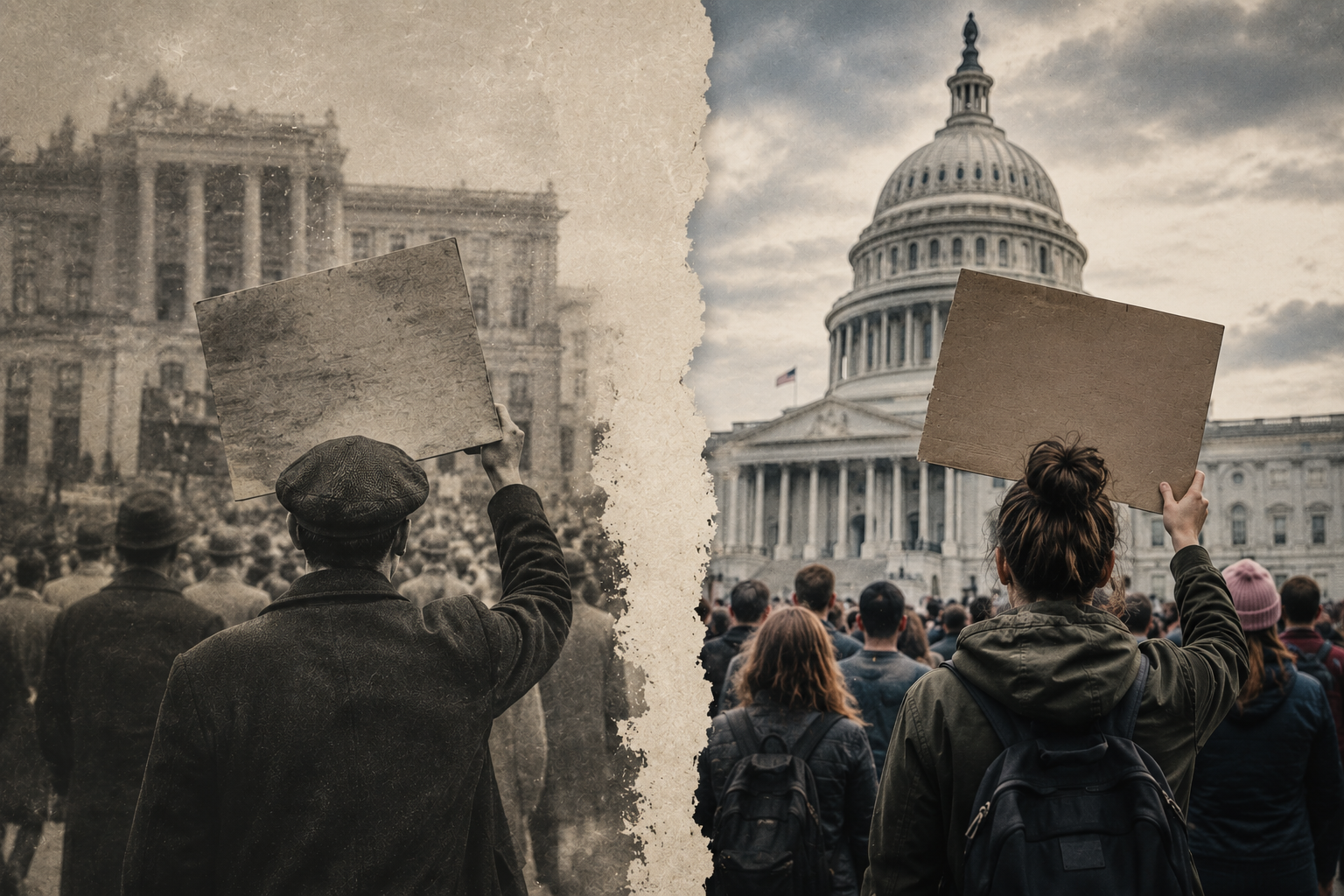
Five months out from the 2026 midterms, Andrew Cuomo delivered a blunt assessment that should send alarm bells ringing through the Democrat Party. He observed that he has never seen a time when his party had no agenda, no message, no coherent vision. This diagnosis is particularly devastating because it directly echoes one of the most instructive midterm cautionary tales in recent American political history: the 1998 Republican collapse under Newt Gingrich.
💥NEW: Stephen A. Smith & Andrew Cuomo *GO OFF* on Dem Party💥
SMITH: “They don’t wanna listen!”
CUOMO: “The hope is the other side, the other team, is going to screw up. Who goes into a game that way!?”
SMITH: “LOSERS!”
CUOMO: “I have NEVER seen a time where the Democratic… pic.twitter.com/HuCmSp8wIw
— Jason Cohen 🇺🇸 (@JasonJournoDC) June 2, 2026
History doesn’t repeat, but it rhymes. In 1998, Republicans became so fixated on the Clinton-Lewinsky scandal that they largely abandoned substantive policy messaging. They assumed that history, public fatigue with the president, and a steady drumbeat of hearings and revelations would naturally deliver victory at the ballot box. Instead, the president’s party gained seats in the House — a rare outcome in midterm elections. Voters, enjoying a strong economy and relative peace, tuned out the partisan spectacle and punished the opposition for offering drama rather than solutions.
Today’s Democrats risk an even harsher rhyme. They share the 1998 GOP’s messaging vacuum and tendency toward distraction, but they enter this cycle burdened by significantly worse candidates, heavier cultural baggage, self-inflicted institutional scandals, and new structural guardrails that tilt the playing field toward Republicans. The combination could make 2026 not just a difficult midterm, but a genuinely punishing one: potentially more damaging than what Republicans faced in 1998.
The 1998 Lesson: Scandal Over Substance
To understand the rhyme, it is worth revisiting 1998 in detail. Republicans entered that cycle controlling both chambers of Congress and believed they had a golden opportunity. Bill Clinton’s affair with Monica Lewinsky, his lies under oath, and the subsequent impeachment drama dominated coverage. GOP strategists calculated that moral outrage and scandal fatigue would drive their base and swing voters to the polls. They largely sidelined kitchen-table issues like taxes, education, and economic growth in favor of relentless focus on the president’s personal failings.
They were wrong. Voters prioritized a booming economy, falling crime rates in many cities, and competent governance over Washington scandal theater. Democrats gained five seats in the House. Gingrich stepped down as Speaker shortly afterward. The clear lesson from 1998 is that midterms function as referendums not only on the party in power but also on whether the opposition party presents a compelling, forward-looking alternative. When the opposition becomes consumed by the past or fails to connect with voters’ immediate concerns, it invites rejection at the ballot box.
Democrats in 2026 face a parallel temptation but with far weaker justification. Rather than one high-profile presidential scandal, they confront a series of self-created vulnerabilities across candidate quality, cultural positioning, and institutional credibility. Yet much of their energy remains devoted to relitigating old battles — from 2020 election disputes to inflammatory analogies on social issues — while their presumptive nominees create daily headaches.
Surface Similarities: A Party Adrift
The most immediate rhyme lies in the messaging void. As Cuomo correctly diagnosed, Democrats currently lack a coherent economic or governing agenda that breaks through to average voters. Attempts to pivot to pocketbook concerns are repeatedly undermined by tone-deaf distractions that reveal where the party’s true energy resides.
Consider Sara Jacobs pressing Marco Rubio with a “gotcha” question about 2020 during a hearing on foreign policy and wartime matters.
🚨 JUST IN: Marco Rubio TOYS with insufferable Rep. Jacobs (D) 🤣
JACOBS: Who won 2020?
RUBIO: I'm not answering about 2020, this is a FOREIGN AFFAIRS COMMITTEE
JACOBS: You can't admit the shoes Trump bought you are too big
RUBIO: The Florsheims he gave me fit fine 🤣… pic.twitter.com/upv4b0YQOC
— Eric Daugherty (@EricLDaugh) June 3, 2026
Or Tim Kaine equating opposition to child gender transitions with Jim Crow laws.
Democrat Senator Tim Kaine compares not supporting child mutilations to Jim Crow…
KAINE: "Attacking on trans people is sort of like the new version of kicking around who we used to kick around…" pic.twitter.com/D9THRQDrdH
— RNC Research (@RNCResearch) June 3, 2026
Meanwhile, New York Democrats recently advanced legislation replacing “mother” with “gestating parent” and “father” with “non-gestating parent” across family court, custody, and education statutes. These examples illustrate a party still deeply invested in they/them ideology and progressive cultural signaling at a moment when many voters crave competence on inflation, safety, and borders.
Like the 1998 Republicans, today’s Democrats appear more focused on settling old scores and appeasing their activist base than on crafting messages that resonate in the suburbs and exurbs. This “no agenda” problem is not abstract: it leaves them vulnerable when Republicans offer clear contrasts on crime, immigration, and fraud. The rhyme is evident: both parties entered their respective cycles strategically adrift, overconfident, and disconnected from broader voter priorities.
Critical Differences: Where the Rhyme Becomes a Rout
This is where 2026 diverges sharply from 1998, and the differences heavily favor Republicans.
Candidate Quality Catastrophe
Candidate quality is the single largest and most glaring differentiator. In 1998, Republicans mostly fielded conventional, if sometimes uninspiring, candidates. Democrats today are elevating individuals whose flaws appear not just problematic but electorally fatal in competitive environments.
In Maine, Graham Platner has become a textbook example of chaotic candidacy. His campaign has been plagued by personal scandals, including ties to a Kik profile on an app notorious as a “predator’s paradise.” He reportedly cucked his wife and then forced her to record a hostage-style video defending him after explicit messages surfaced. Reporters have confronted him with pointed questions such as “How old were the girls?” His repeated claim that Susan Collins “sent him to war” has been thoroughly debunked: he volunteered long after major combat operations had concluded. Additional reporting has uncovered his long-standing admiration for Nazi-allied Croatian forces and a tattoo with disturbing historical associations that he reportedly contemplated for decades. Platner’s entire operation radiates negative, undisciplined energy. Nothing about his campaign improves; each week seems to bring another brick in a death-by-a-thousand-cuts collapse. Susan Collins, by contrast, embodies the independent, steady, moderate, and reliable qualities that Maine voters have historically prized. In a state that values bipartisanship and competence, Platner’s accumulating baggage makes him a profound liability.
In Texas, James Talarico epitomizes inauthenticity. His policy record and church ties veer deeply into radical territory, including support for funding abortions and trans summer camps. He has uttered memorable cringe lines such as referring to women as “neighbors with a uterus.” His campaign achieved the dubious distinction of a meat reveal and a girlfriend reveal in the same week. A recent mailer boldly proclaimed that America’s biggest divide is not left versus right but “top vs. bottom,” language that alienates voters who have no desire to be categorized as “bottom.” Talarico’s attempts to cosplay as a quintessential Texan, complete with cowboy hat and pickup truck photos, come across as forced. As the old Texas saying goes, he appears to be “all hat, no cattle.” Ken Paxton, having been sharpened by a competitive primary, can run a disciplined, Texas-centric campaign while Talarico’s record and persona do much of the damage. Serious analysts see Talarico’s realistic ceiling hovering around 45-46 percent in a state that prizes cultural authenticity.
Further examples compound the problem. In New Jersey, Adam Hamawy brings associations tied to the Blind Sheikh and al-Qaeda links, including time spent at a Gaza hospital later exposed for Hamas infrastructure. In Michigan, Abdul El-Sayed promoted a 2012 “hoodies and hijabs” hate crime hoax connecting the murder of Shaima Alawadi to Trayvon Martin and systemic American Islamophobia — only for it to emerge that her husband had killed her. These are not the profiles of candidates ready for prime time. They provide Republicans with effortless nationalization opportunities on judgment, radicalism, and basic fitness for office.
Cultural Overreach
Democrats continue pushing “gestating parent” language in law while defending or soft-pedaling youth medical transitions. Detransitioner Chloe Cole’s testimony — describing how healthy children’s bodies were commodified and mutilated — carries moral weight that resonates with parents. In suburbs and exurbs across Pennsylvania, Virginia, Michigan, and New Hampshire, families reject this ideology as an assault on common sense and child protection. Kaine’s inflammatory Jim Crow comparison only underscores the party’s distance from mainstream parental instincts.
The American people have woken up from the obvious lie of transgenderism.
There is no excuse for the mutilation of young people. Members of Congress who still defend it should have to look parents in the eye and explain why their child’s healthy body is now a commodity. pic.twitter.com/dPgxnmGACe
— Chloe Cole ⭐️ (@ChloeCole) June 3, 2026
Institutional Scandals and Hypocrisy
Institutional scandals create a profound asymmetry. The Southern Poverty Law Center now faces a serious DOJ indictment alleging it paid extremists, including for cross-burning materials and neo-Nazi organizing, to inflate the very “hate” it used to solicit hundreds of millions in donations. This strikes at the core of “Racism Inc.” Multi-state Somali-linked Medicaid fraud schemes highlight massive waste in programs Democrats defend.
Adding to the damage is the House Ethics Committee’s investigation into Rep. Jimmy Gomez (D-CA) over allegations of sexual misconduct. The probe stems from reports detailing Gomez — a married congressman and father of a young child at the time — being spotted kissing a much younger congressional aide outside a 2023 backyard party. That aide has since been identified as Yardena Wolf, then-chief of staff to Rep. Eric Swalwell. During the inquiry, additional misconduct allegations reportedly surfaced. Gomez has acknowledged making “personal mistakes” in his marriage but maintains he did not violate House rules. The timing and details are particularly awkward for a party that frequently positions itself as morally superior on issues of conduct and women’s rights. It further undercuts any attempt to claim the high ground on personal ethics.
Even more damaging to Democrat messaging is the Epstein file revelations involving the family of Sen. Ron Wyden (D-OR). Wyden has aggressively pushed for full release of Epstein documents and criticized the Trump administration’s handling of them. Yet court-released Epstein files contain 29 separate mentions of his son, Adam Wyden, a hedge fund manager who founded ADW Capital. In 2016, years after Epstein’s conviction for sex crimes involving minors, Adam Wyden was introduced to Epstein through a mutual contact. He met with the financier at his Manhattan home seeking investment for his fund. Follow-up emails show Adam thanking Epstein for the meeting, expressing that he “thoroughly enjoyed our conversation,” and describing himself and Epstein as “like minded individuals.” He emphasized his passion for his business and hoped they could work together. These communications have been weaponized in hearings, with Treasury Secretary Scott Bessent directly confronting Sen. Wyden about what exactly was discussed. The optics are brutal: a leading Democrat voice demanding Epstein transparency now faces scrutiny over his own son’s documented outreach to the predator.
These scandals, Gomez’s Ethics Committee probe and the Wyden-Epstein family ties, erode any remaining Democrat leverage on “Epstein class” attacks or institutional integrity. The drip of revelations leaves Democrats owning chaos rather than solutions.
Structural and Procedural Advantages
Redistricting following the previous census heavily favored the GOP, with new maps in Texas, North Carolina, Florida, Ohio, and elsewhere potentially delivering 8-10 net House seats through more compact, fairer lines. This creates a built-in cushion and protects incumbents in ways unavailable to either party in 1998.
Election integrity measures add further strength. Recent USPS reforms mandate that states provide voter lists and ballot barcodes, enabling better verification, tracking, and rejection of non-compliant mail ballots. This enhances chain-of-custody and reduces vulnerabilities that plagued earlier cycles. Separately, the Supreme Court appears headed toward a 6-3 textualist ruling in Watson v. RNC, likely striking down Mississippi’s post-Election Day grace period for mail ballots. Such a decision would eliminate similar loopholes in approximately 15 states, enforce a uniform received-by-Election-Day standard, and diminish post-election chaos. California’s extended 37-day counting and curing windows would face heightened legal risk. These changes reward parties with strong in-person turnout operations and timely results — traditional Republican strengths.
The Battleground Issues and Voter Priorities
Republicans enter this cycle with three clear, repeatable pillars: crime, immigration, and fraud. Cases like Laken Riley and Iryna Zarutska, the latter directly traceable to soft-on-crime policies, provide powerful human stories. Organized welfare fraud schemes tied to specific immigrant communities offer concrete examples of taxpayer abuse. These issues resonate deeply in suburbs and exurbs where families prioritize safety and fiscal responsibility.
Economic perceptions remain pivotal. While challenges persist, potential oil price reductions from developments involving the Strait of Hormuz could improve sentiment at the pump and grocery store. When combined with a trust factor, voters seeing presidential predictions on energy materialize, the economy could shift from a Democrat wedge to a neutral or even positive factor. Absent a major black swan event, this dynamic favors the party emphasizing results over grievance.
Voters in early-reporting states like Pennsylvania and Virginia, along with Michigan and New Hampshire, are focused on authenticity and competence. Susan Collins’ disciplined campaign stands in stark contrast to Platner’s negativity. Early indicators — a strong GOP ticket in Maine, potential New Hampshire pickup with the Sununu name, and competitive positioning in Texas — suggest momentum.
Strategic Outlook Five Months Out
Republicans must avoid the 1998 trap of becoming consumed by scandal. The wiser path is disciplined nationalization around crime, immigration, and fraud, relentless contrast on candidate quality, and smart leveraging of structural edges. Play to strengths. Hit opponent weaknesses without overreach. Allow flawed Democrat nominees and cultural missteps to compound naturally.
For Democrats, the path to regaining majorities is exceedingly narrow. They desperately need wins in Maine and Texas for any Senate shot, yet both currently project as early Republican victories. In the House, redistricting and integrity reforms dramatically improve Republican positioning. A net gain of +3 to +5 House seats and up to +2 in the Senate remains realistic if economic perceptions stabilize and messaging holds.
Five months remains a long time in politics. Black swan events can always intervene. Yet the current trajectory shows Democrats repeating 1998’s fundamental error, weak messaging amid distraction, while carrying heavier liabilities. Flawed nominees, persistent they/them energy, exposed institutions, and tightened electoral rules create a steeper uphill battle.
Ultimately, the suburbs and exurbs will render the verdict. These voters notice authenticity, demand competence, and reward common sense. History rhymes because fundamental voter priorities — safety, prosperity, and genuine leadership — remain consistent across decades. In 2026, those enduring priorities appear poised to rhyme with significant trouble for a Democrat Party that has lost touch with how to address them effectively.
