
Comprehensive Analysis: How Reforming TVPRA, Asylum Laws, and the Flores Settlement Could Address the U.S. Immigration Crisis
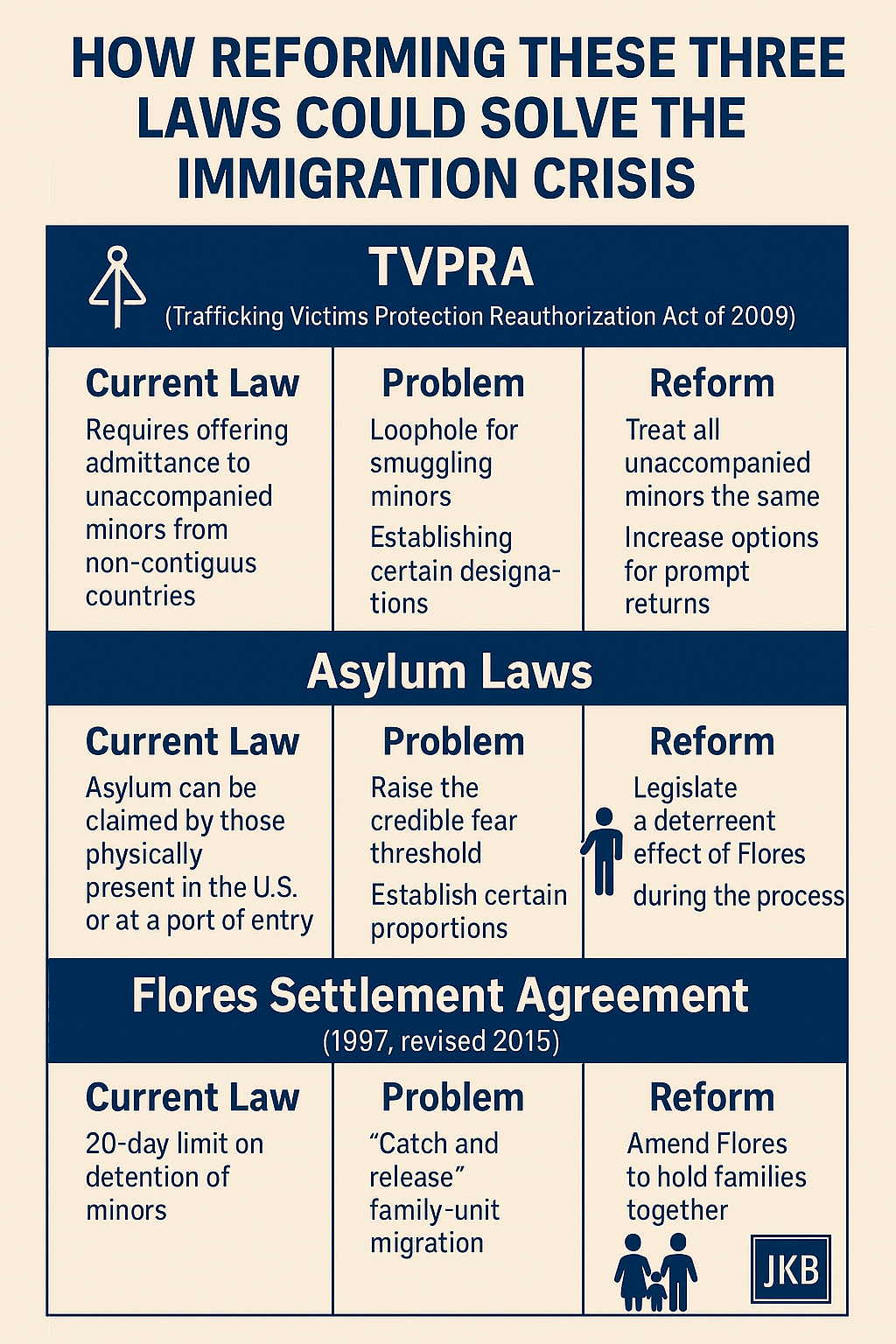 The U.S. immigration crisis at the southern border has escalated to a critical juncture, with 10.8 million border encounters, 2.66 million family unit apprehensions, and 468,929 unaccompanied alien children (UACs) recorded from FY2021 to FY2024, overwhelming an already strained immigration system and fueling concerns about human trafficking, system inefficiencies, and border security. This analysis, grounded in data from U.S. Customs and Border Protection (CBP), the Office of Refugee Resettlement (ORR), and related reports, evaluates how targeted reforms to three pivotal legal frameworks-the Trafficking Victims Protection Reauthorization Act (TVPRA), asylum statutes, and the Flores Settlement Agreement-can address these challenges by closing exploitable loopholes, streamlining processes, and reducing incentives for illegal crossings. By proposing measures such as expedited UAC repatriation, stricter asylum standards to tackle a 2.93 million-case backlog, and modifications to allow family detention, this examination highlights pathways to restore order while emphasizing the necessity of enhanced screening, increased judicial resources, and diplomatic efforts to address root causes like Central American violence and poverty, all while navigating the complexities of bipartisan Congressional support and America’s humanitarian commitments.
I. Reforming the Trafficking Victims Protection Reauthorization Act (TVPRA) 📘
Narrative Discussion 🧾:
TVPRA was designed to shield vulnerable children but has inadvertently enabled smugglers to exploit legal loopholes. The TVPRA, particularly the 2008 William Wilberforce reauthorization, sets rules for handling unaccompanied alien children (UACs) and aims to protect trafficking victims. It mandates that UACs from non-contiguous countries (e.g., Central America) receive a court hearing, unlike those from Mexico or Canada, who face expedited removal. This creates an incentive for smugglers to exploit the system by coaching minors to claim UAC status, knowing they’ll likely be released into the U.S. while awaiting hearings, which can take years due to backlog. Over 468,929 UACs were referred to ORR from FY 2021–2024.
Current Law ⚖️: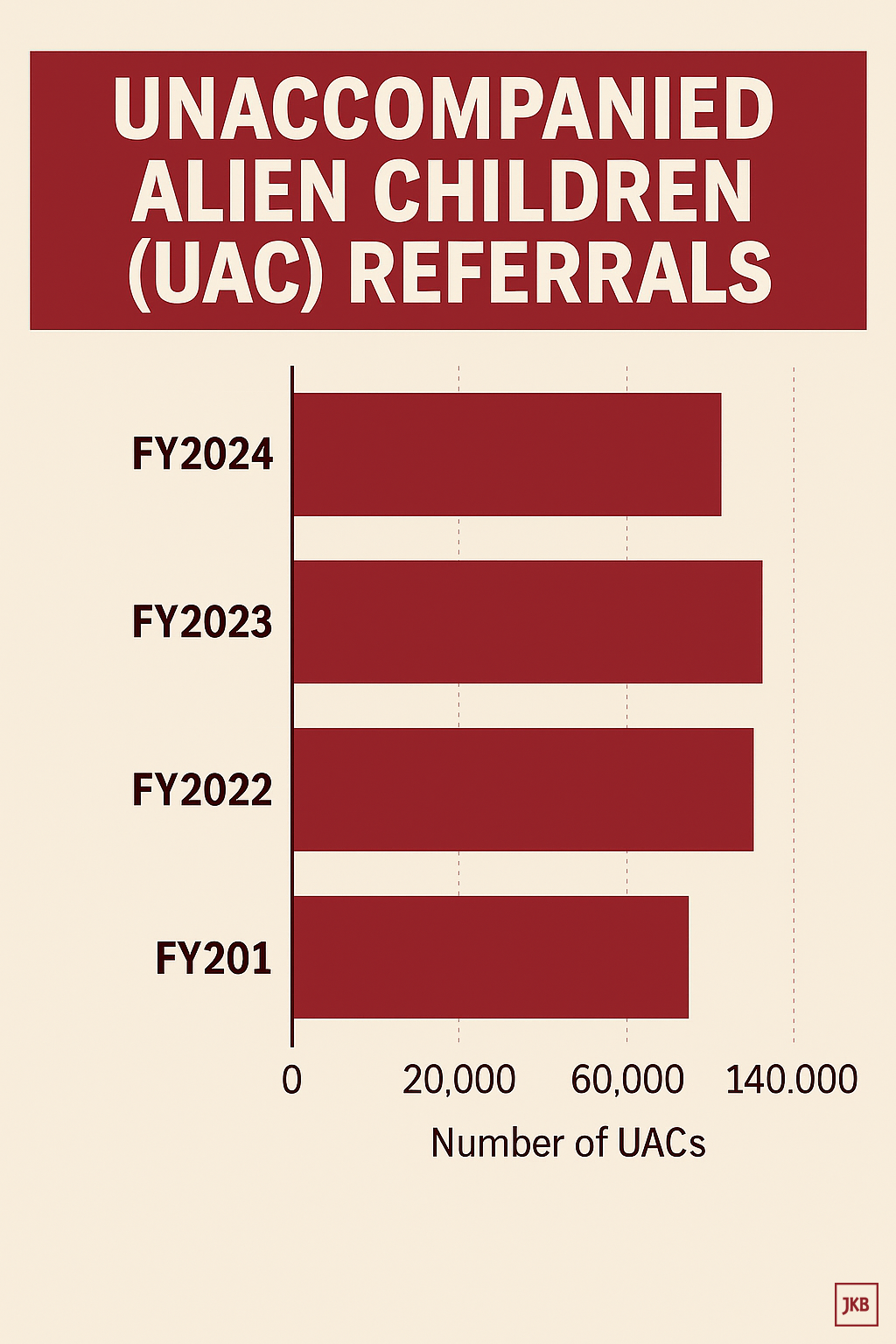
Unaccompanied minors from non-contiguous countries must be transferred to HHS and receive court hearings, often remaining in the U.S. for years.
Problem ❗:
This policy incentivizes smugglers to send children alone. A DHS report (2024) revealed 291,000 UACs lacked Notices to Appear.
Reform Solution ✅:
- Allow expedited return of non-trafficked UACs from all nations.
- Enhance trafficking screenings and child protection protocols.
- Ensure due process while preventing abuse.
II. Reforming Asylum Laws 📤
Narrative Discussion 🧾:
The asylum system is overwhelmed, with 2.93 million pending cases by late 2023. Only 17,700 individuals were granted asylum in FY 2021. Current asylum laws allow migrants to claim “credible fear” of persecution, triggering a process that often leads to release into the U.S. while cases pend, sometimes for years (600,000-case backlog in 2018). Many claims are ultimately denied (e.g., only 20,455 asylum grants in 2016 despite 92,000 credible fear referrals), suggesting systemic abuse or misunderstanding of asylum criteria, which are meant for persecution based on race, religion, nationality, social group, or political opinion, not general violence or poverty.
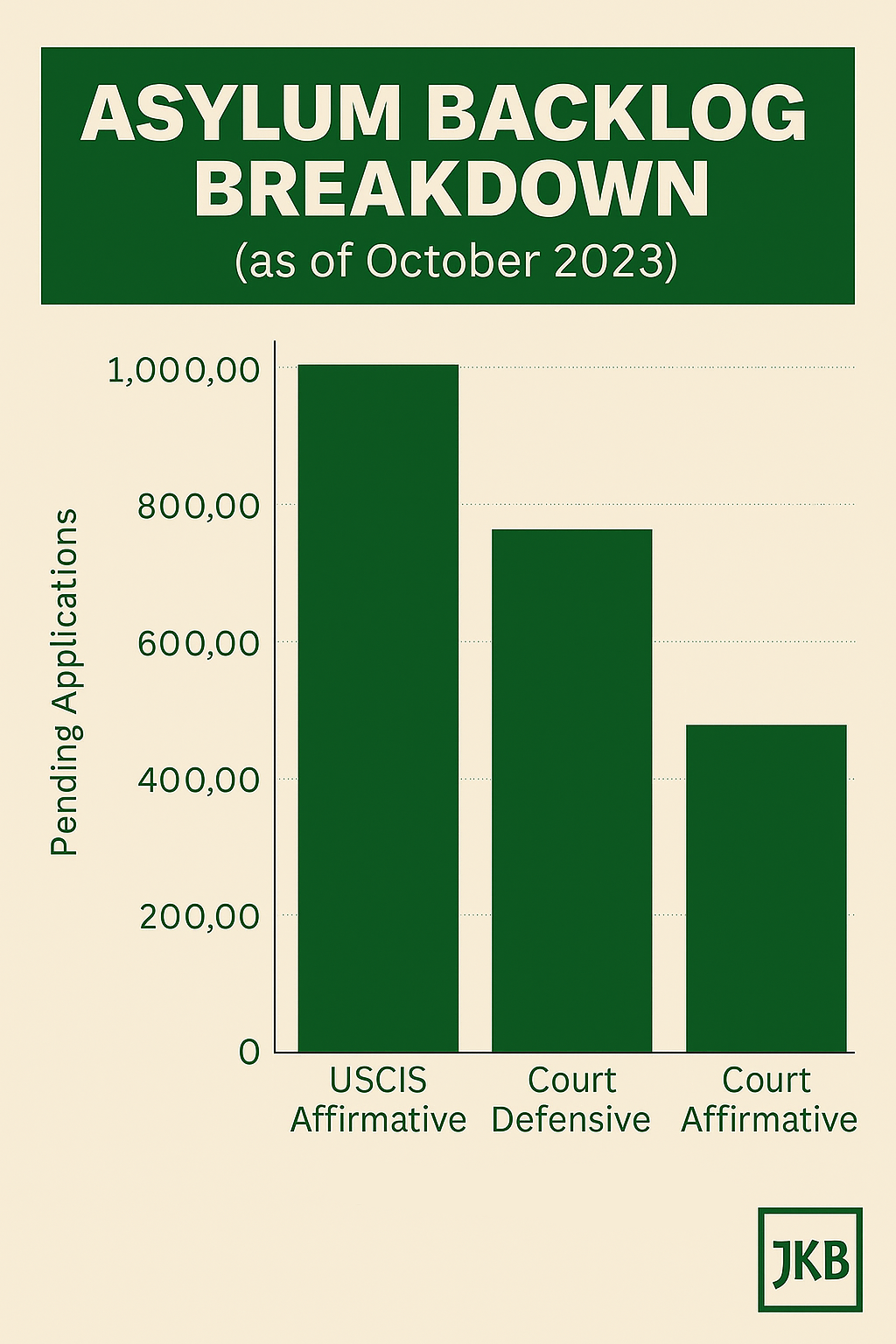 Current Law ⚖️:
Applicants can claim asylum at or inside the U.S. border. Those passing a credible fear interview are released pending hearings.
Problem ❗:
Low screening thresholds and court delays allow abuse and clog the system, delaying justice for genuine asylum seekers.
Reform Solution ✅:
- Tighten the credible fear standard.
- Implement safe third-country processing requirements.
- Increase immigration judge appointments to reduce the backlog.
III. Reforming the Flores Settlement Agreement 🏠
Narrative Discussion 🧾:
The Flores Agreement limits child detention to 20 days, which has led to mass family unit releases. From FY 2021–2024, 2.66 million family members were apprehended at the border. The 1997 Flores Settlement limits detention of migrant children to 20 days, requiring release to the “least restrictive” environment, often with sponsors. A 2015 court ruling extended this to accompanied children, forcing the government to either release families together (often into the U.S. without follow-up) or separate them if parents face prosecution. This contributes to family separations and the “catch-and-release” perception, with 435% more family units apprehended from 2017 to 2018.
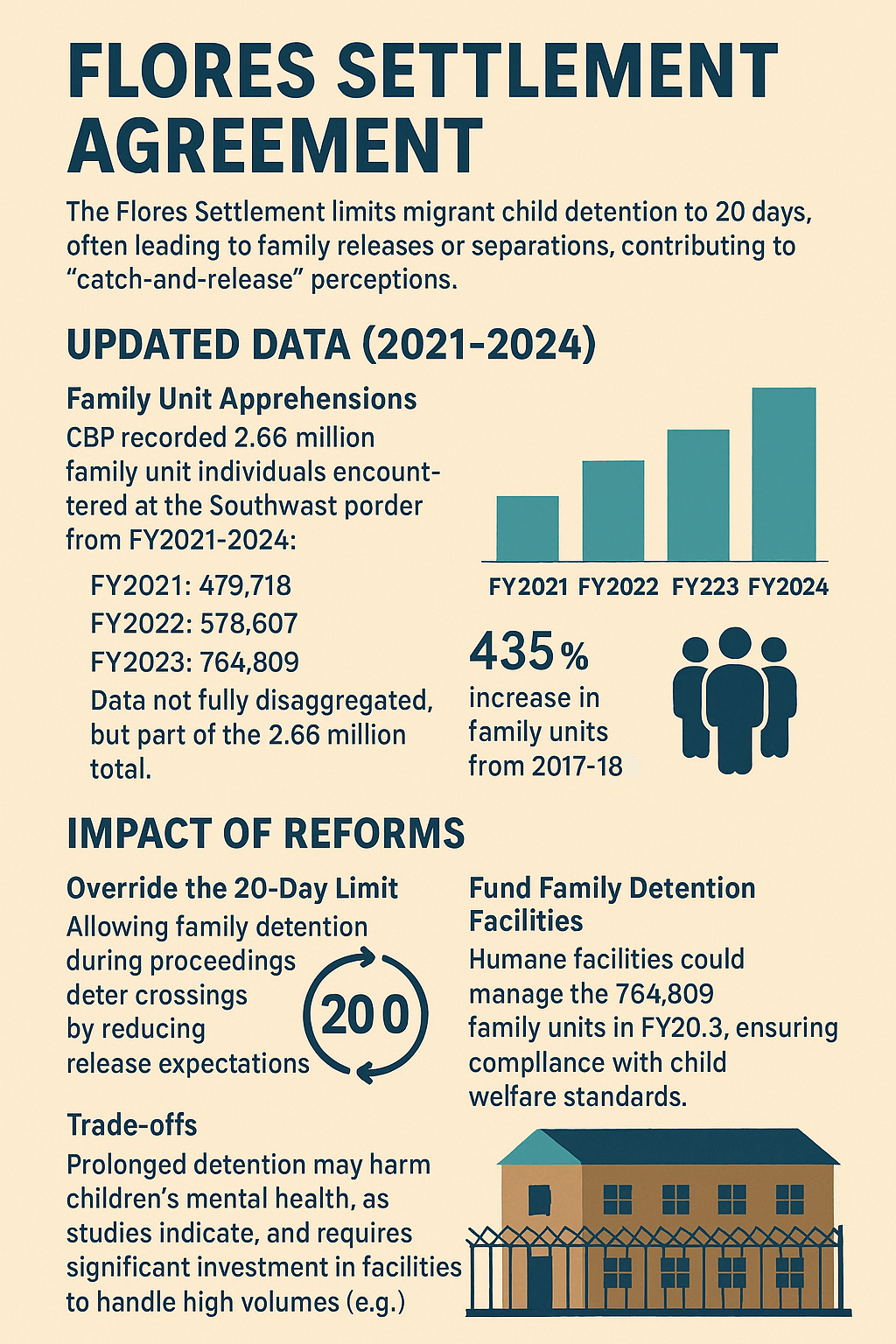 Current Law ⚖️:
Minors cannot be held more than 20 days, leading to the release of entire families into the U.S. regardless of claim resolution.
Problem ❗:
The short detention limit makes it impossible to adjudicate claims in time and incentivizes illegal entry with children.
Reform Solution ✅:
- Override Flores with legislation allowing longer humane detention.
- Build safe, family-oriented facilities.
- Ensure rapid legal processing to shorten stay durations.
IV. Holistic Impacts and Strategic Trade-Offs 📊
Narrative Discussion 🧾:
Aligning these reforms offers a comprehensive solution. The current framework fuels illegal migration by rewarding loophole navigation.
Systemic Impact:
- Deterrence: Reduces pull factors. Closing TVPRA loopholes, tightening asylum criteria, and modifying Flores could discourage illegal crossings by signaling that entry doesn’t guarantee release. This addresses the 2.5 million border encounters in FY2023.
- Efficiency: Addresses the 2.93 million-case backlog. More judges and streamlined processes could shrink the backlog, allowing faster deportations or approvals, reducing border facility strain.
- Protection: Strengthens anti-trafficking efforts through better oversight. Stronger TVPRA screening and asylum reforms could disrupt smuggling networks, which profit $150 billion annually, by limiting exploitable loopholes.
Challenges: Reforms must balance enforcement with humanitarian obligations. Overly restrictive changes could endanger vulnerable migrants, violate international law, or strain relations with countries like Mexico. Public opinion is split, with 60% of Americans in 2023 favoring stricter border policies but 70% supporting protections for genuine refugees (Pew Research).
- Humanitarian concerns about detention and repatriation.
- Bipartisan legislative gridlock.
- Root causes like poverty and violence require long-term diplomacy.
V. Critical Perspective
VI. Conclusion 📝
Reforming the TVPRA to expedite repatriation of non-trafficked UACs, tightening asylum laws to address the 2.93 million-case backlog, and modifying the Flores Settlement to permit family detention during proceedings could significantly reduce the 10.8 million border encounters, 2.66 million family unit apprehensions, and 468,929 UAC referrals recorded from FY2021–2024, while curbing human trafficking and system strain. These measures, paired with enhanced screening, increased judicial resources, and diplomatic efforts to address root causes like Central American violence and poverty, could restore border integrity and uphold America’s humanitarian commitments, though bipartisan Congressional support and careful implementation are critical to avoid harming vulnerable migrants.
