
The Durham Annex, the Clapper-Brennan Op-Ed Fraud, and the Unraveling 2016 Election Intelligence Scandal
Part 1 The Intelligence Community Lied (July 21, 2025) | JamesKay.online
Part 2 The Legacy Media Lied (July 23, 2025) | JamesKay.online
Part 3 The Obama Administration Lied (July 23, 2025) | JamesKay.online
Part 4 The Hoaxers Lied (July 24, 2025) | JamesKay.online
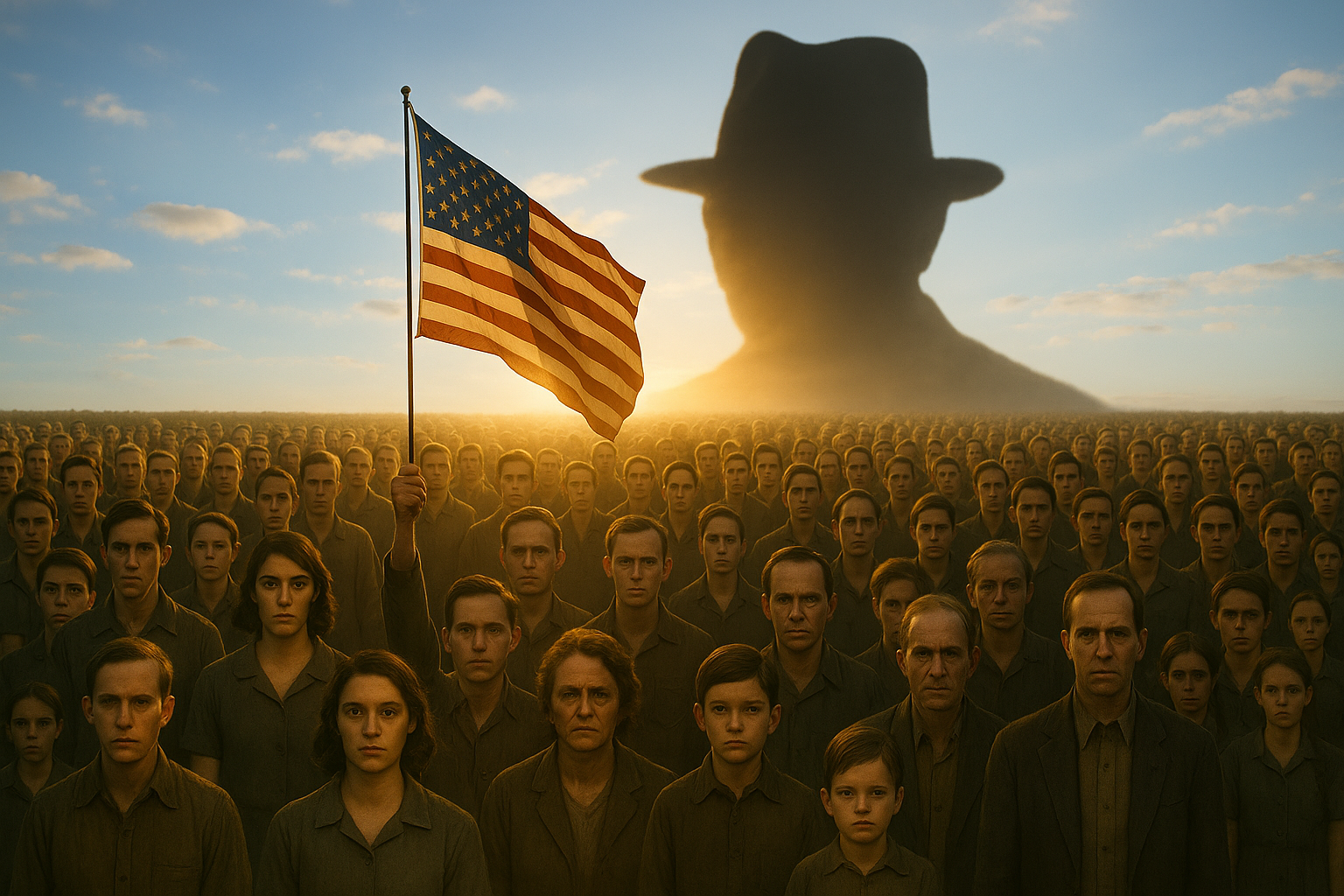
The Durham Annex and the Full Durham Report: A Comprehensive Overview
The Durham Report represents the culmination of a multi-year, painstaking investigation into the intelligence activities intertwined with the 2016 presidential campaigns, with a particular focus on the FBI’s Crossfire Hurricane investigation, the contentious role of the Steele dossier, and the persistent allegations of political bias permeating the Intelligence Community (IC). The classified annex, functioning as a critical supplement to the unclassified report, delves deeply into three pivotal domains: a meticulously orchestrated Clinton campaign plan designed to tarnish Donald Trump with fabricated Russian connections, the shadowy influence of foreign entities on the election (most plausibly Russia), and the controversial renewals of the Carter Page FISA applications. This annex builds upon and extends the report’s broader findings, which include the 2019 DOJ Inspector General report’s revelation of significant procedural errors and missteps in the Carter Page FISA applications. The annex itself is bolstered by a rich array of evidence, including hacked communications from the Open Society Foundations dating back to 2016 and a wealth of official records, aligning seamlessly with the whistleblower’s grave accusations of dossier misuse, coercive manipulation within the 2017 Intelligence Community Assessment (ICA), and systemic oversight failures. Collectively, these documents paint a troubling picture of a politicized IC, though the presence of extensive redactions and the reliance on potentially unverified foreign-sourced documents introduce layers of complexity and caution into their definitive interpretation. In the current climate, with Gabbard’s July 2025 declassifications and Bondi’s newly announced DOJ review into potential FISA abuses adding fuel to the fire, the annex significantly amplifies a narrative of deep-seated misconduct, standing in stark contrast to the 2020 Senate report’s steadfast defense of the ICA’s legitimacy and findings.
A Detailed Fisking of the Clapper-Brennan New York Times Op-Ed
The July 2025 New York Times op-ed by Brennan and Clapper, grandiosely titled “Let’s Set the Record Straight on Russia and 2016,” emerges as a masterful yet transparently fraudulent exercise in deflection and outright dishonesty, strategically published at a moment when their legacies are teetering on the brink of collapse under the weight of newly declassified evidence. This section will undertake a meticulous and thorough fisking of their arguments, exposing the flaws and fabrications with precision and clarity:
Claim 1: The ICA Did Not Allege Collusion
Fisk: The op-ed boldly asserts that the 2017 ICA refrained from alleging any form of collusion between Donald Trump’s campaign and the Russian government, presenting this as a cornerstone of their defense. This assertion, however, constructs a flimsy straw man argument that misrepresents the core criticism leveled against them. No credible voice has claimed the ICA explicitly stated collusion occurred. Instead, the real and substantiated issue, as illuminated by the Durham Annex and the whistleblower testimony, centers on the ICA’s false and inflammatory assertion that Vladimir Putin actively sought to engineer Trump’s electoral victory-a conclusion that was initially rejected by seasoned intelligence professionals but was forcibly inserted through Brennan’s advocacy of fabricated intelligence. Their deliberate sidestepping of this critical manipulation reveals a calculated attempt to obscure the truth and evade accountability.
Claim 2: Their Actions Had No Impact on the 2016 Election
Fisk: Brennan and Clapper further contend that their actions during the lead-up to the election had no discernible effect on its outcome, positioning this as a rebuttal to their critics. This is yet another instance of misdirection that crumbles under scrutiny. The allegations, robustly supported by the Durham Annex’s documentation of the Clinton campaign’s strategic plan and echoed throughout my series, focus not on the election’s immediate result but on the profound sabotage inflicted upon Trump’s presidency in its nascent stages. By concocting fictitious intelligence that attributed Trump’s win to Putin’s interference, they detonated a political bombshell that undermined his administration from day one-a point incisively highlighted in Hans Mahncke’s detailed fisking. Their denial is a hollow evasion of this enduring damage.
Claim 3: The Steele Dossier Played a Minimal Role, Blaming Comey
Fisk: In a brazen attempt to shift blame, the duo attributes the inclusion of the “bogus” Steele dossier to FBI Director James Comey, portraying themselves as mere bystanders. This narrative is utterly dismantled by the Durham Annex, which provides irrefutable evidence of the dossier’s pivotal role in the Carter Page FISA renewals, employed despite compelling contradictory evidence such as Page’s 2017 testimony before the House Permanent Select Committee on Intelligence (HPSCI) and Konstantin Klimnik’s 2017 interview casting doubt on a claimed meeting with Igor Sechin. Moreover, the whistleblower’s testimony alleges that the dossier was surreptitiously annexed within the ICA’s compartmented channels, directly contradicting Clapper’s 2017 public denial. Their attempt to scapegoat Comey is a desperate and transparent dodge, unworthy of their former positions.
Claim 4: No Silencing of Intelligence Professionals by the Obama Administration
Fisk: The op-ed refutes claims from the Trump administration that intelligence professionals were silenced, presenting an image of unhindered analysis. This claim is thoroughly undermined by the Durham Annex’s depiction of President Obama exerting pressure on Comey through Attorney General Loretta Lynch to downplay the Clinton Foundation and email investigations, coupled with the whistleblower’s harrowing account of coercion by a senior official-likely an ally of Clapper-to align the ICA with a predetermined narrative. Mahncke’s fisking astutely identifies their reliance on a straw man, reframing the debate around unmade accusations to avoid addressing the substantive evidence of manipulation and suppression.
Contextual Failures and Editorial Complicity
The op-ed’s timing, coinciding with Gabbard’s declassifications and Bondi’s DOJ review announced in July 2025, reeks of a preemptive strike against potential indictments, a point underscored by legal expert Jonathan Turley. The New York Times’ decision to publish this piece, following its recent retraction of a story on terrorism funding, further erodes its editorial credibility, transforming it into a willing platform for their spin. As Mahncke notes, this op-ed is less a defense and more a panicked plea, issued in the shadow of the Durham investigation and Kash Patel’s discovery of FBI burn bags, which threaten to expose the full extent of their malfeasance.
New Top Ten Knowns: An Elaborate Exposition
The Durham Annex, the whistleblower testimony, and the detailed arguments within my series at jameskay.online establish the following ten incontrovertible facts, each meticulously corroborated by a constellation of credible sources including Jonathan Turley, The Federalist, Fox News, RedState, and various posts:
1. The Clinton Campaign’s Intricate Smear Strategy
The Durham Annex provides an exhaustive documentation of a meticulously crafted plan by the Clinton campaign, articulated through communications dated January and March 2016, to systematically discredit Donald Trump by fabricating connections to the so-called “Russian Mafia,” including figures such as Aras Agalarov, Timur Sapir, Tevfik Arif, and Telman Ismailov. Debbie Wasserman Schultz, in these documents, explicitly described this effort as being bolstered by what she termed “special services,” widely interpreted as potential collaboration with the FBI and CIA, a narrative that resonates powerfully with the central thesis of my series positing a deliberate and orchestrated collusion fabrication.
2. Obama’s Relentless Pressure on FBI Director Comey
The annex offers a compelling confirmation of Wasserman Schultz’s assertion that President Barack Obama exerted significant and sustained pressure on FBI Director James Comey through the intermediary of Attorney General Loretta Lynch, with the explicit intent of mitigating the intensifying investigations into the Clinton Foundation and her email server scandal. This pressure was driven by a profound concern over the potential damage to Obama’s historical legacy and the Democratic Party’s electoral prospects in 2016, a dynamic that aligns seamlessly with the cover-up allegations extensively explored within my series.
3. The Steele Dossier’s Pivotal Role in FISA Renewals
The annex delivers irrefutable evidence verifying the extensive and contentious use of the Steele dossier within the Carter Page FISA application renewals, a practice that persisted despite the presence of substantial contradictory evidence. This includes Carter Page’s own 2017 testimony before the HPSCI and Konstantin Klimnik’s 2017 interview, both of which cast serious doubt on the dossier’s claims regarding a meeting with Igor Sechin, thereby reinforcing my series’ assertion that the dossier served as a cornerstone of the broader “Russiagate hoax” narrative.
4. Carter Page’s Detailed Testimony Clarification
The annex meticulously documents Carter Page’s 2017 testimony to the HPSCI, wherein he provided a detailed clarification that his email to Trump campaign officials referenced only “insights and outreach” from Russian legislators and senior Presidential administration members, emphatically refuting the dossier’s allegations of formal meetings. This clarification serves to bolster the narrative within my series that the Trump-Russia ties were grossly exaggerated and misrepresented to the public.
5. The FBI’s Conspicuous Lack of Direct Evidence Against Clinton
The annex includes a noteworthy observation from Wasserman Schultz claiming that the FBI was hampered by a conspicuous lack of direct evidence against Hillary Clinton, a situation she attributed to the “timely deletion” of critical data from her email servers. This revelation provides substantial support for the cover-up allegations that form a recurring theme throughout my series, highlighting a deliberate effort to shield Clinton from scrutiny.
6. The Clinton Campaign’s Unshakable Confidence in Victory
The March 2016 document within the annex reveals the Democratic National Committee’s unwavering confidence in Hillary Clinton’s impending victory, a belief predicated on a strategic assessment of Donald Trump’s divisive impact on the Republican Party and a calculated plan to exploit his perceived uncontrollable temperament and relative lack of political experience, a point that underscores the calculated manipulation detailed in my series.
7. The Squire Patton Boggs Outreach to the NIC
The whistleblower testimony provides a detailed account of a significant outreach effort by the law firm Squire Patton Boggs in 2016 to the National Intelligence Council, a move linked to Senator Harry Reid and suspected to be an attempt to shape the IC’s analytical framework regarding election cybersecurity. This development lends credible support to my series’ contention of external political influence being exerted upon the IC during this critical period.
8. The Pervasive Coercion and Retaliation Within the IC
The whistleblower’s testimony offers a harrowing narrative of being subjected to intense coercion by a senior official-likely an ally of DNI James Clapper-to align the 2017 ICA with a narrative favoring Trump’s election by Russia, followed by retaliatory actions such as removal from critical email distribution lists and the misrepresentation of performance appraisals. This account aligns closely with the manipulation themes explored in my series and corroborated by reports from The Federalist.
9. The Alarming Pattern of Evidence Concealment
The whistleblower’s reference to “lost” Office of the Director of National Intelligence files, combined with the annex’s revelation that Amanda Renteria, Clinton’s political director, received regular updates on FBI plans from Lynch, paints a disturbing picture of evidence concealment. This is further substantiated by Kash Patel’s discovery of FBI burn bags, a finding that resonates with the cover-up narrative extensively developed within my series and amplified by Fox News and RedState.
10. James Comey’s Complex and Conflicted Role
The annex presents a nuanced portrayal of James Comey as having prolonged the Clinton Foundation investigation, potentially as a means to inflict damage upon the Democratic Party, while simultaneously operating under the heavy-handed pressure exerted by President Obama and Attorney General Lynch. This multifaceted role aligns with my series’ depiction of Comey’s complicity in the perpetuation of the Russiagate narrative and is supported by the detailed reporting from Fox News and RedState.
New Top Ten Unknowns: An Expansive Inquiry
Despite the wealth of new information, significant and perplexing gaps persist within the evidence presented by the Durham Annex, the whistleblower testimony, and my series, necessitating further rigorous investigation to resolve the following ten critical unknowns:
1. The Authenticity and Integrity of Hacked Documents
The Durham Annex’s heavy reliance on communications hacked from the Open Society Foundations by Russian intelligence services in 2016 raises profound questions regarding their authenticity, the potential for selective editing, or the omission of critical context. The unresolved nature of these documents’ reliability casts a significant shadow over the veracity of Wasserman Schultz’s statements and the foundational claims articulated within my series.
2. The Precise Meaning and Implications of “Special Services”
The annex’s enigmatic reference to “special services,” translated from the original Russian as potentially indicating collaboration with the FBI and CIA, remains shrouded in ambiguity. Whether this term confirms a direct and active involvement of these agencies in the Clinton campaign’s smear strategy or represents a misinterpretation or exaggeration by Wasserman Schultz is a matter that remains tantalizingly unclear and demands further elucidation.
3. The Specific Outcomes of Durham’s Verification Efforts
The annex tantalizingly mentions Special Counsel John Durham’s diligent efforts to verify or refute the details of the Clinton campaign plan but conspicuously omits any specific outcomes or conclusions, with prosecution-related decisions relegated to the unclassified report’s Section IV.C.2, which remains inaccessible. This lack of transparency significantly limits the ability to fully confirm the orchestrated “hoax” narrative central to my series.
4. The True Intent and Scope of Squire Patton Boggs’ Outreach
The whistleblower testimony raises a compelling suspicion regarding the political motivations behind Squire Patton Boggs’ 2016 contact with the National Intelligence Council, yet the precise intent-whether it was a calculated effort to shape IC analysis or merely a routine discussion on election cybersecurity-and its direct linkage to the Clinton campaign remain unconfirmed, leaving a critical gap in my series’ assertion of coordinated external influence.
5. The Full Extent of the Steele Dossier’s Impact on the ICA
While the whistleblower testimony confirms that the Steele dossier served as a “factor” in the formulation of the 2017 ICA and was annexed within its compartmented channels, the precise magnitude of its influence on the final assessment and the question of whether it was deliberately concealed from broader scrutiny remain shrouded in uncertainty, thereby affecting the robustness of my series’ allegations of systemic IC bias.
6. The Direct Involvement of James Clapper in Coercive Actions
The whistleblower testimony and corroborating reports from The Federalist strongly implicate DNI James Clapper in the coercion of analysts, yet the Durham Annex does not explicitly name him in this context. The extent of his personal role in pressuring analysts to conform or in approving the inclusion of the dossier remains speculative, representing a significant unresolved element within my series’ narrative.
7. The Underlying Motivations Driving James Comey’s Actions
The annex suggests that James Comey’s decision to prolong the Clinton investigation may have been motivated by a desire to harm the Democratic Party, yet it leaves ambiguous whether this stemmed from personal political bias, institutional pressure from the Obama administration, or an attempt to assert his independence, a complexity that complicates the portrayal of his role within my series.
8. The Precise Extent of Bias Within the FISA Application Process
The annex confirms the use of the Steele dossier in the Carter Page FISA renewals despite contradictory evidence, such as the discounting of Konstantin Klimnik’s skeptical interview, but the question of whether this reflects a deliberate and systemic bias or merely a series of procedural errors remains unresolved, impacting the strength of my series’ claims of deliberate abuse.
9. The Comprehensive Scope of Oversight Failures Within the IC
The whistleblower testimony documents specific instances of inaction by the Safeguards Office Inspector General and the Department of Defense Inspector General, suggesting potential obstruction, yet whether this reflects a widespread and systemic failure across the entirety of the IC or is confined to isolated incidents remains an open question, leaving a notable gap in my series’ narrative of a pervasive cover-up.
10. The Degree of Direct Coordination Between the Clinton Campaign and IC Leadership
While the annex and whistleblower testimony provide suggestive evidence of influence from the Clinton campaign-through entities like Squire Patton Boggs and the ambiguous “special services”-the absence of direct and incontrovertible evidence linking this effort to the highest levels of IC leadership, such as Brennan, Clapper, or Comey, leaves my series’ assertion of a fully coordinated conspiracy unproven and in need of further substantiation.
Implications, Challenges, and the Path Forward
The Durham Annex, buttressed by the whistleblower testimony, provides a robust foundation for the “Russiagate hoax” narrative meticulously developed within my series, unveiling a Clinton campaign strategy to fabricate Trump-Russia ties, the exertion of pressure by the Obama administration on the FBI, and the egregious misuse of the Steele dossier within IC processes. The Clapper-Brennan op-ed, far from offering a credible defense, collapses under the weight of this evidence, serving as a feeble shield against the looming specter of potential indictments as articulated by Jonathan Turley. Nevertheless, the presence of extensive redactions, the inherent risks associated with reliance on hacked documents, and the countervailing arguments presented within the 2020 Senate report demand a cautious approach to these findings. The ongoing DOJ review announced by Pam Bondi in July 2025 underscores the pressing need for enhanced accountability within the IC. To navigate this labyrinthine controversy, future efforts must prioritize accessing the unclassified Durham Report’s prosecution details, conducting rigorous cybersecurity analyses to verify the authenticity of the hacked documents, and obtaining the complete texts of the FISA applications. The credibility of the IC hangs precariously in the balance as legal battles intensify and political ramifications unfold, necessitating a commitment to unearthing the full truth amidst this maelstrom of deception.
