
Thune’s Weakness on the SAVE America Act
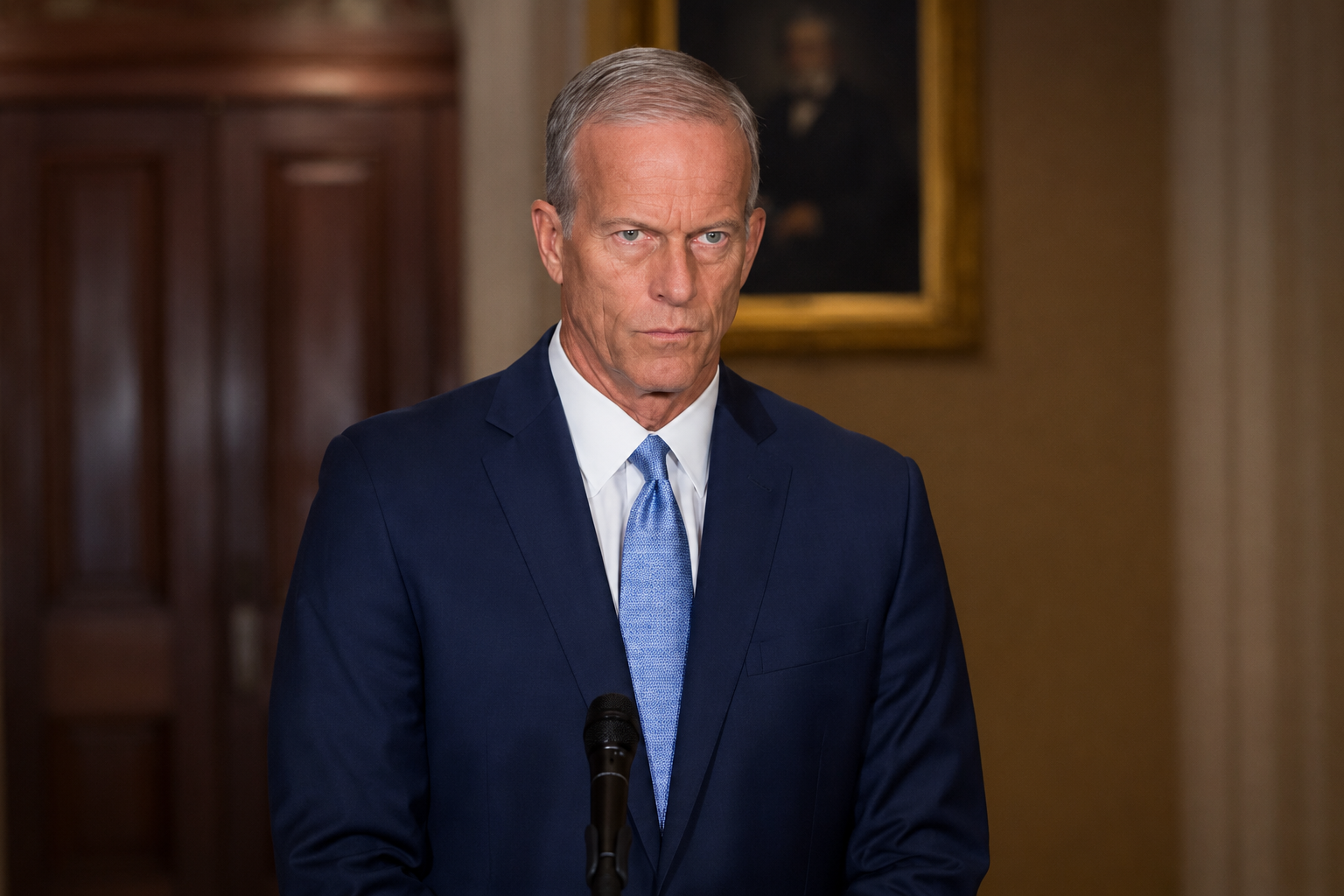
The base already knows. Sean Spicer said it out loud on The Huddle: enthusiasm is soft, and the failure to pass the SAVE America Act is a primary reason. I am in that base. I work Texas Republican politics. I hear what people say when the cameras are off. Spicer is right.
When voters who delivered unified government watch the House pass a core election-integrity bill repeatedly while the Senate finds reasons not to finish the job, the energy drains. That is not complicated. It is cause and effect.
The underlying problem is concrete. Voter registration systems in New Jersey and other states have added non-citizens to the rolls—sometimes after the individuals themselves correctly marked non-citizen status. Federal data has flagged large numbers of potential non-citizen registrations across multiple states. These are administrative failures with direct consequences for election integrity. The SAVE America Act closes the gaps. Documentary proof of citizenship to register and photo ID to vote would eliminate most of the pathways that produce these errors. Even James Carville has told Democrats to accept the popularity of voter ID. An 83 percent issue does not become radioactive because Republicans put their name on the bill. The concept is settled with the public. The only remaining question is whether Republican leadership will act on it.
Speaker Mike Johnson has answered that question in the House. Operating with a narrower majority than John Thune enjoys in the Senate, Johnson has forced the SAVE America Act across the finish line multiple times: standalone, through various vehicles, and again through reconciliation. He treated passage as non-negotiable and kept finding paths. That is what a leader with a functioning whip hand does under pressure.
Thune has done the opposite. He has offered arithmetic. He has cited the lack of sixty votes. He has announced that the conference is not unified for a talking filibuster and therefore will not attempt one. He has publicly told the White House press secretary to get on the phone and secure the votes herself. That is not leadership. That is deflection. The Conference Leader’s job is to produce outcomes or force clear choices. Thune has produced explanations.
The sixty-vote threshold is an excuse, not a command. Senate rules still permit a true talking filibuster. Rule XIX limits each senator to two speeches on the same question on the same legislative day. The majority can keep that legislative day alive by recessing instead of adjourning. It can enforce the limit and make the minority stand and talk. A silent “zombie” filibuster, simply threatening to vote against cloture while the majority declines to force continuous debate, is a political accommodation. It is not what the rules require or prefer. Thune has chosen the accommodation. He will not force the Democrats to hold the floor. He will not test the two-speech rule against a determined minority. He will not make obstruction costly. He manages the problem instead of confronting it.
This is weakness, not constraint. Every majority leader faces structural limits. Lyndon Johnson faced them in the 1950s and expanded his power anyway through personal force, detailed knowledge of every senator’s vulnerabilities, and relentless pressure. Mike Mansfield faced them in 1964. As Majority Leader he kept the Civil Rights Act on the floor, bypassed a hostile committee, forced a real multi-week Southern filibuster, and worked the votes until the Senate invoked cloture for the first time on a civil rights bill. Mansfield did not declare the process too hard. He forced the confrontation and endured it. Johnson and Mansfield treated defining priorities as matters that required testing the outer limits of their authority. Thune treats them as matters that require careful description of why action is difficult.
Thune hides behind the institutionalist label. I am more of an institutionalist than he is, and a traditionalist. I have argued for repealing the Seventeenth Amendment. The framers designed the House as the popular, passionate body. They designed the Senate to represent the states as states in the federal system. Direct election severed that link and turned the Senate into a second chamber of popular election with longer terms. Once that change occurred, the incentives shifted. Defending the current silent-filibuster practice while refusing to make the remaining formal tools operational is not fidelity to the older design. It is protection of the post-Seventeenth status quo. Preferring the filibuster is coherent if it actually forces debate and negotiation. Preserving a hollowed-out version that blocks action is not.
The strategic failure is just as clear. Democrats no longer have Manchin or Sinema as internal restraints. When they next control the Senate, they will eliminate the legislative filibuster for their priorities. Refusing either to force a genuine talking filibuster now or to remove the rule preemptively on a high-salience item is unilateral restraint. It is not principled stewardship. It is leadership that leaves the other side free to abolish the same protection later while denying the current majority the ability to act today.
Absent a black-swan event, the midterm arithmetic is straightforward. Pass the SAVE America Act and Republican majorities in both chambers become far more secure. Fail to pass it and the map turns dicey for the precise reason Spicer and the base already understand: the people who supply the energy will have decided that Senate leadership was never serious about their priority. Enthusiasm gaps decide close races. Leadership that leaves a core legitimacy question unresolved after the voters delivered unified control owns the risk that follows.
John Thune is a failed, weak leader on the central test of this Congress. Whether the motive is a desire to wait out Donald Trump’s term, a preference for conference peace, or simple institutional comfort, the effect is the same. The Conference Leader is damaging the agenda he is charged with advancing. The House has fought. The voter-roll failures are real. Public support is broad. The historical examples of Johnson and Mansfield show what force and willingness to confront actually look like. Thune has offered excuses. That is the record.
