
The Misleading Math Behind the One Big Beautiful Bill Act: A Layman’s Guide
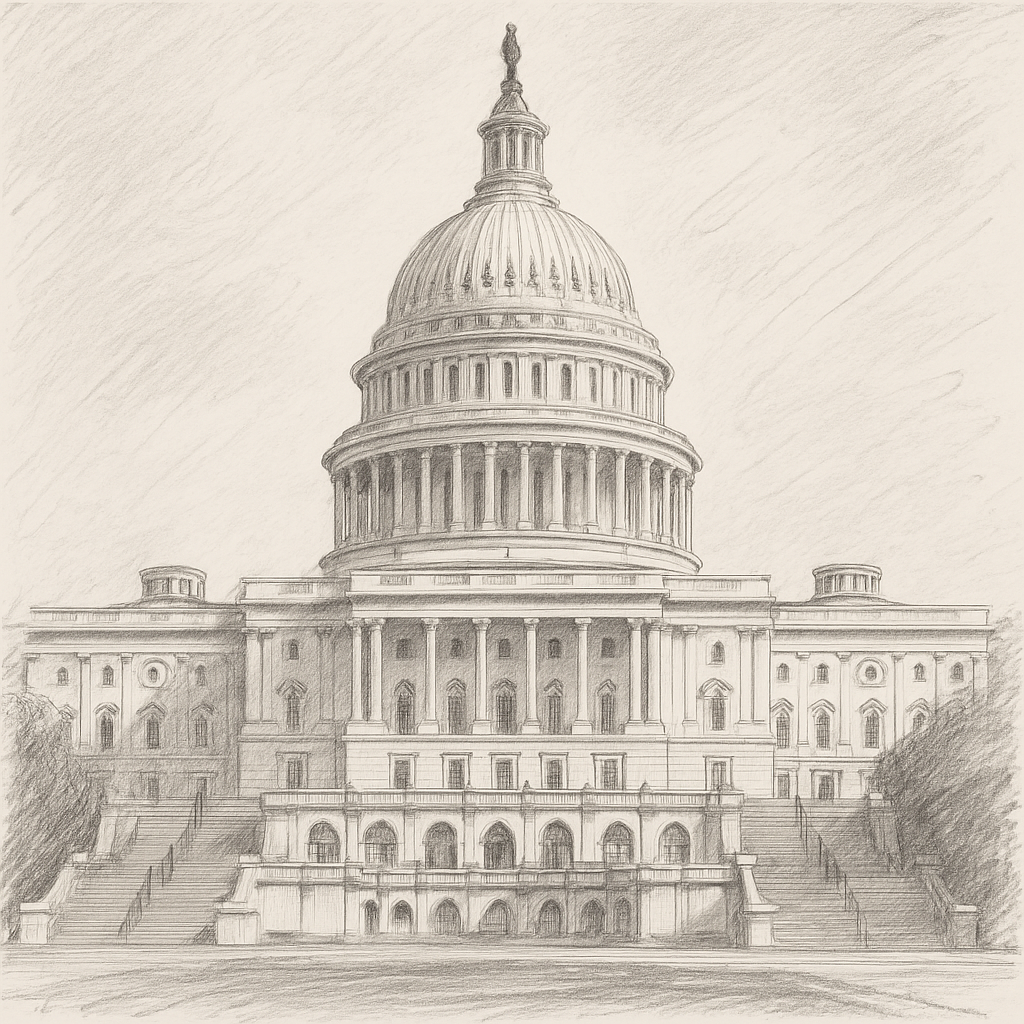 If you’ve caught wind of the One Big Beautiful Bill Act (OBBBA) currently being considered by the Senate, you might’ve heard it described as a budget-busting disaster that slashes Medicaid and hands out tax breaks to the rich. That’s the narrative often pushed by legacy media, leaning heavily on Democratic talking points. But here’s the truth: the numbers driving th
You Can’t Predict Ball: The Texas Rangers’ 2025 Season
 As the Texas Rangers hit the halfway mark of the 2025 season with a 41-43 record, they embody a peculiar paradox that could define their year: a pitching staff that’s the envy of the American League, paired with an offense that’s been maddeningly inconsistent. This stark disparity-elite arms contrasted with anemic bats-has created a season of extremes, where the Rangers’ fortunes hinge on a “magic number” of four runs. With a postseason probability of just 35%, their path to October hangs in the balance, and their ability to close the gap between pitching and hitting will determine whether they can salvage a Postseason run.
The Pitching Powerhouse
The Rangers’ pitching staff is nothing short of spectacular. Boasting a 2.93 ERA (5th in MLB), they’ve been a brick wall, leading the AL in fewest home runs allowed (9), fewest runs allowed (31), and lowest opponent slugging percentage (.347) early in the season. Jacob deGrom, with a 2.08 ERA and 94 strikeouts over 95.1 innings, is a Cy Young contender, delivering gems like a near-perfect game against Baltimore. Nathan Eovaldi, back from a triceps injury, and Tyler Mahle anchor a rotation that’s kept games close, while Hoby Milner and Jacob Latz provide bullpen depth. The pitcher-friendly confines of Globe Life Field (88 park factor) amplify this dominance, making the Rangers’ staff a nightmare for opposing hitters.
Yet, the bullpen has shown cracks, with closer Luke Jackson’s -1.18 WPA signaling inconsistency in high-leverage situations. This vulnerability has cost them in tight games, a critical factor given their offensive struggles.
The Offensive Enigma
The Rangers’ bats, however, have been a rollercoaster. Early in the season, they posted a .192 batting average-the worst in MLB-alongside a .266 OBP (30th) and .344 SLG (25th). May was barely better, with a .210 average and a dismal .615 OPS. June brought a turnaround, with a .258 average, .335 OBP, and .771 OPS (3rd in MLB), fueled by a five-game stretch of .307 hitting and 43 runs. Corey Seager remains the lineup’s heartbeat, but underperformances from Adolis Garcia (-1.10 WPA) and Joc Pederson (-1.54 WPA) prompted drastic moves: Jake Burger’s demotion to the minors, the firing of hitting coach Donnie Ecker, and new signings like Pederson and Kyle Higashioka. Josh Jung and Jonah Heim have shown recent promise, but Wyatt Langford’s oblique injury (return expected July 5) adds uncertainty.
This offensive volatility-bottom-tier for two months, elite in June-has left the Rangers with a season-long .227 average (28th), .293 OBP (29th), and .363 SLG (28th). Their 304 runs in 84 games (3.66 per game) are insufficient to support their pitching, and the pitcher-friendly park doesn’t help.
The Four-Run Magic Number
The Rangers’ season is defined by a striking statistic: they are 28-5 (.848 winning percentage, 2nd in MLB) when scoring four or more runs, but an implied 13-38 (.255 winning percentage) when scoring three or fewer. This four-run threshold is their lifeline, a product of their pitching keeping games low-scoring and their park suppressing offense. When the bats deliver four runs, the Rangers are nearly unbeatable; when they don’t, their pitching heroics are often wasted. This split is more extreme than most teams, as balanced clubs like the Houston Astros or Kansas City Royals likely fare better in low-scoring games, while pitching-weak teams like the Colorado Rockies struggle regardless.
The Postseason Push: 87 Wins in Sight?
To reach a playoff-caliber 87 wins-the AL’s second Wild Card threshold in 2024-the Rangers need a 46-32 record (.590) in their remaining 78 games. This is a tall order, given their current .488 winning percentage, but not impossible. Their 2023 World Series run (90-72, .556) and 2011 franchise-best 96-66 (.593) show they can sustain such a pace. Their June offensive surge suggests potential, but consistency is key. Upcoming series against Baltimore, Detroit, Oakland, Atlanta, the Yankees, Philadelphia, and Houston will test their mettle, with home games (where they went 44-37 in 2024) offering an edge.
Historical Context: An Unprecedented Disparity
The Rangers’ disparity-5th in ERA, 28th in batting average-is one of the most extreme in recent memory. The 1968 Dodgers (2nd in ERA, 15th in hitting) and 2010 Giants (2nd in ERA, 17th in hitting) had notable gaps, but the Rangers’ 25-spot difference in a 30-team league outstrips both. The 1906 White Sox, the “Hitless Wonders,” won a title with poor hitting (.230) and elite pitching, but their era’s low-offense context makes the Rangers’ .192 early-season average more shocking in today’s game. The 2019 Rays and 1968 Cardinals also leaned on pitching, but their hitting was closer to average than the Rangers’ bottom-tier output.
The Road Ahead
The Rangers’ postseason hopes (35% probability) rest on bridging their offensive gap. If Seager, Jung, and Heim can sustain June’s momentum, and Langford returns strong, they could reach four runs consistently enough to leverage their pitching. The bullpen, particularly Jackson, must stabilize to avoid squandering leads. Compared to AL West rivals like the Mariners (43-40, needing 44-39 for 87 wins) and Astros (50-34, needing 37-41), the Rangers face a tougher climb, but their pitching gives them a fighting chance. The Rockies (19-65) are out of contention, and the Royals (39-45, needing 48-30) face a steeper challenge.
The 2025 Rangers are a team of extremes, their season a high-wire act between brilliance and frustration. If their bats can catch up to their arms, they could rewrite their story and make the Postseason. For now, their four-run magic number remains the key to unlocking their potential-or the curse that keeps them grounded.
Like this post? Become a Citizen Producer!


is story come from a flawed system that distorts reality, and it’s time to unpack it for everyday folks who don’t spend their days decoding Washington’s budget games.
The OBBBA, debated in the Senate, is a massive bill that aims to keep current tax rates-21% for corporations, 37% for top earners-set by the 2017 Tax Cuts and Jobs Act (TCJA), while also trimming federal spending growth, particularly in programs like Medicaid, by curbing waste and fraud. It’s a Republican-led effort to stabilize the economy and rein in government excess. But critics, amplified by outlets like CNN and The New York Times, claim it adds $4 trillion to the national debt and guts healthcare. Sounds scary, right? The problem is, that story hinges on a budgetary sleight-of-hand called the CBO baseline, and it’s not as straightforward as it seems.
The Congressional Budget Office (CBO), a nonpartisan group that crunches numbers for Congress, uses a “baseline” to estimate a bill’s impact. Think of it as a yardstick for measuring what the government’s budget would look like if no new laws were passed. Here’s where it gets tricky: the baseline assumes “current law,” meaning it pretends taxes will skyrocket when TCJA cuts expire (e.g., corporate rates jumping to 35%, top individual rate to 39.6%) and spending on programs like Medicaid will keep ballooning unchecked. So, when OBBBA extends today’s tax rates, the CBO says it “loses” $4.5 trillion in revenue, and when it slows Medicaid’s growth, it’s scored as a “cut”-even if spending still goes up.
Let’s break it down with a simple example. Imagine a government program set to grow by $1 billion a year. OBBBA reduces that growth to $500 million. Your wallet would see that as still spending more each year, right? But the CBO calls it a $500 million “cut” because it’s less than the baseline’s projection. This lets critics scream about “slashing” programs, even when no one’s losing benefits. It’s the same with taxes: keeping your current tax rate is scored as a massive “cost” because the baseline assumes you’d pay more if Congress did nothing. In reality, Congress rarely lets taxes spike like that, so the baseline’s a bit like planning your budget assuming you’ll win the lottery.
For OBBBA, the CBO says it adds $3.9 trillion to the deficit over a decade, mostly because extending TCJA rates “costs” $4.5 trillion compared to a baseline where taxes rise. Spending reforms, like cracking down on Medicaid waste, are labeled “cuts” despite spending still growing. Democrats demagogue these numbers, claiming OBBBA favors the wealthy and hurts the vulnerable. Legacy media often parrot this, rarely explaining the baseline’s quirks. Meanwhile, Republicans argue the bill prevents what the CBO’s own rules suggest would be the largest tax increase in American history if TCJA expires, hitting families and businesses hard.
Congress is in a sprint to pass OBBBA before the July 4 recess, with Senate debate heating up after a June 28 vote where Senator Lisa Murkowski joined Republicans to begin debate, signaling she’s a likely “yea” on final passage. On Sunday, June 29, the Senate adjusted Medicaid reform language, notably a provision to phase down provider taxes from 6% to 3.5% in Medicaid expansion states, which was approved by the Senate Parliamentarian to meet reconciliation rules, ensuring it can stay in the bill without needing a supermajority. However, other provisions, like special Medicaid boosts for Alaska and Hawaii, were struck down, which had been a concern for Murkowski.
In the House, at least six blue-state Republicans have raised objections over the state and local tax (SALT) deduction cap, which OBBBA raises but not enough for their liking. Despite this, they’re likely to vote for the bill, as letting TCJA expire would trigger massive tax hikes-per the CBO’s baseline-that they’d be loath to allow. The CBO’s $4 trillion deficit figure looms large, but the Senate’s using a “current policy” baseline-assuming today’s taxes stick around-showing a smaller deficit. Critics call this a gimmick, but it’s closer to how Congress actually behaves.
So, why does this matter to you? The CBO baseline, while meant to be neutral, can make sensible policies look reckless. It’s like judging your grocery bill against a fantasy where you’d spend double without noticing. This setup lets opponents of OBBBA-often Democrats-frame it as a giveaway to the rich or a healthcare gut-punch, when it’s really about keeping taxes steady and slowing spending growth. Next time you hear a news anchor decry OBBBA’s “cuts” or “deficits,” remember: the numbers might be more about Washington’s math tricks than reality. Check what folks are saying on X or dig into the bill’s actual text to cut through the noise.
