
The Virginia Bus Crash Should Never Have Happened: Congress Must Attach Real Reform to the THUD Bill
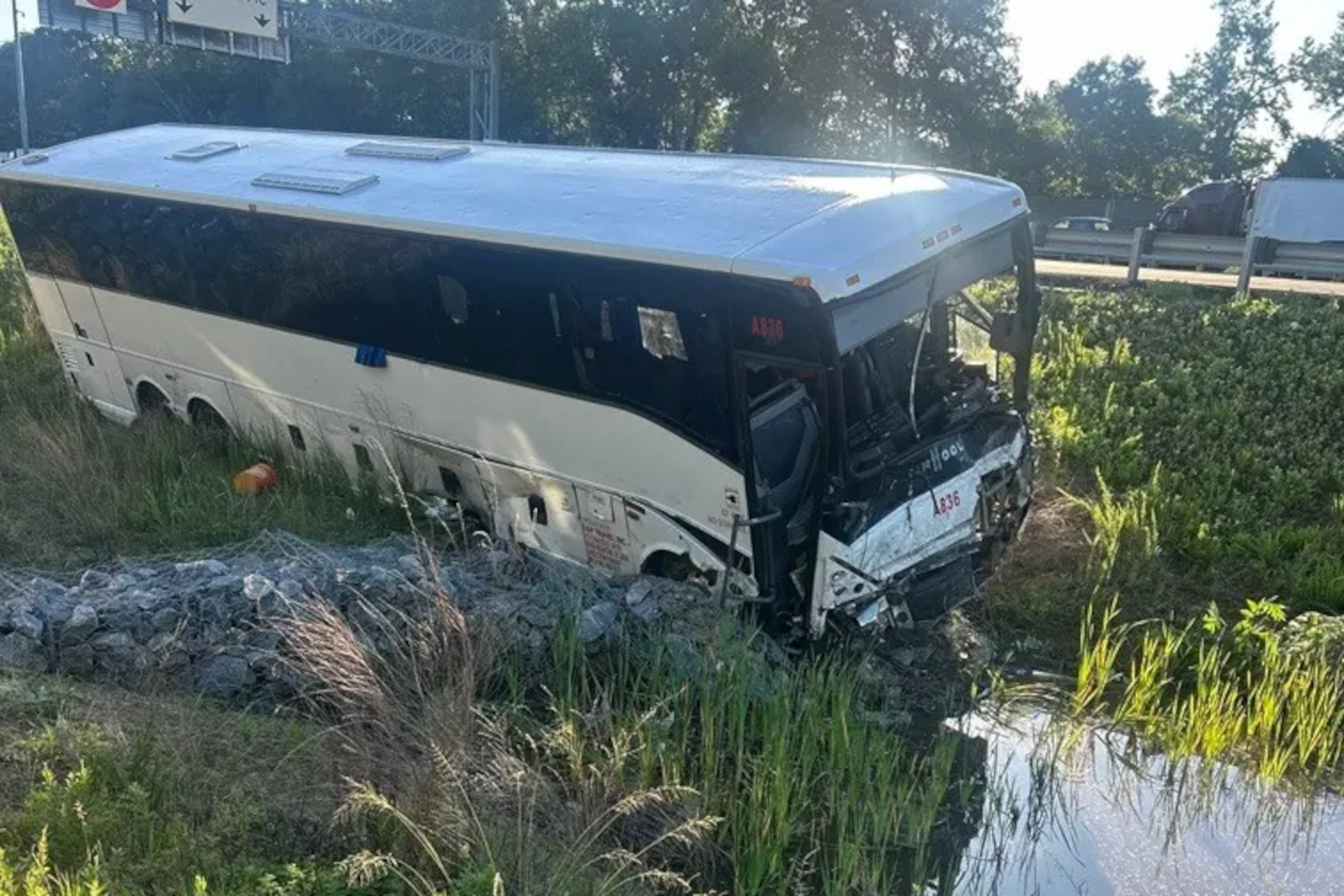
Five Americans are dead because the system that is supposed to keep unqualified drivers off our highways failed completely. On Friday, a charter bus slammed into slowed traffic on southbound I-95 in Stafford County, Virginia. The crash killed a family of four: Dmitri Doncev, his wife Ecaterina, their 13-year-old daughter Emily, and 7-year-old son Mark, along with another 25-year-old woman. Dozens more suffered serious injuries.
This was not an unavoidable accident. It was the direct result of a chain of inexcusable failures. The driver, Jing S. Dong, a naturalized citizen from China, could not speak English proficiently. He held a New York-issued CDL. The training school certified him. New York licensed him. The transport company, E&P Travel, put him behind the wheel of a passenger bus anyway. These three links broke, and American families paid the ultimate price.
Secretary Sean Duffy called it exactly what it is: unacceptable. Federal law has long required commercial drivers to read, speak, and understand English well enough to navigate signs, communicate with law enforcement, and handle emergencies. That requirement exists for a reason. When we ignore it, people die.
The Legal Tool Already Available: Caribe II
The Supreme Court gave us a powerful tool just two weeks before this tragedy. In Montgomery v. Caribe Transport II, decided 9-0 on May 14, 2026, the Court ruled that freight brokers and intermediaries can be held liable under state law for negligently selecting unsafe motor carriers. The decision correctly pierced the FAAAA preemption shield on safety matters. It opens the door to accountability up the chain. But a court ruling is not enough. We must make this permanent, nationwide, and enforceable through legislation.
The Policy Problem: Qualification Chain Breakdowns
Federal regulation (49 CFR § 391.11) requires English proficiency for commercial drivers. Persistent gaps in enforcement, especially in certain states, allow unqualified drivers (some here illegally, others minimally vetted through loopholes) into safety-critical roles. The Virginia crash exposes the exact failures we must crush: weak training certification, lax state licensing, and carriers that prioritize schedules over safety.
The Solution: Codify Caribe II in the FY2027 THUD Bill
Congress now has the perfect opportunity. The FY2027 Transportation, Housing and Urban Development appropriations bill remains pending. The House Appropriations Committee takes it up on June 4. This is the moment to attach strong reform language that codifies Caribe II, enforces strict English proficiency standards, and puts real funding behind the crackdown.
Proposed Amendment Language
(a) Clarification of FAAAA Safety Exception. Section 14501(c)(2) of title 49, United States Code, is amended by adding at the end the following:
‘‘(C) Negligent selection and hiring claims. Notwithstanding any other provision of this subsection, nothing in this section shall be construed to preempt or otherwise limit any common law or statutory claim under State law for negligent selection, hiring, retention, or entrustment of a motor carrier, driver, or other transportation provider by a freight broker, freight forwarder, shipper, charter arranger, or other intermediary, when such claim arises from or concerns the safety of motor vehicles operating on public highways, including but not limited to failures to adequately review—
(i) Federal Motor Carrier Safety Administration Safety Measurement System data;
(ii) safety fitness determinations;
(iii) driver qualification files, including full compliance with English language proficiency requirements under section 391.11 of title 49, Code of Federal Regulations;
(iv) crash history, out-of-service rates, and maintenance records; or
(v) any other factor relevant to determining whether the motor carrier or driver can safely operate a commercial motor vehicle.’’
(b) Strict English Language Proficiency Requirements.
(1) All commercial driver’s license applicants and holders must demonstrate the ability to read, speak, understand, and write English sufficiently to comprehend highway signs, communicate with law enforcement and emergency personnel, and complete required records.
(2) Effective 180 days after enactment, all CDL knowledge and skills tests administered by States shall be conducted in English only, with no foreign-language translations or interpreters permitted except for existing medical or disability waivers.
(3) Brokers, carriers, and training schools must verify and document English proficiency through standardized assessments (including sign recognition and verbal response) before arranging or permitting operation of commercial motor vehicles. Failure to do so constitutes evidence of negligence per se in State tort claims.
(c) Minimum Due Diligence and Recordkeeping. Not later than 180 days after the date of enactment of this Act, the Secretary of Transportation shall issue regulations requiring brokers and intermediaries to—
(1) perform and document reasonable care inquiries, with specific emphasis on English proficiency compliance; and
(2) maintain such records for a minimum of 5 years.
(d) Safe Harbor. A broker or intermediary that demonstrates full compliance with the regulations issued under subsection (c), including English proficiency verification, and selects only motor carriers with a current ‘‘Satisfactory’’ safety rating and no recent ELP-related violations, shall have an affirmative defense to claims brought under subsection (a).
(e) Funding for Enforcement.
(1) Of the amounts made available under this Act for the Federal Motor Carrier Safety Administration, $75,000,000 shall be for enhanced English Language Proficiency (ELP) enforcement, including roadside inspections, state CDL program audits, training school oversight, and technology for real-time proficiency verification.
(2) $25,000,000 shall be for grants to States to implement English-only CDL testing and improve driver qualification verification systems, with priority given to States with prior high rates of improperly issued CDLs.
(3) Funding under this subsection shall be withheld from any State that fails to demonstrate compliance with English proficiency standards or federal CDL issuance rules.
(f) Enforcement and Penalties. The Federal Motor Carrier Safety Administration shall prioritize audits of brokers, carriers, and States with elevated ELP violations. Systemic failures may result in civil penalties, suspension of broker authority, or loss of federal funding eligibility.
(g) Applicability. This section applies to all interstate transportation of property and passengers, including charter bus operations.
This language delivers the hammers that are long overdue. It codifies Caribe II with clear statutory force. It slams the door on English-only testing loopholes. It funds aggressive enforcement with $100 million targeted dollars. It withholds money from non-compliant states. And it protects responsible brokers with a safe harbor while punishing those who cut corners.
The Virginia crash proves the current system does not work. Training schools issue certificates to drivers who cannot read work zone signs. States hand out CDLs in violation of federal rules. Carriers hire them to keep buses rolling. We must hold every link in that chain accountable: from the classroom to Albany to the dispatch office.
Congress has the power and the vehicle right now. Attach this amendment to the THUD bill. Pass it. Make these reforms law before another preventable tragedy claims more American lives. The families of Dmitri, Ecaterina, Emily, Mark, and the other victims deserve nothing less. The traveling public demands it.
It is time to act with authority and end these deadly failures once and for all.
