
Always Be Closing
N.B. Read Parts I, II, III, IV, V, VI, and VII of this series. See also Trump’s Greenland Gambit.
On 19 November 2026 the Danish Folketing ratified the Greenland security agreement by a vote of 109 to zero. No debate occurred. No opposition appeared. Greenland’s own parliament had already approved the text. The remaining formality is the diplomatic note that brings the instrument into force. At the same hour, on the other side of the world, President Trump sat in Shenzhen. He met separately with Xi Jinping and with Vladimir Putin, then sat with both for the first trilateral of the three leaders on the margins of APEC. The joint statement that emerged spoke of UN reform, petroleum supplies, nuclear-risk dialogue, and the International Criminal Court. Ukraine drew discussion; the parties did not settle it. Cameras recorded the three men at the table.
Clocks did not coincide by chance. Realpolitik is the art of making the other side see what has already been decided. While the President occupied the room with the two powers that have spent the last decade probing for footholds on the approaches to North America, the Danish parliament closed the last large vacancy in the Western Hemisphere. The signal did not say America was distracted by summitry. Instead, the signal said the northern flank had already been secured, and the man across the table could afford the conversation because the map behind him was no longer open.
What the Agreement Does
The agreement itself is narrower and more durable than the winter language of purchase. It supplements the 1951 defense accord. It reaffirms Danish sovereignty and the Greenlandic right to self-determination. If independence comes, Denmark and Greenland must keep the new state inside NATO and under the same defense obligations. There is no end date. Operationally, the text authorizes the modernization and expansion of Pituffik and the creation of additional defense areas at Narsarsuaq and Mestersvig. It confirms broad access, overflight, and undersea movement. It opens a pathway for Golden Dome elements. Only NATO members may establish military installations or maintain a persistent presence. States or investors outside NATO, NATO partners, or the EU face a bar on control, significant influence, or privileged information in particularly sensitive sectors (critical infrastructure and the extraction of resources foremost among them) unless the parties expressly agree otherwise.
The Freeze on Strategic Leverage
That is the freeze. China and Russia face no ban on every commercial flight or ordinary trade. However, they face a ban on converting commercial access into strategic leverage: bases, persistent military presence, control of ports or cables, or ownership of the mineral deposits that feed Western defense and industry. Private Western capital can still develop the Tanbreez heavy-rare-earth project that earlier parts of this series treated as the mineral proof point. Adversary capital cannot acquire the lasting influence the screen now prevents. Title remains on the rock. The security and economic levers that decide who operates on the approaches sit in the Western file.
From Orinoco to the Ice Cap
The series has treated the hemisphere as an operating theater rather than a sentimental neighborhood. Part V recorded the southern Greenland mineral opportunity. Part VI closed the southern flank on the Orinoco. Part VII described the September instrument as “Infinite Life”: permanent control over security and related needs, no acquisition cost, no end date, no adversary base or sensitive investment without American approval, paper that survives independence. The 19 November vote turns that recording into binding law. The rule now runs continuously from the Orinoco to the ice cap. The last large, mineral-rich, strategically positioned territory on the approaches to the continent no longer stands as an open frontier for peer competitors.
Scoffers treated the earlier pressure campaign as theater certain to fracture the alliance. High opening bids and tariff threats produced the expected reaction in European capitals. The outcome is the face-saving instrument the method was built to produce: sovereignty language preserved, equal-partner rhetoric intact, NATO continuity guaranteed, and functional American and allied control over the essentials at no purchase price. Unanimous ratification supplies the rebuttal. The alliance holds. The map is cleaner. Moreover, the cleaner map entered force at the precise moment the President sat physically present with the two leaders whose strategic options in the hemisphere had just narrowed.
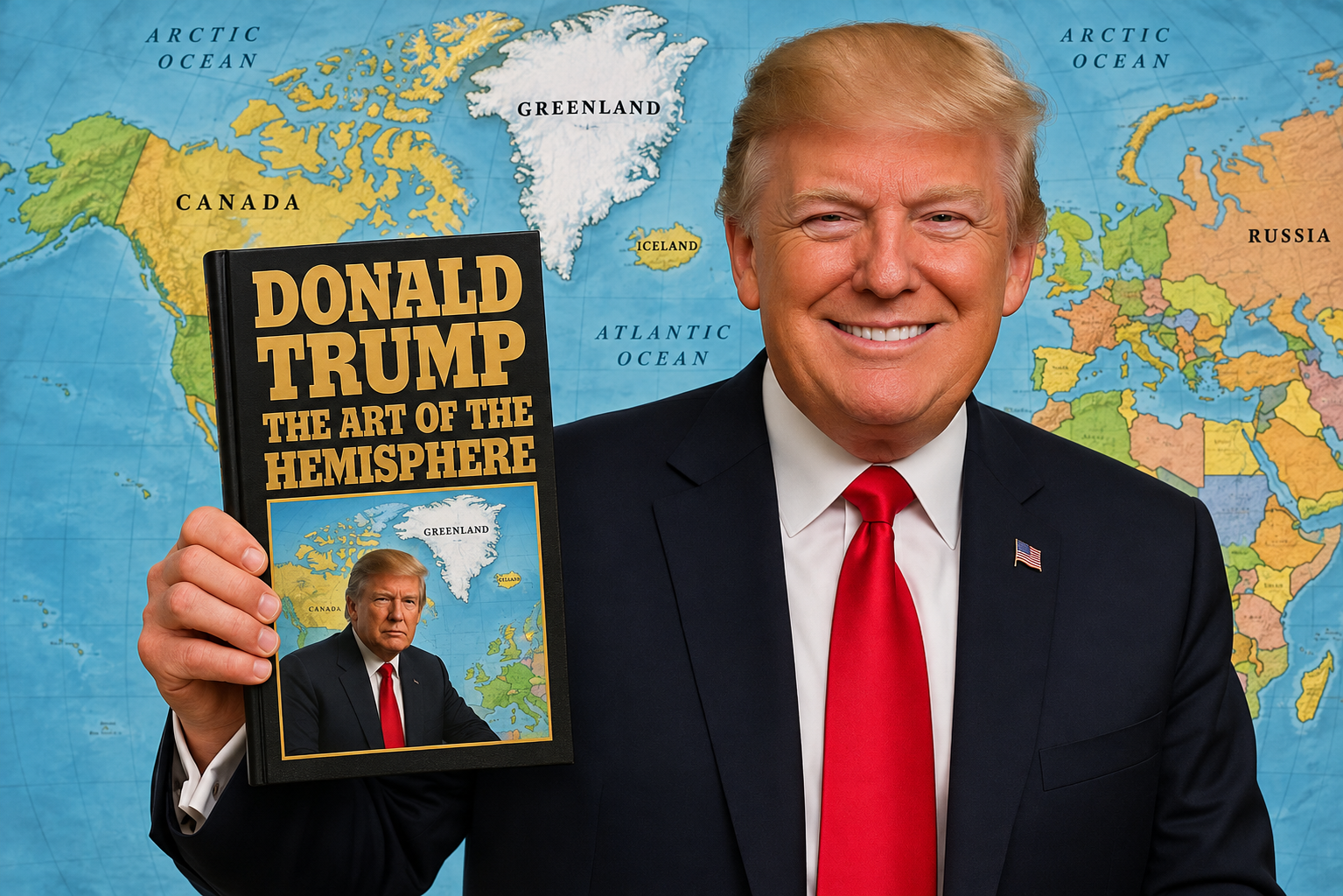
Appearances matter because capacity is visible. Summit photographs show engagement. The parliamentary vote shows that engagement occurred after the last large vacancy had already closed. Realpolitik does not require the other side to admit the sequence. It requires that the sequence stay legible. On 19 November it was. The Art of the Hemisphere never functioned as a shopping list. It functioned as a rule about who may operate in this theater. The rule entered force while the President sat with the powers it excludes. Always be closing.
