
The Pieces Are Falling Right Into Republican Hands
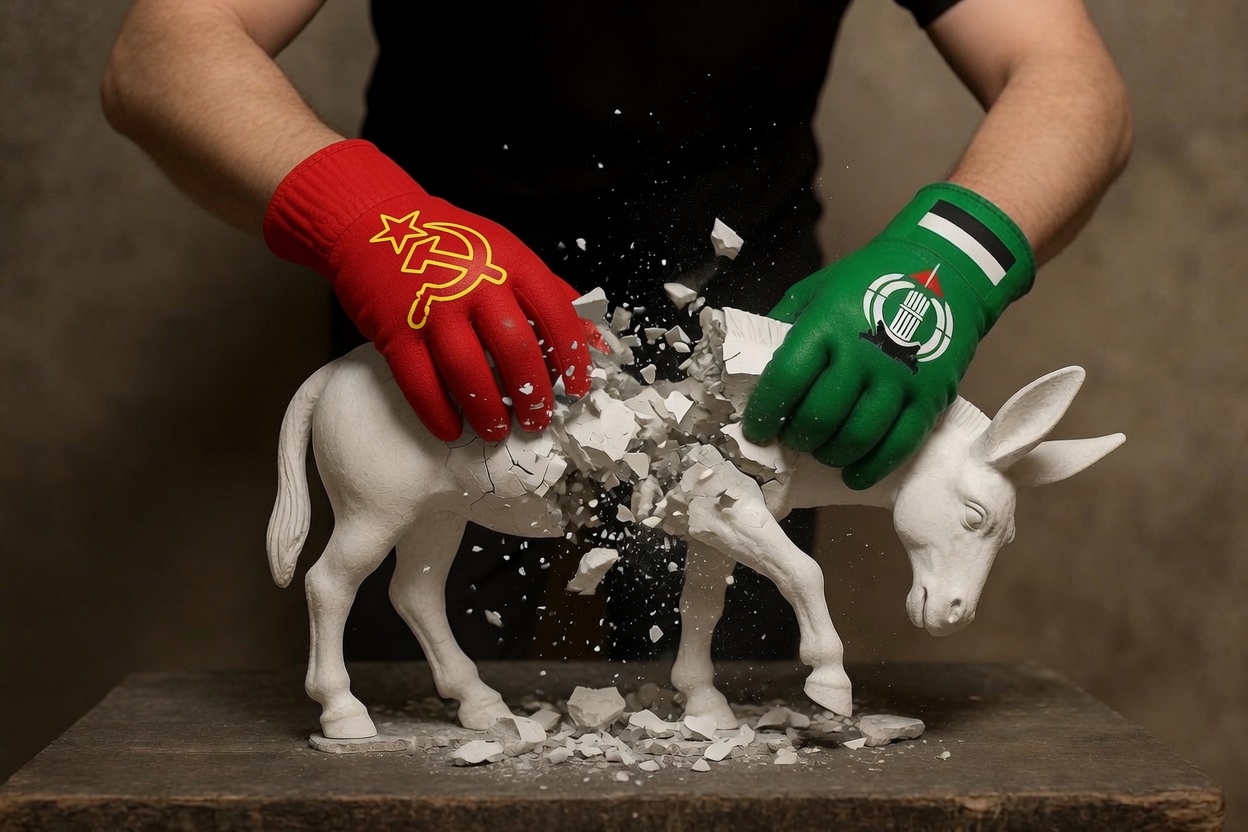
The Democrat Party is fracturing in real time, and the pieces are landing exactly where Republicans can pick them up.
Last night in New York, Zohran Mamdani’s socialist machine knocked off two incumbents tied to House Minority Leader Hakeem Jeffries. One of the winners, Aber Kwas, is the child of illegal immigrants who won a state senate race. She has already blamed 9/11 on America’s “system of capitalism, racism, white supremacy, and Islamophobia.” Another Mamdani-backed candidate helped lead an organization whose stated goal includes the “eradication of Western civilization.” These are not fringe voices anymore. They are winning Democrat nominations and consolidating power inside the party.
I say this with no ill will or animosity: if you hate the Democratic Party, then please don’t run for our nomination.
Don’t use our resources. Don’t rely on our volunteers. Don’t use our infrastructure. Don’t ask Democrats to invest their time, money, and energy in your…
— Jaime Harrison (@harrisonjaime) June 23, 2026
Don’t ask Democrats to invest their time, money, and energy in your campaign.
Focus on building the party you actually support.
Political parties aren’t perfect, but they’re built by millions of people who knock doors, make calls, organize meetings, and fight for the values they believe in. If you don’t believe in the party, then don’t ask its members to carry you across the finish line.
Former DNC Chairman Jaime Harrison felt compelled to issue a public warning: if you hate the Democrat Party, stop running for its nomination and stop using its resources. The fact that a former national chairman had to say this out loud tells you the alarm bells are ringing inside the building.
This is not normal primary turbulence. It is a structural shift with direct consequences for the 2026 midterms.
The Black Vote Problem Is Real
In Texas, James Talarico beat Jasmine Crockett in the Democrat primary for U.S. Senate. Crockett’s supporters have not forgotten it. Black voters who turned out strongly for her are showing every sign of staying home or underperforming for Talarico in November. Talarico’s record and rhetoric make it easy for them to do so.
He spent years as an equitable education consultant pushing DEI frameworks into Texas school districts. He has described his own “whiteness” and “masculinity” as things that limit his imagination. Five years ago, in an interview with a progressive “pastor,” Talarico declared, “I always think of myself as a Christian who hates Christianity.” He scrubbed his campaign website of earlier boasts about “bold progressive legislation” and fighting for “trans kids.” None of this generates enthusiasm among Black voters who have spent decades as a core part of the Texas Democrat coalition.
Colin Allred has snubbed him as well. The former Senate nominee and current congressional candidate wants no part of Talarico’s campaign or the state convention. The racial and personal resentments from the primary have not healed. They have metastasized.
Jon Ossoff sees the same vulnerability in Georgia. He cannot win on policy or his own record, so he resorts to calling Republican nominee Mike Collins a “segregationist” from a church pulpit on Father’s Day. This was not a random outburst. It was a calculated attempt to racialize the race and drive Black turnout when the fundamentals look shaky. Democrats only reach for this kind of crude race-baiting when they fear their own coalition is softening. Ossoff is telegraphing weakness, not strength.
Platner Is Poison to Independents
In Maine, Graham Platner is doing the same damage on the other side of the coalition. His growing list of problems, military service claims under scrutiny, personal conduct issues, and a steady stream of anti-success rhetoric, is not just alienating the base. It is toxic with the independents who decide elections in that state.
Platner has all but confirmed more dirt is coming. He openly supports Planned Parenthood, he explained, because he goes there for STD exams. Susan Collins has won repeatedly by occupying the pragmatic middle that Maine independents expect. Platner represents the opposite: chaotic, negative, and aligned with the most radical elements of his party. Independents do not reward that profile. They punish it. The same dynamic that makes Platner uncompetitive with the center in Maine is visible in other swing areas where Democrats are nominating candidates who cannot close the deal with normal voters.
The Red-Green Alliance Is Displacing Traditional Democrats
The deeper problem is the coalition shift itself. In New York and other urban strongholds, a Red-Green alliance of far-left socialists and Islamist-adjacent political actors is pushing aside the Black and Hispanic networks that built Democrat power in those cities for decades. Traditional Democrat organizations that delivered constituent services and represented older coalitions are losing ground to newer, more ideological factions.
Black and Hispanic voters are noticing. When political power and attention get redirected toward newer activist blocs, the older constituencies lose leverage. Jaime Harrison’s warning is the establishment version of the same observation: the party is being remade by people who do not actually like the Democrat Party as it existed for most of their lifetimes.
This displacement does not stay local. It travels. When voters in Texas see the same patterns, a nominee who cannot consolidate the Black vote, a national party elevating candidates who openly disdain core American institutions, the message lands with force.
Republicans Have a Once-in-a-Generation Opening
These fractures create a rare opening for Republicans to nationalize the midterms.
Candidate quality is on our side. Talarico cannot unite his own coalition. Platner repels independents. The New York socialists hand Republicans clean contrast on cultural issues and basic patriotism. Democrats are producing nominees who either sound alien to normal voters or actively signal hostility to the country’s foundations.
The issues line up the same way. Crime, immigration enforcement, and government waste remain potent. Judicial interference with deportation efforts and the steady stream of extreme rhetoric from Democrat nominees give Republicans fresh, concrete examples every week. Voters do not need to be persuaded that something feels off with the other party. They only need permission to act on what they already see.
The Red-Green takeover and the resulting coalition breakdowns are accelerating this process. When Black and Hispanic turnout softens for flawed Democrat candidates, and when independents recoil from radical language and chaotic personalities, the math favors Republicans who stay focused on the core issues.
This is not a guarantee of victory. It is an opportunity that rarely appears this clearly. Republicans who treat the midterms as a series of local races will leave that opportunity on the table. But those who nationalize around candidate quality, immigration enforcement, crime, and the deeper cultural question of whether the Democrat Party still represents normal American priorities can make this a very long night for Democrats in November.
The pieces are moving into place. The question is whether we will pick them up.
