
From Lies and Loopholes to Chattel Management
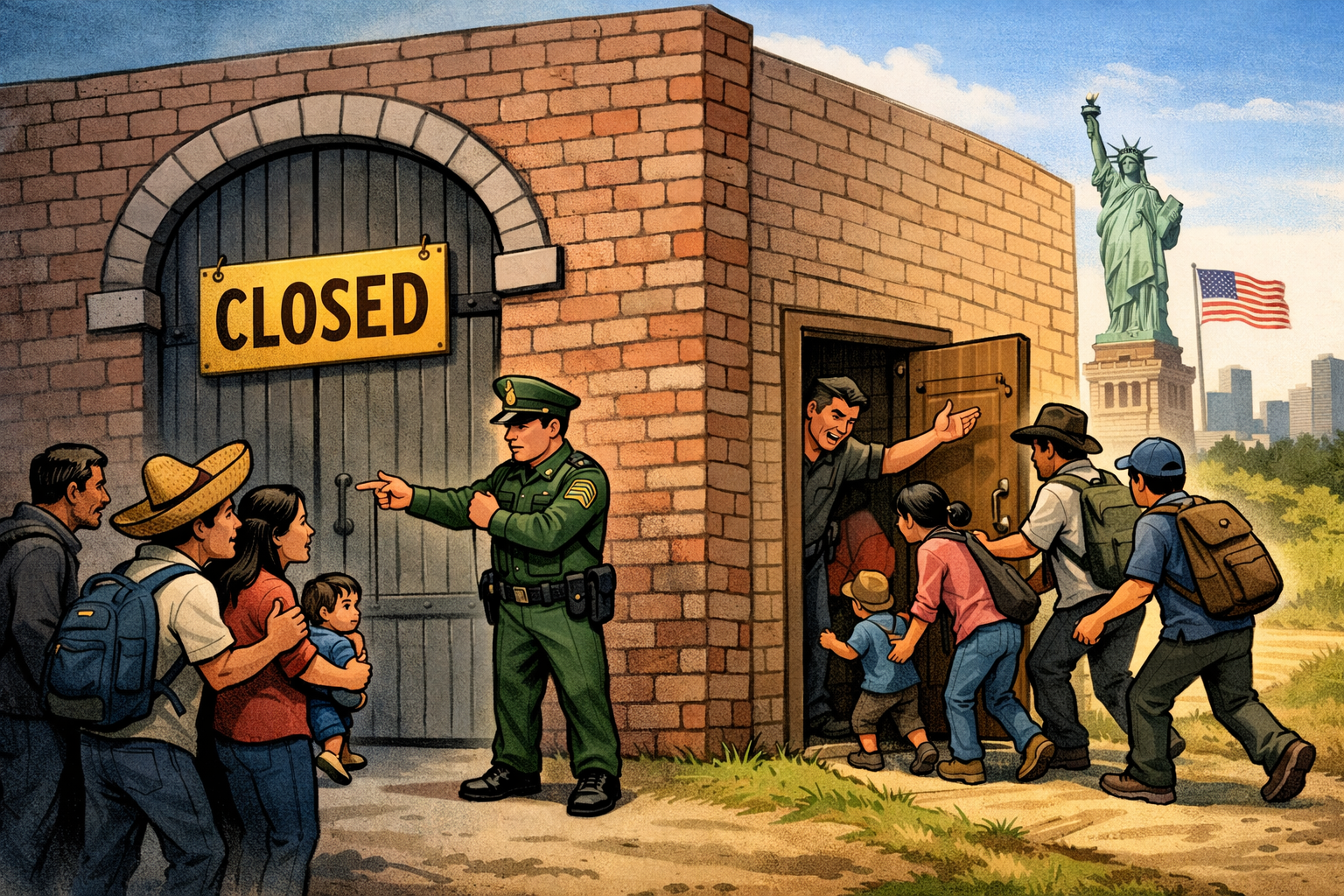
In my column, “Lies, Loopholes, and Legalization,” I went through H.R. 4393 — Rep. María Elvira Salazar’s so-called DIGNIDAD Act — section by section. I called it what it is: an awful amnesty bill full of lies, slicker and roughly four times larger than the 1986 Simpson-Mazzoli scam. It grants protected legal status and work authorization to roughly 11–12 million people who were here illegally before 2021, offers Dreamers a clear path to green cards and citizenship, waters down criminal and gang bars, accelerates chain migration through hardship presumptions, and sells the whole thing with deceptive “restitution” fees that collapse under real-world NGO subsidies and fungibility. I said the bill should stay buried in committee. I meant it.
But even that detailed fisk didn’t go deep enough. There are additional provisions I only touched on lightly, and more importantly, a deeper philosophical cancer at the heart of the bill that demands its own examination. A sharp article by @DataRepublican today forced me to confront that rot directly.
Additional Provisions That Make the Bill Even Worse
Beyond the core amnesty, the bill quietly includes several expansions that deserve more attention. It forgives up to 75% of federal law school student loans for attorneys who agree to work four years at the new “humanitarian campuses” processing asylum claims and helping aliens. Taxpayers are literally subsidizing the legal infrastructure that makes mass processing and eventual legalization smoother.
It creates a strong presumption of eligibility for O-1 “extraordinary ability” visas for foreign nationals who earn a PhD in STEM fields or healthcare from a U.S. university. Combined with changes that make F-1 student visas “dual intent,” this makes it significantly easier for highly educated foreigners to stay and work here indefinitely. These are not small technical tweaks — they are deliberate expansions of legal immigration pathways while the bill simultaneously normalizes millions already here illegally.
Gang enforcement remains weak: the main Dignity Program has no dedicated gang bar, relying only on general felony or multiple-misdemeanor thresholds. For Dreamers, the bill limits the use of gang database evidence. Family unity provisions and “extreme hardship” presumptions grease the wheels for chain migration. And the bill’s “may not be removed” language creates a practical moratorium on interior enforcement for anyone who simply claims eligibility during the application window.
These details compound the damage I outlined last column. But they are still symptoms. The real disease is how the bill fundamentally redefines human dignity.
The Deeper Rot: Government-Issued “Dignity” and the Commoditization of Human Beings
@DataRepublican’s article cut to the heart of the matter and is the reason I’m writing this follow-up. She correctly observed that the “dignity” Salazar keeps touting is not the inherent, God-given dignity rooted in the biblical tradition or the American founding. It is a bureaucratic construct — a government-administered status that is conditional, priced, monitored, and revocable.
The DIGNIDAD Act’s “Dignity Program” and “Dignity Status” are cut from the same cloth: dignity as an institutional deliverable, something an organization provides to a population through managed programs with eligibility criteria and compliance requirements.
In other words, even the “conservative parts” of the bill brings the supranational liberal order another step closer in managing humans as a social credit system.
This is precisely the danger I warned about in my column, “Nosedive by Majority Rule.” When government replaces clear, enforceable lines with administrative discretion and managed privileges, we don’t get compassion — we get rule by bureaucracy, where human beings are reduced to data points and compliance scores. The DIGNIDAD Act is a textbook example of that slide.
Look at what the bill actually creates for the roughly 11–12 million eligible people. It doesn’t simply forgive past violations or grant permanent status. Instead, it issues a renewable “Dignity Status” — initially good for seven years, but explicitly renewable “any number of times” as long as the individual continues to comply. Compliance means paying the $7,000 restitution in installments, undergoing bi-annual check-ins with DHS, maintaining work or study requirements (with limited waivers), passing repeated background checks, and staying in “good standing.”
Fail any of those conditions and the protection from removal can be revoked. This is not dignity. This is a revocable license to exist legally inside the United States, granted and overseen by the administrative state. It turns human beings into managed chattel — inventory to be tracked, billed, and renewed.
This is social credit logic applied directly to immigration policy. The state gets to assign, price, monitor, and potentially withdraw “dignity.” As @DataRepublican rightly noted, this has nothing to do with recognizing the inherent worth of every person made in the image of God. It is the therapeutic administrative state offering conditional privileges in exchange for ongoing compliance and payment. That is a profound inversion of American principles.
When you combine this managed status with the bill’s NGO infrastructure, restitution fund, humanitarian campuses, and legal service subsidies, you see the full picture: a vast compliance bureaucracy is being built to administer millions of people who violated our immigration laws. This is not reform. It is institutionalization of the problem.
This Bill Practically Guarantees “DIGNIDAD 2”
Once this system is in place, the political momentum for expansion becomes almost unstoppable. Dreamers already get a citizenship track. The millions in Dignity Status will quickly form constituencies, backed by business interests and well-funded NGOs, demanding the next logical step: conversion to full green cards, citizenship, and voting rights. They will argue the infrastructure already exists — why keep people in second-class “Dignity” limbo?
We’ve seen this pattern before. The 1986 amnesty was sold as a one-time deal with strict enforcement promises. Instead, it created permanent political pressure and demographic realities that made future amnesties politically attractive. This bill is four times larger and comes pre-loaded with administrative machinery designed to facilitate the next round. “DIGNIDAD 2” isn’t speculation — it’s the foreseeable consequence.
Bottom Line
The DIGNIDAD Act fails on every level. It lies about its scope and effects. It expands legal immigration while legalizing the existing illegal population. It weakens enforcement in practice. And most dangerously, it commoditizes human beings by turning dignity into a government-issued, revocable status complete with fees, check-ins, and compliance scores.
Real human dignity is not a privilege dispensed by Washington. Real sovereignty means enforcing the law instead of managing its violation through renewable bureaucratic categories. This bill does the opposite.
It must die in committee. Not out of hardness of heart, but because turning millions of people into line items in a federal compliance system is corrosive to the rule of law, American sovereignty, and the very idea of inherent human worth.
Read the bill. Follow the money. And recognize the social credit camel when its nose is already deep under the tent.
