
Why Jasmine Crockett Was the Sensible, More Moderate Choice in the Texas Democrat Senate Primary
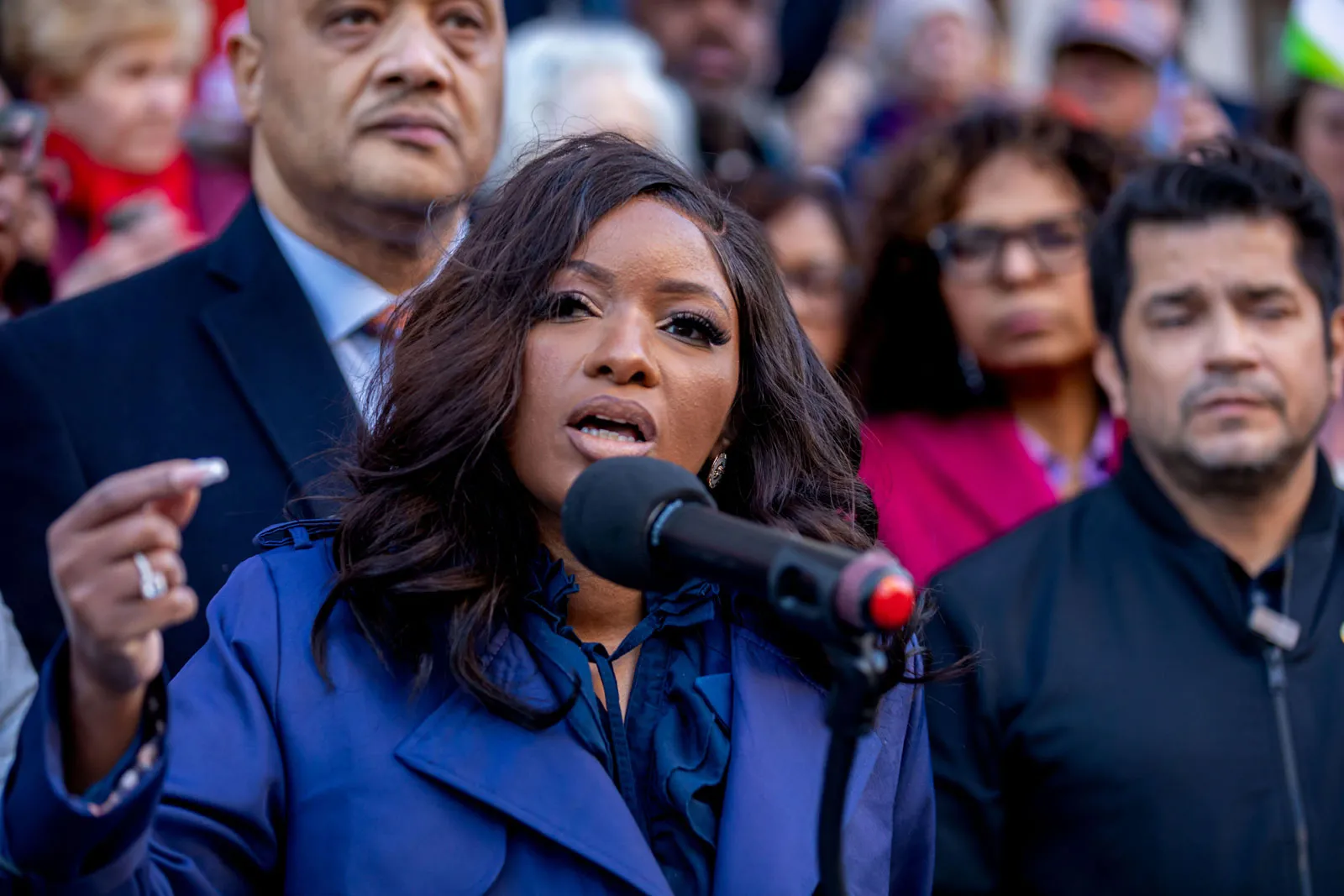
Conventional wisdom has a terrible track record in Texas politics, and it just got another black eye.
Back in November and December of 2025, I wrote repeatedly that James Talarico would win the Democrat primary, dismissing Jasmine Crockett’s chances against him time and again, based on the racial and coalition fractures I saw clearly in the Texas Democrat electorate. I knew then, as I know now, that Crockett was the more sensible, more moderate choice for a general-election fight, not because her policies were centrist (they weren’t), but because her controversies were already fully baked in, her style was overt and partisan, and her profile carried fewer hidden landmines for a statewide audience in this red-leaning state. Talarico, by contrast, was packaging the same far-left positions in soft-spoken, pastoral Christian language that would sound reasonable to some at first listen but would strike most Texans as theological sleight-of-hand once the clips started running.
On March 3, 2026, the primary results proved the point I had been making for months. Talarico won outright with roughly 53 percent to Crockett’s 45–46 percent (with minor candidate Ahmad Hassan taking about 1 percent), avoiding a runoff and becoming the Democrat nominee to face either John Cornyn or Ken Paxton in November. Within hours, national and even some Texas media began treating Talarico as the “formidable” candidate, the fresh face who could finally break the GOP’s three-decade stranglehold on statewide offices. They were wrong then, and they’re wrong now. Texas voters will not elect a candidate whose radicalism is cloaked in Bible verses and an “aw shucks” demeanor. Crockett was the safer, more electable pick. Here’s why.
First, the racial and coalition fractures in the Texas Democrat Party are real, and they delivered exactly the outcome I predicted.
Through late 2025 I kept saying the same thing: White Democrats will not reliably vote for Black candidates in statewide primaries; Latinos will split, often tilting away from Black candidates. The numbers bore that out.
Pre-election polls showed Crockett dominating among Black Democrat primary voters, frequently 80 to 87 percent support in surveys from the University of Texas Texas Politics Project and Emerson College. Talarico, meanwhile, led among white voters (in some breakdowns by as much as 57–71 percent) and performed strongly with Hispanics (around 59 percent in one Emerson poll, near toss-ups in others). The electorate’s composition—where white and Latino Democrats make up large shares—gave Talarico the edge he needed. Crockett’s strength in urban Black turnout areas simply couldn’t overcome the coalition imbalance. This wasn’t about ideology; it was about identity and voting patterns that Texas Democrats still pretend don’t exist. Crockett’s controversies (her viral congressional takedowns, her sharp partisan rhetoric) were already well known and priced in. Voters knew what they were getting. No theological surprises.
Policy-wise, Crockett and Talarico were not miles apart.
Both are firmly progressive: strong support for abortion access, expansive LGBTQ+ rights including gender-affirming care, criticism of strict border enforcement, calls for taxing the wealthy to fund social programs. The real divide was never the substance of the positions; it was the packaging.
Crockett framed her views through straightforward partisan and equity lenses: racial justice, systemic reform, calling out Republican hypocrisy. That style is fiery, confrontational, and unmistakably Democrat. Texas voters have seen it before. They know how to respond to it. Talarico, however, wrapped the identical agenda in anodyne Christian trappings: “hospitality to the stranger” as a biblical mandate for more open borders and amnesty pathways, “God is non-binary” in testimony against anti-trans legislation, framing abortion as aligned with Mary’s “consent” and noting that Scripture doesn’t explicitly prohibit it, critiques of “Christian nationalism” as a betrayal of Jesus while suggesting atheists can sometimes be more Christ-like than professed Christians. He sells wealth redistribution and progressive social views as the true fulfillment of the Gospel.
To many listeners (especially younger or disaffected voters) that sounds compassionate and faith-affirming on first pass. To the evangelical and traditional voters who still decide statewide races in Texas, it sounds like heresy dressed up in a seminary degree. The oppo dump that hit immediately after March 3 only amplified what was already there.
Key statements have gone viral in conservative circles:
- Talarico’s 2021 Texas House speech declaring “God is non-binary.”
- His biblical arguments minimizing restrictions on abortion and presenting it as a matter of divine consent.
- His “front porch with a giant welcome mat” description of immigration policy, which critics translate as open borders plus amnesty.
- His claim that atheists can embody Christ more authentically than some Christian colleagues.
The reaction has been swift and brutal: NRSC research blasts, Paxton calling him a “far-left radical,” Cornyn labeling him “Beto O’Rourke 2.0” who quotes the Bible to defend a non-binary God and abortion on demand, X posts branding him a “wolf in sheep’s clothing,” “radical antichrist,” or “heretical.” These aren’t fringe attacks. They dominate conservative discourse right now, and they will be in heavy rotation come fall.
Texas polling tells the rest of the story.
Recent surveys (UH Texas Trends 2025, Manhattan Institute 2024, UT Texas Politics Project) show strong conservative leans on the cultural issues Talarico reframes: 68 percent support rules requiring restrooms and locker rooms match biological sex, majorities favor stricter border enforcement, and post-Roe abortion attitudes remain restrictive in practice even if divided in theory. Evangelicals and cultural conservatives remain the decisive bloc in general elections here. Talarico’s “politics of love” and “compassionate Christianity” will not neutralize those voters; it will enrage them by seeming deceptive.
Crockett’s fighter persona would have drawn the usual “angry liberal” attacks—attacks Democrats already know how to counter. Talarico’s softer delivery makes the same positions feel like an ambush once the clips air.
On the Republican side, the primary math changes nothing for November.
Cornyn took about 42 percent, Paxton 41 percent, Wesley Hunt 13–14 percent, setting up a May 26 runoff. The Senate Leadership Fund’s closing attacks on Hunt splintered the anti-Paxton vote and guaranteed a bloody fight, but the winner (whether Cornyn’s institutional advantages or Paxton’s base energy) will consolidate Republicans and peel off enough independents. Early internal numbers already had either Republican beating Talarico comfortably once the faith-based contrast is fully drawn.
Texas has not elected a Democrat statewide in more than thirty years. We are not suddenly going to hand the Senate seat to a candidate whose message boils down to open borders, amnesty, abortion on demand, and a non-binary God, all delivered with a soothing voice and out-of-context Bible verses.
Conclusion
I said months ago that Talarico would win the primary, knowing that Crockett was the more sensible, more moderate option for Democrats who actually want to win in November. The primary results proved the coalition warning right. The emerging “Talarico is formidable” narrative is proving the values warning right. Conventional wisdom ignored Texas racial dynamics then. It’s ignoring Texas cultural realities now.
Texas Democrats had a better choice. They didn’t take it. Good luck selling a paper Christian to the real ones.
