
The Democrat Party Needs a Sam Houston to Reject Insurrectionist Rhetoric and Economic Hypocrisy
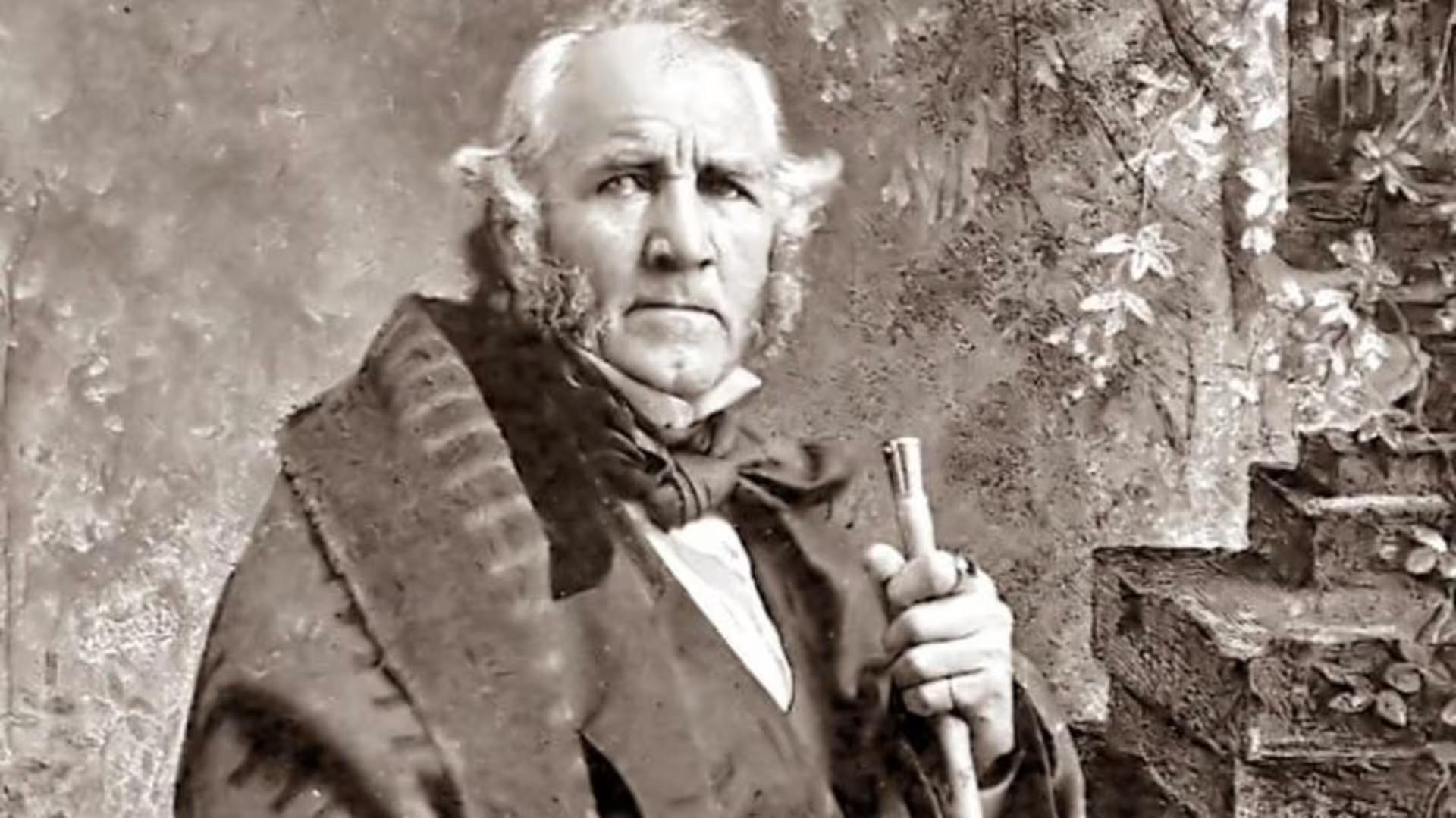
In today’s polarized America, the Democrat Party’s resistance to federal immigration law enforcement, cloaked in claims of “state sovereignty” and justified by assertions that illegal alien labor prevents economic collapse, echoes the antebellum South’s economically driven defiance of federal authority. This rhetoric, as David Strom notes today in a Hot Air column, risks “open rebellion” by reviving Confederate-era states’ rights arguments. The party’s stance mirrors the South’s defense of slavery as economically vital, a path Sam Houston rejected in his 1854 Senate speech against the Kansas-Nebraska Act and his 1861 refusal to swear a Confederate oath. Democrats urgently need a Houston-like leader whose principled foresight can steer them away from divisive, insurrectionist rhetoric toward a pragmatic, unifying approach to immigration that balances economic needs with federal cooperation.
Houston’s 1854 Warning
Houston’s 1854 Senate speech opposing the Kansas-Nebraska Act offers a stark warning about the dangers of economically motivated policies that fracture national unity. The Act, which allowed territories to decide on slavery via popular sovereignty, effectively repealed the Missouri Compromise of 1820-a “sacred compact” that had balanced free and slave states. Houston, one of only two Southern senators to vote against it, foresaw that prioritizing regional economic interests-Southern demands to expand slavery for cotton and tobacco production-would ignite sectional discord, leading to “Bleeding Kansas” and the Civil War. He declared,
I rise to express my deep solicitude upon the subject now before the Senate. The bill proposes to organize the territories of Nebraska and Kansas, and in so doing, it is said to supersede the compromise of 1820, commonly called the Missouri Compromise. This measure, sir, was a solemn compact, entered into by the North and the South, to settle forever the question of slavery in the territories north of 36 degrees 30 minutes. It was a pledge of peace, a bond of union, which has held this nation together for more than thirty years. To disturb it now is to invite discord, to convulse the country from one extremity to the other. I ask, sir, what necessity exists to unsettle this sacred agreement? Has it not served its purpose in preserving harmony? Why, then, should we tear it asunder for the sake of a temporary advantage?
…
If this bill passes, it will open anew the wounds of sectional strife. The agitation of slavery, which the Missouri Compromise laid to rest, will be revived with a vengeance. The North will feel betrayed, for they have adhered to the compact in good faith; the South, in its eagerness to extend its institutions, risks the stability of the Union itself. I foresee, sir, that this measure will lead to anarchy, perhaps to disunion. The Territories will become a battleground, where men will contend not with reason but with violence. Can we not pause and consider the consequences before we plunge into this abyss?
…
The doctrine of popular sovereignty, as proposed in this bill, is fraught with peril. It assumes that the settlers of these territories can peaceably decide the question of slavery. But who will settle there? Men of violent passions, both for and against slavery, will rush to these regions, armed not for peace but for conflict. The result will be bloodshed, not harmony. We have seen the fruits of such agitation in the past; let us not sow the seeds of greater discord now. The Missouri Compromise, by fixing a line, prevented such chaos. Why abandon a system that has proven its wisdom?
…
I am a Southerner, born and bred, and I know the sentiments of my section. But I am also an American, and I love this Union more than I love the fleeting advantages of sectional triumph. The South, in her thirst for power, may gain a temporary victory, but at what cost? The cost will be the alienation of the North, the embitterment of our people, and the peril of our Republic. Let us not, for the sake of ambition, sacrifice the bonds that hold us together. I implore this Senate to reject this bill, to preserve the Missouri Compromise, and to maintain the faith of our nation with its people and its treaties.
This warning underscored Houston’s rejection of short-term economic gains-slavery’s expansion to new territories-that risked national ruin. Modern Democrats mirror this error by defending illegal alien labor as indispensable to industries like agriculture and construction, claiming the economy would collapse without it. This parallels the South’s economic arguments for slavery, which Houston rejected as shortsighted. Sanctuary city policies that release serial repeat offenders to sustain labor markets, risking public safety and federal authority for economic gain. Without a Houston to challenge this economic pretext, Democrats court the same sectional discord he warned of, escalating tensions in a nation already divided over immigration.
Houston’s 1861 Stand
Sam Houston’s vote against the Kansas-Nebraska Act in 1854 alienated many pro-slavery Texans and effectively ended his U.S. Senate career, as the Texas legislature declined to reelect him in 1855. His staunch Unionist stance and defense of the Missouri Compromise clashed with the state’s growing secessionist sentiment, leading to his replacement by a more pro-Southern senator. However, Houston’s popularity endured, and in 1859, Texans elected him governor, reflecting his enduring influence and reputation as a leader committed to Texas’s interests, despite his controversial vote.
Houston’s 1861 address refusing the Confederate oath further exemplifies the leadership Democrats lack. As Texas governor, he faced immense pressure to join the Confederacy, whose economy relied on slavery and whose leaders invoked states’ rights to defy federal authority. Houston stood firm, stating,
I have ever been devoted to the interests of Texas, and I cannot sanction her ruin by civil war and desolation, which will desolate her fields and impoverish her people. To avert this calamity, I refused to take an oath to destroy the Government to which I owe my allegiance, for I cannot violate the principles I have maintained through a lifetime of service. I am for the Union, and no power on earth can shake my fidelity to it, for it is the work of our fathers, the palladium of our liberties.
I fought for Texas’s liberty at San Jacinto, and gave her a place among nations, but I will not join a revolution to tear her from the Union for the sake of slavery’s extension, which will divide and destroy us. The Union has been the shield of our prosperity, the guarantee of our peace and happiness; to dissolve it is to invite ruin, to involve us in anarchy and bloodshed, and to leave our children a heritage of woe, cursing the folly of their fathers who sacrificed the blessings of union for a delusive hope of separate power.
His refusal, costing him his governorship, rejected the South’s economically driven rebellion, which prioritized regional wealth over national unity. Today, Democrats in states like California and Illinois invoke “state sovereignty” to block ICE, framing illegal alien labor as an economic necessity while tolerating actions Strom describes as “open season” on federal agents. This rhetoric, as Strom notes, goes “the full George Wallace,” echoing the segregationist’s 1963 stand against federal desegregation orders and the Confederacy’s 1861 defiance. Like the South’s loyalty oaths, Democrat resistance flirts with nullification, undermining federal supremacy. A modern Houston could break ranks, rejecting this insurrectionist tone and advocating for legal immigration reforms that address labor needs without defying federal law.
Modern Democrat Rhetoric
The Democrat Party’s economic arguments, claiming illegal alien workers are vital to prevent collapse, mirror the South’s defense of slavery as the backbone of its economy. The Kansas-Nebraska Act’s economic motives ignored long-term national consequences, much like Democrats’ current stance. Blue states obstructing ICE operations and tolerating violence against agents to protect local economies highlight this hypocrisy. Just as Houston saw through the South’s economic excuses in 1854, a Democrat leader today could expose the flaws in arguing that illegal alien labor is indispensable, pointing to alternatives like streamlined guest worker programs.
🚨 STEPHEN MILLER DECLARES: "The president is not going to allow American citizens to be r*ped, murdered, maimed and KILLED by illegal alien gang bangers, terrorists, drug dealers and psychopaths."
"And we're not going to leave our citizens at the mercy of a Democrat criminal… pic.twitter.com/rUkd1IzXxQ
— Eric Daugherty (@EricLDaugh) October 6, 2025
By clinging to “free labor” arguments, Democrats risk alienating voters and fueling the “reign of terror” White House Deputy Chief of Staff Stephen Miller describes of the Democrat criminal justice system, such as rising crime in sanctuary cities. Houston’s foresight in predicting war from the Missouri Compromise’s repeal applies here: unchecked defiance could spiral into broader conflict, not just legal but social, as public trust erodes.
Conclusion
Democrats’ selective embrace of states’ rights reveals the Confederate logic, betraying their historical link to such rhetoric during the antebellum era, through Democrat Jim Crow, to the modern Democrat Party of today. Houston’s 1854 and 1861 stands illuminate the path Democrats must take. His warnings against economic and sectional divisiveness, rooted in principle and foresight, contrast with the party’s current trajectory of insurrectionist rhetoric and economic hypocrisy. By embracing a Houston-like leader, Democrats could reject the dangerous parallels to Confederate defiance, forge a balanced immigration policy, and restore national unity before their actions, as Houston warned, “convulse the country” once more.
