
The Perils of Lax CDL Issuance to Illegal Aliens
In the vast network of America’s interstate highways, where 80,000-pound semis barrel along at 70 miles per hour, safety hinges on a simple premise: drivers must be qualified, vetted, and capable of responding to the chaos of the road. Yet, in recent years, a dangerous loophole has emerged in states with permissive policies, allowing illegal aliens-many unable to speak or read English-to obtain Commercial Driver’s Licenses (CDLs). These licenses empower individuals to haul freight, transport passengers, or even carry hazardous materials across state lines, often without the rigorous federal safeguards intended to prevent catastrophe. The consequences have been tragic and foreseeable: a spike in fatal crashes, eroded public trust, and a federal scramble to reclaim control. This
A Shutdown Born of Perfidy and Powerlessness

Democrat Perfidy on Health Care Funding for Illegal Aliens
As the clock struck midnight on October 1, 2025, the United States government ground to a halt, not due to necessity, but due to the perfidious obstinacy of Senate Democrats led by Chuck Schumer. This shutdown, a spectacle of political self-sabotage, centers on a grotesque insistence on funding health care for illegal aliens-a policy choice that epitomizes Democrat hypocrisy and a complete lack of leverage in the face of a resurgent Republican majority. Meanwhile, federal spending has ballooned 54% since 2019 without delivering commensurate value, underscoring the urgent need for another round of the Department of Government Efficiency (DOGE) to “DOGE the site from orbit,” as Ellen Ripley might have put it in Aliens, ensuring no trace of bureaucratic bloat remains.
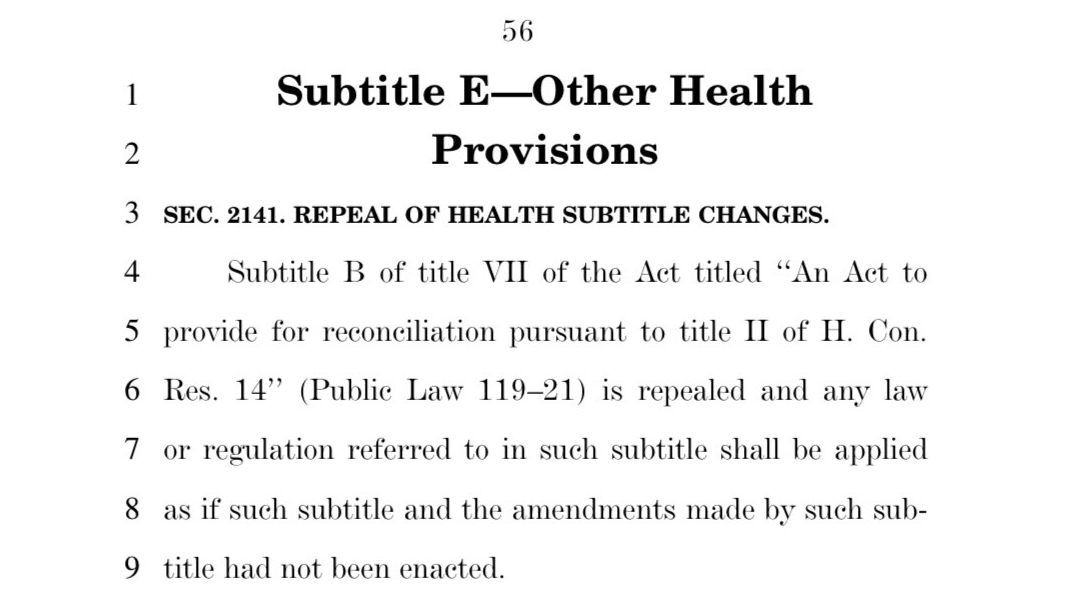
The Democrat Continuing Resolution (CR) proposal, introduced by Rep. Rosa DeLauro and Sen. Patty Murray, brazenly seeks to repeal key provisions of the One Big Beautiful Bill Act (OBBBA), specifically targeting Subtitle B of Title VII. This section, enacted on July 4, 2025, reduced the Federal Medical Assistance Percentage (FMAP) for emergency Medicaid services for illegal aliens from 90% to state rates, saving $11 billion over 10 years and disenrolling approximately 1.4 million individuals. It also imposed work requirements for able-bodied adults without dependents (ABAWDs), saving an additional $325.6 billion by reducing enrollment by 3.5-4 million. These reforms were not cuts but efficiencies, yet Democrats label them as such, a mendacious sleight of hand to justify their insistence on restoring pre-OBBBA access.
Ro Khanna’s appearance on Fox Business, defending this stance by claiming the funding for illegal aliens is “such a small portion” of Medicaid and ACA resources, is a textbook example of Democrat perfidy. Khanna claims it rarely happens, but the principle behind it-using taxpayer dollars to subsidize health care for those not legally entitled to it-remains a moral and fiscal outrage. This is not about compassion; it’s about political pandering, ignoring the 65% of Americans (per NYT/Siena) who oppose a Democrat-led shutdown and the 59% of independents (Marist) who reject such chaos. The Democrat base, already fractured at 47% support, feels the pain of furloughs (750,000 workers) and service lapses (e.g., VA delays), yet Schumer persists, betting on a hand of deuces against a Republican trifecta.
Khanna on Fox: "In terms of healthcare, the reality is they are just not being honest. The amount of money that actually is going towards people who are here illegally is such a small portion of the Medicaid cuts or the ACA, if at all." pic.twitter.com/Y8vREnylaI
— Aaron Rupar (@atrupar) October 1, 2025
Complete Lack of Leverage: The Michael Corleone Quote
Schumer’s position is one of utter powerlessness, a fact epitomized by President Trump’s response, which echoes Michael Corleone’s icy dismissal in The Godfather Part II: “My offer is this: nothing. Not even the fee for the gaming license, which I would appreciate if you would put up personally.” Trump’s refusal to budge on the GOP’s clean CR (H.R. 5371, passed 217-212 in the House, blocked 55-45 in the Senate) is a masterclass in leverage, enforced by Russ Vought’s unblinking execution of the Department of Government Efficiency (DOGE). Vought’s memo, demanding agencies plan for reductions in force (RIFs) by November 21, signals no bluff-12% of federal redundancies (240,000 positions) have already been cut since July, saving $30 billion.
— Office of Management and Budget (@WHOMB) September 30, 2025
Democrats, with only 47 Senate seats, lack the votes to pass their alternative CR (defeated 47-53), and their filibuster strategy collapses against a GOP majority. The National Treasury Employees Union (NTEU) lawsuit against Vought’s workforce plans, filed yesterday, is a desperate gambit that will likely fail, given Trump v. NTEU (2020) precedent and the current judicial climate favoring executive discretion. Schumer’s floor speech, dismissing a poll as “biased” amid GOP laughter, underscores his diminished stature. The shutdown’s pain-first paychecks delayed on October 3-will force a cave by week’s end, yielding nothing, as Trump’s Corleone-esque stance demands. Democrats’ leverage is not just weak; it’s nonexistent.
Massive Increase in Federal Spending Since COVID: No Value Delivered
Since 2019, federal outlays have surged 54%, from $4.45 trillion to an estimated $6.87 trillion in FY2025, driven by COVID-19 relief and subsequent spending on Social Security, health care, and debt interest. Yet, ask yourself: is your life 54% better? Are government services 54% better? The answer, obviously, is no. Gallup’s Well-Being Index remains stagnant at 6.9/10, with 41% reporting financial stress, unchanged from 2019. The World Bank’s Government Effectiveness Index rates the U.S. lower at 1.62/2.5, down from 1.67, despite $2.42 trillion more spent annually. VA backlogs are up 15%, rural hospitals face closure (338 at risk), and the National Flood Insurance Program (NFIP) lapses during shutdowns, leaving citizens vulnerable.
This disconnect is not accidental but systemic. The federal workforce has grown 8% to 2.1 million, costing $450 billion in salaries-up 40% from $321 billion in 2019. Discretionary spending rose 28% ($1.8T to $2.3T), with $50 billion in improper payments annually. Regulatory costs ballooned to $2.1 trillion (up 22%), stifling GDP growth at 2.8% versus a pre-COVID potential of 4%. Productivity lags at 1.2%, despite the spending spree. Democrats’ insistence on reversing OBBBA’s efficiencies-adding $336 billion for work rule repeal and $11 billion for FMAP restoration-exacerbates this, funding a bureaucracy that delivers no value, a perfidious betrayal of fiscal responsibility.
The Need for Another Round of DOGE: “DOGE the Site from Orbit”
The first round of DOGE, under Vought and Elon Musk, cut 12% of federal redundancies, saving $30 billion, but this is merely a start. The site must be “DOGED from orbit,” as Ellen Ripley might say in Aliens, to ensure no trace of bureaucratic bloat remains. A second round, targeting a 20-30% cut (372,000-558,000 jobs), could save $200-300 billion annually, aligning spending with 2019 levels adjusted for inflation (~$5.2T). Deregulation-rolling back $500 billion in EPA and SEC rules-could boost GDP by 1-2%, per Moody’s estimates. This is not just feasible but necessary, given the 54% spending increase without proportional gains.
Vought’s no-bluff style, proven in 2018-19 ($45 billion saved) and 2020 ($135 billion), ensures execution. The shutdown provides leverage-furloughs and RIFs pressure Democrats to cave, yielding a clean CR by October 3-4, with no health care reversals. Trump’s “energetic executive” era, backed by a 6-3 Supreme Court, will greenlight this purge. Public sentiment and Senate GOP support (Thune’s conference) signal momentum. The NTEU’s lawsuit is a sideshow; the real action is Vought’s memo demanding plans by November 21, a deadline Democrats cannot withstand.
Conclusion
Democrats’ perfidy on funding health care for illegal aliens, their complete lack of leverage in the shutdown, the massive increase in federal spending since COVID without delivering value, and the urgent need for another round of DOGE to “DOGE the site from orbit” paint a picture of a party out of touch with reality. Schumer’s Corleone-esque defeat is inevitable, and Vought’s cuts will restore fiscal discipline, ensuring that the American people, not the bureaucracy, benefit from their tax dollars. The site must be cleansed, and DOGE is the only tool for the job.
Like this post? Become a Citizen Producer!


 essay warns of the profound dangers posed by such lax issuance, spotlights the human cost through recent fatalities, examines the Department of Transportation’s (DOT) emergency countermeasures, contrasts states’ regulatory approaches, and addresses the related risk of REAL ID misuse. As of September 30, 2025, the crisis demands urgent reform-not compassion at the expense of lives.
The dangers are multifaceted and immediate. Federal law under 49 CFR § 383.51 mandates English proficiency for CDL holders, ensuring drivers can interpret road signs, communicate with law enforcement, and manage logs effectively. Without this, a simple “Bridge Out” warning becomes a deadly enigma. Illegal aliens, often fleeing economic hardship or violence, may lack formal training or experience with U.S. traffic norms, amplifying risks in vehicles capable of devastating chain-reaction wrecks. Lax state policies exacerbate this by waiving Social Security numbers, birth certificates, or immigration checks, turning CDLs into de facto “ghost licenses.” Critics argue these measures stem from humanitarian intent-enabling work without deportation fear-but the calculus is flawed. When virtue-signaling collides with an 18-wheeler, it’s innocent Americans who pay the price. A 2025 Federal Motor Carrier Safety Administration (FMCSA) audit revealed thousands of invalid CDLs nationwide, with non-domiciled (non-U.S. resident) issuances riddled with errors, including licenses extended years beyond legal work authorization. The result? Highways transformed into roulette wheels, where safety yields to sanctuary-state shortcuts.
No statistic captures this peril more starkly than the mounting fatalities. In 2025 alone, FMCSA linked at least five deadly crashes to non-domiciled CDL holders, many illegal aliens or non-English proficient, who slipped through inadequate vetting. These incidents underscore a pattern: misread signs, failed communications, and unqualified hands on the wheel. Below is a table summarizing these cases, drawn from DOT probes and state reports, highlighting the preventable human toll.
| Case | Date | Location | Driver Details | Crash Details | Fatalities | Language/Safety Link |
|---|---|---|---|---|---|---|
| Harjinder Singh Crash | Aug 12, 2025 | Florida Turnpike (Fort Pierce) | Illegal alien from India, 28; CDL issued in CA (July 2024) despite failing English and road sign tests; prior WA CDL (expired 2024). Entered US illegally in 2018. | Illegal U-turn into oncoming traffic; semi-trailer jackknifed, minivan underride collision at 70 mph. Driver fled scene initially. | 3 (37yo woman, 54yo man, 15yo girl from South FL). | Couldn’t read English signs or communicate post-crash (needed interpreter); DOT: “Inability to read signs…led to fatalities.” |
| Unnamed West Virginia Crash | Jan 2025 | West Virginia interstate | Non-English proficient commercial driver (nationality unspecified, but audit-linked to non-domicile CDL). | Multi-vehicle pileup; details tied to misreading traffic signals in fog. | At least 2 (per FMCSA report). | Required interpreter for investigation; FMCSA cited as example of English barrier causing “fatal errors.” |
| Texas Fatal (Unnamed) | Early 2025 | Texas highway | Illegal alien trucker with non-domicile CDL; limited English. | Rear-end collision with passenger vehicle due to ignored merge signs. | 2. | Part of DOT’s “three fatal crashes” probe; driver couldn’t understand English warnings. |
| Alabama Fatal (Unnamed) | Mid-2025 | Alabama interstate | Similar profile: Non-citizen CDL holder, poor English skills. | Hazmat spill after failing to yield; chain reaction. | 4 (including bystander). | Audit highlighted procedural skips on language verification. |
| Chinese Driver Dashcam Crash | ~Summer 2025 (viral video) | California highway | Chinese national; CDL via CA loophole, no English proficiency. | Swerved into lane, clipping multiple cars; total loss for one sedan. | 1 (driver of impacted vehicle). | Dashcam shows driver ignoring English-only horns/signs; went viral as “unreported epidemic.” |
These tragedies are not anomalies but symptoms of systemic failure. In the Florida case, Singh’s CDL-issued despite bombing English exams-enabled a cross-state rampage ending in three graves. Broader data shows non-domiciled drivers with a 40% higher crash rate in audited states, per FMCSA findings. Each loss erodes the social contract: Why risk families on I-95 for unvetted rigs?
Enter the DOT’s decisive emergency response, a federal backstop to state negligence. Prompted by the 2025 audit’s revelations and these fatalities, Transportation Secretary Sean P. Duffy invoked executive authority on April 2, 2025, via an Executive Order rescinding Obama-era leniency on English enforcement. This paved the way for May’s nationwide ELP guidelines, placing non-proficient drivers out-of-service immediately-no apps or translators as crutches. June’s audit exposed the rot: over 1,500 revocations for English fails and procedural skips. The crescendo arrived September 26, 2025, with an Interim Final Rule (IFR) effective September 29, slashing non-domiciled CDL eligibility. Non-citizens now require employment-based visas (e.g., H-1B), SAVE immigration verification, and limited-term licenses expiring with status-no more refugees, asylees, or DACA holders without full approval. States must pause issuances, audit existing licenses, and revoke invalids, facing decertification or MCSAP fund cuts (up to $160 million for California alone). This “two-front crisis” fix-overly broad rules and state breakdowns-projects booting 190,000 drivers over two years, with a 60-day comment period via Regulations.gov. While industry adaptation is expected (echoing COVID-era surges), the rule prioritizes lives over labor shortages, tying into Trump’s immigration EOs and visa pauses.
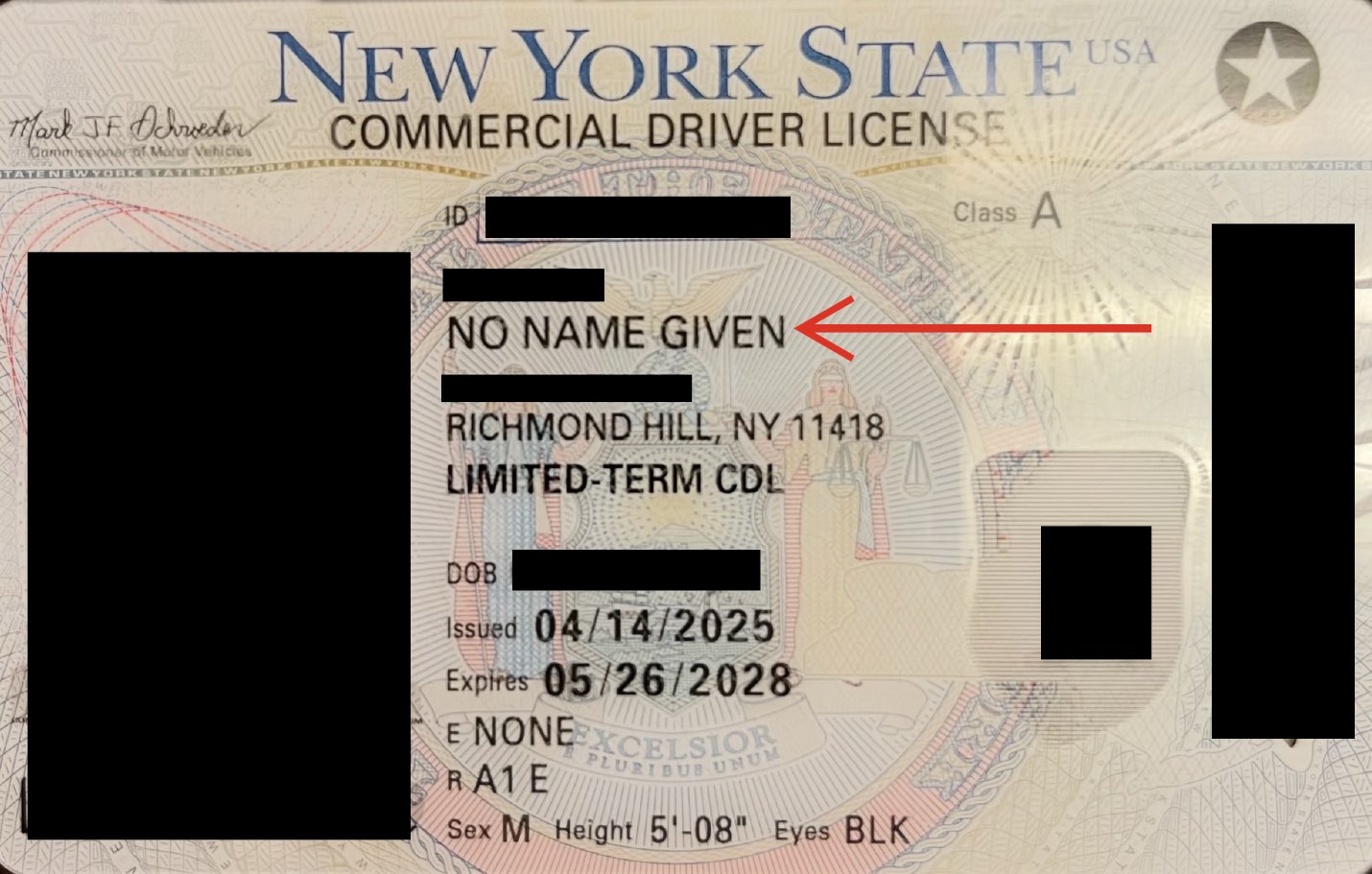
Yet, enforcement’s efficacy hinges on states. Lax regimes in New York and California exemplify the problem. California’s AB60 law, expanded in 2025, issues “limited-term” CDLs to illegal alien applicants sans SSN or status proof, often with minimal English checks-yielding 60,000+ non-domiciled licenses, 25% improper per FMCSA. New York’s Green Light Law mirrors this, waiving federal ID mandates for non-citizen CDLs, enabling “NO NAME GIVEN” placeholders for unverified identities. Both states’ sanctuary policies frame this as equity, but audits reveal chaos: over-issuances, unvetted school bus endorsements, and English barriers fueling crashes like the viral California dashcam swerve. In contrast, strict states like Texas and Oklahoma have stepped up swiftly. Texas’s DPS suspended non-domicile CDLs September 29, 2025, aligning with Governor Abbott’s English proficiency directive and impounding rigs preemptively-no funding threats needed. Oklahoma followed suit, auditing 100% of issuances and mandating SAVE checks, earning FMCSA praise for “zero-tolerance” compliance. These red-state models demonstrate feasibility: rigorous vetting without economic collapse, pressuring laggards via federal leverage.
If New York wants to hand out CDLs to illegal immigrants with “No Name Given,” that’s on them. The moment they cross into Oklahoma, they answer to our laws.
OHP performed an enforcement action along I-40 and apprehended 125 illegal immigrants.
This is keeping Oklahomans safe. pic.twitter.com/kNspThTk4E
— Governor Kevin Stitt (@GovStitt) September 29, 2025
Lurking beneath CDL chaos is a subtler threat: states potentially issuing REAL ID-compliant documents to illegal aliens, undermining national security. The REAL ID Act of 2005 bars such issuance without lawful presence proof (via SAVE), limiting eligibility to citizens, permanent residents, or temporary status holders like DACA/TPS recipients. Non-compliant cards-marked “Federal Limits Apply”-are legal in 19 states plus D.C. (e.g., California’s AB60, New York’s standard licenses), but they cannot access federal facilities or flights post-May 7, 2025. Audits confirm no widespread REAL ID abuse as of September 30, 2025-all 50 states are certified compliant-but edge cases persist. Colorado and Kentucky restrict REAL IDs to citizens/permanent residents, while Washington’s enhanced IDs exclude non-citizens outright. Potential violations? Procedural skips in SAVE checks could inadvertently grant stars to illegal alien applicants, as flagged in 2025 DHS probes of California and New York. Possession of a non-compliant card doesn’t flag immigration status (per DHS), but improper REAL IDs risk invalidation, deportation referrals, and eroded trust in the system. With enforcement phased to 2027, vigilance is key-states must audit rigorously, or federal rejection of all IDs (burdening citizens) looms.
BREAKING – In a massively disturbing revelation, it has been revealed that Democrat states such as New York and California are issuing CDLs to illegals as “no name given,” with Republican states like Oklahoma stating they have already apprehended over 125 illegals with such IDs. pic.twitter.com/bsgxqdimnY
— Right Angle News Network (@Rightanglenews) September 30, 2025
America’s roads are arteries of commerce and connection, not experiments in laxity. The fatalities etched in the table above-mothers, fathers, children-cry out for accountability. DOT’s emergency rule is a vital tourniquet, but true healing requires states to prioritize safety over shortcuts. Illegal aliens deserve pathways to stability, but not at the helm of killing machines. Until federal mandates override state compassion theater, every mile driven remains a gamble. It’s time to enforce the rules, vet the drivers, and reclaim the highways for the qualified-for in their defense lies the only true mercy.
