
How Irreversible Gains Are Engineered—and Now Defended Through Nullification
In a Sunday morning post on X, @Geiger_Capital captured the asymmetry that has defined American immigration politics for years: “One President can open our nation’s border and purposefully mass release millions of unvetted illegal immigrants into the country. But the next President can’t remove them without obstruction, riots and legal hoops. If it continues, we have no sovereignty.”
One President can open our nation’s border and purposefully mass release millions of unvetted illegal immigrants into the country.
But the next President can’t remove them without obstruction, riots and legal hoops.
If it continues, we have no sovereignty.
— Geiger Capital (@Geiger_Capital) January 25, 2026
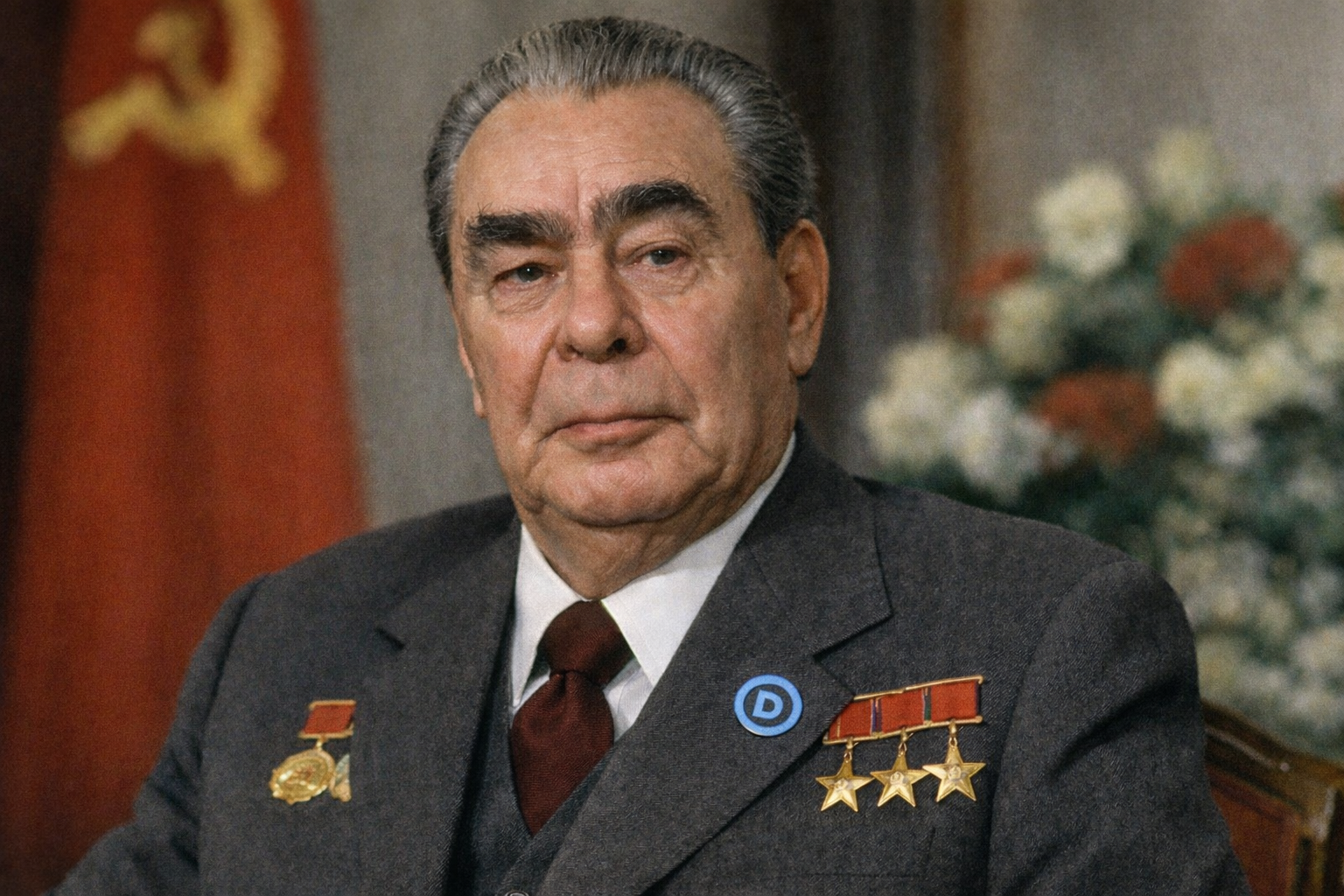
This isn’t mere frustration—it’s the operation of something akin to the Brezhnev Doctrine in modern guise. In the late 1960s, Soviet leader Leonid Brezhnev formalized a policy declaring that once a country embraced socialism under Moscow’s influence, the change was irreversible. Any attempt at reform or reversal threatened the entire communist bloc and justified intervention—most infamously the 1968 Warsaw Pact invasion of Czechoslovakia to crush the Prague Spring’s “socialism with a human face.”
The parallel today is striking, though the tools are different: not tanks, but lawsuits, protests, media narratives, and state-level obstruction. Progressive immigration policies—executed at scale under the Biden-Harris administration—created irreversible demographic and institutional facts on the ground. Attempts to reverse them trigger a defensive apparatus that treats backsliding as illegitimate. And this isn’t accidental drift; it’s the ratchet effect of deliberate policy choices, now defended through what amounts to a nullification crisis.
The original Brezhnev Doctrine rested on limited sovereignty: socialist states had autonomy only so long as it aligned with the collective’s “higher” interests. Backsliding was existential treason. In the U.S. context, the “higher” interest is framed as equity, diversity, and humanitarianism. Once millions are released into communities, integrated into economies, schools, and welfare systems, reversal becomes politically explosive—family separations, economic disruption, accusations of cruelty. The defensive interventions come not from foreign armies but domestic actors: courts issuing injunctions, blue states refusing cooperation, activists mobilizing streets, and media amplifying outrage.
What sets this apart from metaphor is the scale and signaling. The Biden-era border surge wasn’t organic evolution like past immigration waves. Policy reversals—halting wall construction, ending Remain in Mexico, pausing deportations, expanding parole for hundreds of thousands—created clear pull factors. CBP recorded over 10 million encounters nationwide from FY2021 onward, with net additions of illegal immigrants estimated at 6–15 million (including gotaways). Smugglers and foreign leaders openly noted the openness. This wasn’t market-driven; it was executive action overloading systems and releasing en masse.
The endgame appears to be long-term Democrat power preservation. Mechanisms include:
- Demographic engineering and census gains: The Constitution counts all persons for apportionment, including unauthorized immigrants. High-inflow states (mostly blue or purple) swell populations, shifting House seats and electoral votes. The Center for Immigration Studies estimated immigration redistributed ~17 seats toward Democrat-leaning states after the 2020 census; projections for 2030, factoring recent surges, suggest 13–16 more. This locks in power without noncitizen votes.
- Aid and dependency: Mixed-status households access billions in benefits (education, emergency care, state expansions in places like California and Minnesota). This builds constituencies reliant on progressive policies.
- Voter pathways and registration vulnerabilities: Parole programs and naturalization pushes create future voters. Lax rules—like Minnesota’s vouching system, where one registered voter can affirm residence for up to eight others on Election Day—lower barriers and draw federal scrutiny as potential fraud vectors.
Outcomes in high-immigrant states show supermajorities and one-party dominance. Whether explicit strategy or ideological byproduct, the result is entrenched advantage.
The nullification crisis now unfolding proves the doctrine’s defensive phase. The Trump administration—reelected in 2024 with immigration as a defining issue—has executed its mandate aggressively. Exit polls and pre-election surveys showed immigration ranking high for Trump voters (often top domestic priority), with significant support for tougher enforcement. Trump won decisively, promising mass deportations. DHS reports over 600,000 formal deportations and ~1.9 million self-deportations in his first year (through late 2025/early 2026), totaling more than 2.5 million departures.
Yet blue jurisdictions resist. The DOJ, under AG Pam Bondi, has sued over two dozen states (mostly Democrat-led, plus Georgia under Republican Secretary of State Brad Raffensperger) for refusing unredacted voter rolls under the National Voter Registration Act and Help America Vote Act. These demands aim to verify citizenship and clean lists ahead of 2026 midterms.
Minnesota stands as the epicenter. On January 24, 2026, Border Patrol agents fatally shot Alex Pretti, an armed protester, during an ICE operation in Minneapolis—part of “Operation Metro Surge” targeting sanctuary areas. Protests erupted immediately, with crowds blocking agents and demanding ICE withdrawal. Hours later, Bondi sent Gov. Tim Walz a letter demanding voter roll access, welfare data sharing, and repeal of local sanctuary ordinances limiting ICE cooperation—or face continued federal presence.
Walz and Secretary of State Steve Simon have defied these demands, vowing court fights over privacy and overreach. Minnesota’s vouching rule—allowing one voter to vouch for up to eight—has drawn specific DOJ concern as a Lincoln Tunnel loophole.
Protesters clogging streets aren’t resisting tyranny—they’re protesting the enforcement of democratically enacted laws executed by a democratically elected administration. The 2024 election delivered Trump a mandate on border security and deportations. The laws enforced are longstanding federal statutes. When crowds chant against ICE, block operations, and demand an end to removals, they reject the majority’s will expressed at the ballot box. This is textbook nullification: states and cities declaring federal law unenforceable in their jurisdictions when it conflicts with local ideology.
Sanctuary policies, vouching loopholes, and voter-roll stonewalling preserve the prior era’s “gains.” If nullification succeeds, federal authority becomes optional—permanent limited sovereignty in blue America.
The Brezhnev Doctrine endures if reversal requires endless confrontation. Trump’s deportations test the ratchet’s turn; DOJ lawsuits test institutional rollback. Protesters claim to defend democracy while obstructing the democratic mandate. Sovereignty isn’t lost to tanks—it’s eroded through engineered permanence and defended by nullification.
The voters have spoken. It’s time for the laws they chose to be enforced—everywhere. The Union cannot long endure half obeying federal law and half nullifying it. Like Andrew Jackson in 1832, the test is whether supremacy prevails, or the doctrine wins by default.
