
Rooted in Essence: Creaturehood and the Call to Stay Grounded in a Modern Age
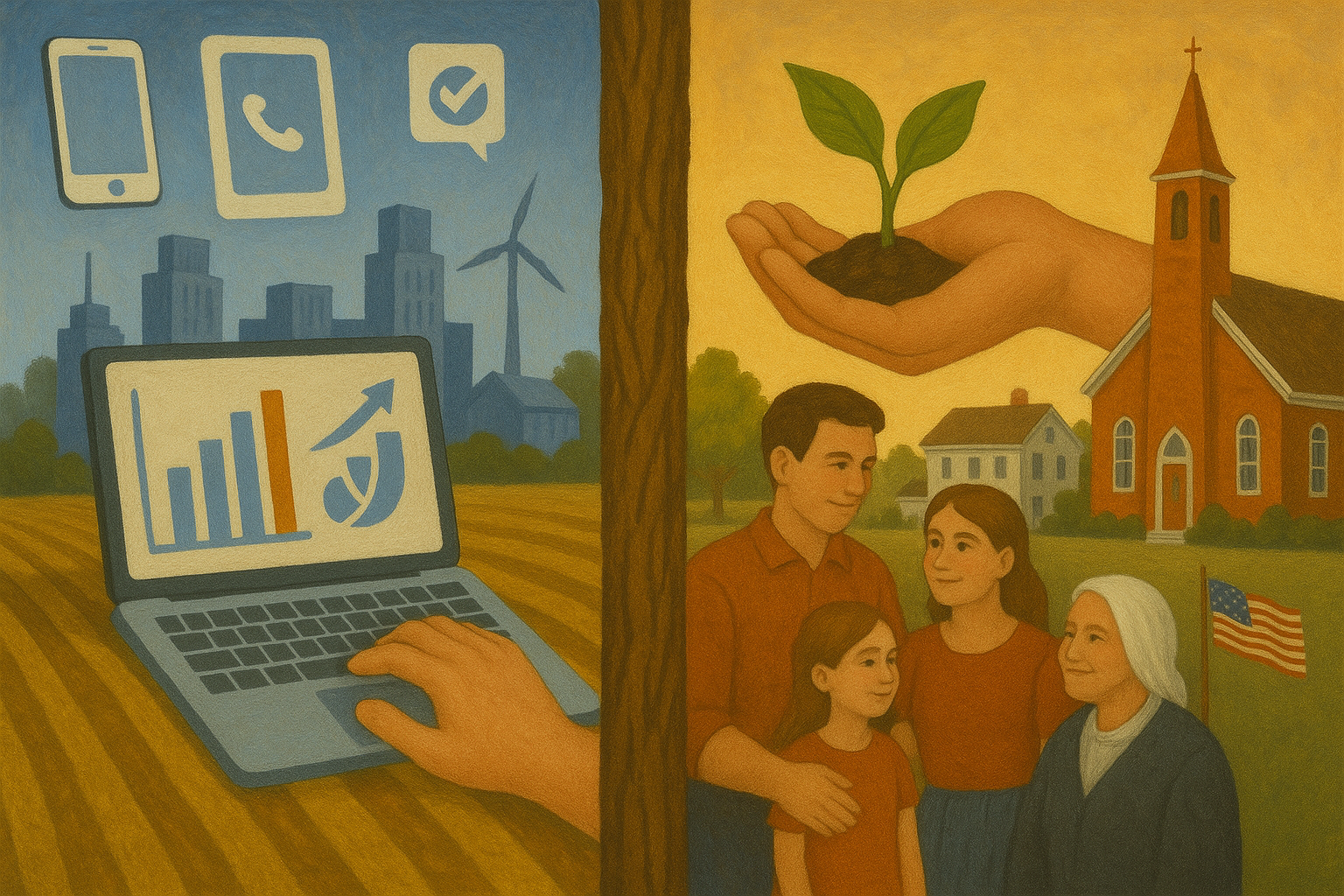
In an era where butter-making machines and self-driving cars promise efficiency, the lingering preference for churning butter by hand, pumping water from a well, or solving equations manually strikes a poignant note. This list of choices-favoring stairs over elevators, hand-grinding coffee over automatic grinders, and visiting the post office instead of emailing-whispers a deeper truth about creaturehood, a theme woven through the fabric of American literature and art. As we embrace technology to boost productivity, the literary legacy of figures like Robert Frost, Norman Rockwell, and a host of American writers urges us to stay grounded in the things that matter: our humanity, our bonds with neighbors, our communities, our heritage, and our culture. In a changing age that often prioritizes modernity over value, preserving this creaturely essence becomes not just a nostalgic impulse but a vital act of resilience.
Creaturehood, the state of being an embodied being defined by physicality, instinct, and vulnerability, anchors American literature from its inception. James Fenimore Cooper’s Natty Bumppo in The Last of the Mohicans (1826) embodies a hybrid existence, his survival skills reflecting a harmony with the wilderness that shaped early American identity. Henry David Thoreau’s Walden (1854) transforms manual labor into a spiritual communion, a tactile engagement mirrored in manual task preferences. Norman Rockwell’s illustrations, like The Runaway (1958) or Four Freedoms, capture this essence through physical gatherings and outdoor play, grounding his subjects in a creaturely warmth that resists modernity’s alienation.
As literature evolved, realism and naturalism reframed creaturehood through struggle. Stephen Crane’s Henry Fleming in The Red Badge of Courage (1895) and Jack London’s Buck in The Call of the Wild (1903) reveal the raw, instinctual undercurrents of survival, while Theodore Dreiser’s Sister Carrie (1900) depicts urban life reducing humans to creaturely existences. Robert Frost, with his “sound of sense” in poems like The Death of the Hired Man (1914) and Birches (1916), grounds his rural imagery in physical labor and natural observation, resisting over-intellectualization to preserve the human voice. This aligns with the nod to hands-on tasks, a literary echo critiquing the detachment of a productivity-obsessed age.
In the 20th century, John Steinbeck’s The Grapes of Wrath (1939) roots the Joad family’s resilience in their physical toil against mechanization, while Cormac McCarthy’s The Road (2006) portrays creaturely endurance as a moral anchor. Rockwell’s The Problem We All Live With (1964) and Frost’s regional struggles reflect this persistence, contrasting with Ray Bradbury’s Fahrenheit 451 (1953), where Montag’s rediscovery of physical books reclaims humanity from a tech-saturated dystopia. Toni Morrison’s Beloved (1987) further expands creaturehood, framing bodies as sites of memory and resilience, tying it to heritage and culture against societal control.
This literary thread underscores a philosophical tension rooted in America’s Puritan and Enlightenment heritage. Nathaniel Hawthorne’s Hester Prynne in The Scarlet Letter (1850) endures physically, while Rockwell’s idealized families and Frost’s solitary figures navigate this balance, suggesting that our creaturely core-manifest in shared meals, handshakes, or community labor-sustains us amid change.
Yet, modernity challenges this grounding. My own columns-“The Productivity Paradox (May 8, 2025),” “AI’s Disruptive Power (May 31, 2025),” and “The Path to Sustainable Innovation (June 26, 2025)”-highlight technology’s double-edged sword. The 2024 Gallup Workplace Report notes 44% of employees feel overworked despite AI, while a 2023 McKinsey study projects a $13 trillion GDP boost by 2030. The Lean Economy movement predicts skill shortages in manual dexterity, and the World Network’s iris biometrics prioritize digital identity, sidelining sensory proofs of our humanity.
My Thesis: Balancing Technology with a Grounding in Creaturehood and Value
My central thesis is clear: while technology and modern conveniences enhance productivity and offer undeniable benefits, we must intentionally preserve a grounding in creaturehood and the values that sustain us-humanity, community, heritage, and culture. This is not a Luddite rejection of progress but a call for balance, ensuring that our embrace of innovation does not erode the essence that makes us human. Evidence from multiple domains supports this balanced approach.
First, the ADAA article on exercise and anxiety (from the Anxiety and Depression Association of America, a nonprofit focused on mental health education and research) highlights that physical activities, like those reflected in manual tasks, produce endorphins-natural painkillers-and improve sleep, reducing overall levels of tension and elevating mood, underscoring the psychological necessity of creaturely engagement. This aligns with my “The Productivity Paradox (May 8, 2025)” column, which argues that over-reliance on technology leads to burnout, suggesting that integrating hands-on rituals-such as kneading dough or walking stairs-can restore well-being. The 2024 Homespun Seasonal Living article reinforces this, questioning when convenience becomes a burden and advocating mindful adoption, like using a washing machine while savoring a hand-kneaded loaf, to maintain equilibrium.
Second, the practical value of creaturehood is evident in the Lean Economy movement’s prediction of future skill shortages in manual dexterity. This highlights the importance of preserving heritage skills-churning butter, grinding coffee-alongside technological adoption, ensuring resilience in a world where automation may falter. My “The Path to Sustainable Innovation (June 26, 2025)” column echoes this, proposing that sustainable progress requires integrating traditional knowledge with modern tools, a balance that honors cultural continuity.
Third, community bonds, a cornerstone of value, thrive through creaturely interaction. The 2023 Thrive Approach article on community connection highlights that face-to-face interactions are more likely to provide the oxytocin levels our brain and body crave, fostering trust and social cohesion-outcomes kindized by the World Network’s shift to digital biometrics. Rockwell’s Four Freedoms and Frost’s depictions of rural labor illustrate this, suggesting that shared physical acts strengthen neighborly ties, a heritage worth preserving amid virtual isolation.
Fourth, the practice of knitting and sewing offers a balanced approach to clothing, blending handmade creativity with modern convenience. Studies, such as those cited by The New York Times, suggest knitting reduces cognitive impairment, while sewing allows for personalized expression, as noted by The Sewing Room Fashion Sewing and Sustainability Blog. Balancing these with buying clothing-acknowledging the efficiency of mass production, as explored in Harpers Bazaar-preserves cultural heritage and mental well-being while adapting to contemporary needs.
Finally, philosophical support comes from Augustine’s view that creaturehood resides in the heart’s devotion, not just the head’s logic. This aligns with my “AI’s Disruptive Power (May 31, 2025)” column, which warns of ethical risks like homogenized creativity, proposing that creaturely instincts-messy, personal, and unique-fuel authentic expression. By retaining rituals tied to heritage and culture, we counter the homogenizing force of modernity.
A Balanced Path Forward
This balance is not about resisting technology but harmonizing it with our creaturely roots. The preference for manual tasks serves as a is not a rejection of progress, but a reminder of what sustains us. Frost’s Birches (1916), Rockwell’s The Runaway (1958), and literature’s creaturely figures-Cooper’s frontiersman, Steinbeck’s laborers, Morrison’s resilient bodies-remind us that our humanity, forged in physical and communal acts, must not be lost to efficiency. The 2023 McKinsey study can coexist with the ADAA article on exercise and anxiety, creating a future where technology enhances productivity-AI drafting emails, cars navigating traffic-while creaturely grounding preserves well-being and cultural richness.
In this age, where modernity often overshadows value, my thesis calls for intentional practice: use a mixer, but knead dough occasionally; drive a Tesla, but walk the stairs sometimes; knit or sew a garment, but buy clothing when time is short. By blending technology with these roots, we craft a future where progress serves our humanity, not just our output, ensuring that the essence that defines us endures.
