
Sanctuary Cities: That’s Where the Illegals Are
Reversing Biden-Harris Border Chaos, Reducing Crime, and Restoring Economic Justice for American Workers
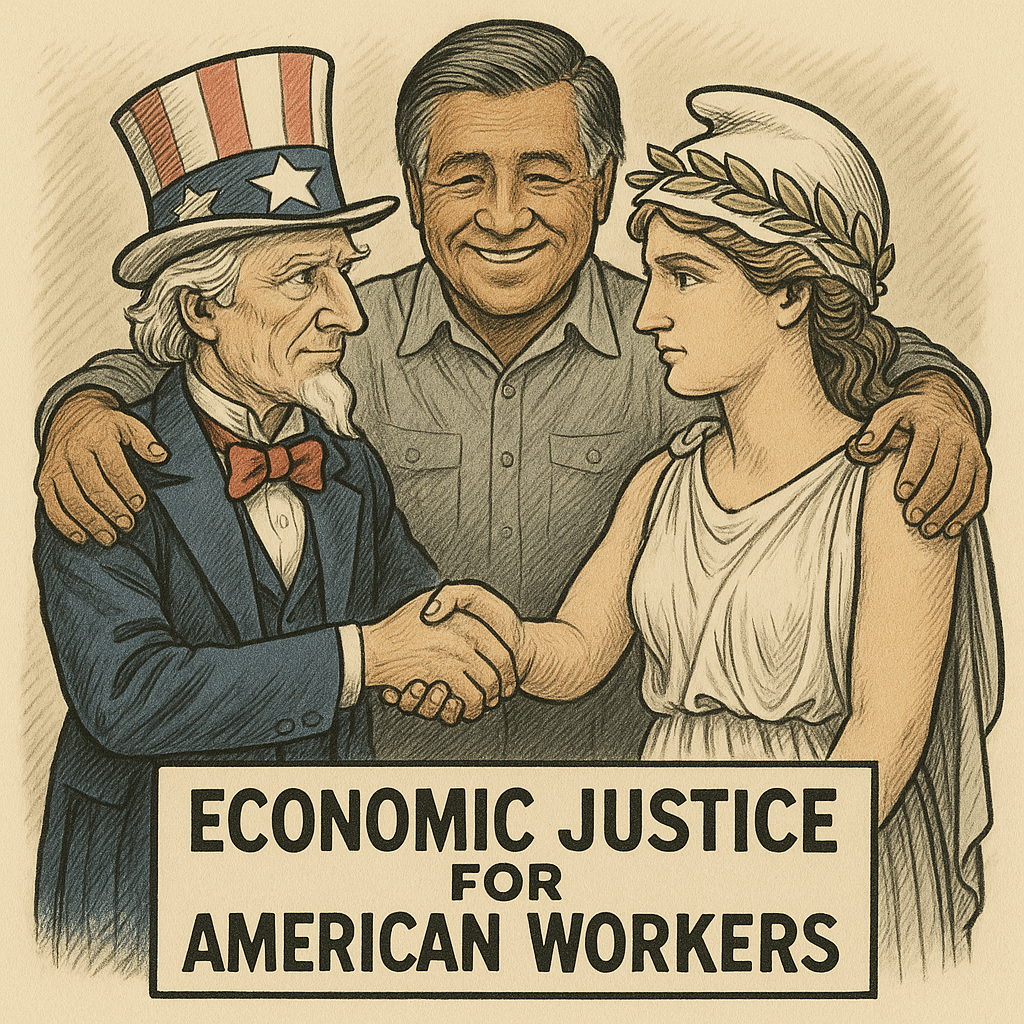 In June 2025, the United States grapples with the fallout of the Biden-Harris administration’s open-border policies, which triggered a massive influx of illegal immigration, straining public resources, depressing wages, and escalating crime. During a 2019 Democratic presidential debate, Joe Biden declared, “I would in fact make sure that there is, that we immediately surge to the border-all those people are seeking asylum,” a statement critics argue invited unchecked migration. The Trump administration’s mass deportation campaign, targeting blue sanctuary cities like Chicago and Los Angeles, channels the logic of bank robber Willie Sutton, who, when asked why he robbed banks, reportedly quipped, “Because that’s where the money is.” Similarly, ICE is focusing on these Democratic strongholds because they harbor large populations of illegal immigrants, making them prime targets for enforcement to reverse the chaos, prioritize public safety, and restore economic fairness for American workers.
The Biden-Harris era saw border crossings soar, with “gotaways” (undetected entries) hitting record highs, as lenient policies fueled a crisis. A 2025 Center for Immigration Studies report estimates that 773,000 to one million illegal immigrants have voluntarily left since January, driven by Trump’s $200 million advertising campaign, $1,000 departure stipends, and strict registration rules. These measures, echoing Eisenhower’s 1954 deportation efforts, aim to shrink the surplus labor pool that depresses wages, particularly for low-skill workers. Cesar Chavez, co-founder of the United Farm Workers, understood this dynamic, opposing illegal immigration in the 1970s to protect legal farmworkers. His “Illegals Campaign” reported undocumented workers to authorities, as growers exploited them to undermine union gains. Today’s deportations, concentrated in blue cities, align with Chavez’s vision, aiming to restore economic leverage to American citizens by reducing competition from illegal labor.
In Chicago, a quintessential blue city, Mayor Brandon Johnson epitomizes Democratic resistance, upholding the Illinois Trust Act and Welcoming City Ordinance, which bar local police from honoring ICE detainers without judicial warrants or sharing immigration status unless federally mandated. Johnson declared, “We welcome all individuals and families who want to work, live, and thrive here,” and launched a “Know Your Rights” campaign to educate immigrants on evading ICE. His call to “stand firm and resist attempts to tear our communities apart” has drawn scrutiny from Tom Homan, Trump’s border czar, who warns that such rhetoric could violate 8 U.S.C. § 1324 (harboring) or 18 U.S.C. § 371 (conspiracy). Johnson’s condemnation of federal policies as “unconscionable” frames ICE as the aggressor, a tactic critics say fuels unrest while deflecting accountability.
Los Angeles, another Democratic bastion, illustrates the violent fallout of this resistance. From June 7-11, 2025, anti-ICE riots saw over 1,000 protesters attack officers and destroy property, including torching Waymo vehicles, resulting in 338 arrests and a 413% surge in assaults on ICE personnel. Mayor Karen Bass and Governor Gavin Newsom labeled the unrest “mostly peaceful,” delaying a curfew for four days and criticizing Trump’s National Guard deployment as “reckless.” The Los Angeles Police Department’s two-hour delay in aiding ICE sparked accusations of deliberate inaction, mirroring Chicago’s refusal to cooperate. A Media Research Center study found CNN and MSNBC described these protests as “peaceful” 211 times-CNN 123 times, MSNBC 88-despite clear violence, fueling charges of media bias that distorts public perception.
This Democratic playbook-withholding police resources, blaming ICE for unrest, and sanitizing protester violence-has historical parallels. In Los Angeles, Bass’s claim that ICE sowed “terror” and her statement, “We are fighting for you,” were seen on X posts as endorsing violence. In Chicago, Johnson’s non-cooperation creates a similar vacuum, risking clashes while framing federal enforcement as inhumane. This mirrors the 2020 BLM riots, where Democrats downplayed violence to score political points, a pattern that persists in 2025. Media outlets like ABC7, with reporter Jory Rand describing rioters as “having fun” watching destruction, further erode trust. This strategy recalls the 1960s urban riots, where local inaction exacerbated chaos, later blamed on federal policies.
ABC7 Los Angeles' Jory Rand calls on law enforcement not to interfere with anti-ICE rioters setting fire to fleet of Waymo vehicles, says they're "just a bunch of people having fun". pic.twitter.com/qCROMfC4or
— M101 News (@M101NewsOrg) June 10, 2025
Public sentiment, however, rejects this narrative. A June 2025 League of American Workers poll shows 61% of Hispanic voters and 63% of independents support Trump’s deportations, crediting him for a 95% drop in gotaways compared to Biden’s tenure. Additionally, 68% of voters, including 74% of men and 64% of Hispanics, favor prosecuting violent rioters, while 69% of parents endorse border security. This aligns with Chavez’s concern that illegal labor harms legal workers, as voters prioritize job security and safety over open-border policies. Trump’s “America First” approach, targeting criminals through operations like “Operation At Large,” addresses these priorities, promising higher wages and better jobs, especially for low-skill sectors.
The economic and social benefits of deportations are undeniable. By prioritizing criminal aliens, ICE reduces crime rates, which spiked in sanctuary cities during protests. Deportations also ease the burden on public services-healthcare, housing, education-overwhelmed under Biden-Harris. A 2023 Federation for American Immigration Reform study estimated illegal immigration costs taxpayers $150 billion annually, a drain deportations aim to alleviate. Economically, reducing illegal labor lifts wages, as seen in post-deportation spikes during Eisenhower’s era, fulfilling Chavez’s vision of empowering legal workers.
Legally, the Illinois Trust Act is defensible under the anti-commandeering doctrine (Printz v. United States, 1997; Murphy v. NCAA, 2018), which shields states from federal mandates. Courts have upheld similar policies in United States v. California (2018), and the Act’s compliance with 8 U.S.C. § 1373 mitigates Supremacy Clause risks. However, Homan’s warnings highlight vulnerabilities: if Chicago’s non-cooperation shields criminals who later offend, it could be framed as harboring, inviting DOJ scrutiny. Johnson’s call to “resist” remains protected speech under Brandenburg v. Ohio (1969), but unverified X claims of inciting “street resistance” could fuel legal challenges if substantiated.
Democrats’ narrative, epitomized by Johnson and Bass, distorts reality by vilifying ICE and sanitizing violence, yet it faces a growing backlash. Newsweek polls show rising approval for Trump’s immigration stance, reflecting frustration with Biden’s “surge” legacy. As deportations restore order, reduce strain, and uplift American workers, they honor Chavez’s fight for legal labor. ICE’s focus on blue cities, like Sutton’s banks, targets the heart of the issue-sanctuary policies that shield illegal immigrants. The clash in Chicago’s streets and Los Angeles’s riots underscores a truth: mass deportations are not just policy-they’re economic justice, reclaiming opportunity for Americans from the chaos of Biden-Harris failures.
