
The Boys of Pointe du Hoc
A Saga of Valor, Sacrifice, and Texan Spirit on D-Day’s Anniversary
Texas A&M
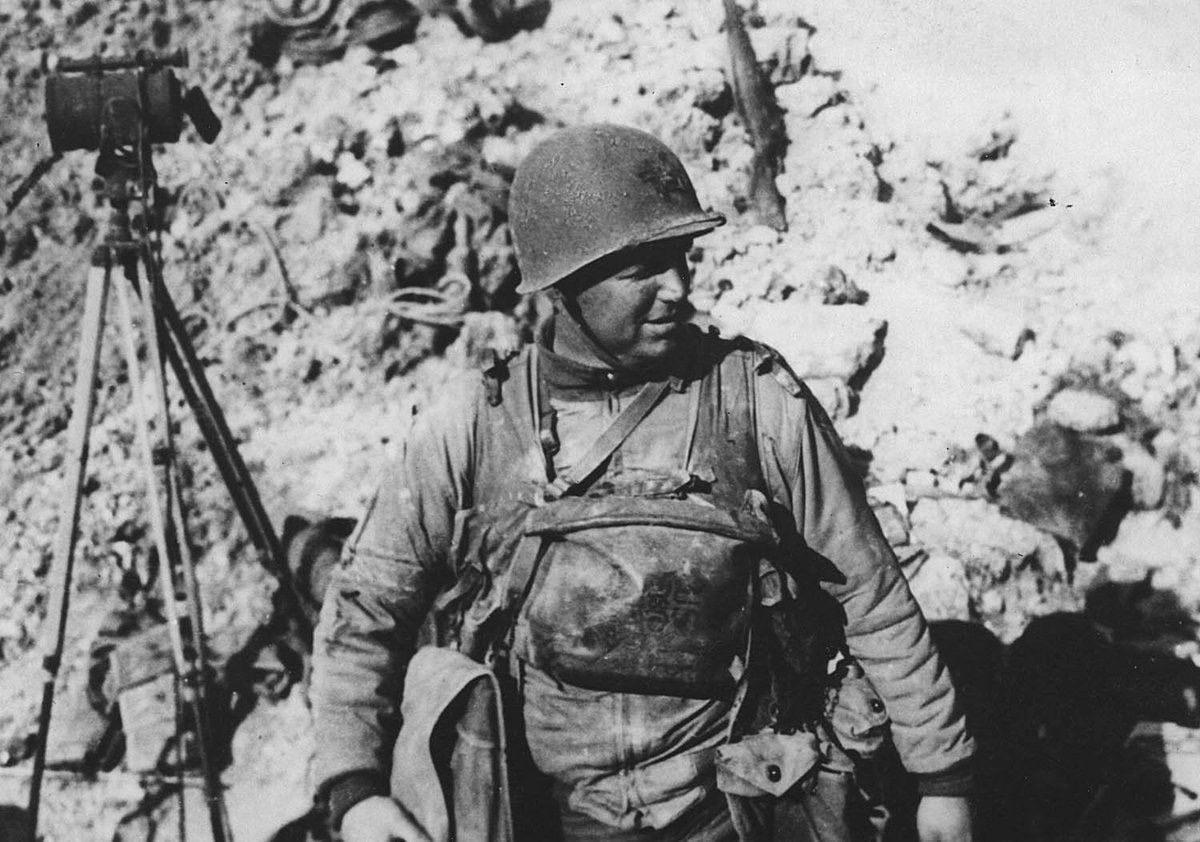
On the windswept cliffs of Normandy, where the sea crashes against jagged rocks and the scars of war still whisper through the ages, the story of D-Day, June 6, 1944, unfolds as a testament to human courage. At the heart of this epic lies Pointe du Hoc, a fortress of stone and steel where Lieutenant Colonel James Earl Rudder, a proud son of Texas A&M, led his 2nd Ranger Battalion in a mission that would echo through history. Supported by the thunderous guns of the Battleship USS Texas, a floating embodiment of Texan grit, these “Boys of Pointe du Hoc” defied impossible odds to secure victory. Forty years later, President Ronald Reagan stood atop those same cliffs, his voice carrying their legacy to the world in a speech that stirred hearts and cemented their place in the annals of freedom. As we commemorate the anniversary of D-Day, we weave together the saga of Rudder, his Rangers, the USS Texas, Reagan’s tribute, and their enduring legacy to Texas and Texas A&M-a tale of sacrifice, leadership, and the unbreakable spirit of liberty.
James Earl Rudder: The Aggie Who Led the Way
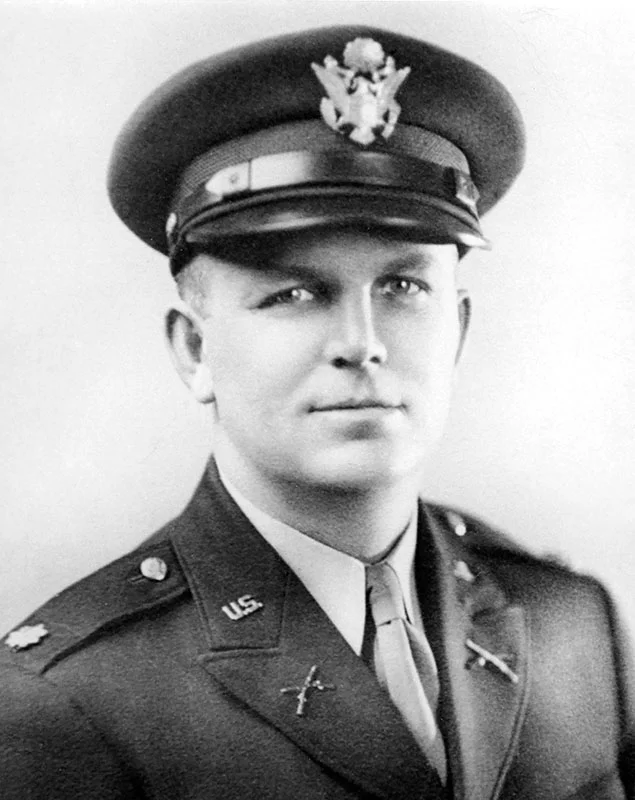
Born in 1910 in the small town of Eden, Texas, James Earl Rudder was forged in the crucible of the Lone Star State’s rugged ethos. At Texas A&M University, he donned the uniform of the Corps of Cadets, played football under the blazing College Station sun, and earned a degree in industrial education in 1932. The Aggie Spirit-rooted in loyalty, integrity, and service-coursed through his veins, shaping a leader whose quiet resolve masked a steely determination. Commissioned as a second lieutenant in the U.S. Army Reserve in 1933, Rudder taught and coached in Texas, his roots deep in the red dirt of his homeland. When the drums of war sounded in 1941, he answered the call, rising through the ranks to command the 2nd Ranger Battalion by 1943.
Trained in the rugged traditions of British Commandos, Rudder molded his Rangers into an elite force, their bodies and minds honed for the impossible. His leadership, grounded in the discipline of the Corps of Cadets and the camaraderie of Aggie life, would soon face its greatest test on the cliffs of Pointe du Hoc, where his name would become synonymous with heroism.
The Crucible of Pointe du Hoc: A Mission Against All Odds

Pointe du Hoc, a jagged promontory jutting into the English Channel, was a German stronghold that loomed over the Normandy invasion beaches. Perched atop 100-foot cliffs, its six 155mm guns could rain destruction on Omaha and Utah Beaches, threatening the entire D-Day operation. General Omar Bradley, commander of the U.S. First Army, called the mission to neutralize these guns the most perilous of the invasion, entrusting it to Rudder and his 225 Rangers from Companies D, E, and F of the 2nd Battalion. Their task: land under enemy fire, scale the cliffs with ropes and ladders, destroy the guns, and hold the position against German counterattacks to secure the coastal road.
The dawn of June 6, 1944, broke with stormy seas and a sky heavy with foreboding. Aboard nine British Landing Craft Assault boats, the Rangers battled 10-foot waves, their faces set against the cold spray. Navigational errors and fierce currents delayed their landing from 6:30 a.m. to 7:10 a.m., stripping away the element of surprise. As they neared the cliffs, German defenders unleashed a hail of machine-gun fire, mortars, and grenades. One landing craft sank, claiming nearly all aboard save one survivor; another was swamped, its men struggling ashore. Yet the Rangers pressed forward, their training on the cliffs of the Isle of Wight guiding their hands as they fired grapples and began their ascent.
The climb was a nightmare of mud, blood, and steel. Germans cut ropes and rolled grenades down the cliffs, while bullets pinged off the rocks. Rudder, leading from the front, urged his men upward, their resolve unbroken. In just 15 minutes, they reached the summit, a moonscape of craters and shattered concrete, only to face a stunning discovery: the gun casemates were empty. Unbeknownst to Allied intelligence, the Germans had moved five of the six guns to an orchard a mile inland on June 3, replacing them with decoy telephone poles. Undeterred, Rudder’s men fanned out. By 9:00 a.m., Sergeant Leonard Lomell and Staff Sergeant Jack Kuhn located the guns, unguarded, and destroyed them with thermite grenades, ensuring they could not fire on the beaches. A sixth gun, under repair, was later demolished by another patrol.

Rudder established a command post in a battered bunker, but the battle was far from over. Communication failures left the Rangers isolated, and the German 914th Grenadier Regiment launched ferocious counterattacks. For two days, the Rangers held their ground, their numbers dwindling as bullets and shrapnel took their toll. Rudder, wounded twice in the leg and arm, refused to yield, directing his men with calm authority. By June 8, when relief arrived from the 743rd Tank Battalion, the Rangers had suffered over 50% casualties-135 of their 225 men killed, wounded, or missing. Yet they had accomplished their mission, safeguarding the invasion and earning a place in history.
The USS Texas: Thunder Over Normandy

Across the waves, the Battleship USS Texas (BB-35), a New York-class dreadnought commissioned in 1914, stood as a colossus of steel and a proud symbol of the Lone Star State. As flagship of Bombardment Force C, Texas was tasked with softening German defenses at Pointe du Hoc and Omaha Beach, its orders clear: “engage until neutralized.” At 5:50 a.m. on June 6, its ten 14-inch/45-caliber guns roared, unleashing 255 shells in 34 minutes, each weighing up to 1,500 pounds. The barrage tore into the cliffs, shattering concrete casemates and creating craters that still scar the landscape. Its twelve 5-inch guns targeted machine-gun nests and strongpoints, while advanced fire control systems, guided by radar and spotters, ensured precision amidst the chaos.
Captain Charles A. Baker, defying orders to remain 5,000 yards offshore, brought Texas to within 2,000 yards of Pointe du Hoc, braving German shore batteries to maximize accuracy. The bombardment’s rubble pile gave the Rangers a foothold for their climb, though it obliterated landmarks, disorienting the assault force. To reach inland targets, the crew ingeniously flooded starboard compartments, creating a 2–3-degree list to elevate the guns’ trajectory, a daring maneuver that extended their range against German positions threatening the Rangers’ hold on the cliffs.
Texas’s support extended beyond the initial assault. On June 7, it sent two Landing Craft, Vehicle, Personnel (LCVPs) to Pointe du Hoc, braving enemy fire to deliver food, water, and ammunition. They evacuated 35 wounded Rangers and 27 German prisoners, though one Ranger died aboard. Through June 17, Texas fired over 2,000 shells, targeting German troop concentrations at Formigny, Trévières, and beyond, bolstering the Rangers and the broader invasion. Its guns, crew, and Texan namesake became a lifeline for Rudder’s men, their salvos a thunderous echo of solidarity.
Beyond D-Day: The Rangers’ Unyielding Spirit
The triumph at Pointe du Hoc was only the beginning for Rudder’s Rangers. Reeling from their losses, the 2nd Ranger Battalion regrouped near Vierville-sur-Mer, integrating replacements to rebuild their ranks. In the Normandy breakout, they supported the advance toward Saint-Lô, navigating the deadly bocage with their scouting prowess. In August 1944, they joined the siege of Brest, assaulting fortified bunkers and coastal batteries in a grueling urban campaign that echoed Pointe du Hoc’s intensity.
The winter of 1944 brought the Rangers to the Hürtgen Forest, where they faced their fiercest trial since D-Day: the assault on Hill 400. On December 7, Companies D, E, and F stormed the strategic high ground under a blizzard of German artillery and SS counterattacks. Scaling steep slopes in a daring night assault, they captured the hill, only to endure two days of relentless attempts to dislodge them. With over 80% casualties, the Rangers held firm, denying the Germans a critical observation post and aiding the Allied push toward the Rhine. Their stand at Hill 400 rivaled Pointe du Hoc in its display of grit and sacrifice.
In 1945, the Rangers supported the Rhine crossing and advanced into Czechoslovakia, securing objectives until Germany’s surrender on May 8. Deactivated on October 23, 1945, the 2nd Ranger Battalion left a legacy of valor, their actions shaping the modern U.S. Army Rangers and their motto, “Rangers Lead the Way.”
Reagan’s Tribute: The Boys of Pointe du Hoc
On June 6, 1984, President Ronald Reagan stood atop Pointe du Hoc’s battle-scarred cliffs, his voice steady against the Normandy breeze, to commemorate D-Day’s 40th anniversary. Before surviving Rangers, their families, and world leaders, he delivered the “Boys of Pointe du Hoc” speech, a masterpiece of oratory crafted by Peggy Noonan. “These are the boys of Pointe du Hoc,” Reagan declared, “the men who took the cliffs.” His words painted a vivid tableau of their climb under “a hail of enemy fire,” their discovery of the empty casemates, and their unyielding stand against counterattacks. To the veterans seated before him, some with tears in their eyes, he spoke directly: “You all knew that some things are worth dying for.”
Reagan framed the Rangers’ sacrifice as a battle for humanity, drawing parallels to the Cold War struggle against Soviet tyranny. “We in America have learned bitter lessons from two World Wars,” he said, urging NATO unity to defend freedom. His call, “We are bound today by what bound us 40 years ago,” resonated as a rallying cry, linking the Rangers’ heroism to the present. The speech, delivered with Reagan’s warmth and conviction, transformed Pointe du Hoc into a global symbol of valor, ensuring the Rangers’ story would endure for generations.
A Legacy Woven in Texas and Aggie Pride
The saga of Rudder’s Rangers, the USS Texas, and their Texan roots is a tapestry of courage, leadership, and sacrifice, forever tied to Texas A&M University.
-
The Rangers’ Legacy: The 2nd Ranger Battalion’s feats at Pointe du Hoc, Brest, and Hill 400 set the standard for special operations. Their tactics-rapid assaults, cliff scaling, and tenacity-inform modern Ranger training, and their motto, born on D-Day, inspires elite units worldwide. The Pointe du Hoc memorial, maintained by the American Battle Monuments Commission, and the Hill 400 monument stand as pilgrimage sites, while books, films, and oral histories keep their story alive.
-
James Earl Rudder and Texas A&M: Rudder’s Aggie heritage was the bedrock of his leadership. Returning to Texas after the war, he served as president of Texas A&M from 1959 to 1970, transforming it into a modern, inclusive institution while preserving its traditions. Rudder Tower and Auditorium honor his legacy, and his heroism is a cornerstone of Aggie Muster, where his name evokes the Aggie Spirit. The Corps of Cadets holds him as a model, his leadership at Pointe du Hoc a beacon for future Aggies.
-
The USS Texas and Texan Pride: Preserved as a museum ship in Galveston, the Battleship Texas, the Last of the Dreadnoughts, embodies Texan resolve. Its D-Day role-bombarding Pointe du Hoc, flooding its compartments to extend its guns’ reach, and sustaining the Rangers-reflects the state’s fierce spirit. Visitors walk its decks, touch its 14-inch guns, and reflect on the craters it left in Normandy, a testament to its bond with Rudder’s Rangers.
-
A Unified Texan Legacy: The convergence of Rudder, an Aggie hero; the Rangers, an elite force; and the USS Texas, a Texan icon, weaves a narrative of sacrifice and triumph. Reagan’s speech amplified this, making Pointe du Hoc a symbol of freedom’s cost, rooted in Texas pride and Aggie values.
As we honor D-Day’s anniversary, we stand in awe of Rudder’s Rangers and the USS Texas, whose courage turned the tide of war. Their legacy, etched in the cliffs of Pointe du Hoc and the heart of Texas A&M, calls us to remember the price of liberty and to carry forward the Aggie Spirit of duty, unity, and sacrifice. In the words of Reagan, these are the men who took the cliffs, and their story will forever inspire a world that cherishes freedom.
