
Dateline: Body and Soul
Prologue — Freak
Body and soul, I’m a freak I’m a freak
Silverchair–“Freak”
A Morning Meditation: Rising in Hope
 As dawn spills across the sky, weaving gold and pink through the fading night, I rise to meet the morning, my heart stirring with the weight of yesterday. My imperfections linger like mist-the sharp word I spoke in haste, the opportunity I let slip, the quiet guilt of not being enough. The world outside my window hums with its own brokenness: fractured relationships, restless news cycles, a collective ache for something better. Yet, in this tender hour, as light softens the edges of the world, I turn my thoughts to a singular hope. There is One who is enough, who meets me in my lack, who offers a path through the shadows into a brighter day.
No one is perfect, I murmur to the stillness. My flaws are etched deep, carved in moments of impatience, distraction, or pride. I see them mirrored in the world-neighbors who clash, leaders who falter, systems that creak under the weight of human error. We strive, we chase ideals of goodness or success, but perfection slips through our fingers like sand. Yet, there is One, eternal and unchanging, whose perfection shines like the sun now cresting the horizon. He is not bound by my limits or the world’s chaos. His presence is steady, a constant that was, is, and will always be. In this soft morning light, I don’t need to exhaust myself chasing an impossible standard. I can rest in Him, letting His perfection cover my shortcomings, His presence a refuge where I am enough.

Righteousness feels like a distant star as I sit with my coffee, the steam curling upward like a prayer. I want to make things right-to mend the hurt I’ve caused, to fix what’s broken in my heart, my home, my world. But my efforts often tangle in frustration or judgment, my good intentions drowned out by the noise of outrage or division. The One who saves, though, offers a different way. He gave Himself, a life laid down not for His own gain but for mine. His sacrifice was not a transaction but a gift, a bridge from my faltering steps to a righteousness I could never earn. This morning, I breathe in that truth, letting it settle deep: I don’t have to prove my worth or outrun my mistakes. His grace is my righteousness, a foundation stronger than my striving.
Some mornings, I wake feeling half-alive, caught in the gray haze of regret, fear, or exhaustion. The world can feel like a graveyard of dreams-where hope is buried under routine, loss, or the weight of my own choices. So many of us walk this way, carrying the quiet death of despair, addiction, or emptiness. But the One who died for me breathes life into my weary soul. As the birds outside weave their song into the dawn, I’m reminded: I can be made new. The chains of my past-guilt, shame, failure-don’t have the final word. Like the sun breaking through the morning mist, His mercy rises fresh, offering a chance to live with purpose. This isn’t a one-time fix but a daily renewal, a call to step into today with courage, to see myself not as broken but as being reshaped by a love that never gives up.
 Peace is what I crave as I sit here, the morning still untouched by the rush of the day. The world beyond my window churns with conflict-arguments that divide families, headlines that pit us against each other, wars that scar the earth. My own heart isn’t immune, wrestling with doubts, anxieties, or the restless need to control what I can’t. We chase peace in fleeting things-scrolling screens, weekend escapes, moments of distraction-but they slip away. True peace, the kind that holds through storms, comes from a holy source. The One whose holiness surpasses all offers a calm that isn’t shaken by circumstance. It’s not just the absence of conflict but the presence of something deeper-a foundation that steadies me as the day unfolds. In this quiet moment, I let go of my need to fix everything, to have all the answers. I rest in His presence, a peace that wraps around me like the morning light.
Time presses in as the clock ticks, a reminder that I am not forever. My days are fleeting, my plans fragile, my life a breath in the grand sweep of existence. The things I build-careers, relationships, dreams-can crumble in an instant. But the One I turn to this morning is eternal, untouched by time’s relentless march. In Him, all wars-within my heart, between neighbors, across nations-will one day cease. This promise isn’t just a far-off hope; it’s a strength for today. As the sun climbs higher, I feel the weight of that truth. The struggles I face-deadlines, disagreements, doubts-are real, but they’re not the end. They’re part of a larger story, one where hope endures, where light keeps breaking through the darkness.
 I was born into brokenness, as we all are. The world I entered is scarred by greed, pride, and pain, and I carry those marks in my own choices, my own stumbles. Left to myself, I’m lost, wandering without a map, chasing fleeting fixes that never satisfy. But as the morning wraps around me, I remember: I am not lost. The One who seeks me finds me, offering a second birth, a new beginning. This isn’t about religion as a rulebook but a transformation that redefines who I am. It’s the addict rebuilding their life, the skeptic finding faith, the broken heart learning to love again. It’s a daily invitation to step out of the shadows and into a life of possibility, grounded in a love that never fails.
As I rise from this meditation, the dawn my witness, I carry this truth into the day: I don’t need to be perfect, righteous, or eternal. There is One who is all these things, and in Him, I find life, peace, and hope. The world will hum its restless tune-meetings, conflicts, uncertainties-but I walk forward, anchored in the One who saves. His light guides me, not just through this morning but through every step, every moment, every breath. With each sunrise, I’m reminded: I am not alone, and in Him, I am made new.
Like this post? Become a Citizen Producer!


Moriarty
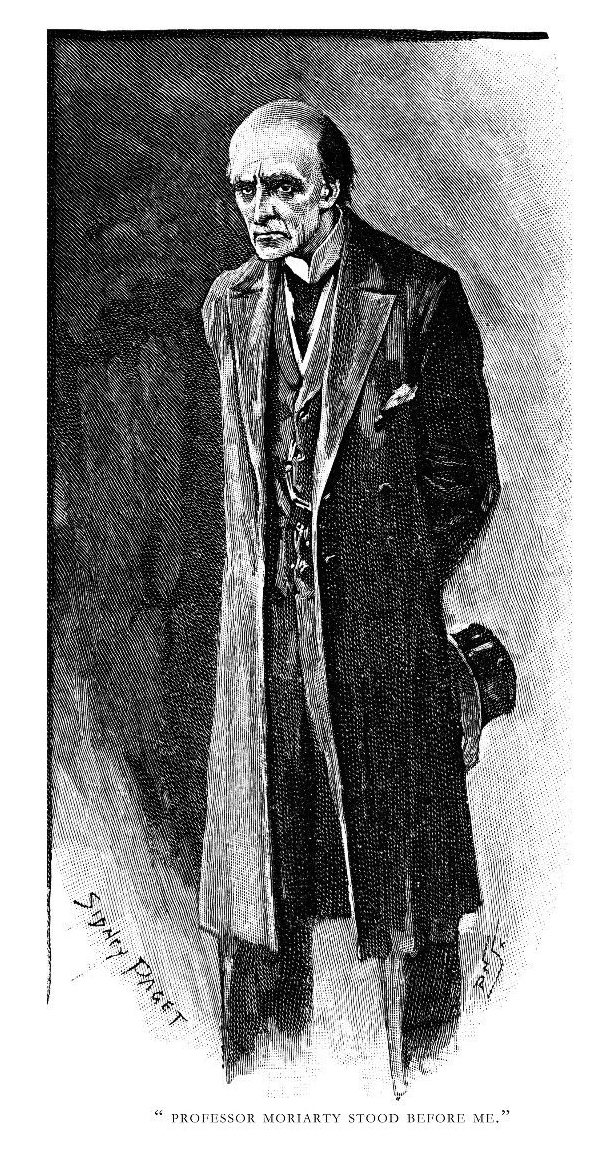
In the shadowy underbelly of Victorian London, Professor James Moriarty, the “Napoleon of crime,” weaves a sinister web of criminality that threatens the very fabric of society. A brilliant mathematician with a mind as sharp as Sherlock Holmes’, Moriarty operates as the unseen architect of a vast criminal empire, orchestrating blackmail, extortion, forgery, and murder with chilling precision. From his respectable perch as a university professor, he manipulates a network of loyal agents, like the sharpshooting Colonel Sebastian Moran, to execute his intricate schemes while remaining untouchable. His genius lies in his ability to exploit societal structures, using fear, greed, and his intellectual prowess to control a sprawling syndicate responsible for “half that is evil in London.” In The Valley of Fear, his shadowy influence surfaces in a meticulously planned murder, while in The Final Problem, his desperation to eliminate Holmes culminates in a deadly confrontation at the Reichenbach Falls, where both men plunge into legend.
Moriarty’s role transcends that of a mere villain; he is Holmes’ intellectual shadow, a mirror reflecting the dark potential of unchecked brilliance. As a narrative device, he elevates the stakes of Conan Doyle’s stories, embodying Victorian fears of hidden corruption and the fragility of order against systemic evil. His sparse appearances in the canon-only two stories-amplify his mystique, making him a timeless archetype of the master criminal. Moriarty’s web-like organization, a precursor to modern crime syndicates, symbolizes chaos lurking beneath civilization’s surface, challenging Holmes’ rationality and justice. His enduring legacy in adaptations, from the anarchic genius of Sherlock to the calculating war profiteer in A Game of Shadows, underscores his versatility as a symbol of societal anxieties, ensuring that Moriarty remains the ultimate foil to the great detective’s crusade for truth.
While Professor James Moriarty’s fictional genius fuels a criminal empire that thrives on subverting justice, his surname finds a contentious parallel in Hennepin County Attorney Mary Moriarty, whose tenure as a prosecutor has drawn sharp criticism for embodying progressive excess through perceived charging and sentencing disparities. Unlike the literary Moriarty’s calculated chaos, Mary Moriarty’s real-world policies-funded by George Soros-have sparked accusations of leniency, with critics pointing to inconsistent charging decisions and lighter sentences that they argue undermine public safety and favor ideological goals over equitable justice. This transition from a Victorian mastermind orchestrating crime to a modern prosecutor accused of skewing the scales of justice through progressive reforms highlights a shared thread of disruption, casting the Moriarty name as a lightning rod for debates over order and accountability in starkly different eras.
Viz…
🚨 WOW: A 19-year-old Hennepin County woman is charged with a felony for $7K in damages after keying a coworker’s car.
But Soros-backed Mary Moriarty let this Democrat activist walk free after $20K in vandalism to Teslas in Hennepin County.
Two-tier justice, plain and simple. pic.twitter.com/5vI4giVR5F
– Dustin Grage (@GrageDustin) April 24, 2025
Moriarty (the Minnesota one) justified herself stating, “Should we have treated this gentleman differently because it’s a political issue? We made this decision because it is in the best interest of public safety.”
If you have to ask then the answer is yes. Vanilla Ass gets a diversion program after causing over $20,000 to six Teslas, each caught on video — and involving his poor dog in his criminal pursuits. Others, however, get the full force treatment. Moriarty is definitely treating this defendant differently because it’s a political issue. What an ignorant cow.
Aliens

Kilmar Abrego Garcia, an El Salvadoran deported during the Trump administration’s first 100 days, lies at the center of a heated immigration dispute that has ensnared Democrats in a political quagmire. Maryland police records identify him as a likely MS-13 gang member, a claim bolstered by a 2022 Tennessee traffic stop where he was caught driving an SUV owned by Jose Ramon Hernandez Reyes, a previously deported illegal alien convicted of smuggling in 2020. Homeland Security had flagged the vehicle for suspected human trafficking, noting its use in transporting non-citizens from the southern border. Abrego Garcia claimed he was driving passengers from Texas to Maryland for construction work, but his expired license and the absence of luggage fueled suspicions of smuggling. Despite denials from his family and lawyers, who insist his deportation violated a 2019 court order protecting him from removal to El Salvador, evidence from a 2019 arrest where police confirmed his MS-13 ties undermines their portrayal of him as a law-abiding Maryland father. This conflicting narrative complicates Democrats’ efforts to defend him, as the Trump administration leverages these allegations to justify its aggressive deportation stance.
It’s like a nightmare, isn’t it? It just keeps getting worse and worse, doesn’t it?
Grady Seasons–The Color of Money
Democrats, having shifted their defense of Abrego Garcia from his personal character to a broader constitutional due process argument, face a political pickle as they navigate the fallout from the Trump administration’s defiance of a Supreme Court order to “facilitate” his return. The Court’s April 2025 ruling clarified that “facilitate” does not mean “effectuate,” recognizing the executive’s authority over foreign affairs, which the administration cites to justify minimal action, pointing to El Salvador’s refusal to release him. Senator Chris Van Hollen and Representatives Maxwell Frost, Robert Garcia, Yassamin Ansari, and Maxine Dexter, who traveled to El Salvador to advocate for him, argue that denying due process threatens constitutional protections for all, a stance that energizes their progressive base.
However, this focus risks alienating swing voters more concerned with economic issues like tariffs than immigration nuances. Republicans seize on Abrego Garcia’s alleged gang ties to paint Democrats as soft on crime, a narrative amplified by his 2022 traffic stop and 2019 arrest, which could erode Democratic support in the 2026 midterms. Tacking to the center, Governor Gavin Newsom warns that this emphasis plays into Trump’s immigration strengths, as the due process argument struggles to resonate broadly. Caught between rallying their base and avoiding perceptions of prioritizing undocumented immigrants over border security, Democrats must carefully balance principle with electoral strategy to mitigate potential political damage in a polarized landscape where immigration remains a divisive wedge issue.
Deporting illegal aliens is an administrative process not a legal one. As Democrats opened the border to flood the country with tens of millions of illegal aliens during the Biden administration, so do they desire to gum up the courts with due process cases. Illegal aliens are not entitled to the same level of due process as are American citizens. Where were the courts when Biden and Mayorkas erased our border and hamstrung our border enforcement agencies? It was not done by accident, it was done in fulfilment of a campaign promise to encourage illegal aliens to literally “surge to the border” on the debate state in Houston on September 12, 2019.
Inferior Courts
Under the U.S. Constitution, inferior federal courts-such as district courts and courts of appeals-exist at the discretion of Congress, reflecting their structural subordination to the legislative branch’s will. Article III, Section 1, vests judicial power in one Supreme Court and “such inferior Courts as the Congress may from time to time ordain and establish,” while Article I, Section 8, Clause 9, empowers Congress to create these tribunals. This authority allows Congress to establish, regulate, or abolish inferior courts, as seen historically with the abolition of the Circuit Courts in 1802, the Commerce Court in 1913, and the Court of Claims in 1982. Congress can also define their jurisdiction and impose procedural constraints, as proposed in 2025 bills like the No Rogue Rulings Act and the Restraining Judicial Insurrectionists Act, which aim to limit nationwide injunctions.
The No Rogue Rulings Act (NORRA), or H.R. 1526, is a bill passed by the U.S. House of Representatives on April 9, 2025, with a vote of 219-213, aimed at limiting the authority of federal district courts to issue nationwide injunctions. Introduced by Rep. Darrell Issa (R-CA), the legislation seeks to curb what its proponents describe as judicial overreach by restricting injunctions to only the parties directly involved in a case, except in specific circumstances. Key provisions include:
-
Restriction on Nationwide Injunctions: District courts are prohibited from issuing injunctions that apply beyond the parties in a case, preventing single judges from halting national policies (Congress.gov).Restraining Judicial Insurrectionists Act
-
Exception for Multi-State Cases: If two or more states from different circuits challenge an executive action, a randomly selected three-judge panel can issue a nationwide injunction, considering justice, irreparable harm, and separation of powers (Congress.gov).
-
Appeals Process: Appeals from such injunctions can go to the relevant circuit court or directly to the Supreme Court at the party’s discretion (Congress.gov).
-
Purpose: Proponents, including Republican lawmakers, argue it restores constitutional balance by preventing unelected judges from blocking executive actions supported by voters, particularly targeting Trump administration policies (Fox News).
Analysis of Nationwide Injunctions Under NORRA
-
Was issued by a single district judge (subject to NORRA’s prohibition).
-
Falls under the multi-state exception (involving two or more states from different circuits, requiring a three-judge panel).
-
Qualifies as a class action lawsuit (allowing nationwide relief).
-
Would otherwise be limited to the parties involved.
-
Deborah L. Boardman (Feb 5, 2025, Birthright Citizenship):
-
Case: Casa v. Donald Trump, blocking Trump’s executive order on birthright citizenship.
-
Analysis: Sources suggest this was filed by advocacy groups like CASA, not multiple states (ABC News). No indication of class action status. As a single-judge ruling, it would likely be disallowed under NORRA unless certified as a class action.
-
Status: Disallowed.
-
-
John C. Coughenour (Feb 6, 2025, Birthright Citizenship):
-
Case: Blocked birthright citizenship executive order.
-
Analysis: Similar to Boardman’s case, likely filed by advocacy groups or individuals, not multiple states across circuits (POLITICO). No class action details. Single-judge ruling would be disallowed.
-
Status: Disallowed.
-
-
Landya McCafferty (Feb 10, 2025, Birthright Citizenship):
-
Case: New Hampshire Indonesian Community Support v. Trump, blocking birthright citizenship.
-
Analysis: Filed by a community organization, not states (CourtListener). No class action mention. Single-judge ruling would be disallowed.
-
Status: Disallowed.
-
-
Allison D. Burroughs (Feb 13, 2025, Birthright Citizenship):
-
Case: O. Doe v. Trump, blocking birthright citizenship.
-
Analysis: Likely filed by individual plaintiffs or advocacy groups, not multiple states (CourtListener). No class action evidence. Single-judge ruling would be disallowed.
-
Status: Disallowed.
-
-
Indira Talwani (Feb 13, 2025, Birthright Citizenship):
-
Case: State of New Jersey v. Trump, blocking birthright citizenship.
-
Analysis: Filed by multiple states (e.g., New Jersey and others), potentially across circuits (e.g., Third Circuit for New Jersey, others unspecified) (CourtListener). Under NORRA, this would qualify for a three-judge panel, which could issue a nationwide injunction. Thus, it would likely be allowed.
-
Status: Allowed (multi-state exception).
-
-
Jamal Whitehead (Feb 25, 2025, Refugee Admissions):
-
Case: Pacito v. Trump, blocking suspension of the U.S. Refugee Admissions Program.
-
Analysis: Filed by refugee-serving agencies and individuals, not states (IRAP). No class action indication. Single-judge ruling would be disallowed.
-
Status: Disallowed.
-
-
William G. Young (Mar 4, 2025, DEI Programs):
-
Case: Blocked executive order ending federal DEI programs.
-
Analysis: Likely filed by advocacy groups or federal employees, not states (The Washington Post). No class action details. Single-judge ruling would be disallowed.
-
Status: Disallowed.
-
-
James Boasberg (Mar 15, 2025, Alien Enemies Act Deportations):
-
Case: J.G.G. v. Trump, blocking deportations under the Alien Enemies Act.
-
Analysis: Filed by individuals or advocacy groups, not multiple states (CourtListener). Sources note this as a temporary restraining order with nationwide effect, not a class action (U.S. News). Single-judge ruling would be disallowed.
-
Status: Disallowed.
-
-
Amy Berman Jackson (Mar 29, 2025, CFPB Dismantling):
-
Case: Blocked attempt to dismantle the Consumer Financial Protection Bureau.
-
Analysis: Likely filed by advocacy groups or affected parties, not states (Newsweek). No class action evidence. Single-judge ruling would be disallowed.
-
Status: Disallowed.
-
-
Paula Xinis (Apr 4, 2025, Wrongful Deportation):
-
Case: Ordered the return of Kilmar Abrego Garcia, illegally deported to El Salvador.
-
Analysis: Filed by an individual or advocacy group, not states (Reuters). No class action mention. Single-judge ruling would be disallowed.
-
Status: Disallowed.
-
-
Brian E. Murphy (Apr 18, 2025, Fast-Track Deportations):
-
Case: Blocked fast-tracking deportations to third countries.
-
Analysis: Likely filed by advocacy groups or migrants, not states (Reuters). No class action indication. Single-judge ruling would be disallowed.
-
Status: Disallowed.
-
-
Colleen Kollar-Kotelly (Apr 24, 2025, Voter Registration):
-
Case: Blocked parts of Trump’s executive order requiring proof of citizenship for voter registration.
-
Analysis: Filed by voting rights organizations and Democratic groups, not explicitly multiple states (Newsweek). No class action details. Single-judge ruling would be disallowed unless certified as a class action.
-
Status: Disallowed.
-
Count of Disallowed Injunctions
-
Total Injunctions: 12
-
Allowed Under NORRA: 1 (Talwani, multi-state exception)
-
Disallowed Under NORRA: 11 (Boardman, Coughenour, McCafferty, Burroughs, Whitehead, Young, Boasberg, Jackson, Xinis, Murphy, Kollar-Kotelly)
Conclusion: 11 of the 12 nationwide injunctions would likely have been disallowed under NORRA, as they were issued by single judges and do not clearly meet the multi-state or class action exceptions. The Talwani injunction, involving multiple states, would qualify for a three-judge panel, which could issue a nationwide injunction, making it allowable.
Notes on Analysis
-
Assumptions: Where sources do not explicitly state the plaintiffs’ identity (e.g., states vs. organizations), I inferred based on context. Immigration cases like Pacito v. Trump typically involve advocacy groups, while birthright citizenship challenges often include state-led lawsuits (e.g., Talwani’s case). Class action status is rarely mentioned, so I conservatively assumed non-class action unless indicated.
-
NORRA’s Scope: NORRA’s prohibition on single-judge nationwide injunctions would affect most cases, as 11 of 12 were issued by single judges without clear multi-state or class action qualifications. The multi-state exception is narrow, requiring states from different circuits, which only Talwani’s case clearly meets.
-
Limitations: Incomplete details about plaintiffs or case certifications (e.g., class actions) in some sources could affect the count. If any disallowed injunctions (e.g., Boardman, Kollar-Kotelly) were class actions, they could be allowed, but no sources confirm this.
-
Context: NORRA’s passage in the House reflects Republican concerns about judicial overreach, particularly after 79 nationwide injunctions across both Trump administrations (America First Policy). Democrats argue it undermines judicial checks on unconstitutional actions (The Hill).
- Judge bios may be viewed at the Federal Judicial Center’s judicial biographical directory.
The Racist Ivy League
In a futile stand against the Trump administration, Princeton University President Christopher L. Eisgruber has emerged as a leading figure in the academic resistance, particularly following the administration’s decision to suspend hundreds of millions in federal grants to the university. This action was part of an investigation into alleged racial discrimination and anti-Semitism on Princeton’s campus. Eisgruber, unwavering in his stance, declared to the New York Times that he would not make concessions and urged other university leaders to follow suit. His defiance stems from a broader ideological commitment that has shaped Princeton’s policies under his leadership since 2013. Notably, in 2020, following George Floyd’s death, Eisgruber publicly acknowledged Princeton’s “systemic racism,” asserting that it was embedded in the university’s very structures. However, a City Journal investigation reveals a different narrative: rather than addressing systemic racism against marginalized groups, Princeton’s policies under Eisgruber have fostered a system of racial discrimination targeting groups like whites, Jews, and males, who are seen as “disfavored” by the administration’s diversity, equity, and inclusion (DEI) framework.
The investigation uncovers a sprawling DEI bureaucracy at Princeton, with over 40 departments dedicated to altering the campus’s racial composition through discriminatory practices. Internal documents and faculty interviews reveal that hiring processes prioritize racial quotas over merit, with guidelines instructing search committees to favor minority candidates and discount negative references for them. Programs like the now-canceled Target of Opportunity Program offered financial incentives to hire underrepresented groups, effectively sidelining white male candidates. Beyond hiring, Princeton’s Supplier Diversity initiative directed contracts to minority-owned businesses, a practice that legal experts, such as Dan Morenoff of the American Civil Rights Project, argue violates federal and New Jersey civil rights laws. The university’s rejection of colorblind equality, as articulated by Eisgruber’s top DEI official, Michele Minter, further underscores its ideological shift toward race-conscious policies. These include racially segregated commencement ceremonies for groups like Pan African and Latinx students, with no equivalent opportunities for white or Jewish students. Despite Eisgruber’s public commitment to nondiscrimination and efforts to scrub DEI references from Princeton’s website, faculty report that these practices persist, painting a picture of an administration doubling down on policies that may breach civil rights laws while defying federal scrutiny.
Seattle’s Jerkoff Park
In Seattle’s affluent Denny-Blaine neighborhood, a small lakeside park named Denny Blaine Park has become the epicenter of a heated controversy pitting community safety against personal freedoms. Established in 1901 by the Denny and Blaine families, the park has long served as an unofficial nude beach, particularly cherished by the LGBTQ community as a safe space for self-expression. Public nudity is legal under Washington state law, and for decades, the park has been a haven for those embracing this freedom. However, local homeowners have filed a lawsuit against city officials, including Mayor Bruce Harrell, City Councilmember Joy Hollingsworth, and Parks Superintendent AP Diaz, alleging that the park has devolved into a hub for illegal and lewd behavior, such as public masturbation and sex acts. The plaintiffs argue that these activities, documented through videos and police reports, violate the Seattle Municipal Code and have transformed the park into a public safety hazard. The lawsuit contends that city officials are aware of the issue but have failed to enforce existing laws, allowing the park to become a “regional venue for criminal and uncivil behavior.” Incidents cited include arrests in early 2025 for public masturbation and repeated complaints from nearby residents, including a woman who reported witnessing multiple lewd acts in a single week.
The controversy intensified after a 2023 proposal to build a children’s playground at Denny Blaine Park sparked backlash from the LGBTQ community, who saw it as an attempt to displace them. The city abandoned the plan, but tensions persisted as residents emphasized that their grievances focus not on nudity but on illegal acts that violate the Seattle Parks and Recreation Code of Conduct. The lawsuit highlights a perceived lack of enforcement, despite the city’s non-emergency line (206-625-5011) for reporting such issues and the authority of Park Rangers and police to issue citations or exclusions. Instead of robust action, the city is reportedly considering “public masturbation deterrent infrastructure,” a proposal met with skepticism by residents who view it as an inadequate response to a growing public nuisance. Posts on X reflect the community’s divide, with some decrying the city’s inaction as a failure of leadership, while others defend the park’s role as a space for marginalized groups, framing complaints as veiled attacks on nudity. The lawsuit, reported on April 23, 2025, underscores a broader clash between maintaining safe public spaces and preserving individual liberties, with Denny Blaine Park caught in the crossfire. As the legal battle unfolds, the city faces pressure to balance enforcement with the park’s cultural significance, leaving residents and advocates awaiting a resolution that ensures both safety and inclusivity.
Epilogue — Freaks
Will you call them freaks?
Will you call them Gods?
Live–“Freaks”
