
Heed the Book, Question the Narrative
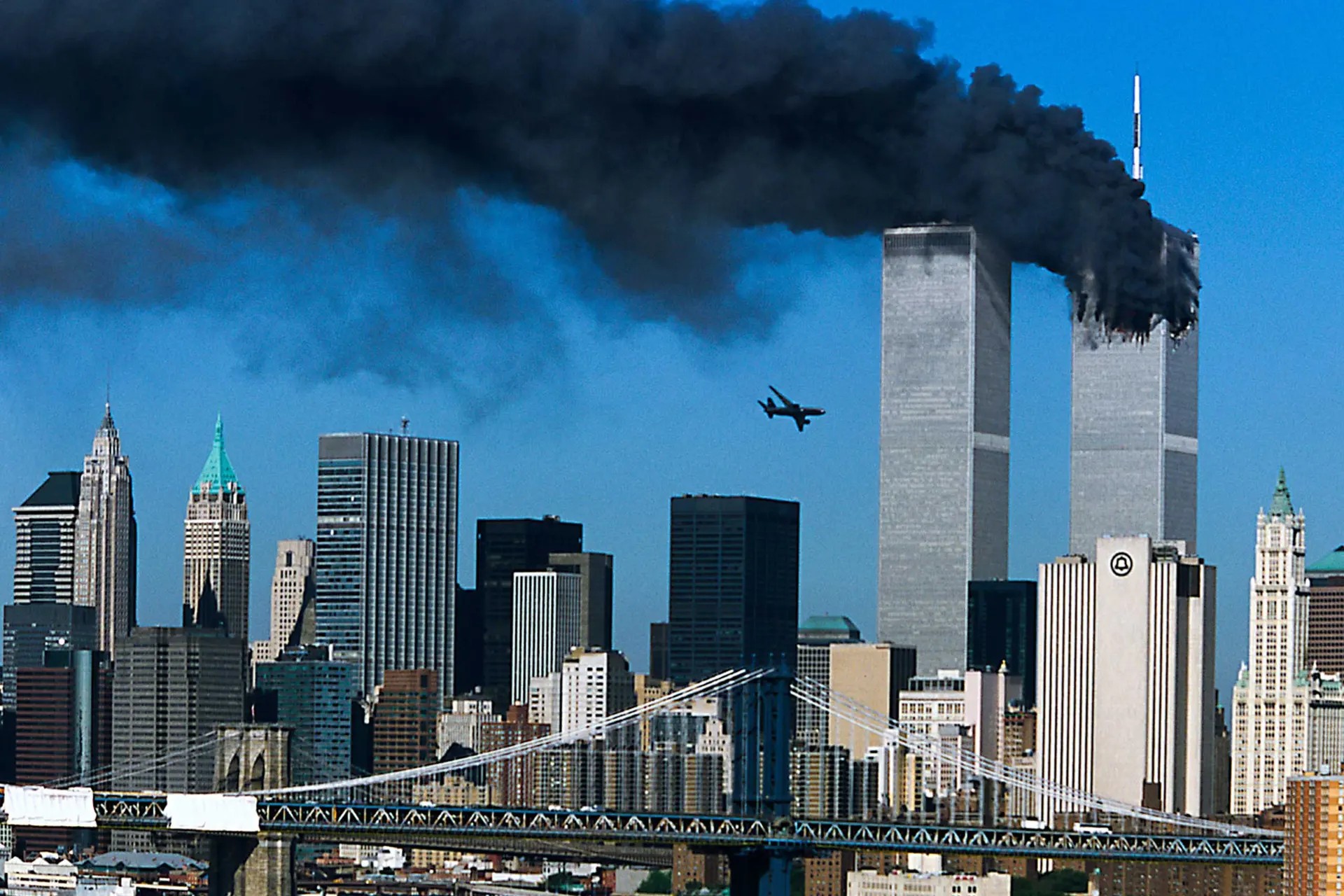
The CIA posted the 1998-2001 portfolio this morning.
I write this as a man who has watched official story-making do its work twice in one lifetime. The first time, the country buried a presidential warning under a commission narrative and a laugh line. The second time, agencies, legacy newsrooms, and the platforms that now police speech treated dissent on a virus, a lab, and a shot as a hygiene problem. I do not stitch those years into one plot. I use the second as a warrant to reopen the first. Once a government has sold “settled” as a moral command, “the Board closed it” and “the Commission already found” stop working as spells.
I also use conjecture. I say that in the clear, because the sentence is the point of the essay. Conjecture, named as conjecture and tied to a document that would kill it, is how a free people hunt the truth through a file the state has already declared closed. Credulity dressed up as responsibility is how the file stays closed. I will mark the turns. I will not pretend a marked turn is a finding.
On the morning of September 11, 2026, the Central Intelligence Agency posted a 101-page scan of seventy-one finished-intelligence products. Hewlett-Packard glass. Classification banners struck through. Sources still black. The New York Times led with the comfort clause: no major new revelations, the Commission confirmed. The Times quoted the airplane. It left the sentence that sits in front of the airplane on the table. On September 10, 1998, the book told the President that Bin Laden’s preferred option was to strike the United States on its own soil in Washington, and that the same group that bombed East Africa might fly an explosive-packed airplane into a U.S. city. Comfort and omission still travel together.
A President’s Daily Brief is not raw traffic and it is not a memoir. Analysts distill. Principals read. The packet mixes one-page articles stamped “For the President Only,” CTC memos that rode with the book, and later Senior Executive Memoranda. I treat a one-page PDB as what a president is most likely to hear aloud. I treat a three-page memo as finished intelligence that entered the same bloodstream. They are not the same artifact. Both bind the government that wrote them.
The scan starts in February 1998 and ends at 0400 on September 12, 2001. That cut matters. It leaves the 1996 aviation file offstage. It leaves EgyptAir 990 outside the Bin Laden chapter. Absence is a fact. I will not smuggle a missing year into a finding.
What the book does contain is a portfolio. The country later pretended the enemy had one trick. The paper lists several.
On February 24, 1998, the book put the fatwa in front of the President: attack American interests and civilians worldwide until the United States retreats from Saudi Arabia and “Palestine.” Signatories include al-Gama’at al-Islamiyya and Egyptian Islamic Jihad. On July 25, 2001, a backgrounder said the quiet part again. The 1996 fatwa authorized shots at Western military targets on the Peninsula. The 1998 fatwa obligated killing Americans, civilian or military, anywhere. Al-Qa’ida required a fatwa as a prerequisite for attacks. Doctrine first. Method second.
On July 3, 1998, the title itself is the homeland warning: “Reports That Bin Ladin is Planning Attacks Inside the US.” Four reports, sources flagged as highly questionable, and then the override. A mall in Washington. A kidnapping, probably aborted. New York or Washington as possible venues. A lieutenant promising they would be in the news soon. An Arab “preparing the sacrifices.” Then the collection hole, written without varnish: “We have little information on Bin Ladin’s operatives in the US.” What they did have already reached into American ground. A Boston charity branch he funded. New York branch employees tied to the 1993 World Trade Center bombing. Gama’at members who might hit on his behalf. Revenge for Omar Abdel-Rahman, Ramzi Yousef, and Wali Khan Amin Shah. In May he had talked of bringing the war to the United States.
On September 1, 1998, the book named the North American net. Wadih el-Hage, U.S. citizen, former Nairobi cell leader, living in Dallas under FBI watch. A Sacramento associate with bodyguard training. A Tampa man procuring surveillance gear. An explosives official on the Shura, last seen in the United States a year earlier. Mercy International offices in Michigan and California. The Kifah Center in New York and Boston, the New York office already linked to 1993. Gama’at scattered through New York, California, Florida, Vancouver, and Toronto. Mustapha Hamza: the group will not stay quiet after the American strikes in Sudan and Afghanistan.
On September 10, 1998, the analysts opened with a hedge and then stepped over it. Intelligence provided no conclusive information on future attacks. Then the preferred option: American soil, Washington. Then the airplane into a city. On September 11, three years to the day before the morning we now commemorate, the worldwide-threat memo counted nearly three hundred threats since East Africa and listed hijacking among the types.
December 4, 1998, is the page that should have rebuilt civil aviation. Title: “Bin Ladin Preparing To Hijack US Aircraft and Other Attacks.” Paragraph one is the old hijack. Free the Blind Sheikh, Yousef, and Muhammad Sadiq Awda. Gama’at planning complete, then on hold. A senior Saudi operative coming to the United States to discuss options, perhaps including an aircraft hijacking. Islambuli planning to seize a U.S. airliner in the next couple of weeks. A possible hijack before Ramadan on December 20. Two members of the operational team had already beaten security in a trial run at an unidentified New York airport. Some in the network had hijack training. No group directly tied to al-Qa’ida had yet carried one out.
Then the sentence that still sits on the table like a tool nobody claimed.
“Bin Ladin could be weighing other types of operations against US aircraft. According to [redacted] the IG in October obtained SA-7 missiles and intended to move them from Yemen into Saudi Arabia to shoot down an Egyptian plane or, if unsuccessful, a US military or civilian aircraft.”
December 11 repeats the tubes and sets them beside hijack training and the Afghan SAM apprenticeship. Same week, same book, two kill chains against aviation. Seize the jet from the inside. Knock it down from the shoulder. The fallback is not a barracks. The fallback is a U.S. military or civilian aircraft.
An SA-7 is not a mythic object. It is a first-generation infrared, tail-chase, man-portable tube. The common variants live in the airport envelope: a few kilometers of slant range, a ceiling on the order of five to seven thousand feet. You use it against a jet on takeoff or landing, engines hot, altitude wrong for escape, shooter in the weeds off the departure end. You do not use it, if you know the weapon, against a 747 already through thirteen thousand feet. I will need that geometry later. I place it here because the December page describes the shot the tube can actually take.
The rest of the 1998 portfolio fills in around those two aviation methods. Open-market shopping for chemical, biological, and nuclear substances. A source talking about a “Hiroshima.” Older cyanide work against American facilities in the Kingdom. VX on the December 11 page. Twenty-three named military sites. The Aden pattern of simultaneous attacks. After the August embassy bombings and the cruise-missile reply, nearly three hundred threats, including kidnapping, rockets, chemicals, assassination. Bin Laden still moving among Kandahar, Khowst, Jalalabad, Kabul. The Taliban still refusing to hand him over.
That is not one plot with noise around it. That is a network that will take the open door. On August 28, 2001, the last pre-attack page in this release, the page that failed in the compiled scan and survives as its own file, the book finally said so in the clear. Al-Qa’ida stressed careful planning, tight security, and flexibility at every stage. Cells cased targets well beforehand. Camps taught improvised bombs, assassination, kidnapping, rockets, mortars, and crude chemical and biological attacks. Bin Laden allowed some cells to pick their own timing and targets so they would not have to call Afghanistan. Leadership still seized the high-priority jobs, as it had before East Africa and in that year’s anti-Israel plotting. Visible security changes could force a delay. Compartmentation meant the arrest of a leader could rob a local cell of direction. Inexperienced couriers and suicide bombers still made Nairobi-style mistakes.
Read that page next to December 1998 and you see the crime of editing. The August 28 item describes a flexible enemy and then drops aircraft from the list. No hijack. No tube. No New York. No Washington. The vulnerability paragraph assumes a cell still casing a building. It does not assume nineteen men already inside the civil-aviation system with tickets.
The years between those dates did the narrowing.
Through 1999 and 2000 the book kept the man in front of two presidents and thinned the methods. Unconventional weapons again. Explosives enhanced. “Determined and Capable Despite Setbacks.” Millennium plots as “refinements.” The Cole as confirmation of long surveillance and a willingness to hit a U.S. warship. Taliban strains that never became surrender. The airplane-into-a-building clause does not return in this packet with the specificity of September 10, 1998. The Community had the scenario. It spent two years writing the next attack as Nairobi, Amman, or Aden.
On April 9, 2001, a Senior Executive Memorandum put Ramzi Yousef back on the page as a member of the organization, tied Bojinka to Bin Laden’s people, and recorded FBI reporting that Wali Khan went to the Philippines in 1994 on Bin Laden’s behalf to gather information for a plot to kill President Clinton. Aviation lineage and a presidential-assassination lineage, same memo. The system did not operationalize either.
On May 22, the hijack returned as hostage theater. Kidnap Americans. Free the Sheikh. “May hijack an aircraft or storm a US Embassy.” Timing and casing, the book said, had not occurred. On June 2, a threat table listed Abu Zubaydah’s suicide car bombs in the Gulf, a Gama’at/UBL/EIJ hostage plan, and a Rome embassy plot. On July 24, an expected imminent operation slipped “a few months” and other near-term work stayed in train. Cryptic June farewell traffic sat in the same item.
Then August 6, 2001, the page everyone already knew and almost no one reads beside 1998. Clandestine, foreign-government, and media reporting: since 1997 he has wanted to hit inside the United States. After the 1998 missile strikes he told followers he wanted to retaliate in Washington. An Egyptian Islamic Jihad operative claimed access to the United States for a strike. The millennium plot in Canada becomes, in this telling, his first serious attempt to implement a terrorist strike in the United States. Ressam on LAX. Zubaydah’s encouragement. East Africa as proof he prepares years in advance and does not quit after setbacks. Al-Qa’ida members, including U.S. citizens, have lived here for years. A 1998 source: a New York cell recruiting Muslim-American youth for attacks.
Then the hedge that sits one paragraph above the hijacking line. The Community has not corroborated some of the more sensational threat reporting, including a 1998 service that said Bin Laden wanted to hijack a U.S. aircraft to free the Blind Sheikh and other prisoners. Nevertheless, FBI information since that time shows patterns of suspicious activity in this country consistent with preparations for hijackings or other attacks, including recent surveillance of federal buildings in New York. The FBI is running approximately seventy full field investigations it considers Bin Laden-related. CIA and FBI are working a May call to the embassy in the UAE: a group of his supporters in the United States, planning attacks with explosives.
In December 1998 the hijack-and-dry-run item was specific enough to title. In August 2001 the same reporting becomes sensational and uncorroborated, while field offices run seventy cases and watch federal buildings in New York for hijack-pattern activity. The Community did not lose the 1998 pages. It discounted them.
On August 10, the book said it had the most compelling evidence to date that leadership was tasking a European network for a suicide strike against U.S. interests in France by the next summer. Lieutenants were taking a more active role so the threats would not look empty. Contrast with the millennium plots, where local cells picked timing and targets.
Eighteen days later came the tradecraft lecture with aircraft missing.
At 0400 on September 12, while the buildings still burned, the sitrep assembled what the pre-attack book had spent three years taking apart. Mounting evidence that Sunni extremists in Afghanistan and the Gulf knew attacks were imminent. Bin Laden leaving Kandahar for Kabul in anticipation. A clash with Mullah Omar the month before over his determination to mount terrorist attacks. Bin Laden telling Omar he had operations in progress that would cause great damage to the United States. A Kandahar-based Arab: two years’ planning, the beginning of the wrath. Separate reporting that the Capitol and the White House may also have been targets. A possible operative named al-Ghamdi on United 175. Separate reporting that a man with a similar name would enter the United States through Canada to hit New York. By breakfast the Agency had a hijacker name and a two-year clock. The pre-attack book never put those pieces in the same paragraph.
I do not claim the packet contains flight numbers, a Tuesday, or four airliners as missiles. Anyone who claims that from this PDF invents it. I do claim the packet contains a portfolio, and that the government that wrote the portfolio funded a single chapter.
Now the hallway. Three jets. I keep them in separate rooms. They share the portfolio. They do not share a single shooter unless a document says so.
TWA 800. July 17, 1996.
A 747 lifts off Kennedy for Paris and comes apart off Moriches Inlet. Two hundred thirty dead. Witnesses describe a streak and a fireball. The FBI runs a criminal investigation for sixteen months on three hypotheses, bomb, missile, mechanical failure, and closes the criminal file in November 1997. The NTSB, in 2000, finds a fuel-air explosion in the center wing tank, most likely from a short. CIA analysts spend months on the witness file and produce an animation that tells the country the streak was wreckage climbing after the tank cooked off. China Lake, the Missile and Space Intelligence Center, the Bureau, and the Safety Board’s structures team examine the reconstructed fuselage and report no warhead petalling, no entry hole that accounts for a hit, no high-velocity fragment pattern that matches a Grail. Trace explosives on three pieces become contamination, dog-training, or an old military charter.
That is the official record. I give it to you whole, because a reader who thinks I hid the tank will not follow me into the next room.
The December 1998 sentence does not retry that crash. It does something colder. Sixteen months after the Atlantic took Flight 800, thirteen months after the Bureau closed the criminal file, CTC wrote to the President that Gama’at had obtained SA-7s in October and intended to move them from Yemen into Saudi Arabia to shoot down an Egyptian airliner or, failing that, a U.S. military or civilian aircraft. The authors dated the acquisition two years after TWA 800. Those tubes, on that dating, did not do that crash. The geometry fights a first-generation SA-7 at 13,700 feet besides. I will not use a presidential warning to cancel physics.
Here is the conjecture, named as such, in pursuit of the truth. The Community believed the outside shot against civil aviation was live after the government had already told the public the last great aviation mystery was a spark in a tank. Belief is not a recovered motor. Belief is a reason to harden the departure corridor. The United States did not harden it. In November 2002, off Mombasa, two SA-7s reached for an Arkia 757 on climb-out. That is the December paragraph in daylight. The document that would kill or confirm the darker conjecture is the 1996-97 aviation file this dump does not include: any PDB, SEIB, or CTC item that treated TWA 800 as a live terrorism question, plus the full CIA-to-Kallstrom memorandum behind the animation, plus the Bureau’s MANPADS lead sheets. Until those pages appear, TWA 800 remains the wound the public maps onto the tube sentence, and the tube sentence remains what it is, a president told that this network would fire a shoulder weapon at a passenger jet.
EgyptAir 990. October 31, 1999.
An Egyptian flag carrier leaves Kennedy for Cairo at 1:22 a.m. Thirty minutes later it is in the Atlantic, sixty miles south of Nantucket. Two hundred seventeen dead. Relief first officer Gameel Al-Batouti sits alone after Captain Habashi steps off the flight deck. The cockpit voice recorder catches an unidentified three-syllable sound, then Batouti saying Tawakkalt ala Allah, I rely on God, and repeating it through the dive, on the order of eleven times in the last minute and a half. Autopilot off. Throttles to idle. Elevators down. Engines cut. Habashi back in the cockpit fighting the airplane. Batouti’s inputs, on the American reading, do not match a recovery.
The NTSB’s probable cause, issued March 2002, is deliberately bloodless. The departure from cruise and the impact were “a result of the relief first officer’s flight control inputs.” The reason for those inputs “was not determined.” They would not write suicide. Cairo would not accept even the softer formula. The Egyptian Civil Aviation Authority says Batouti did not deliberately dive the aircraft and that a dual failure in the right-elevator power control actuators is a plausible mechanical cause. Two governments. One wreck. Two closed files. Hosni Mubarak treated the American theory as an insult to the flag carrier and to the idea that a Muslim pilot would do this. Washington treated the elevator theory as a political requirement hunting a broken part.
Flight 990 sat at 33,000 feet. An SA-7 does not live there. The flight data describe a cockpit sequence, not a motor plume, not a boarding, not a hostage script. If you drag 990 into the Grail paragraph you ask one weapon to do a job the record will not give it.
Here is the conjecture, named as such, in pursuit of the truth. EgyptAir 990 belongs next to the portfolio as proof that “other types of operations against US aircraft” can mean one qualified man already in the seat. Gama’at is Egyptian. EIJ is Egyptian. The Blind Sheikh is Egyptian. The December hijack plot is built around Egyptian prisoners. The SA-7 paragraph names an Egyptian plane as the primary target. Ten months later an Egyptian civil aircraft leaves a U.S. airport and never arrives. I do not have a cable that puts Batouti on Alec Station’s board. The FBI material that leaked around the investigation was personal and ugly, not organizational. Treating him as a cutout for the December plot is a conjecture the PDBs do not make and the Safety Board did not make. Treating the crash as irrelevant to a presidential warning about an Egyptian jet and U.S. civil aviation is the opposite error. The document that would discipline this turn is a CTC or Bureau assessment from November 1999 that asked whether 990 was only a cockpit tragedy. This seventy-one-product collection does not appear to contain that page. CTC’s book in this release stays on Bin Laden. Nine-ninety was handled as a Safety Board problem, a Bureau problem, and a diplomatic problem. That handling is itself a data point.
September 11, 2001.
Four aircraft. Three buildings and a field. The attack that landed used two of the 1998 methods at once and discarded the rest. They boarded like the hijack paragraph. They flew the airframe into buildings like the explosive-packed-airplane paragraph. They did not fire a tube. They did not trade hostages. They did not need a mall. Flexibility, as advertised.
The conjecture here is smaller and, to my eye, stronger. “Failure of imagination” was a failure to keep the 1998 list open. The August 28 tradecraft page described the enemy correctly and applied the description to the wrong picture. Visible security at a building forces a delay. Nineteen men with tickets do not ask the building for permission.
Three rooms. One hallway. The hallway is the portfolio. The government wrote the hallway and then posted a guard at a single door.
Now the scissors.
In 2003, Samuel R. Berger, Clinton’s national security adviser, the Clinton White House’s designated reader for the 9/11 Commission, sat with the “W” library of Clinton intelligence files and asked for box W-049, Richard Clarke’s personal office files. Those files were not fully inventoried. On later visits he stole. Not notes by accident. Copies of Clarke’s Millennium Alert After-Action Review, the after-action on the 1999-2000 disruption, including the Ressam plot against Los Angeles International that the August 6, 2001, PDB later called Bin Laden’s first serious attempt to strike inside the United States. Five copies. Slight variants of the same memo. He folded paper into clothing, walked it out of control, hid four copies under a construction trailer at Ninth and Pennsylvania on the night of October 2, 2003, retrieved them, took them to his office, and cut three to pieces with scissors. When Archives staff called, he denied, then invented an accident. He also walked out his own classified handwritten notes before anyone could review them. Staff saw him bending at the ankle. The Inspector General mapped the trailer run. In April 2005 he pleaded to a misdemeanor, unauthorized removal and retention of classified material. Fifty thousand dollars. Two years of probation. A hundred hours of community service. A three-year bar on a clearance.
Justice offered the comfort line. The Commission received copies. Nothing unique was lost.
That sentence is the tell. If the Commission already had the paper, destruction is pointless unless the thing being protected was not the existence of the review but the differences among the drafts. People who only need to refresh a memory keep a copy. People who care what version A said that version C no longer said put the extras in the trash. A millennium after-action accumulates those deltas. Recommendations written, then softened. Items numbered, then dropped. Responsibilities assigned, then blurred. Language about what the White House did and did not do in the winter of 1999-2000. Clarke’s review ran to roughly twenty-nine recommendations. Several still sat unimplemented when the keys changed hands. That is a scorecard for the Commission’s Clinton chapter. Berger was about to sit as the administration’s witness.
I will use the word cover-up here without a hedge. His hands did the cutting. A man does not stash finished intelligence under a trailer because he wants a quieter room. The live questions are the ones that follow a cover-up: concealment of what, and for whom.
The known what is the paper trail of the last successful disruption of a homeland plot, including whatever the drafts showed about recommendations that died. The unknown what is why the case never closed cleanly. His early visits gave him unsupervised time with original, uncopied, uninventoried Clarke material. Archives counsel Jason Baron told the House it was conceivable the Commission never received everything requested. Inspector General Paul Brachfeld said that if Berger took papers from those files, staff would almost certainly not know. You cannot inventory a hole you never catalogued. Anyone who says we know he only took the millennium memo repeats the plea bargain, not the Archives’ own limitation. The memo is what he got caught with. The box is what he had.
For whom splits into rings. The innermost is himself. An after-action that lists what the NSC did not do is a document about his tenure. The next ring is the Clinton White House as a collective defendant in the Commission’s narrative war. 2003 and 2004 were not a seminar. They were a fight over whether the attacks arrived as a bolt from the blue or as the end of a warning two presidencies failed to convert into a defense. A millennium review that says we saw the spike, we wrote twenty-nine fixes, and we left some on the table is usable against that White House. The third ring is Clarke, his memo, his recommendations, his files. Berger may have been protecting Clarke, policing Clarke, or both. You do not need a romance or a vendetta to see the incentive. Clarke was about to become the most dangerous friendly witness in the building.
The outer rings are where conjecture outruns the file, and I will not let it. No document in the public Berger case ties the theft to TWA 800, to EgyptAir 990, to the December SA-7 paragraph, or to a suppressed aircraft-as-weapon finding. Those files are ugly in their own right. Stapling them to Berger because he is the man who stole paper is how a cover-up of a scorecard inflates into a cover-up of a shootdown. The scissors do not reach that far on present evidence. They do reach the millennium record. They may reach whatever else was loose in Clarke’s box.
Then the country turned the crime into a gag.
Berger’s first public words offered the genre: inadvertently, sloppiness. Once the story is sloppiness, every visual that follows is comedy. Pants. Ankles. Stocking-stuffer. Socks-docs. Soxy Sandy. Sandy Burglar. The Post put him in hosiery before the Inspector General finished the trailer. Talk radio and late night did the rest. A former national security adviser stuffing paper in his clothes is a sketch. A former national security adviser destroying variant drafts of the White House after-action on the last disrupted homeland plot is a records case. The country got the sketch.
The socks were perfect camouflage because they were undignified, possibly true in part, staff saw him bending, something white, and never had to be proved as the method that moved the millennium drafts. Berger and Lanny Breuer denied the socks on the record. The legally reconstructed method was pockets, a portfolio, a walk in the dark, a trailer, scissors, a lie. That sequence is premeditation. It does not scan as a punch line. So the punch line won. Even people who thought he was guilty learned to say it with a grin.
The joke erased the document. By the time sockgate was a word, almost no one could name the Millennium Alert After-Action Review or the fact that he destroyed three versions. Variant destruction is the opposite of sloppiness. The joke made the paper interchangeable, which is exactly what a cover-up needs. If all five copies are the same memo, Justice can say the Commission got it. If they are not the same memo, the missing three are the story. The laugh line decided that question without reading a page.
The joke erased the box. W-049, unsupervised time, the House admission that the Commission may not have received everything, none of that fits on a monologue card. The farce ends when the man looks silly. The inventory problem does not end.
Those being protected did not need the public to believe Berger was innocent. They needed the public to believe he was ridiculous. Ridiculous men do not get their archives reopened. Berger got a nickname and a misdemeanor. The Clinton chapter before the Commission got an embarrassment instead of a scorecard. The Kerry operation cut him loose as personnel before the convention. Justice and Archives leadership got “Commission received copies” as a closing line. Opponents got a moral cartoon of the 1990s that they could rerun forever without generating a document production. Every year the story returns as farce, the after-action stays unread. That is useful to anyone who did not want twenty-nine recommendations laid next to what the next administration inherited.
I have watched this method in my own time. In 2020 and 2021, officials, legacy newsrooms, and the platforms that now sit where town squares used to sit produced a single authorized story about a virus, a laboratory, and a product they called a vaccine. They treated the rest as harm. They took the lab-leak question, the immunity a man already carried in his blood, the myocarditis they later posted as a footnote, and the excess-death arguments ordinary people could see in funeral calendars, and they filed the whole stack under misinformation. They did not have to prove every dissenter wrong. They had to make the dissenter sound unclean. I will not retry that entire war in this essay. I name the method because it is the same method. Closure plus ridicule ends document production. “Conspiracy theorist” in 2021 and “Sandy Burglar” in 2004 are cousins. Both keep a box shut.
Conjecture, used in pursuit of the truth, is how you answer that method without becoming the thing they accused you of being. You do not invent a motor in the Atlantic. You name the file that would show whether the motor was ever a CTC chapter. You do not baptize a co-pilot into al-Qa’ida. You name the assessment that would show whether anyone in the Community even asked the question. You do not turn scissors into a second gunman on the grassy knoll. You put every surviving variant of the millennium review on a table and you read the sentences that failed to survive. Credulity closes files. Named conjecture reopens them.
If the portfolio was real, the defenses were a choice. If the drafts differed, the scissors had a client. If TWA 800 and EgyptAir 990 are not September 11, they are still the other doors in the same hallway. If settled science could be enforced by a platform in 2021, settled investigation could be enforced by a nickname in 2004.
The paper that would turn those ifs into history is not mystical.
Release the 1996-97 aviation file. Release the CIA memorandum of March 28, 1997, to FBI Assistant Director Kallstrom, and the working analysis behind the animation. Release the Bureau’s missile lead sheets on Flight 800 and the notes that killed those leads.
Release any CTC or Bureau assessment of EgyptAir 990 that asked whether the prayer on the tape belonged next to the December aviation paragraph.
Release every surviving version of the Millennium Alert After-Action Review in parallel. Release the Archives log of what Berger requested, what he was left alone with, and what the Commission later listed as received. Release the FBI 302s of his interviews. Release the Commission staff notes on items requested and items that never arrived.
Strip the remaining black blocks on the judgments in this seventy-one-product dump, especially page two of September 10, 1998, and the methods blocks on August 28, 2001. Keep the sources dark if you must. Give us the sentences the President heard.
I am not asking a court to find a Grail in the wreckage off Long Island. I am not asking a court to find a fatwa in a first officer’s mouth. I am asking a republic that has already learned what official closure feels like when it is enforced from the podium and the platform to read the book it just posted.
The book said civilians were a target. The book said Washington was the preferred soil. The book said an airplane might be the warhead. The book said a New York airport had already lost a dry run. The book said a shoulder weapon was in play against an Egyptian jet and, if that shot failed, against a U.S. military or civilian aircraft. The book said the enemy would change plans when the door in front of him closed. Then the book spent three years writing as if the next attack would look like the last one that had already happened. Then a national security adviser put variant drafts of the last successful homeland disruption under a trailer and took scissors to three of them. Then the country learned to laugh at his socks.
At 0400 on September 12 the sitrep put a two-year clock and a hijacker’s name on the same page. The pre-attack book had those pieces. It never kept them together. The portfolio was written down. The joke was the edit. The rest is still in the box.
Heed the book. Then open the box.
