
Trump’s Troop Pay Directive: Executive Authority, Legal Maneuvering, and the Politics of Shutdown Survival
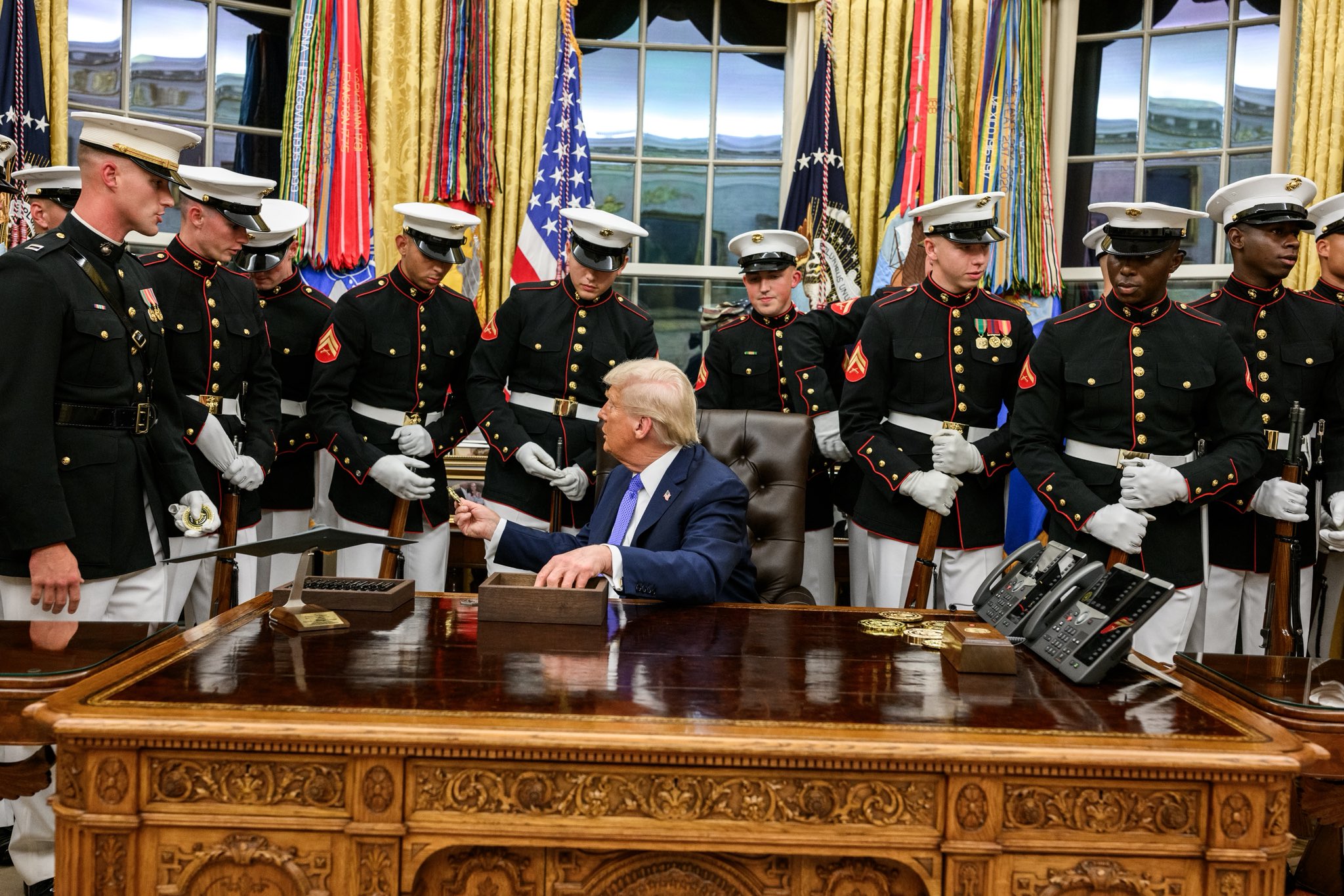
In the midst of a federal government shutdown that began on October 1, 2025, President Donald Trump issued a directive to War Secretary Pete Hegseth, instructing him to redirect available funds to ensure that the October 15 paychecks for approximately 1.3 million active-duty troops are issued on time. This move, amounting to a roughly $4 billion infusion, draws from multi-year Research, Development, Test, and Evaluation (RDT&E) funds to cover Military Personnel (MILPERS) accounts, bypassing the freeze on new spending imposed by the lack of a fiscal year (FY) 2026 budget or continuing resolution (CR). At first glance, it appears as a bold assertion of executive prerogative to safeguard national security priorities. But is it a legitimate exercise of authority rooted in the Constitution and statute, or a risky fiscal workaround that could invite legal challenges and political backlash? This column explores the foundations of executive authority over federal funds, delves into the specifics of Trump’s directive, examines potential criticisms and risks, and rebuts them through lenses of law, optics, and politics.
The Constitutional Foundations of Executive Authority Over Funds
The U.S. Constitution establishes a clear separation of powers when it comes to the nation’s finances, vesting Congress with primary control while granting the executive branch limited flexibility to execute appropriated funds. Article I, Section 9, Clause 7-often called the Appropriations Clause-states that “No Money shall be drawn from the Treasury, but in Consequence of Appropriations made by Law.” This reflects the framers’ intent to prevent the executive from wielding unchecked spending power, a concern born from experiences with monarchical abuses in colonial times. Congress, through its legislative authority, determines how much money is allocated, for what purposes, and over what time periods via annual appropriations acts or continuing resolutions.
However, Article II, Section 3 requires the President to “take Care that the Laws be faithfully executed,” which includes implementing congressional appropriations. This “Take Care” Clause implies some discretion in how funds are managed within the bounds set by law. The executive cannot create new funds or ignore congressional directives, but statutes often provide mechanisms for adaptation to unforeseen circumstances, such as emergencies or operational needs. For instance, the Impoundment Control Act of 1974 (ICA) curbs the President’s ability to withhold or “impound” appropriated funds without congressional approval, but it does not eliminate all flexibility. Instead, it channels such actions through formal processes like rescissions or deferrals.
In the defense context, this balance is particularly pronounced. The Department of War operates under a web of statutes that allow for “reprogramming” (shifting funds within an account) and “transfers” (moving funds between accounts), subject to thresholds, notifications, and sometimes prior approvals. These authorities stem from annual National Defense Authorization Acts (NDAAs) and appropriations bills, reflecting Congress’s recognition that rigid budgets could hamper national security. During government shutdowns-triggered by lapsed appropriations-the Antideficiency Act (31 U.S.C. §§ 1341–1342) prohibits obligations or expenditures beyond available funds, with exceptions for activities necessary to protect life, property, or national security. Military operations fall under this “excepted” category, allowing troops to continue duties, though typically without immediate pay until funding is restored.
Drilling Down: The Mechanics of Trump’s Directive
Trump’s order leverages specific statutory provisions to reprogram funds for troop pay, turning what could be a morale-crushing delay into a prioritized payout. The key enabler is Section 1112 of Public Law 119-4, enacted on March 15, 2025, which extends advance appropriations for certain discretionary accounts. As stated in the law: “With respect to any discretionary account for which advance appropriations were provided for fiscal year 2025 or 2026 in an appropriations Act for fiscal year 2024, in addition to amounts otherwise made available by this division, advance appropriations are provided in the same amount for fiscal year 2026 or 2027, respectively, with a comparable period of availability.” This provision makes approximately $141 billion in multi-year RDT&E funds available through September 30, 2026, even amid the shutdown.
Under 10 U.S.C. § 2214 (often referenced in shorthand as related to reprogramming authorities in defense contexts), up to $8 billion can be reprogrammed from these RDT&E accounts to MILPERS with approval from the Office of Management and Budget (OMB) and notification to Congress. This sidesteps the Antideficiency Act’s general freeze by using unobligated balances from prior appropriations that remain available. Troops qualify as an “excepted activity” because their service protects national security, but this reprogramming ensures they receive paychecks now rather than retroactively. Meanwhile, about 370,000 DoW civilians remain furloughed and unpaid, highlighting the selective nature of the action.
Historically, similar maneuvers have been employed. During the 2013 shutdown, the DoW reprogrammed funds to cover military pay, drawing on precedents that allowed flexibility in multi-year accounts without violating core fiscal laws.
Criticisms and Potential Risks
While innovative, Trump’s directive is not immune to scrutiny. Critics, including Democrats and fiscal watchdogs, have raised several concerns.
Legal Risks: Violation of Purpose Statutes and Penalties
Detractors argue that diverting RDT&E funds-intended for innovation and technology development-to payroll could breach the purpose statute (31 U.S.C. § 1301), which mandates that appropriations be used only for their designated objectives. The Government Accountability Office (GAO) might investigate, potentially deeming it an improper augmentation of MILPERS accounts. DoW officials involved could face Antideficiency Act penalties, including fines up to $5,000 or imprisonment for up to two years. The $4 billion scale for a single paycheck exceeds typical reprogramming, testing legal boundaries and risking judicial intervention. As highlighted in a recent article in The Hill titled “Can Trump pay troops without Congress? Some Democrats don’t think so,” several critics have voiced strong objections on legal grounds. Romina Boccia, director of budget and entitlement policy at the Cato Institute, stated, “for the administration to repurpose funds unilaterally is likely illegal,” adding that “an unobligated balance does not give the administration the right to use the money as it wishes.” Rep. Jim Himes (D-Conn.) remarked on CBS’s “Face the Nation,” “Well, probably not [legal]. Again, we just had a little conversation about the White House’s understanding of United States law, which is pretty tentative to say the best.” Similarly, Rep. Rosa DeLauro (D-Conn.), the top Democrat on the House Appropriations Committee, accused the administration of “violating the law left and right,” emphasizing that “there’s no inherent power that the president has…to move money around that’s been appropriated by…House, Senate, Democrats and Republicans, that’s the law of the land.”
Fiscal Risks: Depleting Resources and Long-Term Chaos
If the shutdown drags on, unobligated RDT&E balances could dwindle, kindizing future paychecks (e.g., October 30) and critical programs like weapons development. This could cascade into broader disruptions, such as delayed R&D projects, echoing hidden costs from past shutdowns like economic slowdowns and service delays. The Hill article notes that repurposing approximately $8 billion of unobligated research, development, testing, and evaluation (RDTE) funds from the prior fiscal year could disrupt defense research and development priorities, as critics like Boccia argue that such unilateral actions undermine fiscal accountability and proper allocation of congressionally intended funds.
Political and Optical Risks: Selective Priorities and Governance by Crisis
Politically, the move exposes accusations of favoritism: Troops get paid, but civilians and contractors suffer, potentially alienating federal workers and their communities. Optically, it’s criticized as a “Band-Aid” that masks Congress’s dysfunction rather than resolving it, fostering uncertainty and eroding public trust in government stability. According to The Hill, the directive highlights partisan divides, with Democrats pushing back against what they see as executive overreach, while it eases pressure on Republicans like House Speaker Mike Johnson but may force Democrats into a politically awkward position if they challenge paying troops amid stalled talks over issues like enhanced health care subsidies.
Rebuttals: Law, Optics, and Politics in Defense
Each criticism, however, can be countered with solid legal precedents, favorable public perception, and strategic political gains. Furthermore, coverage of this issue, such as in The Hill’s article, reveals a lack of thorough research by the author into the established legal frameworks and historical precedents that support the directive’s legality, instead relying heavily on partisan criticisms without balanced exploration of the statutes involved.
Rebutting Legal Risks
Legally, the action aligns with statutory authorities: Reprogramming under 10 U.S.C. § 2214 and multi-year funds per PL 119-4 are explicitly permitted with OMB oversight and congressional notice, not requiring prior approval for below-threshold amounts. The 2013 precedent demonstrates that such shifts during shutdowns have withstood GAO review when tied to excepted activities like national security. Optically, prioritizing troop pay amid threats enhances the image of a decisive leader protecting defenders. Politically, it pressures Democrats to negotiate a clean CR, framing them as obstructing military welfare. Critics quoted in The Hill, who should know better given their positions, include Rep. Jim Himes, who dismissed the move as “probably not” legal based on a “tentative” White House understanding of law, and Rep. Rosa DeLauro, who claimed the administration is “violating the law left and right” without inherent power to reprogram funds-assertions that ignore the explicit reprogramming authorities in defense statutes and past successful uses during shutdowns. Even Romina Boccia of the Cato Institute, despite her expertise, overlooks these mechanisms when stating that unilateral repurposing is “likely illegal,” failing to account for the OMB’s role and congressional notifications that safeguard such actions.
Rebutting Fiscal Risks
From a legal standpoint, DoW contingency plans affirm that normal reprogramming rules apply to multi-year accounts, preventing exhaustion without safeguards. Optically, this avoids the morale hit of unpaid troops, which could impair readiness more than delayed R&D. Politically, it signals fiscal ingenuity, appealing to a base that values military strength over bureaucratic rigidity.
Rebutting Political and Optical Risks
Legally, the selective focus is defensible under the Antideficiency Act’s exceptions, which prioritize security over administrative functions. Optically, it projects empathy for service members, countering narratives of chaos with targeted action. Politically, it’s a win: It rallies Republican support, forces bipartisan talks, and underscores Trump’s “America First” agenda amid shutdown blame games. Moreover, if Democrats sue or protest too loudly against keeping the troops paid, they incur obvious political risk, positioning themselves on the short end of yet another 80/20 issue where public support overwhelmingly favors the military.
In sum, Trump’s directive exemplifies the executive’s adaptive role within constitutional constraints, turning fiscal gridlock into a demonstration of resolve. Yet, it underscores the need for congressional reform to prevent such high-stakes improvisations from becoming the norm.
