
The older I get, the more I realize how we make idols out of everything, including ideas. Lately I’ve been thinking of my own views and how they have changed the past thirty years of relative adulthood. I say relative because at the core of every man is a naughty twelve-year old boy sniggering in the back of a middle school classroom.
See what I mean? It’s just the way guys are.
Back to some seriousness if I must because I’m in a long term transitional period called life. I’ll let Jules explain.
My friend Doc used to call me a contrarian, to which I would retort, “I am not!” and then we would laugh and descend into reenacting the Monty Python Arguments sketch.
See what I mean? It’s just the way guys are.
But deep down it always bothered me because I knew he was right, or at least on the right track. It took me years to realize it, but I’m not merely a contrarian, I’m an iconoclast. Contrarianism is how it used to manifest itself when I was a younger man. I’m also an institutionalist. An institutionalist iconoclast. I do regularly knock down my own ideas when they turn into idols. Now there’s a study for you. And also a deep dive for another post as I’ve taken long enough to get to the issue at hand.
I told you that story to tell you this story.
Conservatives are not monolithic. I was once a free trader, conceptually. And I still am a free trader, conceptually. I’ve also been witness to the curse of the lesson of time. Blessed experience is not free. Think of it like trade. There’s a trade off. There’s a cost.
Anarcho-capitalist Walter Edward Block wrote a column last month that makes an important argument, “Tariffs Are Awful, but the Income Tax May Be Worse“, my emphasis added.
So is there any economic case for tariffs, given the foregoing? Yes, paradoxically, there is-in a way, if the alternative is a tax that’s even worse.
At the start of his second term, President Trump initially fired 6% of the employees of the Internal Revenue Service. He is now looking to end the employment of some 50% of them. Suppose he follows this up by getting rid of all of the rest of the IRS bureaucrats, eliminating the dreaded income tax, and achieving revenue neutrality with tariffs. His motto might be: “Let’s turn back the clock to 1912,” the year before this tax was implemented (when it ranged from 1% to 7%!).
What would the benefits be thereof? First of all, there are many intelligent, productive people who work for the IRS. There are some 90,000 of them. If dismissed by their employer, they would be freed up to produce goods and services desired by the populace. Ditto for the many accountants and tax lawyers who devote all or part of their time to helping their clients wrestle with complicated IRS regulations. Further, many of us fill out our own tax forms. This takes hours, days in some cases, time that could be better spent on leisure or productivity.
The benefit here is that it takes relatively little labor to run a tariff system. Hey, we already have tariffs in place. An increase in their level would hardly call for much more manpower, likely hardly any more at all.
Halfway measures will avail us little. But if Mr. Trump completely eliminates the IRS and the hated income tax along with it, there may be a reasonable case for increasing tariff rates
Block holds the Harold E. Wirth Eminent Scholar Endowed Chair in Economics at the J. A. Butt School of Business at Loyola University New Orleans. Anybody who is an Endowed Chair at the Butt School is someone I’m going to pay attention to because at my core, I’m a naughty twelve-year old boy sniggering in the back of a middle school classroom.

See what I mean? It’s just the way guys are.
In a way the trade off between tariffs and income taxes is like a productive out in baseball. There are tradeoffs and managing failure. There’s a political realignment that has occurred and is still ongoing. It’s time to realign the way we think about revenue and productivity. We have gone beyond the point at which productivity maxes out and it has caused diminishing returns on value where hiring and management are focused on productivity rather than producing value. The organization then paradoxically and perversely becomes averse to value and addicted to boosting productivity.
If creating value diminishes productivity, it becomes a danger to a poor manager who survives on his Jira stories closure rate. Productivity and value are not the same thing. Productivity should help create value, not attempt to replace it because there is no substitute for value. That’s where we are now. It doesn’t matter if you can create value so long as you can show productivity. The whole thing is a phantom and we must return to the pursuit of value over productivity. When Block cites the example of fired IRS employees producing “goods and services desired by the populace,” he’s talking about value.
The Art of the Deal
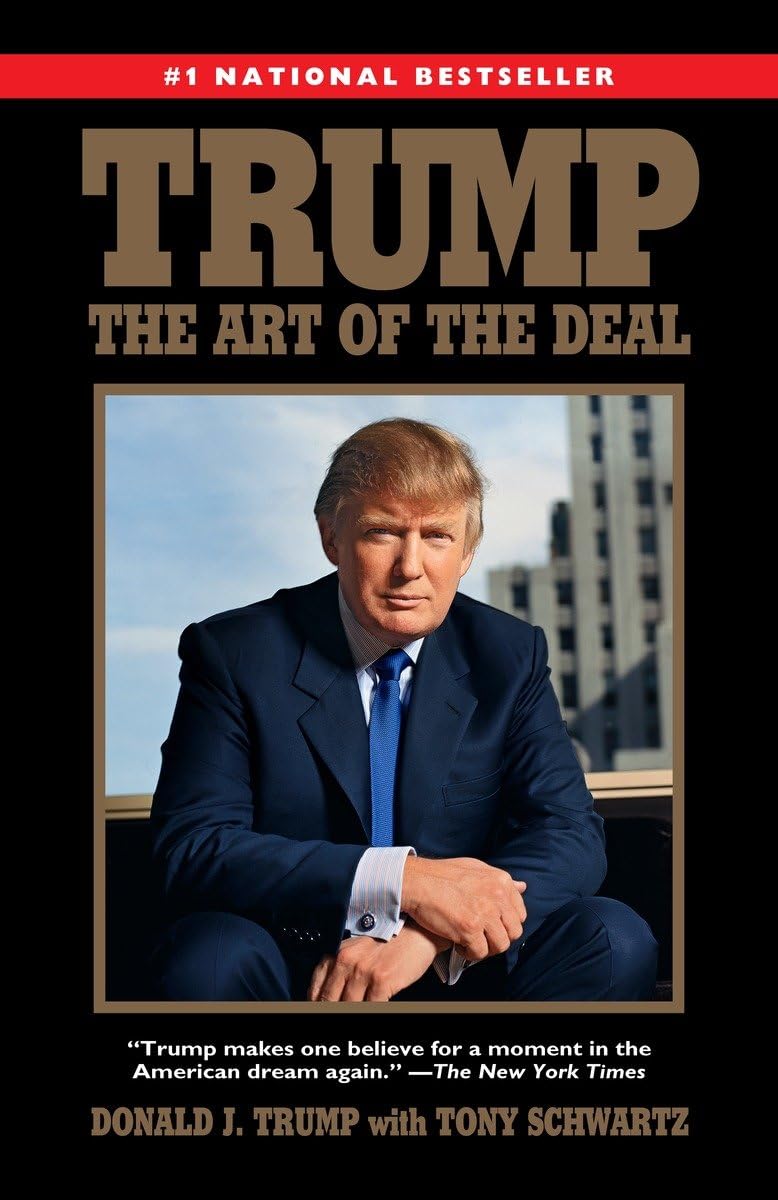 Donald Trump’s reciprocal tariff policy, as expressed in his National Emergency Declaration and “Liberation Day” announcement on April 2, 2025, aligns closely with several principles outlined in the “The Elements of the Deal” section of The Art of the Deal. That section distills Trump’s business philosophy into actionable strategies, and his tariff approach reflects a direct application of those ideas to international trade. Here’s how the policy dovetails with key elements from the book:
1. Think Big
In The Art of the Deal, Trump writes, “I like thinking big. I always have. To me it’s very simple: if you’re going to be thinking anyway, you might as well think big.” The “Liberation Day” tariffs embody this principle on a grand scale. Trump announced a 10% baseline tariff on all imports, with additional reciprocal tariffs ranging up to 49% on over 60 countries deemed “worst offenders,” such as China (34%) and Taiwan (32%). By targeting virtually all U.S. trading partners and framing it as a national emergency to “rebuild American industry,” he’s aiming for a transformative economic shift-not a small tweak. This isn’t about incremental trade adjustments; it’s a bold, sweeping move to reshape global commerce and assert U.S. dominance, consistent with his penchant for ambitious goals.
2. Use Leverage
Trump stresses, “Leverage is having something the other guy wants. Or better yet, needs.” In the tariff policy, he leverages America’s position as the world’s largest consumer market. By imposing tariffs-starting April 5 for the baseline and April 9 for the reciprocal rates-he’s betting that foreign nations, dependent on U.S. consumers, will feel pressured to lower their own trade barriers or face economic pain. His “kind reciprocal” approach (charging half of what he claims others impose on the U.S., e.g., China’s alleged 67% tariff becomes 34%) is a strategic twist: it’s punitive enough to hurt but leaves room for negotiation, amplifying his leverage. The emergency order under the International Emergency Economic Powers Act (IEEPA) further boosts this by bypassing Congress, giving him unilateral control to escalate or ease tariffs as a bargaining chip.
3. Know Your Market
Trump advises, “I do my own surveys and draw my own conclusions.” His tariff policy reflects an intuitive grasp of the U.S. trade landscape, honed by decades of railing against trade deficits (e.g., $918.4 billion in 2024 per the U.S. Bureau of Economic Analysis). He’s targeting countries with the largest surpluses-like China ($295.4 billion deficit) and the EU ($235.6 billion)-based on a formula dividing trade deficits by exports, then halving it. While critics argue this oversimplifies complex trade dynamics (ignoring services or supply chains), it mirrors his book’s emphasis on gut-driven market knowledge over academic analysis. He’s playing to a domestic audience frustrated by “unfair” trade, a market he knows well from his campaign rhetoric.
4. Maximize Your Options
“Never get too attached to one deal or one approach,” Trump writes. The tariff rollout keeps his options open. The two-phase implementation (10% on April 5, higher rates on April 9) allows flexibility to adjust based on retaliation or compliance. Exemptions for steel, autos, pharmaceuticals, and Canada/Mexico (under existing USMCA rules) show he’s not locked into a universal policy-he can tweak it to reward allies or incentivize behavior (e.g., pressuring China while sparing USMCA partners). The IEEPA framework also lets him modify tariffs without legislative hurdles, preserving his ability to pivot as negotiations unfold.
5. Fight Back
Trump’s mantra, “When somebody screws you, fight back,” is evident in his framing of tariffs as retaliation for decades of exploitation. In his Rose Garden speech, he said, “Our country has been looted, pillaged, raped, and plundered by nations near and far.” The reciprocal tariffs-e.g., 20% on the EU for its alleged 39% barriers-are a direct counterpunch to perceived slights like high foreign tariffs, currency manipulation, and non-tariff barriers. This isn’t passive diplomacy; it’s a combative stance to force reciprocity, echoing his book’s aggressive response to being “ripped off.”
6. Get the Word Out
Promotion is key: “You can have the most wonderful product in the world, but if people don’t know about it, it’s not going to be worth much.” Trump branded the policy “Liberation Day,” a catchy, patriotic hook repeated for weeks before the April 2 announcement. His Rose Garden event, complete with a signed executive order and a chart of tariff rates, was a media spectacle designed to dominate headlines and rally supporters. By calling it “the day American industry was reborn,” he’s selling a vision of economic resurgence, leveraging his flair for hype as outlined in the book.
Connecting the Dots
The tariff policy isn’t just economic-it’s theatrical deal-making, straight from The Art of the Deal. Trump’s emergency order declares trade deficits a “national emergency threatening our security,” justifying bold action (Think Big). He uses the U.S. market as leverage to force concessions (Use Leverage), bases rates on his team’s deficit-focused calculations (Know Your Market), and keeps the policy adaptable (Maximize Your Options). It’s a retaliatory strike against perceived trade cheats (Fight Back), packaged with a memorable slogan for maximum impact (Get the Word Out). Even the “kind” discount-halving the reciprocal rates-nods to his book’s negotiation tactic of leaving room for a deal while projecting strength.
Critics, like economists at the Cato Institute, warn this risks inflation, recession, and trade wars, potentially contradicting Trump’s voter mandate to lower prices. But from his perspective, it’s classic deal-making: start big, push hard, and adjust later. Whether it succeeds economically or not, it’s a textbook application of his 1987 playbook to the global stage in 2025.
Donald Trump has been consistent on this issue for four decades. Here’s a clip of Trump on Donohue on December 15, 1987. The full episode can be viewed on another X post.
TRUMP IN 1987:
“Other countries have to pay us for the services we’re rendering or this country is gonna go right down the tubes and that is a shame!”
TALK ABOUT CONSISTENCY FROM @realDonaldTrump 🔥👇🏼 pic.twitter.com/OpVMIhB5TJ
– TONY™ (@TONYxTWO) February 2, 2025
Trump on Late Night with David Letterman on December 22, 1987:
Wow! What an awesome find!
Trump back in 1987
HE’S NEVER CHANGED!#Trump2024 pic.twitter.com/YosDuxvMYO– Fletch17 (@RealFletch17) November 17, 2024
Trump on Oprah Winfrey’s show, April 25, 1988:
FLASHBACK: President Trump on Oprah’s show in 1988 talking about countries ripping America off in trade.
She even suggested that he may run for president some day. 👀
pic.twitter.com/iWiCWeOzO2– Trump War Room (@TrumpWarRoom) August 22, 2024
Ross Perot’s famous “giant sucking sound” comment from the 1992 presidential debate about jobs going south under the then-proposed NAFTA echoes what Trump said in the previous years and again this week.
1992 Ross Perot Explains what @realDonaldTrump is trying to fix with Tariffs and Free, Equal and Fair Trade Agreements.. “The Giant Sucking Sound…of jobs out of America” due to NAFTA and many other outdated and unfair to American Families trade Agreements…this was now 33… pic.twitter.com/V6CMNhjb6H
– DavidCWillisUSA (@DavidCWillisUSA) April 4, 2025
“Globalization is the redistribution of American wealth to foreign countries.”@StephenM torches the elite consensus that gutted U.S. industry and betrayed the working class.
Trump’s tariffs? A long-overdue correction – and the key to revitalizing U.S. steel, the backbone of… pic.twitter.com/tuBiO0uuI4
– Laura Ingraham (@IngrahamAngle) April 4, 2025
I’ve witnessed this devastation with my own eyes in my travels the past two decades. My wife is from Northeastern Ohio and I’ve seen the economic devastation caused by Ford and U.S. Steel plants shuttered along the lake in Avon and Lorain. Add to that the Avon Lake Generating Station: This coal-fired power plant in Avon Lake (often associated with Avon due to its proximity) was retired by GenOn Holdings on September 15, 2021. The closure was driven by unfavorable economic conditions, high environmental compliance costs, and competition from other energy sources. A smaller oil-fired unit at the site, operational since 1973, was also decommissioned. The plant had a generating capacity of 627 MW. Following its closure, the site underwent a controlled demolition on December 19, 2024, as part of a redevelopment plan to transform the 40-acre lakefront area.
For many years I traveled for business. I wasn’t a road warrior, but my travel often came in bunches where I’d go nowhere for months and then be out five of six weeks. And I always got the desert in August and the Upper Midwest in the winter.
The Doom Loop is very real and long predates the Covid lockdown era and remote work. Of all the places I’ve been, Detroit is the worst and has been for decades. There’s even a laugh line in Airplane! about the Magumbo Bar in Drambui being “worse than Detroit”. I’ve seen the devastation where the people used to live. It’s the most racially segregated city in America and it’s very geographically confined. South of 8 Mile Road, it looks like Beirut and is over 85% Black. You literally run the intersection and it flips to being very tony suburbs to the north that are more than 85% White. It doesn’t gradually transform as you drive farther north. It’s literally a matter of crossing the street.
The Guardian ran picture gallery of devastation and abandonment in Detroit in 2011. It looks completely bombed out and depleted, but also as if people just up and left. The only thing missing was the zombie hoards.
Veteran Republican consultant and operative Rich Galen wrote about Detroit’s bankruptcy over a decade ago in Mullings: Detroit. Bankrupt.
-
The city’s population has dropped from almost two million in the 1950s to just under 700,000 who are paying 40 percent less in taxes just since 2000.
-
Fewer people paying less taxes to support more people doing less work.
-
Hey. Wait a minute. That sounds very familiar.
Minneapolis was trending the same way when I was there in the early teens. It’s gotten tremendously worse after the George Floyd Riots. Scott Johnson wrote about the problem for Power Line Blog in 2022 in an article called “Report This“.
Like other big cities misruled for generations by Democrats, Minneapolis has descended to something like the Hobbesian state of nature. Minneapolis isn’t even that big. Indeed, its 2020 population is down about 100,000 from 1950. But put that to one side.
Today’s Star Tribune features the story “After three overnight shootings in Minneapolis, community members want plan for peace.” Subhead: “Three separate shootings left two dead and seven injured Thursday night and early Friday.” We have a crisis of crime and chaos.
-
Boston: Malcolm E. Nichols, served from January 4, 1926, to January 6, 1930. No Republican mayors since, marking nearly a century of Democratic control.
-
Chicago: William Hale “Big Bill” Thompson, whose final term ended on April 21, 1931. Chicago has remained a Democratic bastion for over 90 years since.
-
Cleveland: Harry L. Davis, last term from 1934 to 1935, though George Voinovich (1980–1989) was a later Republican mayor after switching parties. Davis is typically cited as the end of early Republican prominence, with Cleveland mostly Democratic since.
-
Detroit: Louis C. Miriani, served from September 12, 1957, to January 2, 1962. Detroit has had no Republican mayors since, maintaining Democratic leadership for over 60 years.
-
Milwaukee: Carl Zeidler, served from April 16, 1940, to April 7, 1942, resigning for World War II service. Milwaukee has elected Democrats or Socialists since, with no Republican mayors post-Zeidler.
-
Minneapolis: Marvin L. Kline, served until July 7, 1941 (following George E. Leach’s earlier tenure ending in 1929). Minneapolis has aligned with the Democratic-Farmer-Labor Party or Democrats since, with no Republican mayors in over 80 years.
-
Philadelphia: Bernard Samuel, served from January 7, 1941, to January 5, 1952. Philadelphia has been solidly Democratic since, with no Republican mayors for over seven decades.
-
Pittsburgh: Charles H. Kline, served from January 7, 1926, to January 6, 1930. William N. McNair (1934–1936) ran as a Democrat, so Kline is the last clear Republican; Pittsburgh has been Democratic-controlled since the 1930s.
-
San Francisco: James Rolph Jr., served from January 8, 1912, to January 6, 1931, before becoming California’s governor. Rolph was the last Republican mayor; San Francisco has had Democratic or nonpartisan (due to officially nonpartisan elections) mayors since, with no clear Republican successor in over 90 years. Note that San Francisco’s elections became nonpartisan in practice later, but Rolph’s Republican affiliation marks the last of that party.
These cities reflect a broader trend of urban areas shifting toward Democratic dominance in mayoral politics, with San Francisco fitting the pattern of no Republican mayors since the early 20th century. Maybe it’s time to mix in a Republican since the rate seems to be once every century or so. The mismanagement has been a crime in and of itself, but the loss of opportunity and collapsing tax base due to globalization pillaging job opportunities to send them to other countries has been a final coffin nail for most of them.
I could add a couple of other cities I enjoyed visiting. I’ve been to Milwaukee, Saint Louis (Ferguson Effect) Kansas City, Baltimore, and Pittsburgh on business. Now in Baltimore, I was in the Inner Harbor area and far from the Barksdale-Stanfield territory of West Baltimore. I went to an Orioles game because Camden Yards was only a couple of blocks from my hotel. I walked to and from. I did not get to go to a game at PNC because when I was in Pittsburgh, the Buccos were on the road, but I got to walk around downtown a lot. It’s troubling that many of these places have very dangerous no-go zones.
The Lexus and the Olive Tree
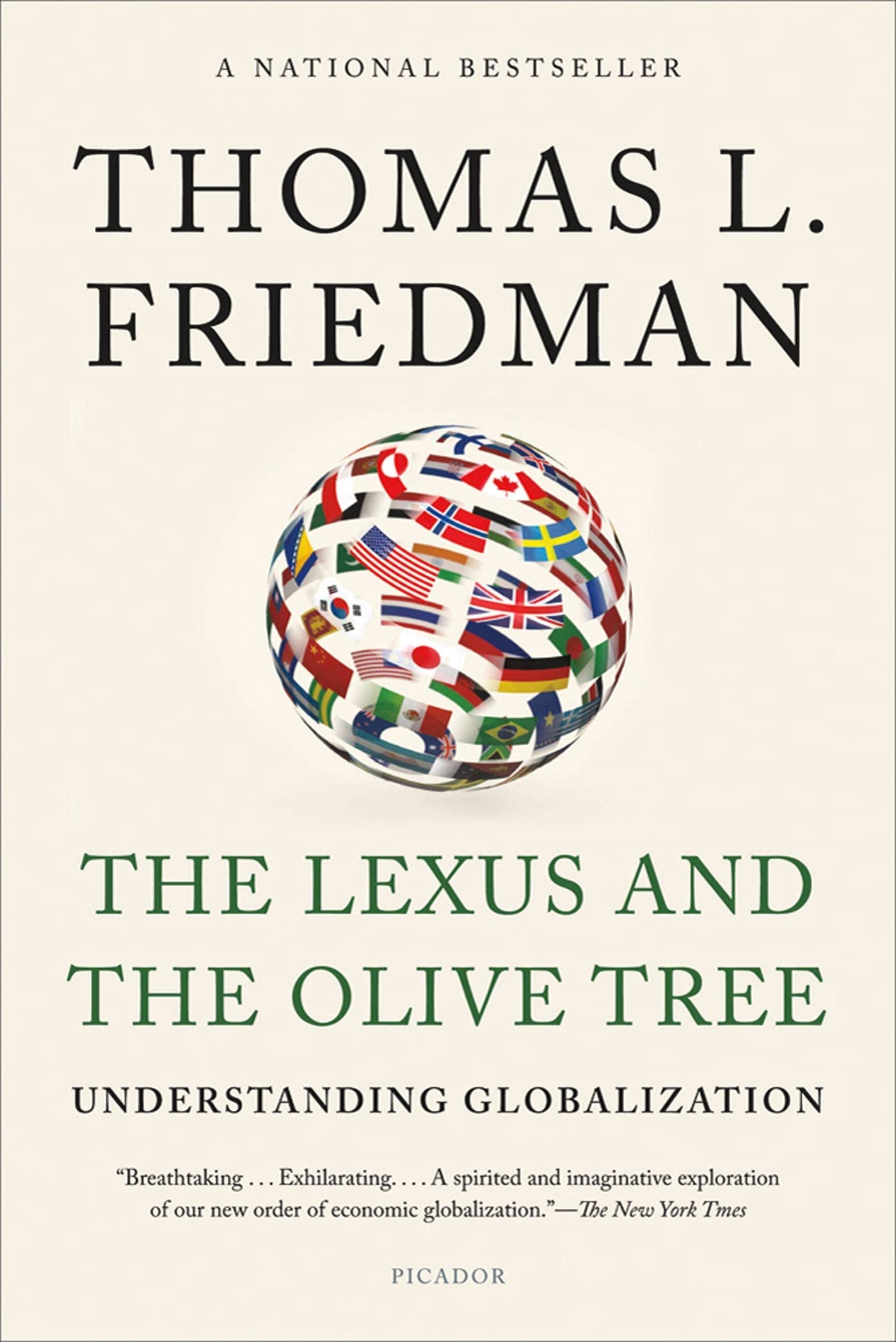
Thomas L. Friedman wrote a very good book called “The Lexus and the Olive Tree” in 1999 where he argued generally in favor of globalization (The Lexus) balanced with the caution about not risking our humanity and creaturehood (The Olive Tree).
Let’s dive deeper into Friedman’s concept of the “Olive Tree” and his cautions about maintaining a balanced approach between it and the “Lexus” in The Lexus and the Olive Tree: Understanding Globalization. This aspect of the book is central to his argument that globalization’s success hinges not just on economic integration but on preserving what makes human societies distinct and grounded.
The Olive Tree: A Deeper Look
The “Olive Tree” symbolizes the enduring, rooted elements of human life-tradition, culture, community, family, and national or local identity. Friedman draws on the olive tree’s characteristics: it’s slow-growing, deeply tied to specific soil, and produces fruit that sustains communities over generations. In the context of globalization, it represents everything that resists the rapid, borderless, homogenizing forces of the “Lexus”-the high-tech, market-driven world of innovation and global capitalism.
Friedman sees the Olive Tree as both a source of strength and a potential point of friction:
-
Strength: It provides meaning, belonging, and stability. For individuals, this might mean religious practices, language, or family ties; for nations, it’s history, sovereignty, or cultural heritage. He argues that people need these anchors to feel secure amid globalization’s whirlwind pace.
-
Friction: When clung to too tightly, the Olive Tree can fuel resistance to change, leading to isolationism, tribalism, or conflict. Friedman cites examples like Middle Eastern societies where rigid adherence to tradition (e.g., rejecting modernization) hinders economic progress, or European nationalists who fear losing identity to a globalized “McWorld.”
He illustrates this with anecdotes, such as a conversation with a Lebanese friend who cherishes Beirut’s old souks (olive trees) but also works in a high-tech firm (Lexus). The tension is universal: how do you modernize without losing your soul?
The Need for Balance
Friedman’s core caution is that neither the Lexus nor the Olive Tree should dominate entirely-unrestrained pursuit of one at the expense of the other leads to instability or alienation. He warns of two extremes:
-
Lexus Overdrive: If societies chase only economic growth and technological progress, they risk eroding cultural identity and social cohesion. This creates a sterile, homogenized world where everything is a commodity, and people feel disconnected. He points to the spread of American fast-food chains or Hollywood as examples-convenient and profitable, but potentially flattening local diversity.
-
Olive Tree Extremism: Conversely, if societies reject globalization to protect tradition, they stagnate economically and politically. Friedman highlights oil-rich states like Saudi Arabia (circa 1999), which relied on resource wealth rather than integrating into the global economy, leaving them vulnerable when oil prices fluctuated or technology outpaced them.
His balanced approach isn’t just a feel-good compromise-it’s a pragmatic necessity. Globalization, he argues, is an unstoppable force, driven by technology and markets (the Electronic Herd), but its benefits-wealth, innovation, connectivity-won’t endure if people feel it strips away their humanity. The Olive Tree, then, acts as a counterweight, ensuring globalization remains humane and sustainable.
Specific Cautions and Examples
Friedman offers several warnings tied to this balance:
-
Cultural Erosion: He cautions that the Lexus can overwhelm local olive trees if unchecked. In France, he notes the backlash against American cultural imports (e.g., Disney or McDonald’s), where farmers and intellectuals feared losing their culinary heritage or language. While he sees this resistance as partly futile, he acknowledges its emotional validity-people need to feel their olive trees are respected.
-
Economic Dislocation: Globalization’s winners (tech-savvy urbanites) often leave behind rural or traditional communities. Friedman describes American factory workers displaced by outsourcing, whose olive trees-small-town life, union jobs-were uprooted by the Lexus. Without a balance (e.g., retraining programs or cultural preservation), resentment festers, fueling populism.
-
National Identity: He warns nations against retreating into olive-tree isolationism. Russia in the 1990s, grappling with post-Soviet identity, oscillated between embracing Western markets and rejecting them for nationalist pride-a seesaw that weakened its global standing. Friedman suggests nations must integrate economically while nurturing a modernized sense of self.
- Personal Identity: On an individual level, he cautions against losing one’s roots to the Lexus’s demands. He tells of a Japanese executive who thrives in global business but ensures his children learn traditional tea ceremonies-an olive tree ritual grounding them amid a Lexus lifestyle.
Practical Implications
Friedman doesn’t just diagnose the tension-he proposes how to manage it:
-
For Individuals: Adapt to the Lexus (learn skills, embrace technology) but maintain olive-tree ties (family, community involvement). He admires “turtles on rollerblades”-slow, steady olive-tree types who speed up for the global race.
-
For Nations: Adopt the “Golden Straitjacket” (market-friendly policies) to attract the Lexus, but invest in education, social safety nets, and cultural preservation to protect olive trees. He praises countries like Denmark, which paired economic openness with strong welfare systems.
-
For the U.S.: As globalization’s leader, America must model this balance-promoting free markets while addressing global inequities (e.g., supporting developing nations’ olive trees) to prevent backlash.
Why Balance Matters
Friedman’s caution is rooted in his belief that globalization’s legitimacy depends on this equilibrium. If the Lexus runs rampant, it breeds inequality and cultural loss, sparking revolts (e.g., anti-globalization protests in Seattle, 1999). If olive trees dominate, societies miss out on prosperity and innovation, falling behind. He sees the 1990s as a test case: nations like China, blending state control (olive tree) with market reforms (Lexus), began to rise, while others, like Iraq under Saddam, doubled down on isolation and floundered.Broader Reflection
The Olive Tree, for Friedman, is the humanizing force in a system that could otherwise become cold and mechanical. His caution isn’t about resisting globalization-he’s a firm believer in its potential-but about ensuring it doesn’t hollow out what makes life worth living. In later editions, he reflects on whether this balance was harder to achieve than he’d hoped, given rising nationalism and economic crises post-1999.Yet his core message endures: the Lexus and the Olive Tree must coexist, or both will suffer. The trouble is, Friedman was way too optimistic and history has proven Stephen Miller correct, “[Globalization] is a formal policy of trying to develop foreign nations at the expense of the U.S. working and middle class.”
Seeing North Dakota’s oil boom
A couple of trips took me to Bismarck and Fargo North Dakota and in just a few short years between the trips, witnessing the incredible growth and the boom the state has experienced was breathtaking. The primary driver of North Dakota’s economic boom has been the rapid expansion of oil and gas extraction, particularly from the Bakken Formation. This oil boom, which began in earnest around 2006 with the discovery of the Parshall Oil Field, leveraged advanced technologies like horizontal drilling and hydraulic fracturing to unlock vast reserves of unconventional tight oil.
By 2012, North Dakota had become the second-largest oil-producing state in the U.S., trailing only Texas, with production peaking at over 1.5 million barrels per day in 2019. This surge in energy production brought significant investment, created tens of thousands of jobs (estimated at 25,000 direct jobs from drilling alone at its height), and boosted the state’s GDP, which grew by 58.3% from $35.4 billion to $56 billion between 2010 and 2019. The influx of workers and wealth also spurred growth in related sectors like construction, transportation, and services, while generating a billion-dollar budget surplus for the state by 2011 through severance taxes and mineral rights leasing.
While agriculture, particularly wheat and other commodities, has historically been a cornerstone of North Dakota’s economy and remains significant-contributing $41.3 billion annually and supporting 123,360 jobs as of a 2025 report-its role in the recent boom has been secondary to oil. The energy sector’s explosive growth, especially during the 2010s, outpaced agriculture’s steady contributions, driving unprecedented economic and population growth, with the state’s population rising 13% from 672,591 to 760,077 over the same decade. Even as oil prices fluctuated, the state’s focus on energy development, coupled with business-friendly policies like low taxes, sustained this momentum, making oil and gas the standout catalyst for North Dakota’s modern economic surge.
So tariffs are bad…
Democrats didn’t used to think so. Here’s Nancy Pelosi arguing against Most Favored Nation trading status for China in July of 1996. She was absolutely right about how China operates. They steal our intellectual property and manufacturing and technology jobs and then sell it back to us. What’s she talking about? Reciprocal tariffs.
Incredible clip from 1996. Nancy Pelosi on tariffs and the trade deficit with China.
“On this day, your member of Congress could have drawn the line to say to the President of the United States, do something about this US-China trade relationship that is a job loser for the… pic.twitter.com/DFlQ9wWSKh
– MAZE (@mazemoore) April 3, 2025
The old socialist Bernie Sanders used to care about American manufacturing jobs before he decided he liked owning multiple homes. This is from September of 2008, three days after Lehman Brothers shuttered and we were about 48 hours from the ATMs no longer working.
2008. Bernie Sanders: Free trade without tariffs will destroy American manufacturing.
Of course Bernie now says that Trump’s tariffs will destroy America. 🤡 pic.twitter.com/H61VBdoeag
– MAZE (@mazemoore) April 3, 2025
Not to be left out of the early DOGE movement, Bernie used to care about waste fraud & abuse by the government and claimed it was President Bush’s responsibility to do something about it. Here he is in March of 2008.
What an incredible ad for DOGE. Thank’s Bernie!
2008. Bernie Sanders acknowledges there is an incredible amount of waste and fraud in the government and then claims it’s the responsibility of the President’s administration to do something about it. pic.twitter.com/e4C1MJpdTx
– MAZE (@mazemoore) March 11, 2025
MAZE knocks it out of the park on a regular basis and I highly recommend following him @mazemoore. This should be a bipartisan issue-and it once was! But now it’s not because Trump. Trade deficit? What’s that? It used to be very bad. Now it’s being described as overblown. Entire communities would disagree if they still existed. And the super smarty smarties play stupid about it while sniggering over the Ben Stein clip from Ferris Bueller. As great as his role as the high school economics teacher was, movie scenes aren’t arguments.
The part where you think the pastor is wrapping up, but no.
The Great Depression, beginning in 1929, was a complex event with multiple contributing factors, including the Wall Street Crash, the Smoot-Hawley Tariff Act, and the Federal Reserve’s monetary policies. Each played a distinct role in either triggering or exacerbating the economic downturn, and their interplay magnified the crisis. It wasn’t only the crash or the tariffs or the Fed, though it was largely the Fed. Milton Friedman’s sequential “domino” view of it is the most accurate of any I’ve ever read and I have the benefit of living history as told to me by my Granny and many great aunts and uncles I was blessed to grow up around and smart enough to listen to them teach about what it was like.
The Wall Street Crash of October 1929 is often seen as the dramatic starting point of the Great Depression. It was a massive stock market collapse driven by speculative excess, over-leveraged investments, and a bubble fueled by easy credit. Stock prices plummeted-by some estimates, the market lost $30 billion in value (equivalent to hundreds of billions today)-eroding public confidence and wiping out significant wealth. Banks that had invested heavily in stocks or lent money for stock purchases faced insolvency, triggering a wave of bank failures (over 9,000 banks collapsed in the 1930s). This financial shock disrupted lending, reduced consumer spending, and deepened deflationary pressures as businesses cut production and laid off workers. While the crash didn’t single-handedly cause the Depression, it set off a chain reaction that exposed underlying economic weaknesses.
The Smoot-Hawley Tariff Act of 1930, intended to protect American farmers and industries by raising tariffs on over 20,000 imported goods, worsened the situation by choking global trade. Signed into law in June 1930, it increased average tariffs to nearly 50%, prompting retaliatory tariffs from trading partners like Canada and Europe. U.S. exports, which had already begun to decline after the crash, fell sharply-from $5.2 billion in 1929 to $1.7 billion by 1933. This trade collapse hit American farmers and manufacturers hard, as they lost foreign markets, while domestic prices continued to deflate. Critics, including over 1,000 economists who petitioned against it, argued it deepened the economic slump by isolating the U.S. economy at a time when international cooperation might have mitigated the downturn. Its role was less about causing the Depression and more about amplifying and prolonging it.
The Federal Reserve’s monetary policy, however, bears significant blame for both the onset and severity of the Depression. In the late 1920s, the Fed kept interest rates low, fueling the stock market bubble with cheap credit. After the crash, it failed to act decisively as a lender of last resort. Instead of injecting liquidity into the banking system, the Fed tightened monetary policy, raising interest rates in 1931 to defend the gold standard amid fears of capital outflows. This contraction reduced the money supply by about a third between 1929 and 1933, intensifying deflation (prices fell 10% per year on average) and strangling economic activity. Bank runs accelerated as panicked depositors withdrew savings, and the Fed’s inaction allowed the financial system to implode. Economists like Milton Friedman later argued that this policy failure turned a severe recession into a catastrophic depression.
In contrast, the Wall Street Crash was a sudden, visible trigger-a symptom of deeper imbalances-while Smoot-Hawley was a misguided legislative response that aggravated the slump by shrinking trade. The Fed’s actions (and inactions), however, were systemic, directly undermining the money supply and banking stability, which were critical to recovery. The crash sparked the fire, Smoot-Hawley fanned the flames, and the Fed starved the economy of oxygen when it needed it most. Together, they transformed a manageable downturn into a decade-long global calamity.
As much credit as the Fed gets when they seem to manage the interest rates appropriately by balancing looser money by lower interest rates and tighten money to control inflation by raising interest rates, it’s difficult for me to do so because the Fed shouldn’t exist. If I had the magic wand of Constitutional Restoration of the Republic, the first thing I’d do is repeal the 17th amendment, then end the Fed, and THEN repeal the 16th amendment. Let’s wrap up this thing with a look at one of the horribles the Fed has done in recent years, Quantitative Easing.
Quantitative easing (QE) is a monetary policy tool used by central banks, like the Federal Reserve, to stimulate the economy by injecting money into it and not by properly managing interest rates. They do this by buying up financial assets, usually government bonds, which increases the money supply and lowers interest rates unnaturally. The idea is to encourage borrowing, spending, and investment to kickstart growth, especially during crises like the 2008 financial meltdown or the COVID-19 pandemic. But how did this play out for the middle class?
Let’s break it down.
On one hand, QE helped stabilize the economy after major shocks. Post-2008, it kept credit flowing and prevented a deeper collapse, which could’ve wiped out more middle-class jobs and homes. Lower interest rates made mortgages and car loans cheaper, so if you were in the middle class with decent credit, you might’ve refinanced your house or bought a new vehicle at a better rate. Employment eventually recovered too-by 2014, U.S. unemployment dropped from its 10% peak in 2009 to around 6%, and kept falling in later years. For the middle class, that meant more job security and income stability over time.
But here’s the rub: QE also juiced up asset prices. Stock markets soared-the S&P 500 tripled from its 2009 low by 2019-and housing prices climbed, especially in urban areas. If you owned stocks or a home, you might’ve seen your wealth grow. Problem is, the middle class doesn’t own as much of that stuff compared to the rich. In the U.S., the top 10% hold about 70% of stock market wealth, while the middle 50% own less than 15%. Homeownership helps, but many in the middle class were still renting or underwater on mortgages post-2008, missing out on the boom. So, QE disproportionately fattened the wallets of the already wealthy, widening the gap.
Then there’s inflation. QE didn’t spark the runaway consumer price inflation some feared-CPI stayed tame, averaging 1-2% annually in the 2010s. But asset inflation hit hard. Housing costs outpaced wage growth, making it tougher for younger middle-class families to buy homes. Wages themselves barely budged-real median household income in the U.S. stagnated around $60,000 (in today’s dollars) from 2008 to 2016, only picking up later.
So, while QE appeared to be keeping the economy afloat, it didn’t translate into fatter paychecks for most middle-class workers. Another angle: cheap money from QE fueled corporate borrowing. Companies took on debt to buy back stocks or automate, not always to hire more people. Again, there’s that ol’ debil of productivity focused management. Middle-class jobs in manufacturing or retail kept shrinking, replaced by gig work or low-wage service roles. The “wealth effect” the Fed hoped for-where rising asset values make people spend more-mostly benefited those with assets to begin with, not the average Joe living paycheck to paycheck.
In short, QE was a lifeline for the economy, and the middle class got some indirect perks like lower borrowing costs and job preservation. But it also amplified inequality, pumped up living costs without matching wage gains, and left many feeling squeezed. The middle class didn’t tank, but they didn’t exactly thrive either-more like they treaded water while the top swimmers lapped them.
So that said, I don’t want to hear anymore weeping about the Wall Street after those crack addicts got high on Quantitative Easing while the asset inflation continued to crush the middle class and perpetuate stagnant wage growth and hiring. When inflation went over 9% thanks to Democrat spending during the Biden (or whoever) years, I got a 1.1% “raise” from my then employer. Gee. Thanks.
To close, if we’re interested in stimulating both investment and the middle class then get serious about it and cut the damned Capital Gains tax. Take it down to single digits. If your tax policy taxes fruit, don’t also put a tax on new branches. The middle class benefits much more from a Capital Gains tax cut combined with income tax cuts. While the Congress considers the reconciliation bill to extend the tax cuts, they should also expand the tax cuts as a companion to the tariffs.
