
Immutable Characteristics in Protected Categories
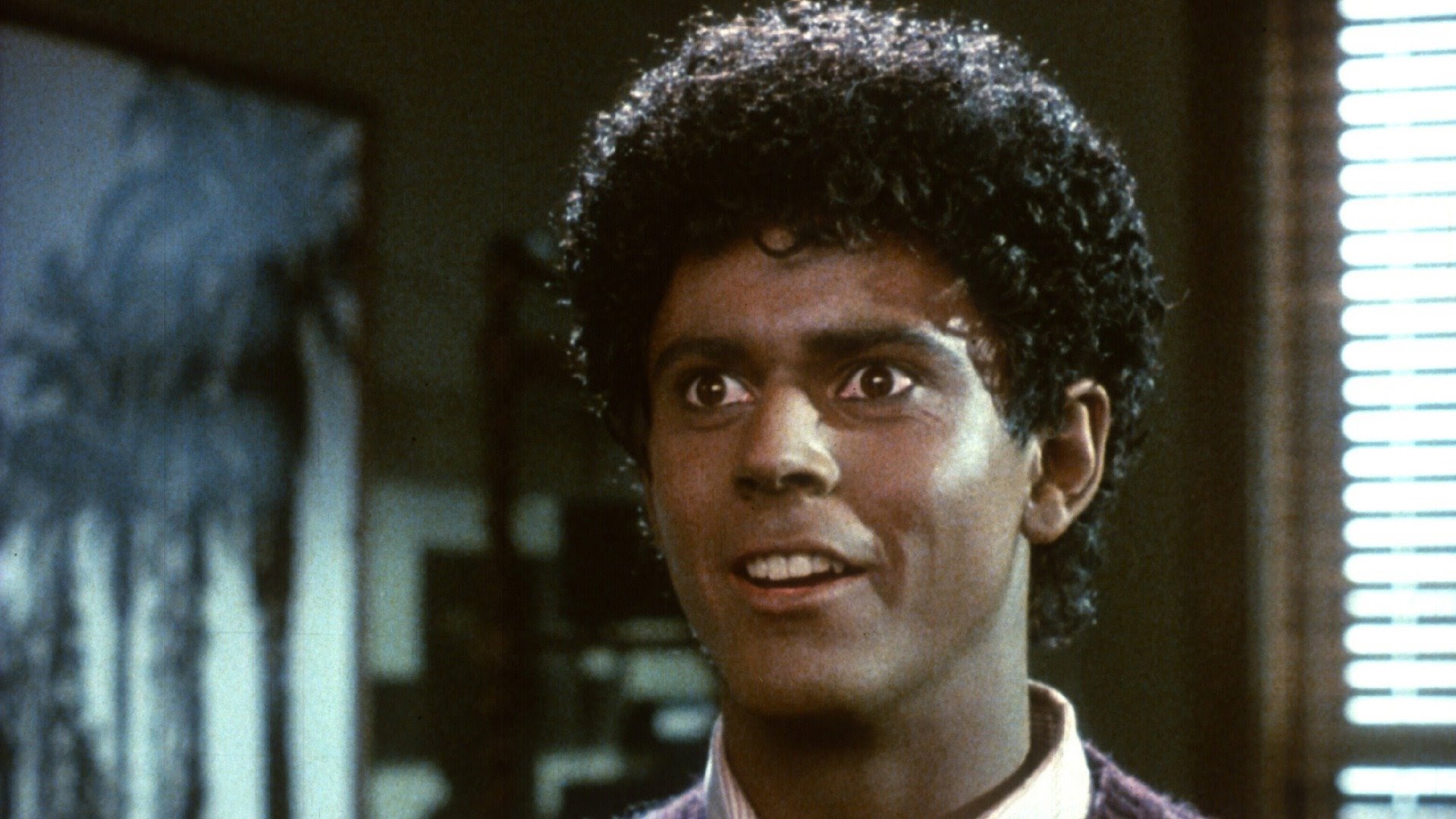
Directed by Steve Miner
Shown: C. Thomas Howell (as Mark Watson)
In the 1986 film Soul Man, Mark Watson (C. Thomas Howell), a white male of European ancestry, dons blackface to secure a Harvard Law scholarship reserved for Black students, an act that crystallizes the profound unfairness of exploiting immutable characteristics for personal gain. Nearly four decades later, in August 2024, Imane Khelif, an athlete with XY chromosomes and male physiology, won gold in women’s boxing at the Paris Olympics, competing under the International Olympic Committee’s (IOC) “recognized female” policy. These cases, though separated by time and context, are united by a shared violation: both Watson and Khelif take finite opportunities—scholarships and medals—meant for disadvantaged groups (Black individuals, XX females) by leveraging immutable traits (white race, male biology) they do not share.
This essay argues that Watson’s scholarship theft and Khelif’s Olympic participation are equally unfair, as they displace intended beneficiaries without justification, undermining the corrective and competitive purposes of protected categories. Parallel cases of transgender athletes—AB Hernandez in California, Aayden Gallagher and Veronica Garcia in Washington, Lia Thomas in NCAA swimming—and a hypothetical reframing of Rachel Dolezal under the “one drop rule” reinforce this argument, illustrating how policies prioritizing identity over immutable characteristics, like the IOC’s gender rules, obscure fairness. Drawing on recent articles detailing protests, medical evidence, and public debates, this essay emphasizes the binary nature of sex versus the non-binary continuum of race, delivering a clear, unequivocal case against spot-taking, free of dissembling.
The Catalyst of Unfairness: Mark Watson’s Deception
Mark Watson’s actions in Soul Man serve as a stark entry point into the fairness debate. The scholarship he claims is designed to address systemic racial disadvantage, an immutable characteristic rooted in African ancestry and evidenced by centuries of oppression—slavery (1619–1865), Jim Crow laws (1877–1964), and ongoing inequities like the 2023 wealth gap ($44,721 Black vs. $240,121 White, Federal Reserve) and lower college enrollment (34% Black vs. 42% White, 2023 National Center for Education Statistics). Watson, with his white European ancestry, faces none of these barriers.
By using blackface, he violates explicit eligibility rules, displacing a Black student who embodies the disadvantage the scholarship aims to redress. This act of deception takes a finite opportunity meant for corrective justice, rendering it unequivocally unfair. The cultural context of 1986, where blackface is universally condemned as racial appropriation, amplifies this violation, with no policy or hypothetical identity claim (e.g., transblack) justifying his spot-taking. Watson’s case establishes a moral and logical benchmark: exploiting an immutable characteristic to claim an opportunity reserved for a disadvantaged group is indefensible. This principle extends to women’s sports, where immutable biological sex defines fairness, and Khelif’s participation raises parallel concerns.
Imane Khelif and the Binary Imperative of Sex
In August 2024, Imane Khelif’s gold medal in women’s boxing at the Paris Olympics ignited a firestorm of debate, rooted in his biological status. A leaked 2023 medical report, published by the New York Post on June 2, 2025, and discussed in a RedState article and The Megyn Kelly Show on June 4, 2025, confirmed Khelif has XY chromosomes, indicating male biology. Conducted by an accredited Indian laboratory, the report prompted his disqualification from the 2023 women’s World Boxing Championship by the International Boxing Association (IBA), yet the IOC permitted his Olympic participation under its passport-based “recognized female” policy. With male physiology—higher muscle mass, testosterone levels, and strength (10–20% greater than females, per a 2020 Sports Medicine study)—Khelif’s inclusion mirrors Watson’s unfairness, exploiting an immutable characteristic that disqualifies him from women’s sports.
Women’s sports exist to ensure competitive equity for XX females, addressing the immutable biological disadvantage of male physiology in a binary sex framework (male/XY, female/XX). Male advantages, such as 5–10% strength retention post-hormone therapy (2021 Journal of Applied Physiology study), skew competition, as evidenced by Khelif’s 5-0 victory over Yang Liu and Angela Carini’s fear of his punch power, though no injuries occurred. By winning gold, Khelif displaced an XX female from a finite medal, violating the purpose of women’s sports. The IOC’s “recognized female” policy, prioritizing legal gender over biology, obscures this unfairness, much like a hypothetical policy enabling Watson’s racial fraud would.
Critics, including J.K. Rowling and Megyn Kelly, cited in the June 4 RedState article, called the IOC’s decision a “travesty,” accusing media outlets like ESPN and The New York Times of dismissing concerns as a “right-wing campaign.” The World Boxing Organization’s 2025 mandate for Khelif to undergo a sex-determination test, noted in the New York Post and RedState, signals a necessary shift toward biology-based fairness, underscoring Khelif’s misalignment. Like Watson’s scholarship theft, Khelif’s participation is unequivocally unfair, as his XY male biology takes a female spot without sharing the intended disadvantage.
Parallel Violations in Transgender Athlete Cases
Khelif’s case is not isolated but part of a broader pattern, where transgender athletes—biological males—compete in women’s sports, leveraging immutable sex advantages to displace XX females, equating Watson’s racial unfairness. In California, AB Hernandez, a biological male, won girls’ high jump (tied, 5’7”) and triple jump (~7-foot margin) at the 2025 CIF State Championships (May 30–June 1). The CIF’s gender identity policy, under California law (AB 1266, 2013), allowed Hernandez’s participation without hormone requirements, displacing XX females from titles. The CIF’s 2025 pilot rule, offering extra “biological female” medals, acknowledges this unfairness, yet Hernandez’s spot-taking persists, mirroring Khelif’s medal.
In Oregon, Aayden Gallagher, a biological male, won the girls’ 6A 200-meter (23.82s) in May 2024 but placed fifth in the 400-meter (56.24s), losing to four XX females (e.g., Sophia Beckmon, 54.94s). Gallagher’s fifth-place finish doesn’t negate unfairness, as his male advantages secured a finals spot, displacing an XX female, akin to Khelif’s gold. In Washington, Veronica Garcia, a transgender athlete, won the girls’ 2A 400-meter (55.70s, ~1-second margin over Lauren Matthew) at the 2025 State Championships (May 31), per a Townhall article on June 3, 2025. Garcia faced boos and a protest by Tumwater High School girls wearing “Keep Women’s Sports Female” T-shirts, detailed in a RedState article, reflecting concerns over male advantages, echoing Khelif’s controversy. Garcia’s defiant response—“It’s a damn shame they don’t have anything else better to do”—highlights the inclusion versus fairness debate, but his victory displaced an XX female, rendering it unfair.
Lia Thomas, a biological male, won the 2022 NCAA women’s 500-yard freestyle (4:33.24, 1.75s over Emma Weyant), leveraging male advantages post-hormone therapy, displacing an XX female. A RedState article on June 3, 2025, detailing Piers Morgan’s debate with trans pickleball player Sara Weiss, reinforces this pattern, with Morgan labeling male participation as “cheating” despite policy compliance, paralleling Khelif’s IOC-enabled inclusion. Hernandez, Gallagher, Garcia, and Thomas, like Khelif, take female spots (titles, finals, medals) via male biology, with policies (CIF, OSAA, WIAA, NCAA) prioritizing gender identity over binary sex, equating Watson’s unfairness by displacing intended beneficiaries without sharing their disadvantage.
Rachel Dolezal and the Non-Binary Nature of Race
Rachel Dolezal’s case, reframed under the hypothetical “one drop rule,” offers a nuanced contrast, highlighting race’s non-binary continuum against sex’s binary clarity. Dolezal, a white woman of European ancestry, identified as Black, leading the Spokane NAACP (2014–2015) and teaching Africana studies, taking roles meant for Black individuals facing systemic racism (e.g., 2023 incarceration: 1,408 per 100,000 Black vs. 275 White, Bureau of Justice Statistics).
Without the “one drop rule,” her transblack identity (which she called “transracial”) violates implicit NAACP authenticity and explicit honesty rules, displacing Black leaders, leaning unfair but less so than Watson’s overt fraud. Under the “one drop rule,” a historical U.S. classification deeming anyone with trace African ancestry as Black, Dolezal qualifies for NAACP eligibility, aligning with racial criteria. However, her white-lived experience, free of systemic racism, misaligns with corrective justice, taking a Black spot less unfairly than Watson but not fully fair, as race’s non-binary nature permits flexibility absent in binary sex.
Dolezal’s inclusion contrasts with Watson’s and Khelif’s, as race’s continuum allows technical eligibility, reducing unfairness compared to their clear violations. Unlike Khelif’s male advantages or Watson’s rule-breaking, Dolezal’s unfairness involves access-based displacement, not performance, making it less absolute but still problematic when immutable racial disadvantage is considered.
The Core of Unfairness: Immutable Characteristics and Spot-Taking
The fairness of protected categories—Black scholarships and women’s sports—rests on immutable characteristics ensuring opportunities for groups with specific disadvantages. Watson’s white race disqualifies him from a Black scholarship, as he lacks the systemic racial disadvantage (e.g., racism’s socioeconomic barriers) the scholarship redresses, taking a finite spot from a Black student. His blackface fraud violates explicit rules, unequivocally unfair, with no dissembling policy obscuring this violation. Khelif’s XY male biology, confirmed by the 2023 medical report, disqualifies him from women’s boxing, as he leverages male advantages in a binary sex context, taking a female gold medal. The IOC’s “recognized female” policy dissembles, prioritizing legal gender over biology, but Khelif’s spot-taking is equally unfair, as losses don’t negate male advantages, per your comparison to Gallagher’s fifth-place finals spot.
Hernandez, Gallagher, Garcia, and Thomas mirror Khelif, taking female spots via male advantages, with policies dodging binary sex, equating Watson’s unfairness. The Tumwater protest against Garcia, Morgan’s critique of Weiss, and Rowling/Kelly’s IOC condemnation underscore that male inclusion undermines fairness, paralleling objections to Watson’s appropriation. Dolezal’s “one drop rule” inclusion is less unfair, as race’s non-binary flexibility permits eligibility, but her lack of lived disadvantage misaligns with racial equity, taking a Black spot less severely than Watson or Khelif.
Sex’s binary clarity amplifies Khelif’s, Hernandez’s, Gallagher’s, Garcia’s, and Thomas’s unfairness, as male advantages directly skew competition, evidenced by margins (e.g., Garcia’s 1-second, Thomas’s 1.75s) and protests. Race’s non-binary continuum tempers Dolezal’s unfairness, as access, not performance, is affected, but Watson’s white race remains a clear disqualification, equating Khelif’s male biology. Both Watson and Khelif exploit immutable traits to take finite opportunities, violating corrective (racial) and competitive (sex-based) equity.
A Call for Clarity: No Equivocation, No Dissembling
The unfairness of Watson’s and Khelif’s actions demands a resolute stance. Watson’s taking of a Black scholarship is unequivocally unfair, as his immutable white race lacks the systemic racial disadvantage the scholarship addresses, displacing a Black student without justification. Khelif’s inclusion in women’s boxing, as an XY male, is equally unfair, as his immutable male biology leverages advantages in a binary sex context, displacing an XX female from a 2024 gold medal, with losses irrelevant, as Gallagher’s fifth-place spot-taking illustrates. Both violate fairness by exploiting immutable characteristics (white race, XY biology) to take opportunities meant for disadvantaged groups. Watson’s rule-breaking and Khelif’s compliance with a dissembling “recognized female” policy differ, but the outcome—spot-taking without disadvantage—is identically unfair. Hernandez, Gallagher, Garcia, and Thomas align with Khelif, taking female spots via male advantages, equating Watson’s unfairness, while Dolezal’s “one drop rule” inclusion is less unfair due to race’s flexibility.
Policies like the IOC’s, CIF’s, OSAA’s, WIAA’s, and NCAA’s, which prioritize identity over biology, obscure fairness, as do hypothetical allowances for Watson’s fraud. The Tumwater protest, Rowling’s and Kelly’s critiques, and the 2023 XY report demand a return to immutable characteristics—race and sex—as the basis for protected categories. No equivocation: Watson and Khelif are equally unfair. No dissembling: spot-taking, whether through deception or flawed policies, cannot stand. Fairness requires protecting opportunities for those who share the immutable disadvantages they were meant to address.
This post has been altered post publication for clarity.
