
Scooped
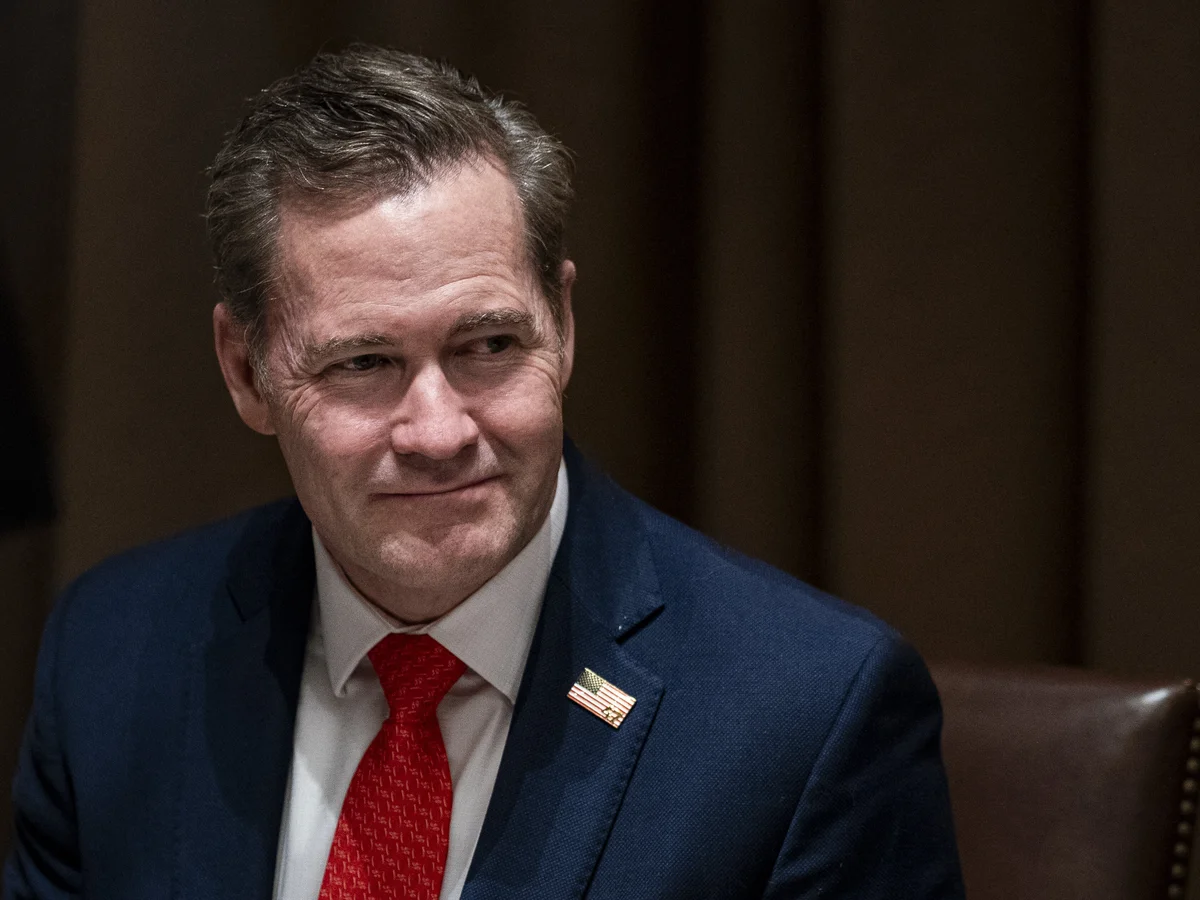 On Thursday morning, the political landscape was rocked by a breaking story that appeared to signal a major upheaval in the Trump administration. At 07:35 CDT, veteran journalist Mark Halperin took to X, dropping a bombshell: three sources had confirmed that Mike Waltz, the National Security Advisor, along with his deputy Alex Wong and others at the National Security Council, were on their way out, potentially that very day.[1] Halperin’s post, amplified by his YouTube show “The Morning Meeting” at 09:00 CDT on @2waytvapp, painted a picture of a swift and decisive ouster, with no hint of Waltz’s next move. The news spread rapidly across X, with users like @ImperiumFirst at 10:05 CDT claiming Waltz had been “sacked” over the Signalgate scandal-a blunder where Waltz reportedly added journalist Jeffrey Goldberg to a Signal group chat discussing classified military plans.[2] By 10:48 CDT, @linda_mattos echoed the narrative, asserting Waltz had resigned in disgrace over the leak.[3] The Hill’s report at 10:50 CDT cemented this storyline in the mainstream, declaring Waltz was out, with no mention of a next chapter for him.[4]
The initial reports were breathless and unequivocal: Waltz’s tenure as National Security Advisor was over, his career seemingly derailed by a mix of incompetence and the Signalgate fiasco. The narrative took hold-Waltz was a casualty of his own misstep, his influence already waning due to internal power struggles and a hawkish stance that clashed with Trump’s inner circle. Posts on X and early web reports from outlets like TRT World Now at 12:00 CDT and the Pittsburgh Post-Gazette at 13:42 CDT leaned into the scandal, framing Waltz’s exit as a firing or forced resignation.[5][6] The story seemed clear: Waltz was done, a high-profile casualty of a turbulent administration.
But the narrative was incomplete, and the rush to judgment missed a critical twist. At 13:30 CDT, a user named @karma2moksha posted on X, revealing a bombshell that upended the morning’s assumptions: Trump had not only removed Waltz from his National Security Advisor role but had nominated him as U.S. Ambassador to the United Nations, with Marco Rubio stepping in as interim National Security Advisor.[7] This revelation, soon corroborated by Al Jazeera at 13:51 CDT and @Fla_Pol at 13:52 CDT, shifted the story dramatically.[8][9] Waltz wasn’t out of the administration; he was being reassigned to a prominent diplomatic post, filling a vacancy left by Elise Stefanik, who had withdrawn her own U.N. Ambassador nomination to return to her leadership role in the House Republican Conference. Additional X posts, like @SkyNews at 13:56 CDT quoting State Department Spokesperson Tammy Bruce on Waltz’s nomination and @LFATVUS at 13:57 CDT announcing the nomination, further confirmed the reassignment.[10][11]
The initial reports had been wrong-not in their reporting of Waltz’s ouster, but in their failure to grasp the bigger picture. The Signalgate scandal, while real and damaging, was not the end of Waltz’s story but a pivot point. By 14:13 CDT, The Atlantic hinted at deeper issues, noting that Waltz’s influence had been eroding before the scandal, yet confirmed his new role as U.N. Ambassador nominee.[12] Outlets like New York Magazine at 14:29 CDT called it a “demotion,” but others, like Axios at 14:47 CDT and The Independent at 14:56 CDT, framed it as a strategic reassignment, with Waltz now facing a contentious Senate confirmation process.[13][14][15] The vacancy left by Stefanik, reported by The Palm Beach Post at 15:03 CDT, was a key piece of the puzzle: Trump needed a high-profile figure for the U.N. role, and Waltz, despite his missteps, fit the bill.[16]
As Thursday unfolded, the narrative continued to evolve. Reports from Politico at 16:28 CDT and The Washington Post at 17:49 CDT revealed that Waltz’s downfall had roots beyond Signalgate, including a power struggle with Rubio and Trump’s growing distrust.[17][18] Yet, the U.N. nomination was consistently framed as a soft landing, not a banishment. By 18:49 CDT, Fox News quoted Vice President JD Vance denying that Signalgate was the sole reason for Waltz’s removal, calling the U.N. role a “promotion.”[19] The Guardian’s report at 20:56 CDT, noting Waltz’s continued use of Signal during a cabinet meeting, added fuel to the controversy but didn’t negate his new path.[20] By the time Xinhua and The Washington Post wrapped up today’s coverage at 21:02 and 21:45 CDT, respectively, the story was clear: Waltz’s ouster was real, but his reassignment to the U.N. Ambassador role was a calculated move, not a fall from grace.[21][22] The day’s events, sparked by Halperin’s early scoop, underscored the danger of snap judgments in a fast-moving news cycle, where the full story-Waltz’s reassignment to fill Stefanik’s vacancy-emerged only after the initial reports of his demise were proven incomplete.[23]
Today’s frenzy left political watchers shaking their heads in bemusement as the mad dash to break the news of Mike Waltz’s ouster as National Security Advisor churned out a slew of hasty conclusions that missed the mark. Mark Halperin’s early X post, proclaiming Waltz’s exit with grave certainty, sparked a wildfire of reports, with users piling on about the Signalgate scandal, painting Waltz as a fallen figure unceremoniously shown the door. Major outlets echoed the narrative of a scandal-fueled firing, only for the story to pivot dramatically when it emerged that Waltz wasn’t ousted but reassigned as U.N. Ambassador, stepping into the vacancy left by Elise Stefanik’s return to the House. The rush to be first had turned seasoned reporters and eager posters into sprinters tripping over their own feet, a reminder that in the race for breaking news, leaping to conclusions often lands you far from the truth.
Works Cited
- Halperin, Mark. “BREAKING NEWS: 3 sources say that @michaelgwaltz deputy NSC adviser Alex Wong & others there are on their way out as early as today.” X, 07:35 CDT, https://x.com/MarkHalperin/status/1917920823265959961.
- ImperiumFirst. “Waltz sacked over Signalgate.” X, 10:05 CDT, https://x.com/ImperiumFirst/status/1917955501860606438.
- linda_mattos. “Mike Waltz resigned as National Security Advisor after accidentally adding journalist Jeffrey Goldberg to a Signal group chat.” X, 10:48 CDT, https://x.com/linda_mattos/status/1917967240147673261.
- “National Security Adviser Mike Waltz out as Trump’s NSA.” The Hill, 10:50 CDT.
- TRT World Now. “Mike Waltz resigned as National Security Advisor due to a group chat leak scandal.” X, 12:00 CDT, https://x.com/TRTWorldNow/status/1917985124932526268.
- “Mike Waltz leaving White House post.” Pittsburgh Post-Gazette, 13:42 CDT.
- karma2moksha. “Trump confirmed Waltz is out as National Security Advisor but nominated as U.N. Ambassador.” X, 13:30 CDT, https://x.com/karma2moksha/status/1918002516714717454.
- “Trump reassigns Mike Waltz to U.N. Ambassador nominee.” Al Jazeera, 13:51 CDT.
- Fla_Pol. “Waltz announced as U.N. Ambassador hours after ouster.” X, 13:52 CDT, https://x.com/Fla_Pol/status/1918007240147673261.
- SkyNews. “State Department Spokesperson Tammy Bruce on Waltz’s nomination.” X, 13:56 CDT, https://x.com/SkyNews/status/1918009516714717454.
- LFATVUS. “Waltz nominated as U.N. Ambassador after resigning as NSA.” X, 13:57 CDT, https://x.com/LFATVUS/status/1918010016714717454.
- “Mike Waltz’s exit and U.N. Ambassador nomination.” The Atlantic, 14:13 CDT.
- “Waltz’s demotion to U.N. Ambassador.” New York Magazine, 14:29 CDT.
- “Trump nominates Waltz as U.N. Ambassador.” Axios, 14:47 CDT.
- “Waltz nominated as U.N. Ambassador after ouster.” The Independent, 14:56 CDT.
- “Waltz fills Stefanik’s U.N. vacancy.” The Palm Beach Post, 15:03 CDT.
- “Waltz’s downfall predates Signalgate.” Politico, 16:28 CDT.
- “Waltz’s ouster and Rubio’s rise.” The Washington Post, 17:49 CDT.
- “JD Vance calls Waltz’s U.N. role a promotion.” Fox News, 18:49 CDT.
- “Waltz photographed using Signal during cabinet meeting.” The Guardian, 20:56 CDT, https://www.theguardian.com/us-news/live/2025/may/01/donald-trump-tariffs-immigration-economy-ukraine-us-politics-live-updates.
- “Trump nominates Waltz as U.N. Ambassador.” Xinhua, 21:02 CDT.
- “Trump’s Alabama address mentions Waltz’s U.N. nomination.” The Washington Post, 21:45 CDT.
- Halperin, Mark. “Update on NSC shakeup.” X, 17:54 CDT, https://x.com/MarkHalperin/status/1918105072057073891.
Like this post? Become a Citizen Producer!


Wednesday: Late Edition
The Must-See Cabinet Meeting
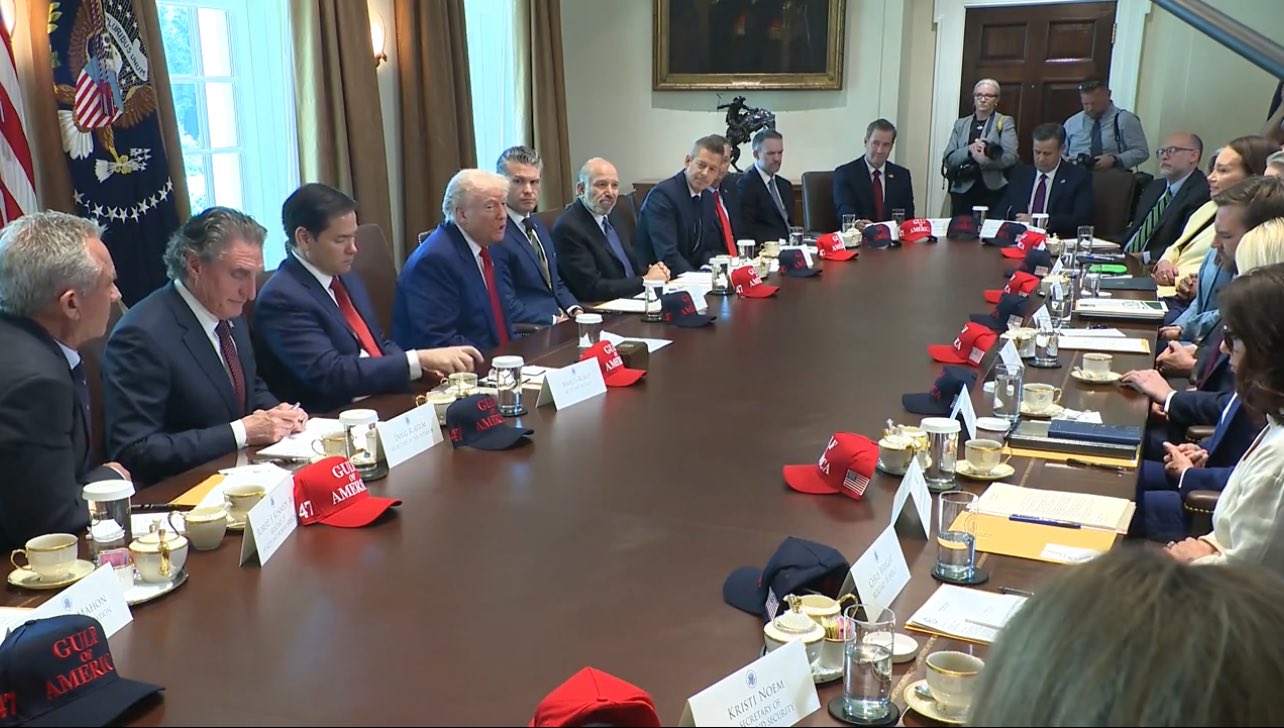 President Trump’s public events have become can’t miss events. Wednesday’s cabinet meeting was a two hour stop down. One thing that is abundantly clear is this administration is locked in, narrowed, and completely mission-driven to achieve President Trump’s campaign promises and fulfill what Americans overwhelmingly voted for. One by one each Cabinet Secretary gave an update on their successes and ongoing initiatives. This is a capable cabinet and it’s a breath of fresh air over the previous band of incompetents. It’s much improved over the hit-and-miss far too swampy first Trump administration cabinet. Vice President J.D. Vance summed up the first 100 days by turning to the media and asking them a simple question:
“We came in with a massive recruitment shortfall, and in 100 days, Secretary Hegseth and President Trump’s leadership, we now have people breaking down the doors to join our military. Why has that happened?”
🚨VP Vance just dropped truth bombs: Trump’s first 💯 days were historic-and the media can’t handle it.
They haven’t learned a thing, and now they’re watching real leadership rewrite the playbook, instead of unelected bureaucrats using an autopen to govern. pic.twitter.com/boBMZ0FWzT
– Wesley Hunt (@WesleyHuntTX) April 30, 2025
In the afternoon, President Trump hosted the “Invest in America” event in the White House’s Cross Hall, with the explicit purpose of showcasing over $2 trillion in new U.S. investments secured in his first 100 days, aiming to highlight his administration’s success in revitalizing American industry and job creation through policies like tariffs and deregulation. The meeting brought together top CEOs from companies such as NVIDIA, Apple, Eli Lilly, Novartis, Toyota, and IBM to celebrate their commitments to domestic manufacturing, technology, and infrastructure, reinforcing Trump’s “America First” economic agenda. By spotlighting these investments, the event sought to demonstrate how tariff-driven policies were incentivizing businesses to shift production to the U.S., fostering economic resilience and reducing reliance on foreign supply chains, despite a 0.3% GDP contraction in Q1 2025 due to an import surge.
The investments announced by these companies underscored the event’s focus on bolstering U.S. economic capacity. NVIDIA pledged $500 billion over four years to develop AI infrastructure, including manufacturing AI supercomputers entirely in the U.S., aiming to secure technological dominance. Apple committed $500 billion to expand production across multiple states, focusing on AI, silicon engineering, and job creation, doubling its U.S. Advanced Manufacturing Fund to $10 billion. Eli Lilly announced a $27 billion investment to build four new manufacturing plants, enhancing pharmaceutical production and creating over 3,000 jobs. Novartis planned a $23 billion investment to construct and expand ten U.S. facilities, including manufacturing and R&D sites, generating 4,000 jobs. Toyota invested $88 million to boost hybrid vehicle production in West Virginia, securing 2,000 jobs. IBM committed $150 billion over five years to advance computing and manufacturing operations, emphasizing innovation in AI and quantum computing. These pledges, totaling billions in domestic investment, are direct outcomes of Trump’s tariff policies, which encouraged companies to prioritize U.S.-based production to avoid rising import costs.
Economy
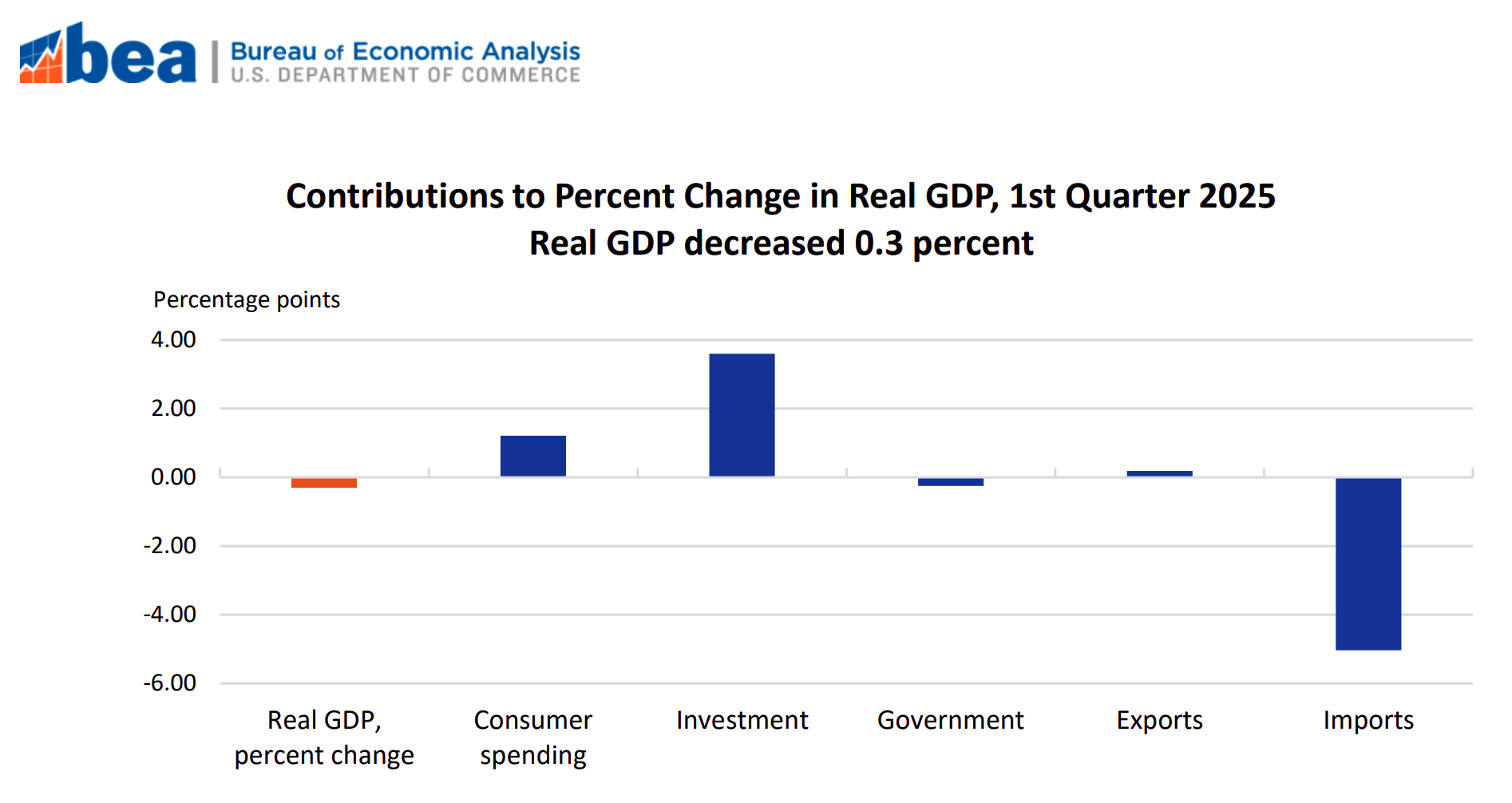
In the first quarter, the U.S. economy contracted, with real GDP declining by 0.3%, a sharp reversal from the growth seen in late 2024, as reported by the Bureau of Economic Analysis. The primary driver of this downturn was a significant surge in imports, particularly in consumer goods like pharmaceuticals and capital goods such as computers. Businesses, anticipating new tariffs under President Trump’s administration, stockpiled goods to preempt rising costs. Despite the economic contraction, private investment emerged as a critical buffer, with gross private domestic investment growing, led by a notable increase in private inventory investment, especially in the wholesale trade sector. This stockpiling, while boosting economic activity, also raised concerns about potential overstocking, which could lead to excess inventory challenges if consumer demand does not keep pace.
The import surge significantly widened the U.S. trade deficit, as businesses rushed to secure goods before tariffs increased prices. This influx of imports, particularly from countries like China, which saw a record trade surplus, directly subtracted from GDP, as imports are a negative factor in the GDP calculation. However, this trade imbalance also spurred domestic economic activity, as companies invested heavily in inventory to manage the anticipated cost increases. The BEA noted that the import-driven inventory buildup, especially in pharmaceuticals and capital goods, reflected strategic business decisions to maintain supply chain stability. This dynamic illustrates how tariff expectations reshaped trade patterns, indirectly encouraging domestic investment to handle the increased volume of goods, even as it exacerbated the trade deficit in the short term.
Amidst this trade-driven economic shift, domestic investment saw a robust boost, with fixed investment surging significantly, reversing a decline from the previous quarter. This growth was driven by strong nonresidential investment in structures, equipment, and intellectual property, alongside modest gains in residential investment. The tariff threat incentivized businesses to redirect resources toward domestic production and infrastructure, anticipating higher costs for imported capital goods. This strategic pivot not only supported economic activity but also signaled confidence in the U.S. market’s long-term potential. By making foreign goods more expensive, tariffs encouraged firms to invest in local manufacturing and innovation, fostering resilience against global supply chain disruptions and aligning with broader economic goals of reducing reliance on imports.
The success of Trump’s tariff strategy is evident in its ability to catalyze this surge in domestic investment, positioning the U.S. economy for long-term strength despite short-term GDP contraction. The proactive stockpiling of goods, while inflating the trade deficit, drove significant inventory investment, ensuring supply availability and supporting domestic industries like wholesale trade. Simultaneously, the robust growth in fixed investment reflects a forward-looking commitment to domestic production, as businesses prepare for a future where imports may be costlier. While risks like excess inventory remain, the Q1 2025 data demonstrates that tariffs effectively stimulated domestic economic activity, encouraging firms to bolster local infrastructure and manufacturing capacity. This shift not only mitigates the immediate impact of trade disruptions but also lays the foundation for sustained economic growth, proving the efficacy of tariffs in driving domestic investment and economic resilience.
RIP David Horowitz
David Horowitz, a true man of the Right, has passed away at age 86 after a lengthy cancer battle. Twitchy has a very nice compendium of tributes and I recommend them all. I also recommend his autobiography Radical Son: A Generational Odyssey which documents his upbringing as the child of Marxists to his own radical youth, to his awakening as a conservative. There were few better at calling out the intellectual and moral failings of the Left because he had grown up among them. The best tribute came from his son Ben.
Rest in Peace to my father @horowitz39 . We love you Dad.
David Joel Horowitz was born January 10, 1939 to Phil and Blanche Horowitz in Queens, New York. David was raised in Queens along with his sister Ruth. Phil and Blanche were high school teachers and members of the… pic.twitter.com/c7PG6zE60W
– benahorowitz.eth (@bhorowitz) April 30, 2025
A Final Thought
Remember… it can always be worse.