
Lou Holtz: The Coach Who Built Champions for Life
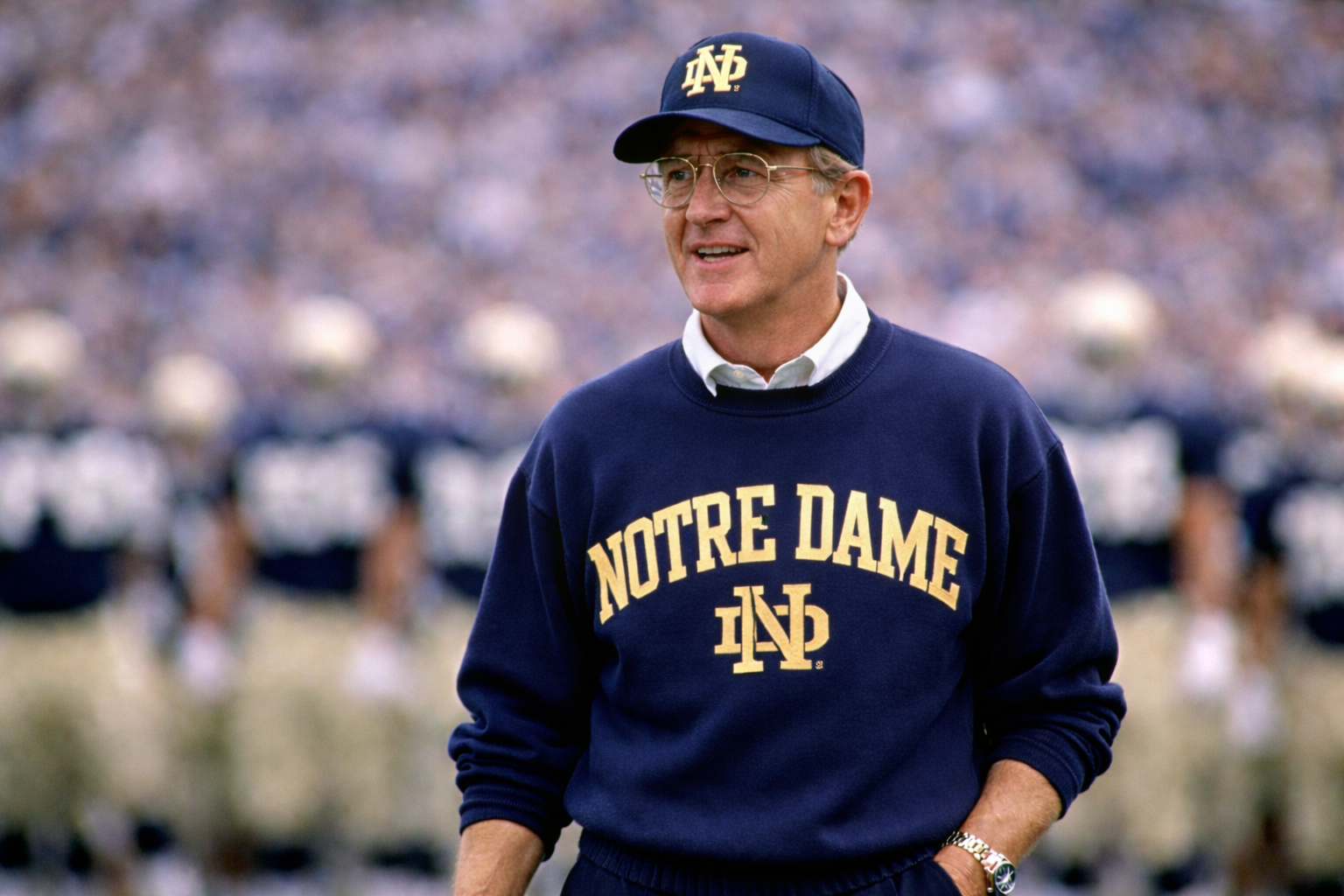
Today, March 4, 2026, the college football world lost one of its greatest teachers. Lou Holtz, the legendary coach who led Notre Dame to the 1988 national championship and inspired generations with his no-nonsense wisdom, passed away at age 89 in Orlando, Florida. Notre Dame Football captured the moment perfectly in their tribute: “Remembering the life and legacy of Lou Holtz.” If you haven’t watched the video yet, pause and take it in. It’s a powerful reminder of the man who didn’t just win games; he changed lives.
Remembering the life and legacy of Lou Holtz pic.twitter.com/8WiEtVr6fT
— Notre Dame Football (@NDFootball) March 4, 2026
Holtz’s career numbers are staggering: a 249–132–7 record, the only coach in history to take six different programs to bowl games, a 100–30–2 mark at Notre Dame that included the 1988 undefeated national title, College Football Hall of Fame induction in 2008, and the Presidential Medal of Freedom in 2020. Yet those stats only scratch the surface. As he often reminded people, “I never felt I coached football. I felt I coached life.” Across six programs (William & Mary, NC State, Arkansas, Minnesota, Notre Dame, and South Carolina) he mentored thousands of young men, turning them into disciplined, purposeful leaders who carried his lessons far beyond the field.
What made Holtz special was his ability to distill complex ideas into simple, unforgettable truths. He gave his players three unbreakable rules, a powerful philosophy of attitude, and four essential ingredients for a meaningful life. He lived those truths with humility and class, even in lopsided victories, and the impact on the young men who played for him was profound. This is his story, and these are the lessons every coach, leader, parent, and athlete can apply today.
The Three Rules That Built Trust, Effort, and Unbreakable Teams
Holtz didn’t complicate success. He boiled it down to three rules he repeated in every meeting, every practice, and every press conference. He said these rules generated trust, maximized effort, and created teams that couldn’t be broken:
“Do the right thing. Do the best you can. Always show people you care.”
First, do the right thing. Holtz believed character wasn’t optional; it was the foundation. In an era when shortcuts and excuses were common, he made it clear: integrity builds trust faster than talent ever could. He drilled this into players by holding them accountable not just for on-field mistakes, but for off-field choices. He wanted them to understand that every decision either strengthened or weakened the program. As he explained in speeches, this rule created a culture where players could trust one another completely because they knew everyone was committed to what was right, not just what was easy.
Second, do the best you can. Holtz refused to accept “good enough.” He pushed players to give maximum effort in every rep, every meeting, every moment. It wasn’t about perfection; it was about leaving nothing on the table. He connected this rule directly to personal growth, reminding players that their best today would become their baseline tomorrow. This relentless standard turned average teams into champions and ordinary young men into extraordinary leaders.
Third, and perhaps most important to Holtz, always show people you care. He said this rule tied everything together. Tough love wasn’t harsh; it was honest. He would rip into a player during practice, then pull him aside for a hug and a quiet word of belief. He prayed with families, attended weddings long after eligibility ended, and stayed in touch during life’s toughest moments. Showing care wasn’t soft; it was the ultimate form of leadership. Holtz proved that when players know you genuinely care about them as people, they will run through walls for you.
These three rules weren’t slogans on a wall. They were lived daily. They created the trust that allowed Notre Dame to go from mediocrity to dynasty in just a few years. For today’s coaches, they remain the simplest, most effective blueprint for building high-performing teams, whether on the field, in the boardroom, or at home.
The Power of Attitude – The One Thing You Can Always Control
If the three rules were the foundation, attitude was the engine. One of Holtz’s most famous quotes captures it perfectly:
“Ability is what you’re capable of doing. Motivation determines what you do. Attitude determines how well you do it.”
He returned to this truth constantly. Holtz taught that talent gets you in the door, motivation gets you moving, but attitude decides everything else. He refused to let players dwell on what they couldn’t control: injuries, weather, referees, opponent talent. Instead, he demanded they control the one thing they could always own: their response.
He gave them a practical tool to live it out: the acronym WIN: What’s Important Now? In every huddle, every practice rep, every moment of pressure, players were taught to ask themselves that single question. It kept them present, focused, and relentless. Holtz would say, “Life is 10% what happens to you and 90% how you respond to it.” He proved it by turning around program after program. At Notre Dame in 1986, he inherited a team coming off years of struggle and convinced them they were destined for greatness, not because of talent alone, but because of the attitude they chose to bring every single day.
This philosophy extended far beyond football. Holtz used it in motivational talks to business leaders, parents, and even in his own life during his wife Beth’s battle with cancer. He showed that a great attitude isn’t about pretending everything is perfect; it’s about choosing excellence and gratitude no matter the circumstances. For coaches today, this is pure gold: your team’s attitude will always reflect yours. Model it daily, and watch what happens.
The Four Things Everyone Needs – Holtz’s Blueprint for a Life Without Voids
Holtz often said life doesn’t have to be complicated. In speeches, interviews, and team meetings, he returned to this simple framework:
“I think that everybody needs four things in life. Everybody needs something to do regardless of age. Everybody needs someone to love. Everybody needs something to hope for, and, of course, everybody needs someone to believe in.”
He expanded on it in countless talks: “Say you need four things in your life. If you don’t have any of these four things in your life, you’re going to have a tremendous void.”
He broke them down with clarity and passion.
Something to do, regardless of age, and with passion. Holtz hated idleness. He believed every person needs meaningful work or activity that gets them out of bed excited. As a coach, he gave every player a role and a purpose. He told recruits and veterans alike, “Decide what you want to do,” because that decision alone creates direction. In retirement, he stayed active speaking and mentoring, proof that this need never expires.
Someone to love. This was deeply personal for Holtz. Married to Beth for over 60 years, he often credited their relationship with giving him strength. Love, to him, was active care. It tied straight to his third rule. He told stories of family prayer during big decisions and rallying around his wife through illness. For players, he created a brotherhood where they genuinely loved and protected one another.
Someone to believe in. Holtz was never vague. In speech after speech he declared, “In my case it’s Jesus Christ, our Lord and Savior.” He encouraged players to find something bigger than themselves—faith, values, a higher purpose. At Notre Dame he could speak openly about spiritual life, and many players credit that foundation with carrying them through injuries, failures, and life after football.
Something to hope for. This was the forward engine. “You have to have something to hope for,” he repeated. Even after the 1988 national title, he asked players, “What’s going to happen now?” Hope kept them young and motivated. He gave Notre Dame players hope that they could be champions again, and he gave them hope for lifelong success.
Holtz used these four things as both diagnostic and prescription. He asked players (and audiences) to check themselves: Do you have all four? Then he helped them fill whatever was missing. By giving young men purpose, connection, faith, and vision, he eliminated voids and built lives of meaning.
Humble Leadership in Action – Class When Everyone Expected a Blowout
Holtz’s philosophy showed up in the most unexpected places, including how he talked to the press and how he handled lopsided games. He had a special way with the media: self-deprecating, humble, always building up opponents no matter how mismatched the contest. He did it to keep his own team grounded and to show genuine respect for the game.
A perfect example came in 1989. SMU was in its first full season back after the NCAA “death penalty” and an extra self-imposed year of no football. The Mustangs were rebuilding with limited talent. Notre Dame entered their November 11 matchup as the No. 1 team, fresh off the national title, riding a long winning streak.
In the days leading up, Holtz made it sound like SMU would be a real challenge, emphasizing their resilience and fight. The Irish won 59–6, but Holtz deliberately pulled back in the fourth quarter. He had backups take intentional delay-of-game penalties near the goal line and even step out of bounds short of the end zone. Post-game he explained it as sportsmanship and not wanting the score to “get out of hand.”
By comparison, earlier that same season John Jenkins’ Houston run-and-shoot team hung 95 points on the same SMU squad, racking up a record 1,021 total yards. No mercy, full throttle. Holtz chose a different path: one of restraint, respect, and class. It wasn’t weakness; it was living the three rules and the four essentials in real time. He showed players that winning with character matters more than padding stats.
The Lasting Impact on Thousands of Young Men
Holtz didn’t just coach football; he coached life, and the ripple effect on the thousands of young men who played for him is his greatest legacy.
Alvin Miller, who played under Holtz at Notre Dame, captured it beautifully: “Each young man who crossed Coach Holtz’s path was influenced in such a way that they will never forget the impact he left on their life. Coach Holtz made sure that the players he coached had the support network they needed to become the best young men possible. He prepared them for what they would experience on the field as well as what they would experience in life after football.”
Jerome Bettis still tells the story of Holtz’s recruiting visit to his Detroit home. Holtz walked in, realized quickly who ran the house, and spent the entire time selling Mama Bus on Notre Dame. Bettis later said, “He didn’t just speak to me as an athlete; he spoke to me as a young man, and he spoke to my mom as a mom. That respect and trust left an impact on me that’s lasted my whole life.” During one practice Holtz suddenly stopped everything and announced to the team that “somebody is going to cost us a national championship” before calling out Bettis as the potential problem. It was classic reverse psychology: firing Bettis up and teaching accountability. Bettis credits Holtz with shaping the work ethic that carried him to the Pro Football Hall of Fame.
Tim Brown arrived before Holtz but blossomed under him. After just two days of spring practice, Holtz pulled Brown aside and told him he could win the Heisman Trophy, planting a seed of belief that became reality in 1987. The funniest story came during punting drills. Brown kept dropping punts. Holtz got so frustrated he pushed Brown aside, stepped in himself, and said, “I’m going to show you how to do this.” He promptly broke his finger catching the next punt. Brown recalled, “He got so mad at me that he literally pushed me out of the way and said, ‘I’m going to show you’… He comes back with a big old cast on and says, ‘C’mon, let’s get back to it.’ That was Lou Holtz. He tried to teach you even to the point of breaking his fingers.” Brown has said many times, “Without the great Lou Holtz, I would not have won the Heisman… He put me in the Hall of Fame.”
These stories (and hundreds more like them) show the pattern: tough love, genuine belief, lifelong care. Players became NFL stars, successful businessmen, devoted fathers, and community leaders, all carrying pieces of Holtz with them.
The Legacy We Carry Forward
Lou Holtz proved that you don’t have to be flashy to be legendary. You just have to show up every day with the right attitude, live the three rules, give people the four essentials, and lead with class even when no one is watching.
As coaches (whether leading youth teams, high-school programs, businesses, or families), the best way to honor Coach Holtz is to apply his lessons immediately. Check yourself against the three rules. Guard your attitude like the most valuable asset you own. Make sure the people you lead have something to do with passion, someone to love, someone to believe in, and something to hope for.
God didn’t put us on this earth to be ordinary, Holtz liked to say. He lived that truth out loud, and now it’s our turn.
Rest in peace, Coach Holtz. Your 100 wins at Notre Dame were impressive, but the thousands of lives you changed through your words, your example, and your love? That’s the real championship. Your lessons are still winning: one young man, one team, one leader at a time.
Go Irish. ☘️
James Kay
Coaching Series | jameskay.online
