
Using Venezuela as Leverage Against Putin
The Big Chess Board
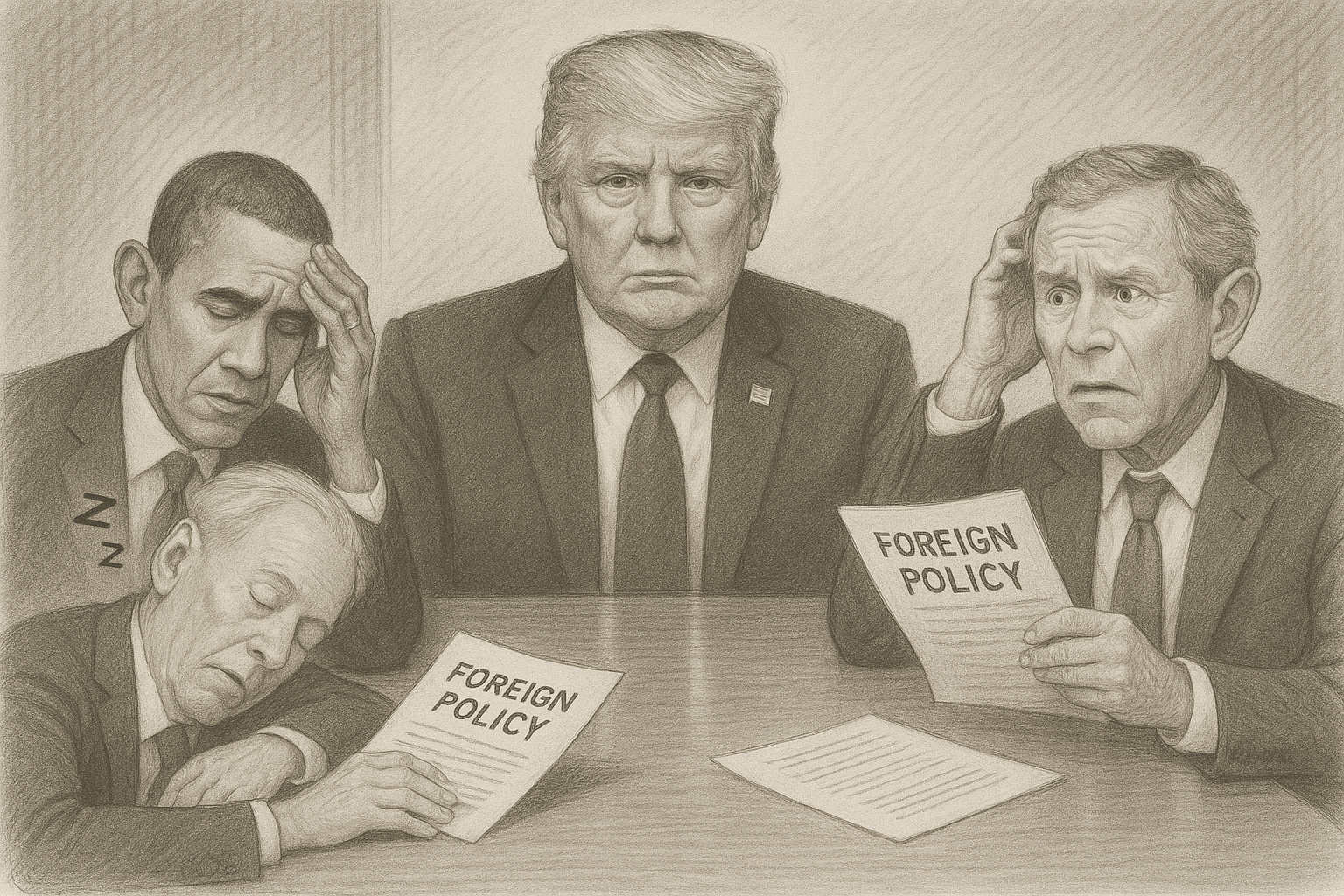
Donald Trump’s foreign policy maneuvers in Venezuela exemplify a distinctive application of realpolitik, the pragmatic pursuit of national interest over ideological ideals. This approach, historically shaped by figures like Otto von Bismarck with his shifting alliances and Henry Kissinger with his Cold War détente, finds a contemporary expression in Trump’s “America First” doctrine. This philosophy emphasizes power, economic leverage, and strategic deals over moral or democratic crusades, contrasting with predecessors like George W. Bush’s nation-building in Iraq or Barack Obama’s reliance on multilateral institutions.
It’s worth noting that Venezuela is a key Russian ally. Trump could be indicating that if Putin won’t accept a deal with a sovereign Ukraine then he will lose Venezuela to US influence. It’s big chess board.
— David Marcus (@BlueBoxDave) December 1, 2025
A central element of Trump’s strategy involves leveraging Venezuela to pressure Vladimir Putin into ending the war in Ukraine, an idea presaged by David Marcus’s X post, which describes a “big chess board” where global powers maneuver for strategic supremacy. This essay explores how Trump’s actions align with realpolitik, draws parallels to Ferdinand Marcos’s 1986 ousting from the Philippines, and evaluates the strategy’s potential outcomes and inherent risks.
Realpolitik and Trump’s Approach
Realpolitik focuses on maintaining power balances and securing tangible advantages, a framework Trump adapts with a uniquely transactional twist. Unlike past U.S. interventions driven by ideological goals-such as the democratization efforts in Afghanistan-Trump’s engagement with Venezuela is not primarily about seizing its 303.3 billion barrels of oil (18.4% of global reserves) but about disrupting Putin’s sphere of influence. Recent reports from the New York Times detail a direct ultimatum to Nicolás Maduro: resign and accept safe passage for his family, supported by a naval deployment off Venezuela’s coast. The Miami Herald and Hot Air further outline a four-month pressure campaign, culminating in the recent airspace closure, signaling a calculated escalation. This reflects a resilient strategy, designed to unravel Russia’s foothold without resorting to a full-scale invasion, aligning with Marcus’s chessboard metaphor. The objective is to compel Putin-already burdened by conflicts in Ukraine, Syria, and Armenia-to negotiate a peace deal, with hints from Secretary of State Marco Rubio suggesting a possible resolution by year-end.
Venezuela as Strategic Leverage
The cornerstone of Trump’s plan is to weaken Maduro, whose regime’s illegitimacy-stemming from fraudulent 2018 and 2024 elections-depends heavily on Russian support. Moscow has invested significantly, providing $4 billion in arms, deploying Tupolev bombers, and facilitating oil-for-loans deals to sustain Maduro against U.S. sanctions and domestic opposition. By targeting this proxy, Trump aims to force Putin into concessions on Ukraine, using Venezuela’s strategic location and resources as a bargaining chip rather than a direct prize. The U.S., with its own 40 billion barrels (2.4% of global reserves) from shale, does not require Venezuela’s oil but seeks to alter global energy dynamics and weaken Russia’s economic leverage. This approach embodies the “big chess board” concept, where each move-naval presence, airspace restrictions, and support for opposition figure Edmundo González Urrutia-builds toward a diplomatic breakthrough, with the opposition’s potential resilience adding critical momentum.
Parallels to Marcos’s 1986 Ousting
Ferdinand Marcos’s exit from the Philippines offers a historical parallel to this strategy. His dictatorship, underpinned by rigged elections (1981, 1986) and martial law, unraveled amid economic collapse and the People Power Revolution, with President Ronald Reagan offering exile to Hawaii after key military defections. Similarly, Maduro’s illegitimacy-rejected by the U.S. and over 50 nations-provides a foundation for Trump’s pressure, with the naval buildup echoing Reagan’s strategic pivot. However, Marcos lacked the extensive foreign backing that Putin provides Maduro, and Venezuela’s vast oil reserves and geopolitical significance elevate the stakes. The Marcos transition, though ephemeral in its initial instability and marked by lingering corruption, eventually led to a democratic shift; Venezuela’s fragmented opposition, as evidenced by Juan Guaidó’s decline, risks a more protracted and chaotic transition if Maduro falls.
Feasibility and Risks
This strategy aligns with realpolitik’s pragmatic essence but encounters significant obstacles. Maduro’s military, reinforced by Russian advisors and financial incentives, remains loyal, contrasting with Marcos’s defecting generals, and his defiance-demanding global amnesty and military control-could necessitate further escalation. A failed move might unravel into regional instability, including mass migration surges, empowerment of cartels, or heightened drug trafficking concerns, while China’s $60 billion investment in Venezuelan oil could prompt a counter-move in the Indo-Pacific. Nonetheless, a resilient opposition, bolstered by U.S. diplomatic and material support, might trigger defections, mirroring Marcos’s tipping point. The outcome hinges on Maduro’s response, Putin’s willingness to negotiate, and the international community’s reaction, with global implications unfolding.
Conclusion
Trump’s use of Venezuela as leverage against Putin exemplifies a tailored realpolitik, exploiting illegitimacy and strategic pressure on the “big chess board.” The Marcos analogy highlights the potential to unravel an authoritarian regime and shift power dynamics, though Russia’s deep involvement and Venezuela’s stakes complicate the endeavor. This gambit’s success depends on imminent developments, with Venezuela’s fate poised to influence Ukraine and reshape global alliances.
