
The Enduring Shadow of the Moynihan Report: From 1965 Warnings to Modern Realities
From Vigilante Fantasies to Urban Realities: How ‘Suicidal Empathy’ Undermines Civil Society
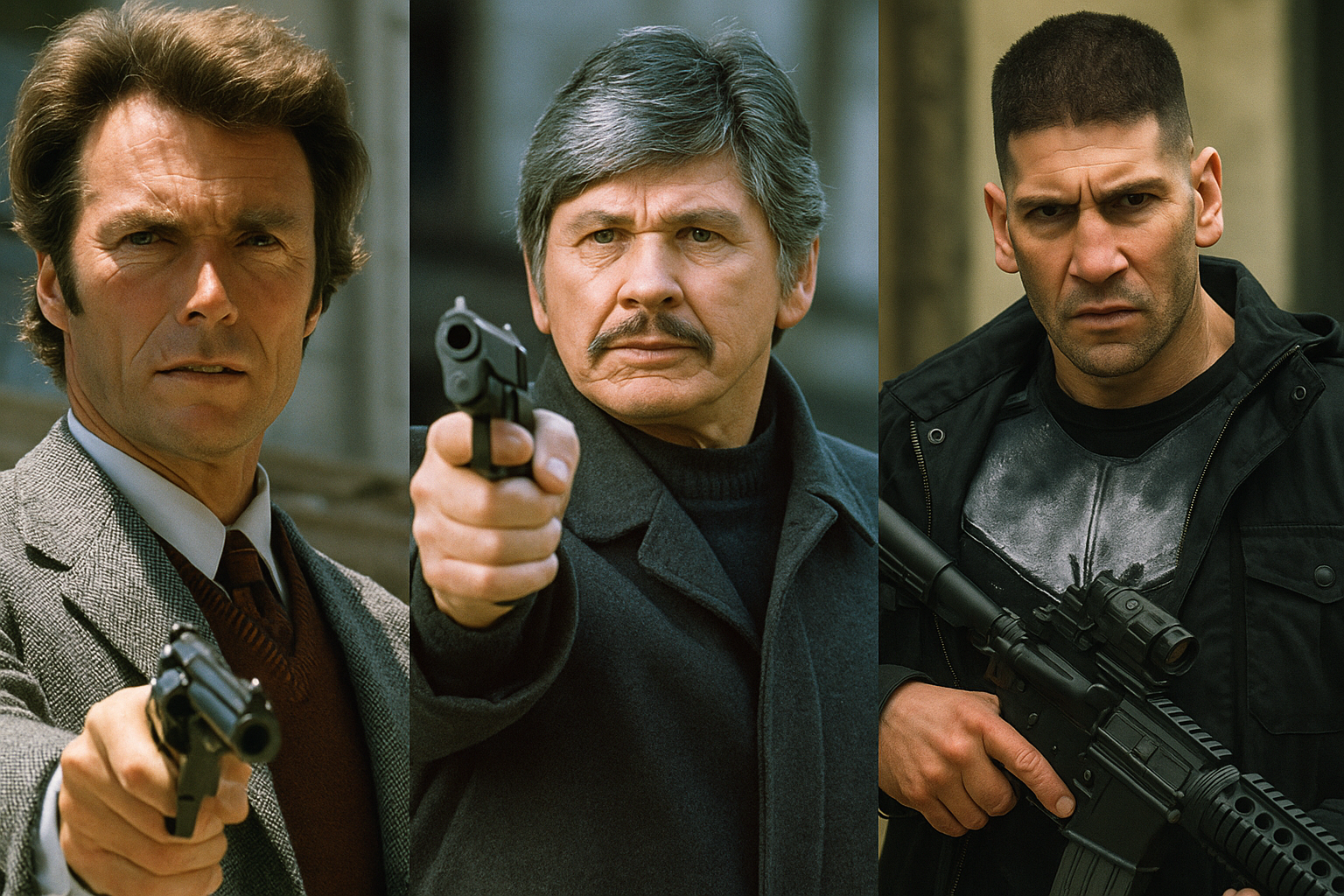
In the gritty urban landscapes of 1970s America, films like Dirty Harry (1971) and Death Wish (1974), alongside comic icons like The Punisher (debuting in 1974), captured a raw cultural pulse: a society teetering on the edge of chaos, where rising crime rates and perceived institutional failures fueled fantasies of extrajudicial justice. Clint Eastwood’s Harry Callahan, a rogue cop contemptuous of bureaucratic red tape, embodied frustration with legal protections that seemed to favor criminals over victims. Charles Bronson’s Paul Kersey, an architect turned vigilante after his family’s brutalization, represented the everyman’s breaking point. And Frank Castle, the Punisher, a war-hardened veteran unleashing merciless retribution on the mob, symbolized unyielding survival instinct against systemic rot. These narratives weren’t mere entertainment; they were cultural indictments of a civil society fraying under the weight of unchecked violence, reflecting a deep-seated demand for security and justice when official channels faltered.
Fast-forward to today, and these archetypes resonate more than ever, illuminating evolutionary psychologist Gad Saad’s concept of “suicidal empathy”-an excessive, misdirected compassion that prioritizes adversaries or wrongdoers at the expense of self-preservation and societal stability. Saad argues this “empathy bug” manifests as a pathological overextension, where Western societies indulge in boundless tolerance for harmful behaviors, leading to self-destructive outcomes like eroded security and cultural decline. In the context of those vigilante tales, suicidal empathy appears as the liberal orthodoxy of the era-expansive suspects’ rights, rehabilitation over punishment, and empathy for criminals as “victims of circumstance”-that handcuffed law enforcement and emboldened predators, much like Callahan’s infamous disdain for Miranda warnings. These stories served as cathartic rebellions, channeling the human survival instinct: an innate drive to protect kin and community when threats loom, unfiltered by abstract moralizing.
At their core, these works underscore the delicate nature of civil society-a fragile web of trust, norms, and mutual aid that crumbles without robust enforcement of justice. As urban crime surged in the 1970s, fueled by economic woes and drug epidemics, audiences flocked to theaters for visions of reclaimed agency. Kersey’s rampage in Death Wish didn’t just glorify violence; it critiqued a system paralyzed by empathy for muggers, leaving citizens vulnerable and demanding a return to bounded compassion-one that safeguards the innocent first. Similarly, The Punisher’s skull-emblazoned crusade rejected nuanced mercy for mobsters, echoing Saad’s warning that irrational empathy fuels cultural chaos by eroding the very boundaries that sustain civilization. This fragility is no relic; it’s evident in modern headlines, where progressive policies echo the same self-sabotaging tendencies.
Consider the “Daniel Penny Effect,” a chilling contemporary echo of these themes. In 2023, Marine veteran Daniel Penny restrained Jordan Neely, a erratic individual threatening subway passengers in New York City, leading to Neely’s accidental death; Penny was acquitted in December 2024 after a high-profile trial. Yet, as conservative commentator David Strom argues, this case exemplifies how Blue cities prosecute interveners while releasing repeat offenders, deterring citizen action and accelerating urban decay. A recent tragedy in Charlotte underscores this: Ukrainian immigrant Iryna Zarutska was stabbed to death on a light rail by DeCarlos Brown, a violent recidivist who should have been incarcerated, with bystanders failing to aid her as she bled out- a direct result of policies that prioritize criminal leniency over public safety. Strom blames “soft-on-crime” reforms and activists pushing “diversity” narratives, creating a low-trust society where survival instincts are suppressed by fear of legal backlash.
This pattern intensifies with figures like Zohran Mamdani, a Democratic Socialist eyeing New York City’s mayoralty, whose decarceral agenda includes emptying jails, abolishing gang databases, and shifting police from misdemeanors to “serious” crimes-effectively blinding law enforcement to threats. Critics decry this as suicidal empathy incarnate: compassion for offenders that hollows out justice, inviting the chaos those 1970s films warned against. Mamdani’s vision, appealing to elite progressives but alienating working-class voters craving security, risks undoing New York’s hard-won safety gains, much like the revolving-door systems that birthed vigilante lore.
Here enters the Breitbart Doctrine: “politics is downstream from culture,” the late Andrew Breitbart’s maxim that cultural narratives shape political realities. Those films didn’t just reflect 1970s angst; they influenced a conservative backlash against liberal excesses, paving the way for tougher policies like “broken windows” policing in the 1990s. Today, as vigilante tropes persist in franchises and comics, they continue molding public demand for justice, countering suicidal empathy’s grip. But as Breitbart implied, if culture sows apathy through media glorifying leniency or demonizing defenders like Penny, politics follows-yielding leaders like Mamdani and cities where civil society unravels.
Ultimately, from Dirty Harry’s .44 Magnum to the Punisher’s arsenal, these icons remind us that human survival demands empathy with limits. In a world of fragile civility, unchecked compassion isn’t virtue-it’s suicide. As Saad posits in his explorations of this malaise, reclaiming rational boundaries is key to preserving the West. Otherwise, the vigilante fantasy may become grim necessity, as our streets mirror the screens of yesteryear.
Like this post? Become a Citizen Producer!


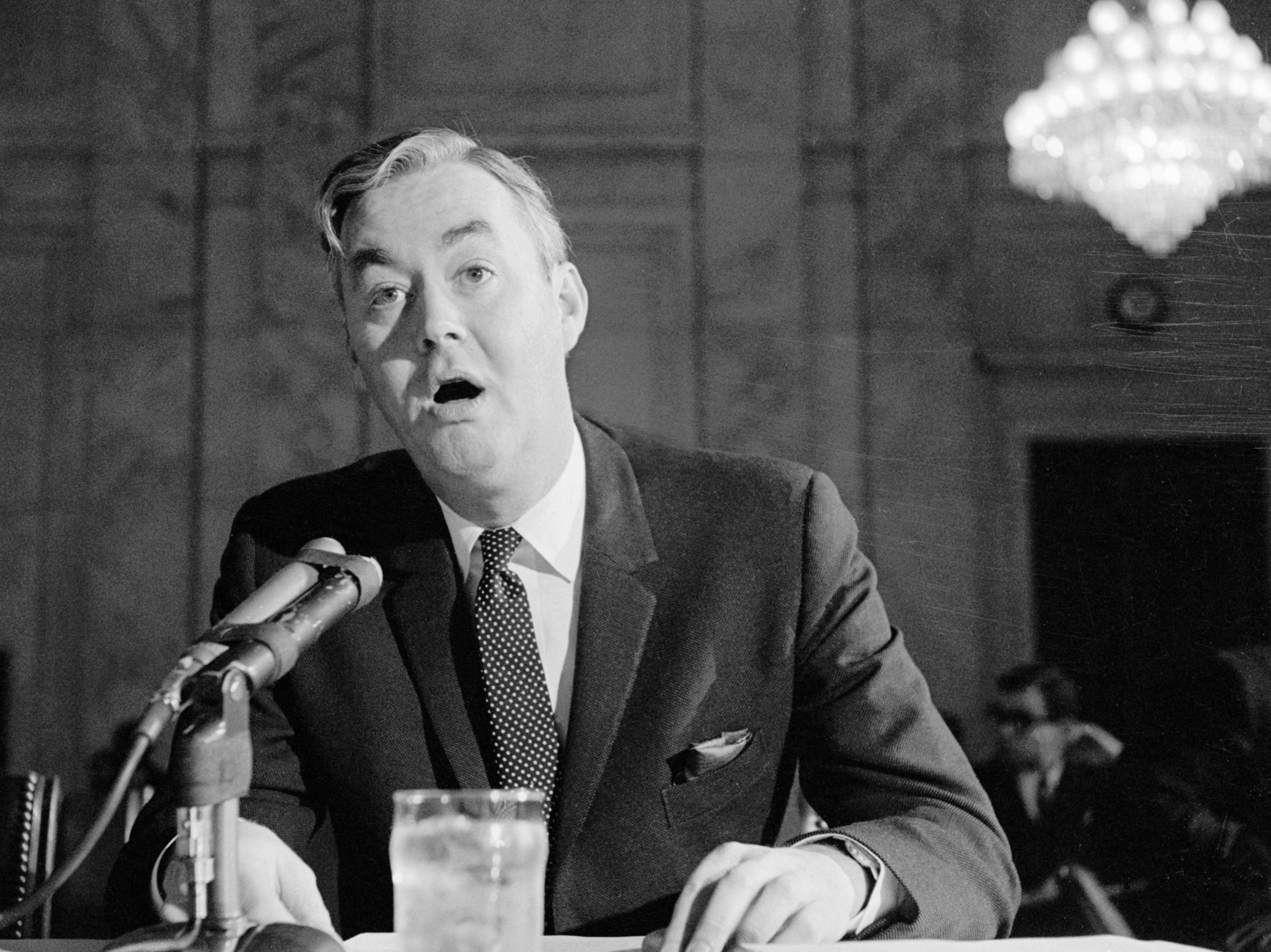
had conducted a study on poverty among blacks.
In the turbulent mid-1960s, amid the Civil Rights Movement’s zenith and President Lyndon B. Johnson’s Great Society ambitions, a controversial document emerged from the U.S. Department of Labor. Titled “The Negro Family: The Case for National Action,” it was authored by Daniel Patrick Moynihan, then Assistant Secretary of Labor. Released in March 1965, the report was initially an internal memo intended to inform policy discussions on poverty and racial inequality. Drawing on census data and sociological insights, Moynihan argued that while civil rights legislation was essential, it alone could not eradicate deep-seated disparities without addressing the instability of Black family structures. He described a “tangle of pathology” in urban Black communities-marked by rising rates of single-mother households, out-of-wedlock births, and welfare dependency-rooted in the legacies of slavery, Jim Crow segregation, and ongoing discrimination. This pathology, he warned, perpetuated cycles of poverty and social dysfunction, calling for bold national action to strengthen family units beyond mere economic aid. Leaked to the press that summer, the report ignited fierce debate: civil rights leaders decried it as victim-blaming, while others saw it as a call for empathy and reform. The Moynihan Report in situ reflected the era’s optimism for federal intervention colliding with raw data on urban decay, setting the stage for decades of policy battles over welfare, race, and family.
Fast-forward to today, and a provocative thesis emerges: Democrat policies and long-term dominance in urban governance have allowed the conditions Moynihan described to metastasize, spreading and intensifying rather than resolving. This perspective posits that flawed liberal approaches-emphasizing government aid over personal incentives-have entrenched family breakdown, poverty, and dependency in America’s cities. To explore this, consider five key arguments, each supported by empirical data.
First, the expansion of welfare programs under Democrat initiatives has inadvertently incentivized single-mother households, a core element of Moynihan’s “pathology.” Programs like those from the Great Society era provided aid that often diminished with marriage, discouraging stable two-parent families. In 1960, fewer than 25% of Black children were born out of wedlock; by 2021, this had surged to over 70%, with more than 50% of Black children in single-parent homes by 2013. This trend, critics argue, correlates with declining Black male labor-force participation and heightened welfare reliance in Democrat-led urban areas.
Second, permissive social policies in Democrat-dominated cities have fueled a dramatic rise in out-of-wedlock births, exceeding Moynihan’s projections. From 1940 to 2020, rates among Black Americans climbed from about 15% to 78%, with urban hotspots like Chicago and Detroit showing even steeper increases due to concentrated poverty and aid programs that reduce marriage incentives. Today, nearly 70% of Black children are born to single mothers, perpetuating disadvantage in these long-held Democrat strongholds.
Third, persistent poverty in urban centers under Democrat control underscores the failure of anti-poverty strategies to break Moynihan’s cycles. Despite trillions invested in Great Society-style programs, poverty rates in Democrat-represented districts averaged 17.1% from 2010-2014-higher than in Republican ones-with blue states like California and Michigan doubling the national average in their cities. Black family poverty hovers at 48.8% for households with children under 18, concentrated in these urban environments.
Fourth, soft-on-crime policies in blue cities have amplified violence and social instability linked to family breakdown. In 2025, Democrat-led urban areas like Jackson, Mississippi, and Memphis report homicide rates up to 78 per 100,000-15 times the national average-amid reduced policing and bail reforms. This surge ties directly to the welfare dependency and unstable families Moynihan flagged, with violent crime remaining elevated despite broader national declines.
Fifth, heightened welfare dependency in urban Black families has solidified matriarchal structures, undermining self-sufficiency. By the 1970s, nearly 1 in 6 urban Black residents in cities like New York were on welfare, with Black women deriving up to 20% of income from aid, doubling single-parent home rates since 1965. Policies like TANF, shaped by Democrat permissiveness, leave over 50% of Black families reliant on safety nets, deepening poverty in these areas.
In conclusion, modern conservative scholars regard the Moynihan Report as remarkably prescient, vindicated by trends like the drop in Black marriage rates to 33% and out-of-wedlock births exceeding 70%. Figures from institutions like the Heritage Foundation and AEI argue that liberal welfare expansions have disincentivized marriage, perpetuating dependency and inequality across races. They defend Moynihan against “victim-blaming” charges, emphasizing his focus on historical racism, and advocate for cultural renewal through community efforts like church-led marriage initiatives rather than more government intervention. As debates rage in 2025, the report’s legacy endures as a cautionary tale: ignoring family stability invites societal metastasis, a view conservatives champion for policy reform.
