
From Arlington to Cooperstown: Why Buddy Bell Deserves the Hall of Fame
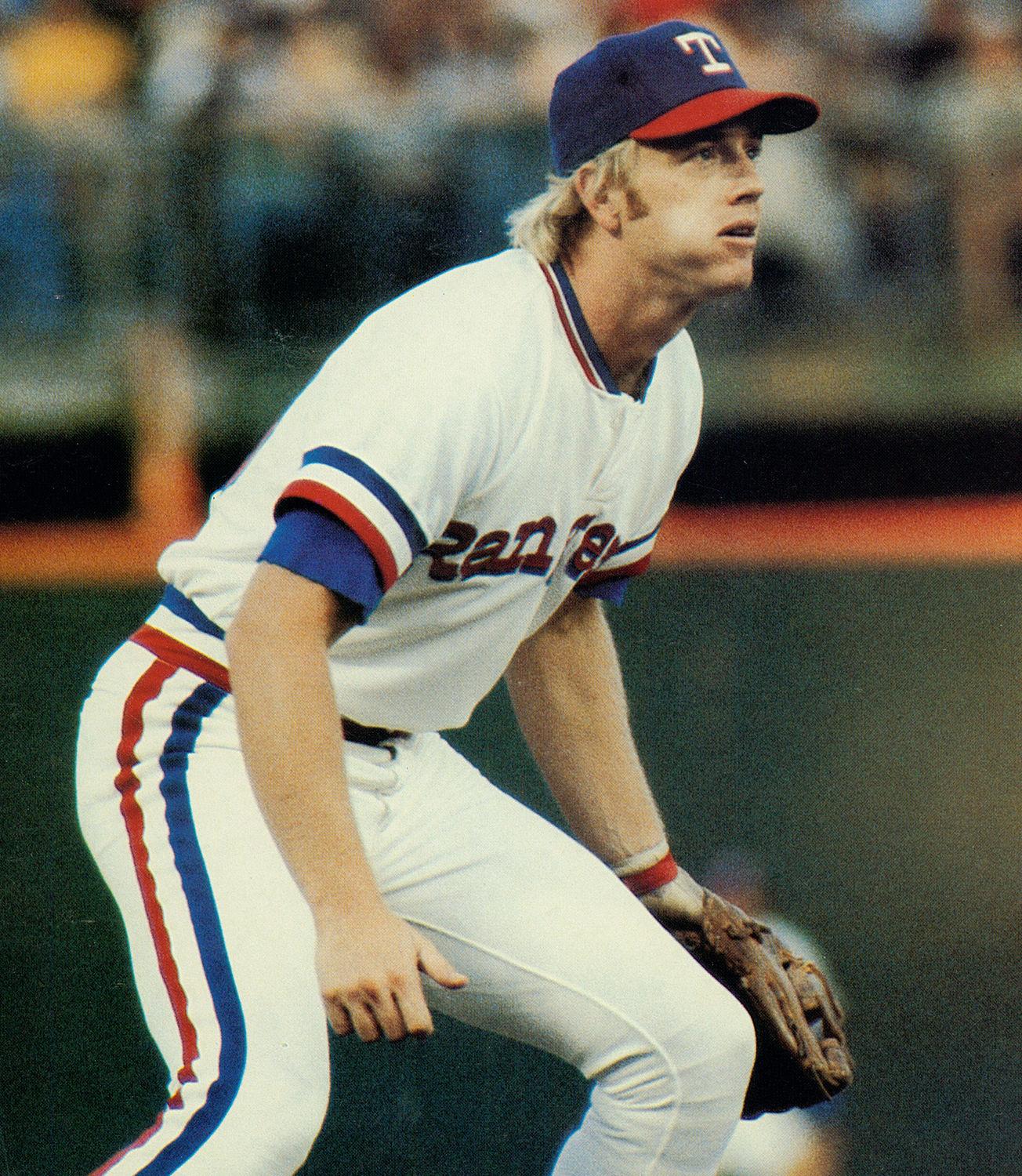 In the scorching Texas summers of the late ’70s, Arlington Stadium was my sanctuary. Fresh from Little League in the 1980 heatwave-when 100°F was just “summertime in Texas”-I’d race to the third-base side, nachos dripping cheese, Saran wrap crinkling over my Coke. With the first pitch at 7:35 PM, Fergie Jenkins or Gaylord Perry dealing, Buddy Bell’s glove worked magic. I’d watch, awestruck, as he dove to rob a liner, his throw to first a bullet. Fast-forward to July 30, 2017, and I’m at Globe Life Park with my son, cheering as Adrián Beltré doubles for his 3,000th hit against the Orioles. My son loved Beltré like I loved Bell-two Rangers third basemen who stole our hearts and wowed us across generations. Bell’s glove, with six Gold Gloves and a 66.3 WAR, was a notch above even Beltré’s, placing him among the top-3 defenders ever. As a father and fan, I believe Buddy Bell belongs in Cooperstown. Here’s why.
Arlington Nights: Bell’s Defensive Magic
Growing up, Arlington Stadium was my summer haven. Sweaty from Little League, where we played through the 1980 heatwave without a second thought, I’d settle into the third-base side, the air thick with the scent of nachos and anticipation. With the first pitch at 7:35 PM, often wrapping in under two hours, aces like Jenkins, Perry, or Jon Matlack set the stage. But Buddy Bell was the star. I remember a 1980 game against the A’s-Bell dove for a Rickey Henderson grounder in the hole, snagged it, and fired to first, nailing the speedster. The crowd roared, my Coke nearly spilling. His range was unmatched, playing deep to steal hits, his throws pure precision.
Bell’s stats match my memories. His 23.8 defensive WAR (dWAR) ranks third among third basemen, behind Brooks Robinson (38.8) and Beltré (27.0). His 167 Total Zone Runs (TZR) is third all-time, trailing Robinson (293) and Beltré (195). His 2.82 Range Factor per game (fifth) edges Beltré’s 2.77 (seventh), and his six consecutive Gold Gloves (1979–1984) top Beltré’s five. Gene Mauch called him “unmatched at third,” and Graig Nettles said, “He’s as good as I’ve ever seen.” Bell’s smooth coverage and quick release make him a top-3 defender, alongside Robinson and Beltré, and in my eyes, a hair better.
| Player | Defensive WAR (dWAR) | Total Zone Runs (TZR) | Range Factor/Game | Gold Gloves |
|---|---|---|---|---|
| Brooks Robinson | 38.8 | 293 | 2.98 | 16 |
| Adrián Beltré | 27.0 | 195 | 2.77 | 5 |
| Buddy Bell | 23.8 | 167 | 2.82 | 6 |
| Clete Boyer | 15.5 | 162 | 2.92 | 1 |
| Scott Rolen | 21.2 | 148 | 2.67 | 8 |
| Nolan Arenado* | 13.9 | 145 | 2.74 | 10 |
| *Active player as of July 12, 2025; stats via Baseball-Reference. | ||||
Beltré’s Brilliance and Bell’s Edge

On July 30, 2017, I stood with my son at Globe Life Park, his face glowing as Beltré laced a double for his 3,000th hit. The crowd’s roar echoed my own Arlington Stadium cheers decades earlier. My son idolized Beltré’s dives, barehanded grabs, and rocket arm, just as I’d worshipped Bell’s glove. Beltré’s .286/.339/.480, 3,166 hits, 477 homers, and 116 OPS+ earned him a 2024 Hall of Fame plaque. His five Gold Gloves and 27.0 dWAR were spectacular, his flair a fan’s dream. But watching Bell in the ’70s and ’80s, I saw a smoother mastery-his wider range and quick release felt a touch sharper, backed by his 2.82 Range Factor and 167 TZR.
This isn’t a knock on Beltré, a hero to my son and me. Bell’s defensive edge is subtle, rooted in his era’s grit and my memories of his glove saving games. Bell’s .279/.341/.406, 2,514 hits, 201 homers, and 109 OPS+ were strong, with standout seasons in 1979 (200 hits, 101 RBI, .299 BA) and 1984 (.315 BA, Silver Slugger). Unlike Beltré’s power-driven case, Bell’s bat complemented his glove, making him a complete star on Rangers teams that never reached the playoffs.
Bell’s Hall of Fame Case
Third base is underrepresented in Cooperstown, with only 19 Hall of Famers, and Bell’s 66.3 bWAR ranks 13th, surpassing inductees like George Kell (37.6) and Freddie Lindstrom (28.3), and nearing Ron Santo (62.8). His 1995 ballot snub-1.7% of votes-came amid Mike Schmidt’s first-ballot dominance and Bell’s lack of postseason play with sub-.500 Rangers clubs. Yet his metrics rival Santo’s, and baseball fans continue to champion his overlooked career. The Veterans Committee must reconsider Bell, whose glove and grit scream Hall-worthy.
A Rangers Family Legacy
My mother, our Rangers matriarch, took my kids to games, her passion for the team a spark that lit our family. From her cheering Bell in Arlington Stadium’s dusty seats to my son’s Beltré fandom at the Temple, baseball binds us. Bell’s three-generation MLB family-father Gus, sons David and Mike-mirrors our own. I see Bell diving in 1980, my son sees Beltré’s 3,000th hit, and we both see Rangers legends who stole our hearts and wowed us across generations. With a top-3 defensive case, stats rivaling giants, and a career of quiet excellence, Buddy Bell deserves Cooperstown. As a fan who lived those Arlington Stadium nights and shared Beltré’s glory at the Temple with my son, I know Bell belongs in the Hall.
