
Legal Analysis of the Declaration of Independence
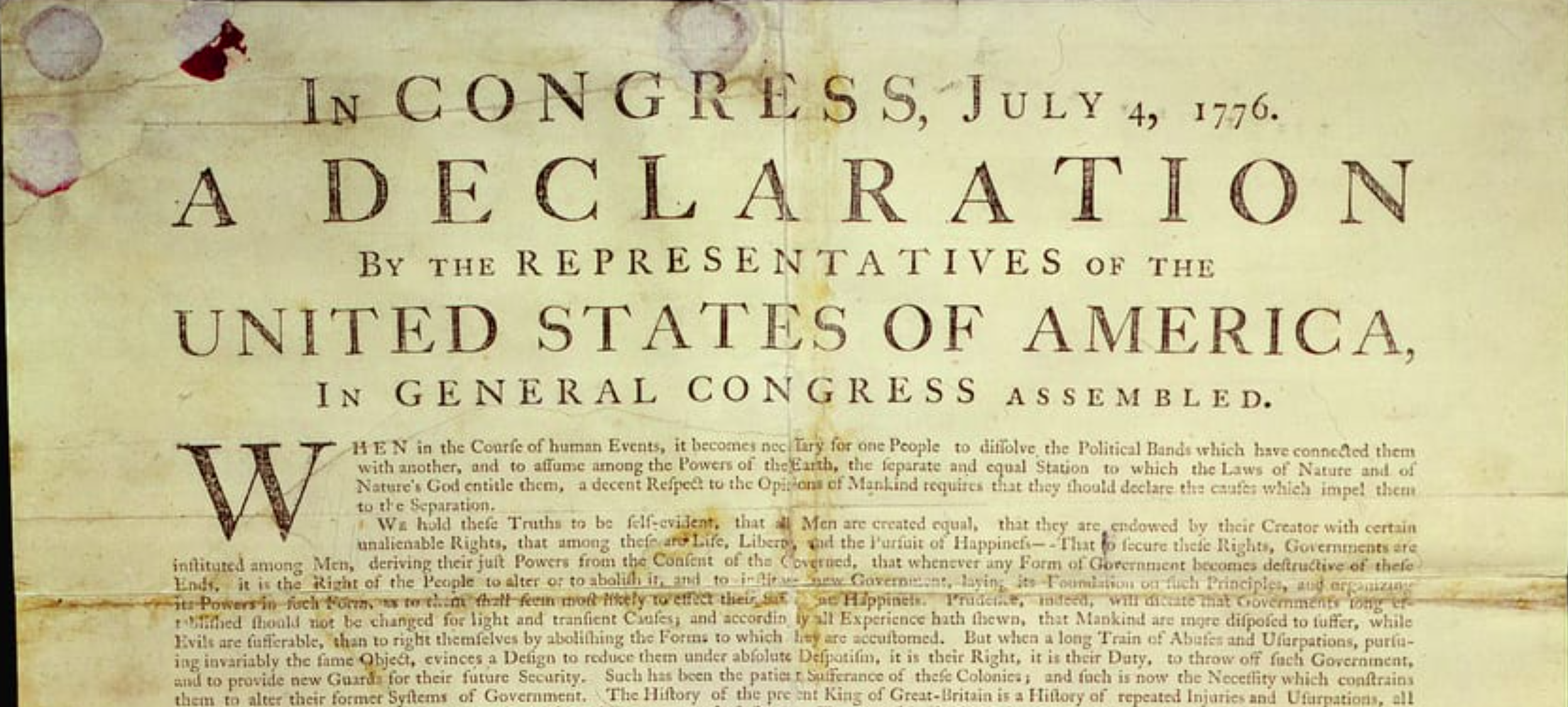
The Declaration of Independence, adopted on July 4, 1776, by the Continental Congress in Philadelphia, is a foundational document that transcends its historical moment to embody universal principles of governance and individual rights. While not a legally binding statute, it serves as a profound legal and philosophical manifesto justifying the American colonies’ separation from British rule. Its eloquence and accessibility, as highlighted by lawyer Aaron Walker, make it a “Cliff’s Notes version of John Locke’s Second Treatise of Government,” distilling complex Enlightenment ideas into a compelling case for revolution. This analysis examines the Declaration’s structure, legal foundations, validity in its historical context, and enduring significance, fully integrating Walker’s perspective to underscore its legal and moral resonance. Each section includes detailed influences-philosophical, legal, historical, and political-for each section, enriched by Walker’s emphasis on its Lockean roots, parallels with the English Bill of Rights, and practical application of moral rights.
1. Structure and Purpose
Expanded Analysis with Walker’s Perspective
The Declaration of Independence is a meticulously crafted legal and political argument, structured to persuade multiple audiences: the American colonists seeking unity, the British Crown as the target of grievances, and foreign powers, particularly France, whose support was critical for the Revolution’s success. Its organization reflects Enlightenment rhetorical conventions, blending logical reasoning, moral appeal, and legal justification in a format accessible to both scholars and the public. Aaron Walker describes the Declaration as a concise yet powerful articulation of John Locke’s philosophy, making complex ideas of natural rights and revolution “comprehensible to the average person.” The document unfolds in five parts:
- Preamble: This opening explains the necessity of declaring independence, invoking the “Laws of Nature and of Nature’s God” to ground the argument in universal principles. Walker notes that this section, while straightforward, introduces the concept of natural law, setting the stage for the philosophical justification of rebellion. He credits Pauline Maier’s American Scripture for highlighting the Declaration’s accessibility, which he sees as key to its persuasive power.
- Statement of Principles: This section articulates the philosophical core, asserting that all men are endowed with inalienable rights-life, liberty, and the pursuit of happiness-and that governments derive legitimacy from the consent of the governed. Walker emphasizes that this distills Locke’s Second Treatise, particularly the idea that individuals have moral rights in a state of nature, which governments must protect or risk being overthrown.
- Indictment of the Crown: The Declaration lists 27 grievances against King George III, framing his actions as violations of both English constitutional rights and universal natural rights. Walker compares this to the English Bill of Rights (1689), which listed grievances against James II to justify the Glorious Revolution, noting that the Declaration serves as a “bill of particulars” to legitimize rebellion through specific wrongs.
- Declaration of Sovereignty: This section proclaims the colonies as “Free and Independent States,” asserting their right to sovereign powers like waging war and forming alliances. Walker sees this as a practical application of Locke’s principles, enabling the colonies to claim legitimacy on the international stage.
- Conclusion and Pledge: The document concludes with the signatories’ commitment to support independence with their “Lives, Fortunes, and sacred Honor.” Walker views this as a moral and legal pledge, reinforcing the Declaration’s role as both a philosophical treatise and a call to action.
The Declaration’s purpose was to legitimize the American Revolution domestically and internationally. It unified the colonies by articulating a shared cause and sought foreign support by aligning with universal principles. Walker underscores its diplomatic brilliance, noting that its reference to the “Law of Nature” resonated with international norms, aiding alliances like the 1778 Franco-American treaty. Its accessibility, as Walker highlights, made it a rallying cry for colonists and a persuasive case for foreign powers, culminating in the Treaty of Paris (1783).
Influences
- John Locke: Locke’s Two Treatises of Government (1689) shaped the Declaration’s structure, as Walker emphasizes, providing a logical progression from natural law to rebellion. The preamble’s universal principles reflect Locke’s rationalist approach.
- English Legal Tradition: The English Bill of Rights (1689) and Petition of Right (1628) influenced the Declaration’s format as a legal indictment, as Walker notes in its parallel to the Glorious Revolution’s justification.
- Classical Rhetoric: Cicero and Aristotle’s rhetorical strategies (ethos, pathos, logos) informed the Declaration’s persuasive structure, which Walker praises for its accessibility to a broad audience.
- Colonial Political Documents: The Virginia Resolves (1765) and Suffolk Resolves (1774) provided models for articulating grievances, shaping the Declaration’s structure.
- International Diplomacy: Emer de Vattel’s The Law of Nations (1758) influenced the Declaration’s appeal to foreign powers, as Walker notes in its use of natural law to claim sovereignty.
2. Legal Foundations
Expanded Analysis with Walker’s Perspective
The Declaration’s legal arguments are rooted in Enlightenment principles, natural law, and customary international law, forming a robust justification for rebellion. Aaron Walker describes the Declaration as a practical application of Locke’s Second Treatise of Government, emphasizing “moral rights” that exist in a state of nature-rights to life, liberty, and property (adapted as “pursuit of happiness”) that individuals can defend absent government protection. He notes a key limitation: vindicating these rights depends on physical capability, highlighting the need for a government based on consent to secure them equitably. The Declaration’s legal foundations include:
a. Natural Law and Rights
The Declaration asserts that individuals possess inalienable rights derived from natural law, not granted by governments. Walker explains that these are “moral rights,” such as the right to reclaim stolen property or defend one’s life in a state of nature, as per Locke’s philosophy. If a government fails to protect these rights, the people may overthrow it. This challenged the divine right of kings and British parliamentary sovereignty. Walker sees the Declaration’s adaptation of Locke’s “property” to “pursuit of happiness” as a deliberate choice to broaden its moral and legal appeal, making it a universal call for liberty.
b. Social Contract Theory
The Declaration embraces Locke’s social contract, arguing that governments are formed to protect individual rights and derive legitimacy from consent. King George III’s “repeated injuries and usurpations” breached this contract, justifying rebellion. Walker underscores the practical flaw in Locke’s state of nature: without a government, only the strong can enforce their rights, which the Declaration addresses by advocating a new government based on consent. This shift to popular sovereignty was revolutionary, redefining political legitimacy.
c. Grievances as Legal Justifications
The Declaration lists 27 grievances, such as taxation without consent and dissolving colonial legislatures, framed as violations of English constitutional rights and natural law. Walker compares this to the English Bill of Rights, which served as a “bill of particulars” against James II, noting that the Declaration’s grievances similarly justify rebellion by detailing the King’s wrongs. Some grievances, like taxation without representation, align with English law, while others, like inciting Native American attacks, appeal to moral outrage, broadening the document’s impact.
d. International Law and Sovereignty
In 1776, international law relied on customary norms and jurists like Emer de Vattel. The Declaration claims the colonies’ right to a “separate and equal station” among nations, asserting sovereign powers. Walker connects this to Locke’s natural law framework, noting that the Declaration’s reference to the “Law of Nature” aligns with Vattel’s principles, making it a diplomatic tool to secure recognition from powers like France, which allied with the colonies in 1778.
Influences
- John Locke: Locke’s Second Treatise is the primary influence, as Walker emphasizes, providing the natural law and social contract framework.
- English Legal Tradition: The English Bill of Rights (1689) and Magna Carta (1215) shaped the grievances, as Walker notes in their parallel to the Glorious Revolution.
- Emer de Vattel: Vattel’s The Law of Nations informed the sovereignty claims, as Walker highlights in the Declaration’s natural law appeal.
- Montesquieu: The Spirit of the Laws (1748) influenced the critique of concentrated power, reflected in the grievances.
- Colonial Experience: The Mayflower Compact (1620) and colonial charters shaped the assertion of self-governance.
- Thomas Paine: Common Sense (1776) influenced the Declaration’s accessible tone, as Walker notes in its ability to distill Locke’s ideas.
3. Legal Validity in Context
Expanded Analysis with Walker’s Perspective
The Declaration’s legal validity in 1776 was contested, depending on perspective. Its legitimacy rested on its philosophical grounding and pragmatic success. Aaron Walker views the Declaration as a legal argument rooted in Locke’s moral rights, justifying rebellion when physical might alone cannot secure justice.
- British Perspective: The British viewed the Declaration as treason, as rebellion was a capital offense under English law. The Declaratory Act of 1766 asserted Parliament’s absolute authority, denying the colonies’ right to secede. Walker notes that the British saw no legal basis for the Declaration’s claims, viewing it as a challenge to parliamentary sovereignty.
- Colonial Perspective: The colonists argued that the Crown’s violations-taxation without consent, suspending legislatures-breached their rights as English subjects and the social contract. Walker emphasizes that the Declaration’s reliance on Locke’s moral rights framework provided a higher authority than British law, justifying rebellion as a defense of natural rights.
- International Perspective: The Declaration’s success depended on foreign recognition. By invoking the “Law of Nature,” it aligned with Vattel’s principles, as Walker notes, appealing to international norms to secure alliances, notably with France in 1778, and recognition via the Treaty of Paris (1783).
The Declaration’s legal force was pragmatic, deriving legitimacy from military and diplomatic success. Walker highlights its role as a “bill of particulars,” akin to the English Bill of Rights, which made it a compelling legal case for both domestic and international audiences.
Influences
- English Legal Precedents: The English Bill of Rights (1689) and Glorious Revolution (1688) provided a model, as Walker notes in their shared structure.
- Locke and Natural Law: Locke’s justification of rebellion influenced the colonial perspective, as Walker emphasizes.
- Vattel and International Law: Vattel’s sovereignty principles shaped the international appeal, as Walker connects to the “Law of Nature.”
- Colonial Resistance: The Stamp Act Congress (1765) provided precedents for collective action.
- French Enlightenment: Rousseau and Montesquieu’s ideas bolstered the international appeal.
4. Legal Significance and Legacy
Expanded Analysis with Walker’s Perspective
The Declaration, though not legally binding, has profound legal and symbolic significance. Walker underscores its role as a philosophical touchstone, citing Abraham Lincoln’s view that his political sentiments sprang from its ideals. It continues to shape American law and global democratic movements.
- Foundation for American Constitutionalism: The Declaration’s principles of natural rights and popular sovereignty informed the U.S. Constitution (1787) and Bill of Rights (1791). Walker notes its Lockean roots as the basis for American legal identity, though its silence on slavery and other rights fueled later legal battles.
- Influence on International Law: The Declaration inspired documents like the French NetDeclaration of the Rights of Man (1789) and influenced self-determination in international law, as seen in the UN Charter (1945). Walker highlights its universal appeal, rooted in Locke’s philosophy, as a catalyst for global democracy.
- Judicial Interpretation: The Declaration is cited to interpret the Constitution’s spirit, as in Marbury v. Madison (1803). Walker sees it as a moral guide for judges, though its non-binding status limits direct application.
- Contemporary Relevance: The Declaration inspires movements for equality and justice, though debates persist over its application. Walker emphasizes its enduring moral and legal force, guiding contemporary governance.
Influences
- Locke and Enlightenment Thought: Locke’s ideas shaped the Constitution, as Walker notes.
- French Revolution: The Declaration’s influence on the French Declaration reflects its global impact.
- Colonial Legal Traditions: The Virginia Declaration of Rights (1776) provided a model.
- Abolitionist and Civil Rights Movements: Douglass and King drew on the Declaration, as Walker highlights.
- International Jurists: Vattel’s sovereignty concepts influenced its legacy in international law.
5. Conclusion
Expanded Analysis with Walker’s Perspective
The Declaration of Independence is a masterful blend of legal, philosophical, and rhetorical elements, grounded in natural law and social contract theory. Aaron Walker’s perspective, viewing it as a “Cliff’s Notes version of Locke’s Second Treatise” and a parallel to the English Bill of Rights, underscores its role as a practical and moral justification for rebellion. Its legal arguments, rooted in universal principles, justified the break from Britain and laid the foundation for American constitutionalism and global human rights. Walker’s emphasis on its accessibility and moral force highlights its enduring power as a symbol of liberty and self-governance, inviting ongoing debate about its principles in a modern world.
Influences
- Enlightenment Thinkers: Locke, Montesquieu, and Rousseau, as Walker emphasizes.
- English Constitutionalism: The English Bill of Rights, as Walker notes.
- Colonial Political Culture: Self-governance traditions shaped its legacy.
- Global Democratic Movements: The Declaration’s universalist rhetoric influenced global declarations.
- American Founders: Jefferson, Adams, and Franklin ensured its resonance, as Walker highlights.
