
Quick Takes: Monday Moments
Healthcare Reforms Are A Vital Response to DOJ’s Historic Fraud Takedown
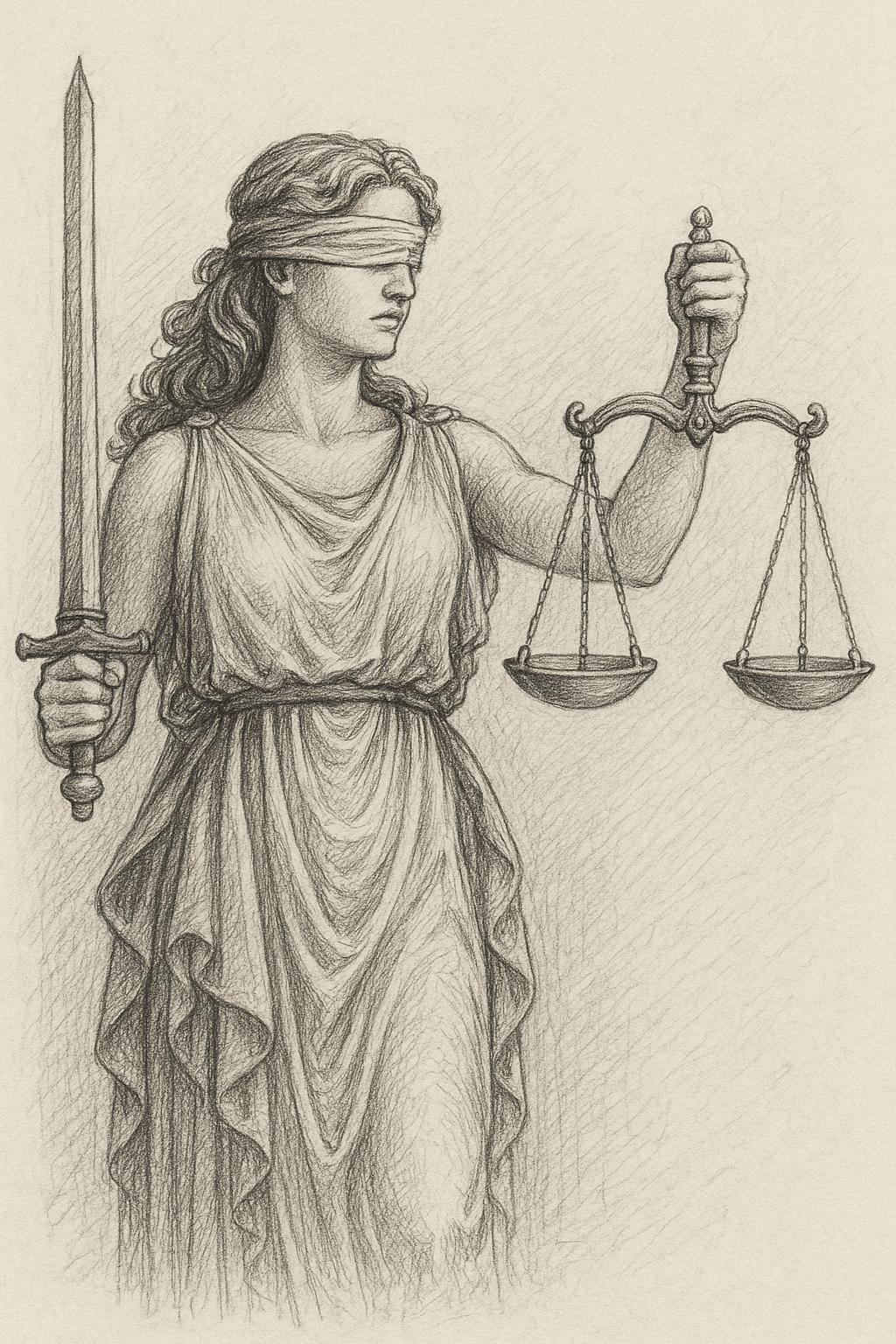 The Department of Justice’s (DOJ) June 30, 2025, healthcare fraud takedown, charging 324 defendants for $14.6 billion in false claims, exposes the critical vulnerabilities threatening Medicare and Medicaid’s solvency. Described as the largest coordinated operation in DOJ history, it targeted schemes like “Operation Gold Rush,” which exploited 1 million stolen identities to bill $10.6 billion, and opioid trafficking involving 15 million prescription pills (Lyndhurst Daily Voice). With $2.9 billion in actual losses and $245 million in seized assets (Tampa FP), this bust underscores the rampant fraud draining entitlement programs, necessitating urgent reform to protect taxpayer funds and vulnerable populations.
The One Big Beautiful Bill Act (H.R. 1), passed by the House on May 22, 2025, offers essential reforms to address these issues, aiming to save $804 billion over 2025–2034, including $625 billion from Medicaid. Its Medicaid provisions-work requirements, shortened retroactive coverage, and restrictions on non-citizen eligibility-target systemic bloat, while AI-driven fraud detection and provider billing suspensions directly counter the schemes uncovered by the DOJ. These measures ensure resources reach legitimate beneficiaries, not criminals exploiting stolen identities or fraudulent wound care claims.
The DOJ’s takedown proves fraud is a primary threat, with $4 billion in false claims prevented through proactive measures (DOJ Press Release). H.R. 1’s focus on program integrity, like removing deceased enrollees and curbing pharmacy benefit manager profiteering, aligns with these findings, ensuring entitlements remain solvent for those who need them most. By addressing the systemic weaknesses exposed in this operation, H.R. 1 lays the groundwork for sustainable healthcare programs.
The DOJ’s historic bust is a clarion call for Congress to pass H.R. 1’s reforms in the Senate. The establishment of the Health Care Fraud Data Fusion Center signals a tech-driven future (DOJ Press Release), but only legislative action can address structural flaws. By rooting out the fraud exposed in this $14.6 billion takedown, H.R. 1 safeguards Medicare and Medicaid’s future, ensuring they serve Americans without being bled dry by criminal enterprises.
Canada’s DST Repeal: A Triumph of The Art of the Deal
Canada’s repeal of its Digital Services Tax (DST) on June 29, 2025, is a textbook demonstration of Donald Trump’s negotiation tactics from The Art of the Deal. By suspending trade talks on June 27, 2025, and labeling the DST a “discriminatory cash grab,” Trump applied intense pressure, exploiting Canada’s economic dependence on the U.S., which accounts for over 75% of its exports. The DST, enacted on June 28, 2024, imposed a 3% tax on digital services revenue for companies like Amazon and Google, with a retroactive US$2 billion bill. Trump’s bold move, threatening tariffs and trade disruptions, forced Canada to prioritize trade stability over the projected C$7.2 billion tax revenue, embodying his principle of leveraging an opponent’s vulnerabilities to secure a favorable outcome.
The rapid repeal, announced by Finance Minister François-Philippe Champagne to resume trade talks by July 21, 2025, reflects Trump’s strategy of creating urgency to close deals, as outlined in The Art of the Deal. By setting a high-stakes deadline, Trump made the DST’s continuation untenable, compelling Canada to act swiftly. The Liberal government, led by Prime Minister Mark Carney, underestimated Trump’s resolve, as noted by trade expert Michael Geist, who criticized their handling as poorly executed. This aligns with Trump’s advice to “think big” and act decisively, as Canada’s retreat was driven by the need to avoid economic fallout from a trade war, showcasing Trump’s ability to dictate terms through unwavering pressure.
This episode underscores Trump’s mastery of The Art of the Deal principles: know the market, push hard, and be ready to walk away. U.S. pressure from Congress and groups like the U.S. Chamber of Commerce amplified Trump’s leverage, framing the DST as an unfair targeting of American firms. Canada’s decision to abandon its unilateral tax, despite preferring an OECD multilateral framework, highlights the book’s lesson that negotiations are won by controlling the narrative and stakes. The repeal positions the U.S. favorably for upcoming trade talks, proving Trump’s approach as a powerful tool in reshaping international economic policies to America’s advantage.
Denaturalization is Necessary
The Trump administration’s denaturalization efforts are a vital tool for protecting national security and upholding the integrity of U.S. citizenship. Building on the Obama-era Operation Janus, these policies target individuals who fraudulently obtained citizenship, such as terrorists, war criminals, and fraudsters, under the Immigration and Nationality Act (8 U.S.C. § 1451). The DOJ’s Denaturalization Section, established on February 26, 2020, has a 95% success rate, as seen in cases like Elliott Duke’s denaturalization on June 13, 2025, for pre-naturalization crimes (DOJ Press Release). A June 11, 2025, DOJ memo prioritizes cases involving national security, terrorism, and financial fraud, ensuring robust enforcement within the constitutional limits set by Afroyim v. Rusk (1967) (Justice Department Memo).
Operation Janus, launched post-2011 under Obama, identified 858 naturalized citizens who concealed prior deportation orders, laying the groundwork for Trump’s expanded efforts (DHS OIG Report). By 2018, it led to a 600% increase in denaturalization referrals, with cases like Baljinder Singh’s revocation on January 5, 2018, for hiding a 1992 deportation order (Justice Department). Trump’s policies, including Operation Second Look, broadened this scope to include marriage fraud and other deceptions, supported by a $207.6 million FY2019 budget to investigate 887 leads (Immigration Impact). This foundation ensures that Trump’s approach targets only those who undermine the naturalization process.
Afroyim v. Rusk (1967) ensures that denaturalization is limited to fraud or misrepresentation during naturalization, protecting citizenship as a Fourteenth Amendment right (387 U.S. 253). Congress has not expanded these grounds post-1967, with minor amendments like the 1986 expatriation clarification (Public Law 99-653) and 2003 military service exception (Public Law 108-136) aligning with Afroyim’s framework (CNN). Trump’s policies adhere to these legal boundaries, focusing on material fraud as upheld by Maslenjak v. United States (2017), ensuring fairness while addressing serious threats.
Critics claim these efforts risk statelessness and disproportionately target marginalized groups, but these concerns are overstated. Cases like Duke’s involve grave crimes, justifying revocation, and the DOJ’s evidence-based approach counters bias allegations (NPR). With 25 million naturalized citizens in 2023, Trump’s policies restore trust in the citizenship process by holding fraudsters accountable, deterring future violations, and reinforcing the value of lawful citizenship (Migration Policy Institute). This approach, rooted in Obama’s groundwork and legally sound under Afroyim, is essential for a secure nation.
Biden’s Reckless Green Spending Spree: A Partisan Farewell
In its final two days ending January 20, 2025, the Biden administration’s Department of Energy (DOE) unleashed a staggering $42 billion in green energy subsidies, a desperate move to lock in funds before the Trump administration took over. According to RealClearInvestigations and HotAir, this included a $15 billion loan to Pacific Gas & Electric, $9.63 billion to Blue Oval SK for controversial battery plants, $705 million to Zum Energy for electric school buses, and $445 million to the now-bankrupt Li-Cycle. HotAir also notes a $382 million loan to the bankrupt Sunnova, part of a $3.3 billion package, highlighting a pattern of poorly vetted deals.
The broader context reveals a frantic $90 billion in green energy loans and $20 billion in EPA Greenhouse Gas Reduction Fund disbursements in the administration’s final days, with $93 billion in Loan Programs Office commitments post-2024 election, per HotAir. Energy Secretary Chris Wright criticized this rush as prioritizing political optics over taxpayer protection, prompting audits of $15 billion in grants, as reported by Reuters. Reason details flawed projects like Blue Oval SK, mired in delays, and canceled grants to ExxonMobil ($332 million) and Kraft Heinz ($170.9 million), saving over $3 billion, with $7 billion in loans also axed.
This spending spree, with $300 billion in uncommitted Inflation Reduction Act funds, per HotAir, was less about climate progress and more about boxing in the next administration. The collapse of recipients like Li-Cycle and Sunnova exposes a lack of scrutiny, while the volume of last-minute disbursements suggests a politically driven fire sale. Taxpayers deserve better than to fund this reckless, partisan gamble, now under deserved scrutiny from auditors and the Trump administration.
Quote of the Day