
An Originalist Victory in Free Speech Coalition v. Paxton
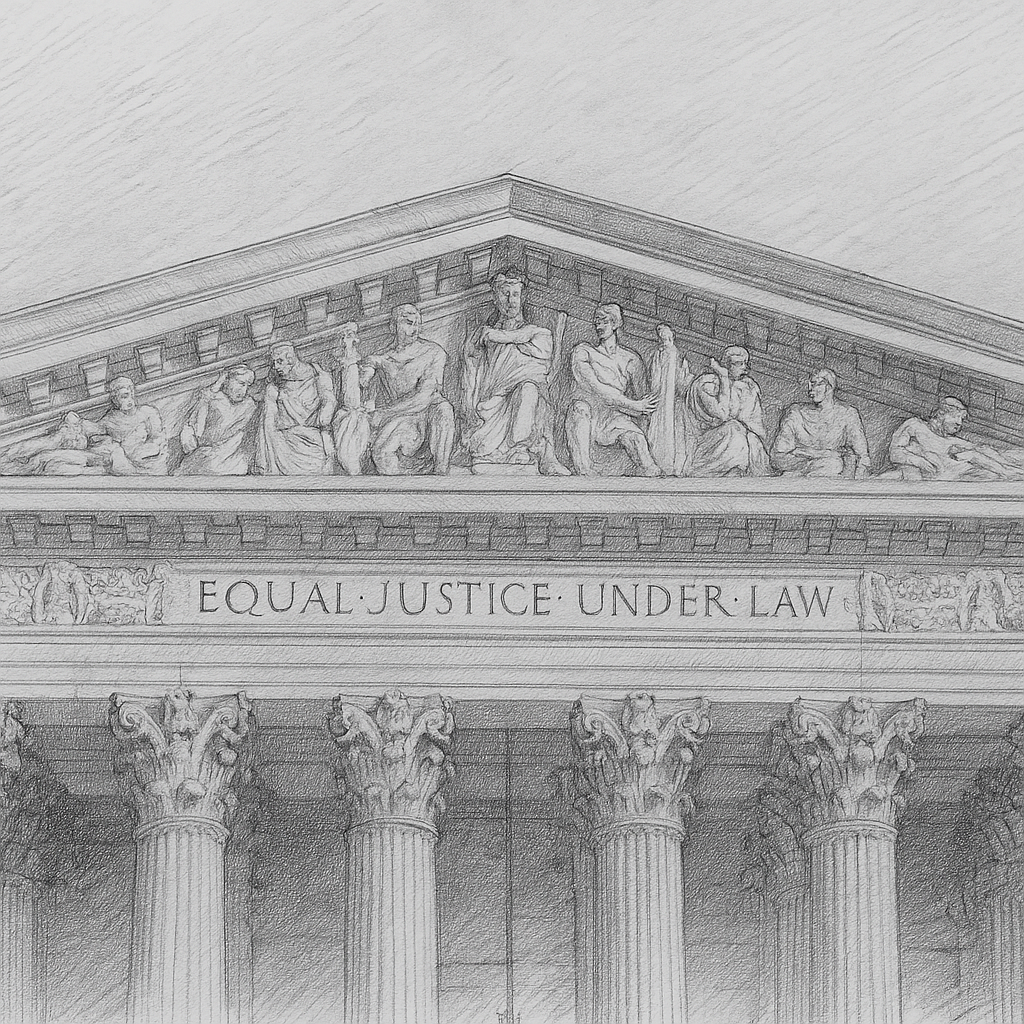 On June 27, 2025, the Supreme Court’s 6-3 decision in Free Speech Coalition, Inc. v. Paxton, 606 U.S. ___, upheld Texas’s H.B. 1181, a law requiring age verification for websites with material deemed “obscene for minors.” From an originalist perspective, interpreting the Constitution by its 1791 public meaning, this ruling affirms state authority to protect societal welfare while honoring the First Amendment’s core protections. The majority opinion, authored by Justice Clarence Thomas and joined by Chief Justice Roberts and Justices Alito, Gorsuch, Kavanaugh, and Barrett, applied intermediate scrutiny, aligning with the Founding-era balance of free speech and state power. Justice Kagan’s dissent, advocating strict scrutiny, strays from this historical framework by emphasizing modern privacy concerns over traditional state authority.
H.B. 1181 requires websites with over one-third sexually explicit content-deemed prurient, offensive, and valueless for minors-to verify users’ ages using government-issued ID or transactional data, as reported by the Daily Wire. This addresses a pressing need, with 73% of teenagers aged 13–17 viewing online pornography, 54% by age 13, per the Washington Examiner. The Free Speech Coalition challenged the law, arguing it burdens adults’ First Amendment rights through privacy risks and compliance costs, a concern echoed in Kagan’s dissent, as noted by Spectrum Local News. The majority, however, deemed the burden on adults’ access to protected speech incidental and permissible.
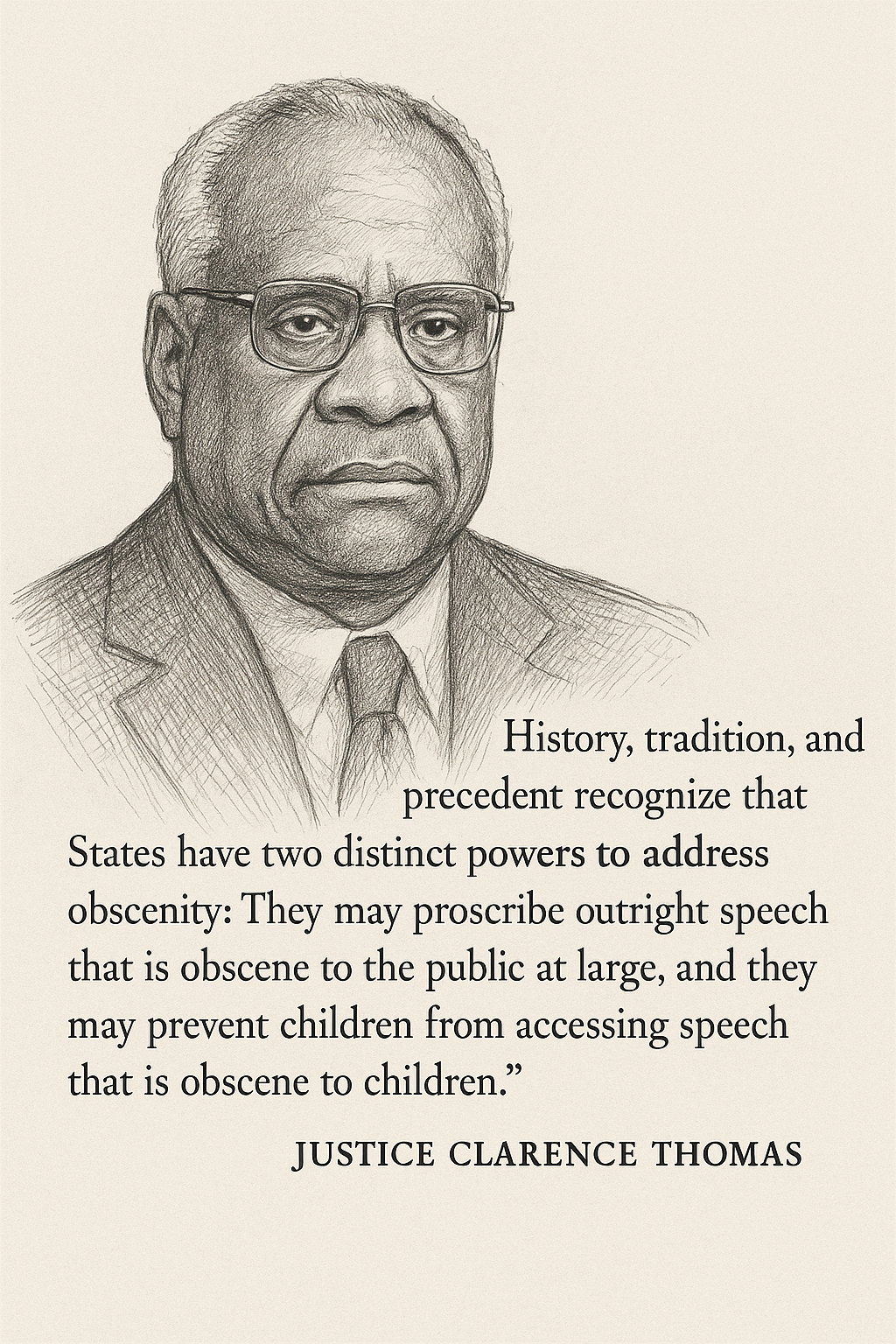
Originalists view the First Amendment as protecting political and expressive speech, not unfettered access to materials historically deemed harmful to minors. Justice Thomas articulated:
History, tradition, and precedent recognize that States have two distinct powers to address obscenity: They may proscribe outright speech that is obscene to the public at large, and they may prevent children from accessing speech that is obscene to children.
In 1791, states regulated obscene publications and vices to preserve public morality, especially for children. The majority’s intermediate scrutiny-requiring the law to advance a significant state interest without excessively burdening speech-reflects this balance (Paxton, slip op. at 32-36). H.B. 1181’s age-verification mandate, akin to historical restrictions on minors’ access to alcohol or gambling, fits this tradition. Its impact is clear: Pornhub exited Texas and 16 other states with similar laws, showing effective child protection, as highlighted by National Review.
The majority distinguished cases like Sable Communications v. FCC (492 U.S. 115, 1989), Reno v. ACLU (521 U.S. 844, 1997), United States v. Playboy Entertainment Group (529 U.S. 803, 2000), and Ashcroft v. ACLU (542 U.S. 656, 2004), which used strict scrutiny for broader speech restrictions (Paxton, slip op. at 21-28). Unlike those, H.B. 1181 merely requires age verification, a less intrusive, historically grounded measure. Originalists reject strict scrutiny’s “least restrictive means” test here, as it would undermine state authority. The majority’s reliance on United States v. O’Brien (391 U.S. 367, 1968), applying intermediate scrutiny to incidental burdens on expressive conduct, supports this view (Paxton, slip op. at 18-19, 28). H.B. 1181 regulates the non-communicative act of accessing obscene content without verification, not the content itself.
Kagan’s dissent, joined by Justices Sotomayor and Jackson, argues H.B. 1181’s content-based restrictions require strict scrutiny due to privacy risks and chilling effects on adults’ protected speech (Paxton, slip op. at 1-23, Kagan, J., dissenting). The Free Speech Coalition’s concerns, as reported by Townhall, highlight compliance costs driving Pornhub’s exit from multiple states and potential data breaches. Kagan invokes Ashcroft to demand the least restrictive means (Paxton, slip op. at 9, Kagan, J., dissenting). Originalists view this as misguided: the 1791 understanding of free speech prioritized community standards over individual privacy and did not impose strict scrutiny on vice regulations. The dissent’s reliance on post-Founding precedents reflects a living-constitutionalist approach, not the original meaning.
 The Daily Wire and Spectrum Local News report that 18 to 23 states have similar laws, reflecting federalist experimentation. Originalists embrace this as consistent with the Constitution’s design, allowing states to address modern challenges like online pornography. The Washington Examiner’s focus on parental rights echoes the Founding-era view that families and communities guide moral education. The ruling’s practical effect-deterring minors’ access with minimal adult burden-aligns with historical state powers.
In conclusion, Free Speech Coalition v. Paxton upholds the originalist principle that the First Amendment protects free speech while allowing states to regulate to safeguard minors. By applying intermediate scrutiny, the majority affirms H.B. 1181 as a tailored exercise of state authority, consistent with historical practices and federalism. The dissent’s strict scrutiny push, rooted in modern precedent, deviates from the 1791 understanding prioritizing state power to protect morality. As states like Louisiana and Utah follow Texas, the ruling ensures the Constitution’s original balance endures, protecting children without unduly restricting adults’ rights.
