
Why Understanding Trump’s Tariff Policy Requires Reading The Art of the Deal
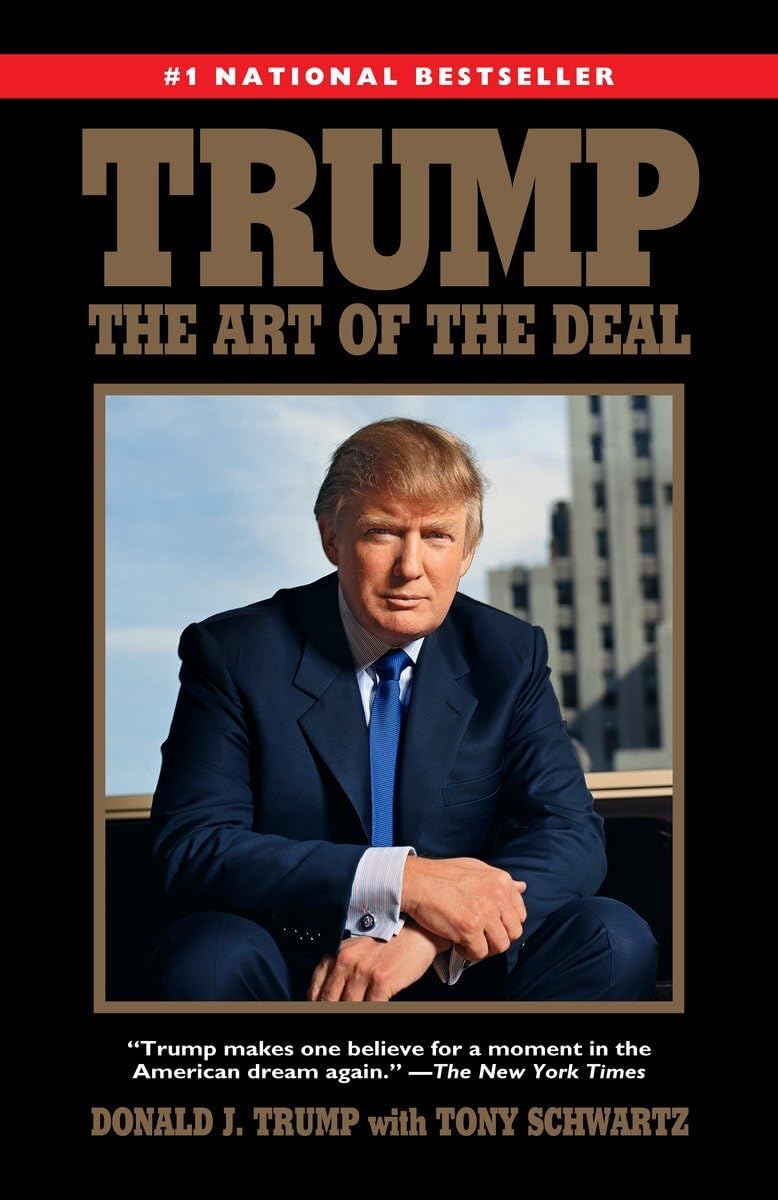 To grasp the intricacies of President Donald Trump’s tariff policy in 2025, one must delve into The Art of the Deal, his 1987 book that outlines the principles driving his negotiation strategy. This book is not merely a memoir of real estate triumphs but a blueprint for his approach to high-stakes deal-making, emphasizing bold ambition, strategic leverage, and market awareness. These principles-thinking big, maximizing options, knowing your market, using leverage, being willing to walk away, getting the word out, fighting back, delivering results, and enjoying the process-are vividly reflected in Trump’s current trade negotiations with China, the European Union, the United Kingdom, Japan, South Korea, and India. Understanding these tenets offers insight into why Trump pursues aggressive tariffs and how he aims to reshape global trade to favor American interests. Moreover, Trump’s trade philosophy, rooted in skepticism of free trade agreements, echoes warnings from the past, notably Ross Perot’s 1992 presidential debate prediction of a “giant sucking sound” of jobs leaving the U.S. due to deals like NAFTA. Over the past four decades, Trump’s critiques of trade policies have been vindicated, as evidenced by job losses in manufacturing and growing trade deficits, aligning with Perot’s prescient concerns and reinforcing the relevance of Trump’s deal-making approach today.
Thirty years ago today, the US House of Representatives passed a resolution to establish the North American Free Trade Agreement. Texas businessman, Ross Perot, ran for President in ’92 to help America avoid the “giant sucking sound” of lost jobs Perot claimed NAFTA would create. pic.twitter.com/kV61mSRUvw
– Frank DeScushin (@FrankDeScushin) November 17, 2023
Trump’s views on trade, articulated as early as the 1980s, have proven prophetic. In interviews and writings, including The Art of the Deal, he criticized trade deals that allowed countries like Japan and later China to flood U.S. markets with cheap goods while imposing barriers to American exports. He argued that such imbalances would erode American manufacturing and jobs, a stance that paralleled Ross Perot’s 1992 debate warning about NAFTA. Perot famously predicted that the agreement would lead to a “giant sucking sound” as jobs moved to Mexico due to lower wages and lax regulations. Data supports their concerns: after NAFTA’s implementation in 1994, the U.S. trade deficit with Mexico grew from $1.7 billion in 1993 to $74.6 billion by 2016, and manufacturing jobs declined by 5 million between 2000 and 2015, with studies like one from the Economic Policy Institute (2015) attributing 700,000 of those losses to NAFTA. Similarly, China’s entry into the World Trade Organization in 2001, which Trump opposed, led to a U.S.-China trade deficit ballooning to $419 billion by 2018, with 2.4 million jobs displaced, per a 2020 study by the Center for Economic and Policy Research. These outcomes validated Trump’s and Perot’s warnings about unchecked free trade hollowing out American industries, particularly in states like Ohio and Michigan.
By applying The Art of the Deal principles, Trump’s tariff policies aim to reverse these trends. His use of high tariffs-such as the threatened 50% on EU goods or 55% on Chinese imports-forces concessions, as seen in the EU’s 10% tariff offer and China’s tentative 55/10 framework. His willingness to walk away, as with the looming July 8, 2025, tariff pause deadline, mirrors Perot’s call to renegotiate or exit harmful trade deals. Trump’s focus on delivering results, like the U.S.-UK deal boosting farm exports, seeks to restore jobs and economic leverage, proving his long-held belief that strategic trade barriers can protect American workers. Reading The Art of the Deal illuminates why Trump pursues this path and how his foresight on trade’s impact, aligned with Perot’s 1992 warning, has been borne out over decades, making it essential for understanding his 2025 tariff strategy.
Trump’s trade strategy has yielded a mix of preliminary agreements and ongoing negotiations. With China, a 55/10 tariff framework-55% on Chinese imports to the U.S., 10% on U.S. exports to China-was agreed in principle during London talks on June 10-11, 2025, awaiting final approval from Trump and President Xi Jinping. The EU, facing threats of 50% tariffs, offered a flat 10% tariff on its exports to the U.S., coupled with concessions like banning Russian gas to favor U.S. energy, though no deal is finalized. The U.S. and UK signed a trade deal at the G7 summit in Canada, reducing tariffs on UK cars (from 25% to 10% for 100,000 vehicles) and aerospace goods while increasing U.S. farm export quotas. Japan’s talks are advanced, with a Memorandum of Understanding (MoU) expected by June’s end, addressing 10-25% tariffs and investments like the Alaska LNG project. South Korea, under 25% tariffs, is close to a deal emphasizing trade and investments like Hyundai’s $21 billion in U.S. manufacturing, but political delays persist. India is nearing a broad MoU for “near-zero” tariffs by April 2025, driven by its desire to avoid steep U.S. duties, though details remain pending. These deals, shaped by a July 8, 2025, tariff pause deadline, reflect Trump’s push to rebalance global trade.
Thinking Big
Trump’s approach to trade is nothing short of audacious. With China, he’s pushed for a 55/10 tariff framework to rebalance a massive trade deficit and bring manufacturing back to American soil. This bold move, agreed in principle, sets a high bar, even if final approval is pending. Similarly, with the EU, Trump’s threat of 50% tariffs on key sectors like cars and pharmaceuticals prompted a counteroffer of a flat 10% tariff, showing his strategy of aiming high to force concessions. For Japan, South Korea, and India, he’s leveraging steep tariffs-up to 25% on autos and 24% on other goods-to extract significant trade and investment commitments, envisioning a restructured global trade landscape with the U.S. at its center.
Maximizing Options
Trump keeps his options open, maintaining flexibility across negotiations. With Japan, talks include not just tariffs but also investments in U.S. infrastructure, giving the U.S. multiple pathways to benefit. South Korea’s negotiations involve trade concessions alongside strategic cooperation in shipbuilding and energy, ensuring the U.S. isn’t locked into a single deal structure. India’s talks, described as a “broad architecture” for future agreements, allow room for phased tariff reductions and long-term commitments. The 90-day tariff pause gives Trump a window to pivot between deals, ensuring he’s not cornered into accepting suboptimal terms.
Knowing the Market
Trump’s team demonstrates a keen understanding of each country’s pressures. With China, the U.S. capitalized on Beijing’s need to maintain market access, especially after resolving rare earth export restrictions. The EU’s offer reflects its fear of higher duties crippling its auto and pharmaceutical sectors. In the UK, Trump seized on Prime Minister Keir Starmer’s desire for a post-Brexit trade win. Japan’s reliance on U.S. security guarantees and South Korea’s strategic alliance provide leverage, while India’s ambition to counter China’s influence shapes its willingness to negotiate.
Using Leverage
Trump’s greatest weapon is the threat of punishing tariffs. The looming 50% tariffs on EU goods forced Brussels to propose a 10% rate and offer energy concessions. China’s agreement to a 55/10 framework came under pressure from potential 145% tariffs. Japan faces a 24% reciprocal tariff and 25% auto tariff, pushing it toward an MoU. South Korea’s investments and supply-chain role give Trump leverage. India, wary of being sidelined, is moving toward lower tariffs, with Trump’s team using its rivalry with China as a bargaining chip.
Being Willing to Walk Away
Trump’s readiness to impose tariffs if deals falter signals his willingness to walk away. The EU has been warned of retaliation, yet Trump’s team remains confident. With China, the lack of final approval keeps the deal tentative. Japan and South Korea face deadlines, creating pressure to concede, as Trump can let the pause lapse. India’s talks are not finalized, and Trump’s negotiators are prepared to let the deadline pass if terms aren’t met.

Getting the Word Out
Trump’s publicity mastery shines through. The U.S.-UK deal was touted as a “fair” job-creator, while Starmer called it a “sign of strength.” Media coverage of the China talks highlights Trump’s tough stance. The EU’s tariff offer underscores his ability to force concessions. Preliminary talks with Japan, South Korea, and India are framed as transformative, keeping the narrative in Trump’s favor.
Fighting Back
When faced with resistance, Trump doesn’t retreat. China’s reluctance was met with U.S. insistence. The EU’s retaliatory threats were countered with escalation warnings. Japan’s leverage hints were met with U.S. demands. South Korea’s delays prompted Trump to push for a swift resolution, while India’s slow progress hasn’t deterred U.S. negotiators.
Delivering the Goods
The U.S.-UK agreement delivers reduced tariffs and increased U.S. farm exports. The China framework, if finalized, promises trade rebalancing. Japan’s expected MoU and South Korea’s investment commitments signal outcomes, while India’s tariff moves offer long-term benefits. Trump’s focus on execution ensures economic impacts.
Having Fun
Trump’s enthusiasm is evident, treating trade talks as a grand game. His public statements and theatrical brinkmanship-threatening massive tariffs while dangling pauses-show him thriving, using drama to keep adversaries off balance and allies engaged.
In this global trade chess match, Trump’s The Art of the Deal principles-big thinking, strategic flexibility, market savvy, and relentless leverage-have positioned the U.S. to reshape its economic relationships. While the China and UK deals show progress, Japan, South Korea, and India remain works in progress, with Trump’s team playing to win, all while enjoying the high-stakes game.
