
China’s Shadow and the Silenced Questions
How Weakened Ballot Security and Stifled Debate Left the 2020 Election Vulnerable
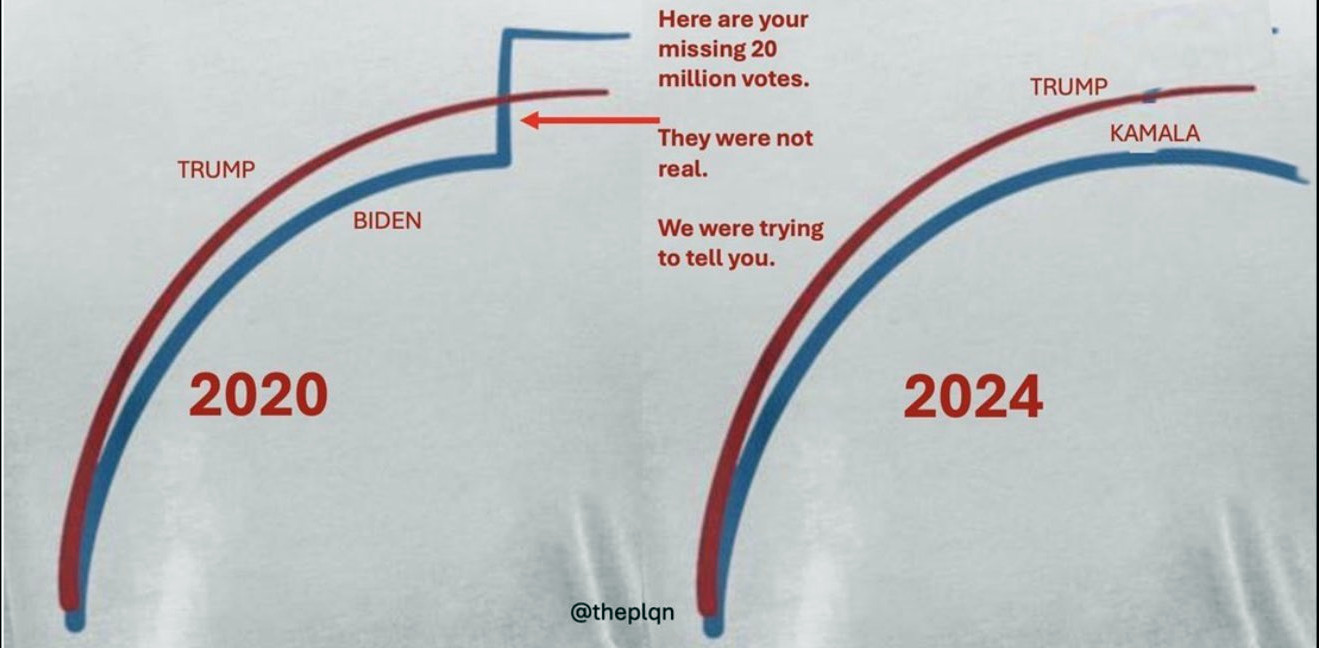 The 2020 U.S. presidential election unfolded under the shadow of a global pandemic widely believed to have originated in China. To protect public health, 47 states and the District of Columbia expanded mail-in voting, a move that boosted voter turnout to a historic 68% but introduced vulnerabilities that may have allowed foreign interference to influence close races. Recently declassified FBI documents allege that the Chinese Communist Party (CCP) exploited these loosened election protocols by producing nearly 20,000 counterfeit U.S. driver’s licenses to facilitate fraudulent mail-in ballots favoring Joe Biden. Yet, as troubling as these allegations are, an equally disturbing trend emerged: the near-total suppression of any public discourse questioning the election’s integrity. This silencing, driven by media, political, and cultural pressures, left critical vulnerabilities unaddressed and eroded trust in the democratic process.
The expansion of mail-in voting was a direct response to the COVID-19 pandemic, which disrupted traditional in-person voting. States like California, Nevada, New Jersey, Vermont, and Washington, D.C., mailed ballots to all registered voters, while others, including Connecticut, Massachusetts, and New York, eliminated or relaxed excuse requirements for absentee voting, citing COVID-19 fears. Michigan, Pennsylvania, and Wisconsin extended deadlines to accept ballots postmarked by Election Day, and drop boxes proliferated to ease access. According to the Pew Research Center, mail ballots accounted for 43% of votes in 2020, up from 21% in 2016. These changes, while enabling safer voting, strained election infrastructure. Verification processes, often reliant on signatures or limited ID checks, struggled under the unprecedented volume, particularly in states with minimal safeguards against fraud.
The declassified August 2020 FBI report, recently released by Director Kash Patel to Senate Judiciary Committee Chairman Chuck Grassley, alleges a CCP plot to produce fake driver’s licenses to enable fraudulent mail-in ballots for Biden. The seizure of nearly 20,000 counterfeit licenses partially corroborated the intelligence, yet the FBI, under then-Director Christopher Wray, failed to fully investigate and recalled the report around the time Wray testified to Congress that no foreign interference plots were known. This lack of follow-through raises questions about bureaucratic inaction or political influence. The 2020 election’s tight margins-Biden won Arizona by 10,457 votes, Georgia by 11,779, and Wisconsin by 20,682-mean even a small number of fraudulent ballots could have been decisive. While studies, such as those from the Brennan Center, indicate voter fraud is rare (e.g., 372 potential cases out of 14.6 million mail ballots in 2016 and 2018), the scale of 2020’s mail-in surge and the CCP’s sophisticated capabilities suggest the risk was significant.
Compounding this, another report highlights China’s broader ambitions to exploit U.S. systems. Two CCP operatives were charged with smuggling a dangerous pathogen, Fusarium graminearum, into the University of Michigan, allegedly to weaponize biology under the guise of research. This incident underscores China’s willingness to target U.S. vulnerabilities, whether through bioweapons or election interference. The irony is profound: a virus linked to China prompted election changes that may have enabled Chinese meddling, yet questioning these vulnerabilities was swiftly branded as taboo.
From the moment concerns about election integrity surfaced, raising them became a social and political third rail. The media, tech platforms, and political establishment framed any skepticism about the 2020 election as baseless “conspiracy theorizing” or a threat to democracy. Former President Donald Trump’s claims of widespread fraud, while often exaggerated or unsubstantiated, were met with blanket dismissal rather than reasoned debate. Outlets like CNN, The New York Times, and The Washington Post consistently labeled such concerns as “false” or “debunked,” often without engaging with specific allegations like those in the FBI’s report. Social media platforms, including Twitter (pre-X) and Facebook, took unprecedented steps to suppress content questioning the election, suspending accounts, removing posts, and attaching warning labels to claims of fraud. A notable example was the temporary suspension of accounts sharing the New York Post’s October 2020 story about Hunter Biden’s laptop, which raised questions about foreign influence but was dismissed as disinformation.
This censorship extended beyond traditional and social media. Public figures, including elected officials and election experts, faced intense backlash for suggesting audits or investigations. In Georgia, calls for signature verification audits were derided as unnecessary, despite the state’s narrow margin. In Pennsylvania, lawsuits challenging mail-in ballot procedures were dismissed by courts, often on procedural grounds rather than substantive review. The 182 voting rights lawsuits filed in 2020, many seeking to ensure ballot security, were overshadowed by narratives framing them as attempts to “undermine” the election. Even neutral voices, like election officials advocating for stronger ID checks, were sidelined as partisan.
The cultural climate amplified this suppression. Questioning the election was equated with endorsing extremism, particularly after the January 6 Capitol riot, which was weaponized to paint all election skepticism as dangerous. Academics, poll workers, and citizens who raised concerns risked professional and social ostracism. A 2021 survey by Rasmussen Reports found 56% of voters believed it was likely cheating affected the election, yet such sentiments were rarely explored in mainstream discourse. Instead, the narrative solidified: the election was the “most secure in history,” a claim echoed by Wray and election officials but contradicted by the FBI’s own uninvestigated report.
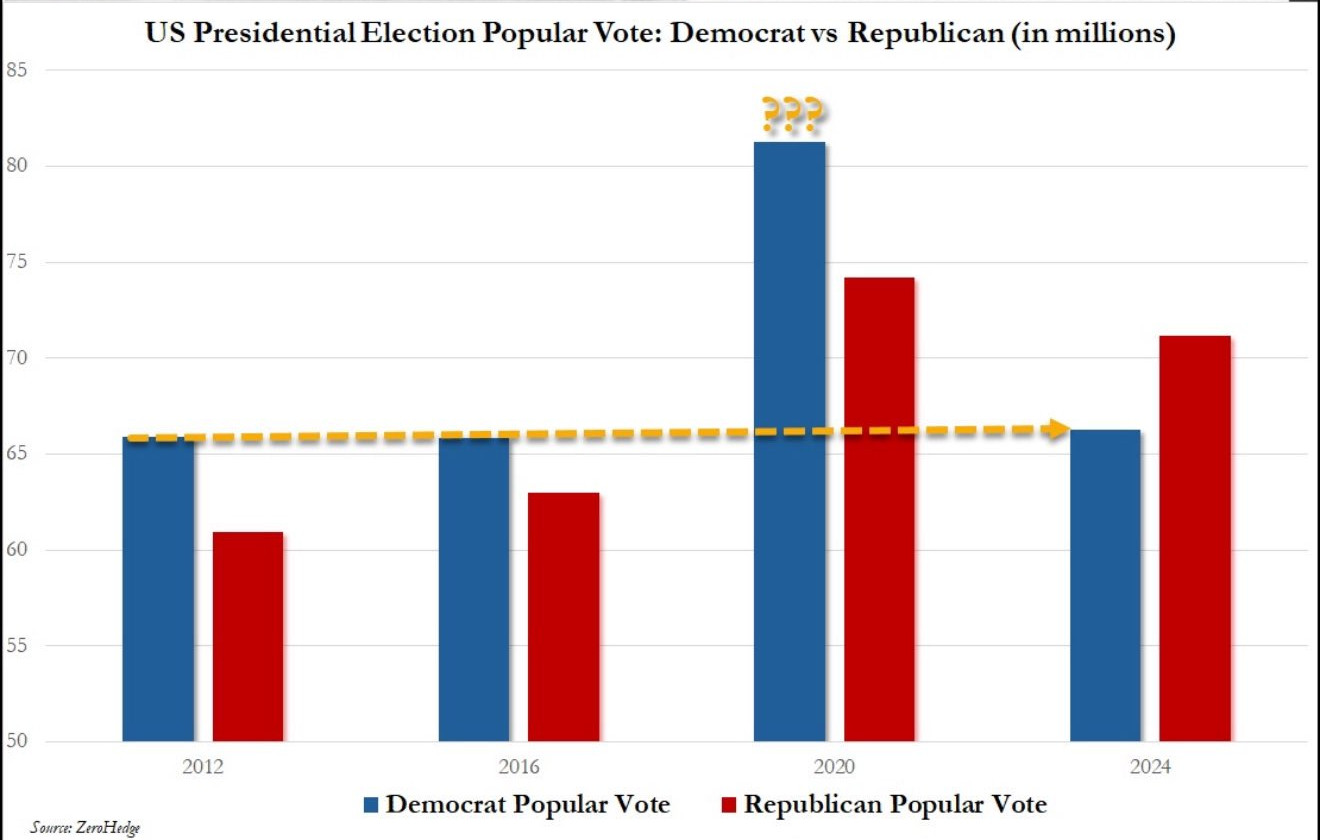 This stifling of debate had consequences. By dismissing legitimate concerns-such as the lack of universal voter ID requirements (only 21 states required ID for mail ballots in 2020) or inconsistent signature verification-the public was denied a transparent reckoning with the election’s vulnerabilities. The FBI’s failure to probe the CCP’s alleged scheme, coupled with the recall of the report, suggests a deliberate avoidance of inconvenient truths. Had questions been openly aired, states might have implemented stronger safeguards, like those now in place in Georgia, which tightened ID requirements for absentee voting in 2021.
The 2020 election’s vulnerabilities and the suppression of debate share a common thread: a failure to prioritize trust in democracy. Weakened ballot security, driven by a well-intentioned but rushed response to a China-linked virus, created openings for exploitation. The CCP’s alleged plot, if true, exploited these gaps in a way that could have swayed close races. Yet, by shutting down discussion, the media and tech gatekeepers prevented a full accounting, leaving lingering doubts among millions. Patel’s release of the FBI documents and Grassley’s push for scrutiny are steps toward transparency, but they come years too late to address the immediate fallout.
As the U.S. prepares for future elections, it must balance voting access with ironclad security. Universal voter ID, robust signature verification, and real-time audits could close gaps without disenfranchising voters. Equally critical is fostering an environment where questions about election integrity are met with evidence, not censorship. The 2020 election, shaped by a pandemic and silenced skepticism, serves as a warning: when foreign adversaries exploit crises, and domestic discourse stifles inquiry, democracy itself is left vulnerable.
