
Dateline: Good Friday
It is Finished
On this Good Friday, we stand in the quiet ache of Jesus’ crucifixion, our hearts pierced by the Gospels’ vivid tableau-His bloodied steps to Golgotha, the cross’s brutal weight, and the tender cry, “It is finished” (John 19:16–30, Matthew 27:32–56, Mark 15:21–41, Luke 23:26–49). Dust clings to the air, heavy with grief, as we fast and pray beneath a splintered cross that holds both sorrow and salvation. Judas Iscariot, with his silver coins and betraying kiss, haunts this sacred day, his story a mirror to our own faltering hearts (Matthew 26:14–50). Yet, woven through Gospel truths, ancient legends of trembling earth and mournful trees, and vibrant global traditions, Good Friday whispers a tender truth: even in betrayal and loss, Christ’s love reaches us, inviting reflection and redemption across time and cultures.
Gospel Stories of Good Friday
-

Ecce Homo. Antonio Ciseri, 1871 Jesus’ Trial and Condemnation (John 19:1–16, Matthew 27:11–31, Mark 15:1–20, Luke 23:1–25):
- Story: In a torchlit courtyard, Jesus stands before Pontius Pilate, His face swollen, eyes unyielding, as the crowd’s cries-“Crucify him!”-crash like waves (Luke 23:21). Pilate, sweat glistening, dips his hands in a basin, the water swirling with his cowardice (Matthew 27:24). Soldiers twist a crown of thorns, its barbs biting Jesus’ brow, and drape a purple robe over His scourged flesh, jeering at the “King” with spit and scorn (John 19:2–3). Barabbas, a rebel, strides free, while Jesus, shackled, faces the cross’s march.
- Cultural Context: This scene ignites Good Friday’s intensity worldwide. In Spain’s Semana Santa, wooden floats carry statues of a thorn-crowned Jesus, their carved wounds shimmering under flickering candles as penitents in pointed hoods tread Seville’s ancient streets. In Latin American Passion plays, actors reenact Pilate’s judgment, the crowd’s shouts splitting the humid air. Catholic and Orthodox churches proclaim these verses, the words heavy as stone, while hymns like “O Sacred Head, Now Wounded” weave the thorns’ pain into global worship.
- Relatability: Picture yourself in that mob, voices roaring, as an innocent man is condemned. The thorns, the jeers-it’s a mirror to our moments of silence when justice bleeds, urging us to stand for truth.
- The Road to the Cross (Via Dolorosa) (John 19:17, Matthew 27:32–33, Mark 15:21–22, Luke 23:26–32):
- Story: Jesus stumbles under a jagged cross, its weight grinding His scourged shoulders, blood trailing on Jerusalem’s stones. His legs falter, and Simon of Cyrene is dragged from the crowd, his back forced to bear the splintered beam (Mark 15:21). Women sob, their tears mingling with dust, as Jesus, voice cracking, comforts them: “Daughters of Jerusalem, do not weep for me” (Luke 23:28). The Via Dolorosa snakes toward Golgotha, a path of sweat and sacrifice.
- Cultural Context: Jerusalem’s Via Dolorosa pulses with pilgrims, its cobbled alleys alive with Good Friday prayers at 14 stations. In Italy, candlelit processions wind through moonlit villages, crosses held high. In the Philippines, devotees trudge barefoot, some hauling wooden beams under a blazing sun, their steps echoing Jesus’ own. The Stations of the Cross, born from this story, adorn churches worldwide, each carved scene a portal to His suffering.
- Relatability: Imagine Jesus, gasping for breath, yet pausing to console others. It’s a challenge-could we lift another’s load like Simon, or weep with love like those women, even in our own struggles?
- The Crucifixion (John 19:18–30, Matthew 27:35–50, Mark 15:24–39, Luke 23:33–46):
- Story: At Golgotha, iron nails pierce Jesus’ hands and feet, hammering Him to a weathered cross between two thieves. Soldiers toss dice for His seamless robe, their clatter cold in the dust (John 19:23–24). Jesus gasps, “Father, forgive them,” as blood drips from His wounds (Luke 23:34). Darkness smothers the sky at noon, a heavy veil (Mark 15:33). He cries, “My God, my God, why have you forsaken me?” (Matthew 27:46), then whispers, “It is finished,” His head slumping in death (John 19:30). The temple curtain rips, a deafening tear (Matthew 27:51).
-
Cultural Context: This is Good Friday’s core, throbbing in every tradition. Orthodox churches shroud icons in black, chanting Lamentations as the Epitaphios, embroidered with Jesus’ lifeless form, is borne in procession. Catholic Passion services at 3 p.m. proclaim John 19, while Mexicans kneel before crucifixes draped in mourning cloth. In Greece, bells toll like heartbeats, and in Spain, floats of a crucified Christ glide through streets, incense swirling like tears. The “seven last words” fuel hours-long meditations in Latin America, each phrase a glimpse of Jesus’ soul.
-
Relatability: The nails, the suffocating dark, Jesus’ final breath-it’s like the world stops. His forgiveness amid agony dares us to love through our deepest wounds, knowing He carried them all.
-
The Centurion’s Confession (Mark 15:39, Matthew 27:54, Luke 23:47):
- Story: A Roman centurion, armor glinting under a blackened sky, watches Jesus die. The earth quakes, stones shatter, and his voice trembles: “Truly this man was the Son of God!” (Matthew 27:54). In Luke, he adds, “Certainly this man was innocent!” (Luke 23:47). Amid the chaos, this outsider’s faith burns bright, a lone flame in the crucifixion’s despair.
- Cultural Context: The centurion’s words resound in Good Friday sermons and art. In Spain, Semana Santa floats sometimes show soldiers kneeling before the cross, their spears lowered. Orthodox icons of the crucifixion frame the centurion, his face etched with awe. In African churches, his story as a Gentile echoes, preached as proof the cross embraces all peoples, woven into global worship’s tapestry.
- Relatability: Imagine a battle-scarred soldier, numb to death, shaken by Jesus’ love. His confession feels like those moments when truth pierces our defenses, changing us forever.
- Jesus’ Burial (John 19:38–42, Matthew 27:57–61, Mark 15:42–47, Luke 23:50–56):
- Story: As dusk settles, Joseph of Arimathea, hands shaking, pleads with Pilate for Jesus’ body. With Nicodemus, he wraps it in linen, the air thick with myrrh’s sharp scent, and lays Jesus in a stone-hewn tomb (John 19:38–42). Mary Magdalene and other women sit by the sepulcher, tears carving paths down their faces, as a boulder grinds shut, sealing the grave (Matthew 27:61). Silence falls, heavy as grief.
- Cultural Context: This hushed moment shapes Good Friday’s end. In Poland, “Holy Tombs” bloom with flowers, drawing worshippers to kneel in vigil. Orthodox churches parade the Epitaphios, its image of Jesus’ body carried like a fallen king. In Ethiopia, Coptic chants pierce darkened churches, echoing Luke 23:55–56. In Spain, statues of the entombed Christ stand silent, their stillness a counterpoint to Semana Santa’s earlier fervor.
- Relatability: Picture the women, hearts shattered, watching a tomb’s stone roll shut. Their quiet waiting mirrors our own seasons of loss, clinging to hope when darkness falls.

Judas

Judas Iscariot, the disciple who betrayed Jesus for thirty pieces of silver, occupies a complex and haunting role in the Good Friday narrative, as detailed in the Gospels (Matthew 26:14–16, Mark 14:10–11, Luke 22:3–6, John 13:21–30). His act of betrayal, sealed with a kiss in Gethsemane (Matthew 26:47–50), marks him as one of the most reviled figures in Christian tradition, yet his story sparks profound questions about free will, redemption, and divine purpose. Beyond the Gospel accounts, early church writings, apocryphal texts, cultural legends, and modern reinterpretations have woven a tapestry of narratives around Judas-some vilifying him, others reevaluating his role as a tragic or even necessary figure in the Passion. Below, I explore Judas’s role through Gospel stories, legends, reinterpretations, and reevaluations, infusing vivid imagery and maintaining a solemn yet relatable tone, as requested. Inline links to scripture references use the ESV version on Biblia.com, and the expanded Cultural and Regional Stories section draws from global traditions, aligning with your previous feedback.
Gospel Stories of Judas’s Role
-
Judas’s Agreement to Betray Jesus (Matthew 26:14–16, Mark 14:10–11, Luke 22:3–6):
-
Story: In a shadowed corner of Jerusalem, Judas Iscariot, one of the Twelve, slips away to the chief priests, his heart stirred by greed or disillusionment. He asks, “What will you give me if I deliver Him to you?” (Matthew 26:15). They weigh out thirty pieces of silver, the clink of coins sealing his pact. Luke adds a darker note: “Satan entered into Judas” (Luke 22:3), suggesting a spiritual battle behind his choice. The deal is struck, and Judas watches for a moment to betray Jesus in secret.
-
Cultural Context: This moment, central to Holy Wednesday (“Spy Wednesday”) and Good Friday, is dramatized in global Passion plays, from Mexico’s Iztapalapa to Germany’s Oberammergau, where Judas’s furtive meeting is staged with chilling intensity. In Catholic and Orthodox liturgies, Matthew 26:14–16 is read, framing Judas as the archetype of betrayal. In art, like Caravaggio’s The Taking of Christ, Judas’s shadowed face captures his inner turmoil.
-
Relatability: Picture Judas, coins cold in his hand, choosing silver over his Teacher. It’s a gut-wrenching reminder of times we’ve traded loyalty for fleeting gain, wondering if we can turn back.
-
-
Judas at the Last Supper (John 13:21–30, Matthew 26:20–25):
-
Story: In the dim glow of an upper room, Jesus shares bread with the Twelve, His voice heavy: “One of you will betray me” (John 13:21). The disciples murmur, eyes darting, as Judas, seated close, feels the weight of Jesus’ gaze. Jesus dips bread and hands it to him, saying, “What you are going to do, do quickly” (John 13:27). Judas rises, his shadow flickering, and steps into the night, the door creaking shut behind him (John 13:30). Matthew notes Judas’s feigned innocence: “Is it I, Rabbi?” (Matthew 26:25).
-
Cultural Context: This scene anchors Maundy Thursday services, with Catholic Masses and Orthodox Twelve Gospels readings emphasizing Jesus’ foreknowledge. In Latin American churches, sermons linger on Judas’s exit into “night,” a symbol of spiritual darkness. Renaissance art, like Leonardo’s Last Supper, portrays Judas clutching a moneybag, his face turned from light, a staple in Good Friday reflections.
-
Relatability: Imagine sitting at a table with friends, knowing one will betray you, yet offering them bread. Judas’s choice feels like our own moments of hypocrisy, hiding disloyalty behind a smile.
-
-
The Betrayal in Gethsemane (Matthew 26:47–50, Mark 14:43–46, Luke 22:47–48, John 18:2–5):
-
Story: Under Gethsemane’s olive trees, torches flicker as Judas leads a mob, his breath visible in the cool night air. He approaches Jesus, eyes averted, and kisses Him-a signal to the soldiers (Matthew 26:49). Jesus, calm, says, “Friend, why are you here?” (Matthew 26:50), or in Luke, “Judas, would you betray the Son of Man with a kiss?” (Luke 22:48). The soldiers seize Jesus, and Judas vanishes into the chaos, his kiss a wound deeper than swords.
-
Cultural Context: This betrayal is a Good Friday focal point, reenacted in processions like Spain’s Semana Santa, where statues of Jesus in chains follow a Judas figure. In Orthodox Vespers, the kiss is a sermon theme, contrasting love with treachery. In Philippine Senakulo plays, Judas’s kiss is staged with dramatic tension, the crowd gasping as torches flare.
-
Relatability: Picture Judas, his lips brushing Jesus’ cheek, betraying with a gesture of love. It’s a stab to the heart, like times we’ve hurt those closest to us with false affection.
-
-
Judas’s Remorse and Death (Matthew 27:3–10, Acts 1:18–19):
-
Story: Dawn breaks, and Judas, haunted by Jesus’ condemnation, clutches the silver coins, their gleam now a curse. He storms into the temple, hurling the money at the priests’ feet, crying, “I have sinned by betraying innocent blood” (Matthew 27:4). Despairing, he hangs himself, his body swaying in a desolate field (Matthew 27:5). Acts adds a gruesome detail: his body bursts open, spilling onto the ground (Acts 1:18). The priests buy a potter’s field, called “Field of Blood,” with the silver (Matthew 27:7–10).
-
Cultural Context: Judas’s end is preached on Good Friday, especially in Catholic and Protestant settings, as a warning against despair. In medieval Europe, his suicide was depicted in art, like Giotto’s frescoes, showing a rope around his neck. In some Latin American traditions, Judas effigies are burned on Good Friday, symbolizing rejection of betrayal.
-
Relatability: Imagine Judas, alone, the coins worthless, his guilt a noose. It’s a stark picture of our own regrets, when we realize too late the cost of our choices, yet hope for mercy lingers.
-
Legends of Judas Iscariot
-
The Ointment of Judas’s Mother (Medieval Legend):
-
Story: A medieval tale claims Judas, born to a cursed lineage, was abandoned as a child after a prophecy foretold his treachery. Raised by strangers, he unknowingly killed his brother and married his mother, echoing Oedipus. Joining Jesus, he stole from the disciples’ purse, his greed festering until he betrayed Him for silver, the coins glinting like his mother’s ointment jar, a symbol of his tainted past.
-
Cultural Context: Popular in medieval Catholic Europe, this legend, found in texts like the Golden Legend (13th century), paints Judas as doomed from birth, his betrayal fated. It appears in European Passion plays, especially in Germany, where Judas’s cursed origins heighten his infamy. The story’s dark tone suits Good Friday’s somber mood but is absent from modern worship due to its non-biblical nature.
-
Relatability: Picture Judas, haunted by a past he can’t escape, choosing betrayal as if cursed. It’s a story that makes us wonder how our own wounds shape our choices, yet calls us to seek redemption.
-
-
Judas as the Thirteenth Demon (Apocryphal/Eastern Tradition):
-
Story: Some early Christian texts, like the Arabic Infancy Gospel, portray Judas as possessed by a demonic force from youth, destined to be Satan’s tool. In this legend, he betrays Jesus not just for money but as a vessel of evil, his kiss in Gethsemane a mockery of divine love, his eyes glowing with otherworldly malice as torches light the garden.
-
Cultural Context: This view, echoed in Orthodox hymnography, emphasizes Satan’s role (Luke 22:3), framing Judas as a cautionary figure. In Eastern churches, Good Friday sermons may reference his possession, contrasting Christ’s victory over evil. The legend influenced medieval art, where Judas is depicted with demonic features, reinforcing his role as the ultimate traitor.
-
Relatability: Imagine Judas, overtaken by a darkness he can’t fight, his betrayal a surrender to despair. It’s a chilling reminder of how we can lose ourselves to destructive forces, yet Jesus’ forgiveness offers a way back.
-
-
The Burning of Judas Effigies (Latin American Tradition):
-
Story: In this folk practice, Judas is crafted as a straw-stuffed effigy, his face painted with a sneer, clutching a bag of coins. On Good Friday, crowds gather in village squares, setting the figure ablaze as it crackles and blackens, the flames consuming the betrayer’s likeness, a cathartic rejection of his treachery under a twilight sky.
-
Cultural Context: Common in Mexico, Venezuela, and parts of Greece, this ritual, tied to Matthew 27:3–10, symbolizes purging betrayal from the community. In Oaxaca, effigies are stuffed with fireworks, exploding in bursts of light, blending mourning with defiance. The practice, rooted in Catholic folk tradition, is less common today but persists in rural areas, reflecting Good Friday’s emotional intensity.
-
Relatability: Picture a fire consuming Judas’s image, the crowd cheering as guilt burns away. It’s a raw expression of our desire to reject our own betrayals, seeking cleansing through Christ’s sacrifice.
-
Reinterpretations of Judas’s Role
-
Judas as a Tragic Figure (Literary Reinterpretation):
-
Reinterpretation: Writers like Jorge Luis Borges (Three Versions of Judas) and Nikos Kazantzakis (The Last Temptation of Christ) portray Judas as a tortured soul, driven by complex motives-perhaps zeal for revolution, despair at Jesus’ pacifism, or a misguided attempt to force His hand. In this view, Judas betrays Jesus with a breaking heart, his kiss a plea for action, his suicide a descent into self-loathing (Matthew 27:5).
-
Cultural Context: This perspective, popular in 20th-century literature and film, resonates in secular and progressive Christian circles. In European theater, plays like Jesus Christ Superstar depict Judas as a conflicted friend, his betrayal a catalyst for salvation. These works, though controversial in traditional settings, invite empathy, framing Good Friday as a drama of human frailty.
-
Relatability: Imagine Judas, torn between love and doubt, betraying Jesus with tears in his eyes. It’s a story that echoes our own moments of wrestling with faith, making choices we regret.
-
-
Judas as a Necessary Instrument (Theological Reinterpretation):
-
Reinterpretation: Some theologians, drawing on John 13:27 (“What you are going to do, do quickly”), suggest Judas fulfilled a divine role, his betrayal necessary for the crucifixion and resurrection. Without Judas, the cross-and salvation-might not have occurred. This view doesn’t absolve him but sees his act as woven into God’s plan, a paradox of free will and providence.
-
Cultural Context: This idea appears in Catholic and Protestant theology, notably in Augustine’s writings, and is explored in modern scholarship (e.g., William Klassen’s Judas: Betrayer or Friend?). In Good Friday sermons, some priests frame Judas as a tragic pawn, his sin enabling redemption. The interpretation is debated, as it risks diminishing Judas’s responsibility, but it enriches discussions of divine sovereignty.
-
Relatability: Picture Judas, unaware his betrayal serves a greater purpose, caught in a story bigger than himself. It’s a reminder that even our worst mistakes can be redeemed by God’s grace.
-
Reevaluations of Judas’s Role
-
The Gospel of Judas (Apocryphal Reevaluation):
-
Reevaluation: The Gospel of Judas (c. 2nd century), a Gnostic text rediscovered in 2006, portrays Judas as Jesus’ closest confidant, betraying Him at His request to fulfill a divine mission. Jesus tells Judas, “You will sacrifice the man that clothes me,” suggesting the betrayal frees His spirit. This Judas is a hero, not a traitor, his kiss a sacred act (Matthew 26:49).
-
Cultural Context: This text, rejected by mainstream Christianity, sparked global debate, covered in National Geographic and academic circles. It resonates in progressive theology, where Judas is seen as a misunderstood figure, but is dismissed in Catholic and Orthodox traditions as heretical. On Good Friday, it’s rarely referenced, but it fuels academic reevaluations of Judas’s role.
-
Relatability: Imagine Judas, entrusted with a painful task, kissing Jesus as an act of obedience. It’s a radical idea that makes us question who the real betrayers are in our lives, pushing us toward compassion.
-
-
Judas and the Question of Repentance (Theological Reevaluation):
-
Reevaluation: Some modern theologians argue Judas’s remorse (Matthew 27:4) shows a capacity for repentance, though his suicide suggests despair over redemption. Could Judas, like Peter who denied Jesus (Luke 22:54–62), have found forgiveness if he’d sought it? This view sees Judas as a cautionary tale, not a damned soul, emphasizing God’s mercy.
-
Cultural Context: This perspective appears in Catholic homilies and Protestant writings, like C.S. Lewis’s reflections on grace. In Good Friday meditations, especially in Latin America, Judas’s despair is contrasted with Peter’s restoration, urging believers to seek forgiveness. It softens Judas’s image, aligning with contemporary emphasis on redemption over judgment.
-
Relatability: Picture Judas, throwing back the silver, desperate for a way out but too broken to ask. It’s a story that hits close, reminding us that even in our darkest guilt, forgiveness waits if we reach for it.
-
Cultural and Regional Stories of Judas

- Burning Judas Effigies (Latin America): In Mexico and Venezuela, villagers craft Judas effigies from straw, his painted face sneering, asack of coins dangling. On Good Friday, crowds ignite them in dusty plazas, flames leaping as fireworks crackle, purging betrayal’s stain (Matthew 27:3–10). In Oaxaca, children cheer as the effigy burns, a communal rejection of Judas’s sin under a twilight sky, blending grief with defiance.
- Judas in Semana Santa (Spain): In Seville’s Semana Santa, floats depict Jesus betrayed in Gethsemane (Matthew 26:47–50), with Judas’s figure often small, shrouded in shadow, his kiss frozen in carved wood. Penitents in hooded robes follow, their chains clinking, embodying repentance for sins like Judas’s. The somber processions, lit by candles, make his treachery a mirror for collective reflection.
- Pasyon Narratives (Philippines): In the Philippines, the Pasyon chants Judas’s betrayal (Luke 22:3–6), his voice a mournful strain in the Good Friday epic sung under palm roofs. Senakulo plays stage his kiss with dramatic flair, actors portraying Judas with trembling hands, the crowd hissing as torches flare, amplifying the Gospel’s emotional weight in tropical heat.
- Judas in Passion Plays (Germany): In Germany’s Oberammergau Passion Play, Judas strides through torchlit scenes, his silver coins glinting as he betrays Jesus (Mark 14:10–11). Actors portray his remorse with gut-wrenching intensity, collapsing in despair (Matthew 27:5), prompting audiences to grapple with his humanity, a tradition rooted in Catholic Bavaria but resonating globally.
- Orthodox Hymnography (Greece, Eastern Europe): In Greek Orthodox churches, Good Friday Vespers hymns curse Judas’s greed, his “accursed hands” grasping silver (Matthew 26:15). Congregants, holding candles, sing of his fall, the Epitaphios looming as a reminder of Jesus’ sacrifice, contrasting Judas’s darkness with Christ’s light in a moonlit sanctuary.
- Judas in Ethiopian Keening (Coptic Tradition): In Ethiopia, Coptic Good Friday chants weave Judas’s betrayal (John 13:21–30) into Psalms, women keening as priests recount his exit into “night.” Rural families, gathered under acacia trees, share stories of his despair, using his fall to teach forgiveness over vengeance, rooted in Matthew 27:4.
- Moravian Reflections (Caribbean): In Jamaican Moravian churches, Good Friday love feasts include readings of Judas’s betrayal (Matthew 26:20–25), paired with sermons on redemption. Drummers beat a slow rhythm, evoking African lament, as congregants reflect on Judas’s choice versus Jesus’ mercy, blending Gospel with Caribbean spirituality.
- Judas in Modern Theater (Global): In global productions like Jesus Christ Superstar, Judas emerges as a conflicted antihero, his betrayal (Luke 22:47–48) driven by frustration or love. Performed in theaters from London to São Paulo, these reinterpretations, staged around Good Friday, invite audiences to see Judas as a mirror of human struggle, his story sparking debate under stage lights.
Good Friday Legends and Traditions
-
The Legend of the Holy Grail:

La Sainte Cène. Pourbus, Frans II, 1618 -
Story: As Jesus hangs lifeless, blood flows from His pierced side, and Joseph of Arimathea, kneeling in the dust, catches the crimson stream in the Last Supper’s cup. This Holy Grail, pulsing with sacred light, becomes a relic of divine love, carried across seas and guarded by knights in tales of chivalry, its glow promising eternal life.
-
Cultural Context: Born in medieval Europe, this legend thrives in Catholic imagination, especially in France, Spain, and England, woven through Arthurian epics like Chrétien de Troyes’ Perceval (12th century). Spanish churches, like Valencia’s cathedral, display claimed Grail relics on Good Friday, evoking Christ’s blood. The tale shapes art, from illuminated manuscripts to Wagner’s operas, linking the crucifixion to quests for redemption across cultures.
-
Relatability: Imagine Joseph clutching a cup stained with Jesus’ blood, its weight heavy with grace. It’s a story that makes the cross feel tangible, like a treasure we’re called to seek in our hearts.
-
-
The Wandering Jew:
-
Story: On the Via Dolorosa, a man-often named Ahasuerus-scoffs at Jesus, His cross scraping the stones, and denies Him a moment’s rest. Jesus’ eyes, weary yet piercing, curse him: “You will wander until I return.” Ahasuerus trudges the earth, his cloak tattered, his soul heavy with regret, a living shadow of Good Friday’s pain.
-
Cultural Context: This medieval legend, popular in Catholic Europe (Germany, Spain, France), emerges in 13th-century chronicles and Gothic tales. In Spain, it’s woven into Passion narratives, underscoring human cruelty on the Via Dolorosa. Its anti-Semitic undertones have drawn modern critique, but it lingers in historical art and folklore, a cautionary tale for Good Friday processions.
-
Relatability: Picture a man doomed to roam for one cruel act. It’s a chilling reflection of our own hasty judgments, pushing us to choose mercy over scorn in others’ suffering.
-
-
Veronica’s Veil:
-
Story: Amid a jeering mob, Veronica steps forward, her trembling hands clutching a linen cloth. She wipes Jesus’ face, caked with blood and sweat, and His image-eyes tender, wounds raw-burns into the fabric, a holy imprint glowing with His suffering. This Veronica Veil becomes a relic of compassion, cherished as a testament to love on the cross.
-
Cultural Context: A pillar of Catholic devotion, this story, from the apocryphal Acts of Pilate (4th century), marks the sixth Station of the Cross. In Rome, the veil is venerated at St. Peter’s, and in Spain, Semana Santa floats show Veronica, her cloth raised in Seville’s torchlit processions. The image inspires icons and prayers worldwide, tying Good Friday to acts of kindness.
-
Relatability: Imagine Veronica, pulse racing, reaching out to ease Jesus’ pain with a simple cloth. Her courage feels like our chance to offer small acts of love when someone’s hurting.
-
-
The Earthquake and Raised Saints:
-
Story: As Jesus breathes His last, the earth roars, rocks splinter, and tombs burst open. Saints long dead-patriarchs like Abraham, prophets like Isaiah-rise, their shrouds shimmering in twilight, striding through Jerusalem’s streets to proclaim Christ’s triumph (Matthew 27:52–53). Apocryphal tales paint them storming from graves, heralding the cross’s victory over death’s chains.
-
Cultural Context: Matthew’s account fuels Orthodox and Catholic theology of the Harrowing of Hell, where Christ frees souls from Hades. In Greece, icons show Jesus shattering death’s gates, pulling Adam and Eve into light, chanted during Good Friday Vespers. Italian frescoes and Ethiopian liturgies amplify this, tying the earthquake to resurrection hope, a vivid backdrop to global worship.
-
Relatability: Picture graves splitting as Jesus dies, the dead rising to shout His victory. It’s a wild, electric vision that says His death shakes our deepest fears, promising life.
-
-
The Legend of the Dogwood Tree:
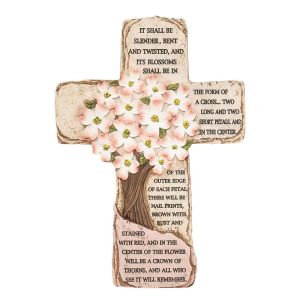
Dogwood tree cross -
Story: Once towering and strong, the dogwood tree’s wood forms Jesus’ cross, its branches creaking under His weight. After His death, God reshapes it-slender, delicate, its white petals cross-shaped, tipped with red like nail wounds, a thorny heart blooming each spring to whisper of the crucifixion.
-
Cultural Context: This American folktale, popular in the U.S. and Latin America, has no biblical root but thrives in Good Friday sermons and poetry, especially in rural churches. In Mexico, similar legends link local trees to the cross, their blooms a natural icon of sacrifice. The dogwood’s story, shared in songs and children’s books, ties nature to Christ’s Passion, resonating in Western Christian imagination.
-
Relatability: Imagine a tree, once part of Jesus’ pain, now blooming with scarred petals to tell His story. It’s like creation itself kneeling at the cross, inviting us to see His love in every spring.
-
-
Longinus the Centurion:
-
Story: Longinus, a Roman centurion, thrusts a spear into Jesus’ side, blood and water spilling onto the rocky ground (John 19:34). As the sky darkens and earth quakes, he falls to his knees, crying, “Truly this man was the Son of God!” (Matthew 27:54). Legends claim his blind eyes were healed by Jesus’ blood, leading him to faith and martyrdom.
-
Cultural Context: From the apocryphal Gospel of Nicodemus (4th century), Longinus is a hero in Catholic and Orthodox traditions. In Italy, his statue towers in St. Peter’s, and in Eastern Europe, his spear, the “Holy Lance,” is a relic. Good Friday liturgies highlight his conversion, with icons showing a soldier awestruck at the cross, a symbol of the Gospel’s reach to all.
-
Relatability: Picture a grizzled soldier, his spear still wet, stunned by Jesus’ death. His change of heart feels like our moments when love breaks through, calling us to believe.
-

Cultural and Regional Good Friday Stories
-
Semana Santa Processions (Spain): In Seville’s ancient streets, massive floats sway, bearing statues of Jesus nailed to the cross, blood carved in scarlet rivers (John 19:18). Mourners in black lace and pointed hoods follow, their candles dripping wax under a starlit sky. The Cristo de la Buena Muerte in Málaga, eyes closed in death (John 19:30), hushes crowds, incense curling like a prayer. Brass bands play mournful dirges, and the air hums with collective sorrow, making the Gospels’ pain palpable.
-
Epitaphios Processions (Greece, Orthodox World): In Athens and villages across Greece, Orthodox faithful gather under moonlit domes, clutching candles as the Epitaphios-a richly embroidered cloth depicting Jesus’ body-is carried through streets (John 19:38–42). Bells toll, and voices chant the Lamentations, their melodies weaving grief and hope. Families line the route, some tossing rose petals, transforming towns into open-air sanctuaries of mourning, as if the entire community buries Christ together.
-
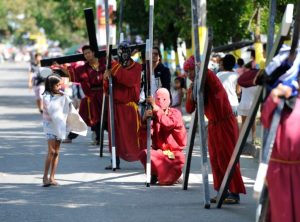
Crucifixion in the Philippines (CNN) Pasyon and Reenactments (Philippines): In Philippine villages, the Pasyon rings out, singers under palm-thatched roofs chanting Luke 23:33–46, their voices raw with anguish. Some devotees, in controversial acts, nail themselves to crosses on dusty hills, their blood mingling with sweat, seeking to share Jesus’ pain. Others join Senakulo plays, reenacting the crucifixion under tropical heat, the crowd’s wails echoing the Gospel women’s tears (Luke 23:27–28), making Good Friday a visceral, communal lament.
-
Holy Tombs and Vigils (Poland): In Poland, churches erect “Holy Tombs,” ornate displays of Jesus’ body, surrounded by lilies and flickering candles, reflecting Matthew 27:57–61. Worshippers, young and old, kneel in silent vigil, their breaths misting in chilly sanctuaries. Some towns host processions with shrouded crosses, the faithful singing hymns through snow-dusted streets, their voices a quiet defiance of death’s shadow.
-
Keening and Cross Veneration (Ethiopia, Coptic Tradition): In Ethiopia, Coptic churches dim their lamps, and priests chant Psalms in Ge’ez, their voices rising like a storm, echoing Luke 23:55–56. Women keen, their wails filling ancient stone sanctuaries, while congregants kiss a wooden cross, its surface worn smooth by centuries of devotion. In rural areas, families gather under acacia trees, sharing bread in somber silence, as if sitting with Mary Magdalene at the tomb.
-
Moravian Love Feasts (Czech Republic, Caribbean): In Moravian communities, from the Czech Republic to Jamaica, Good Friday includes “love feasts,” simple meals of bread and tea shared in church halls, recalling Jesus’ sacrifice (John 19:30). Hymns in Czech or Patois fill the air, their harmonies heavy with grief, while scripture readings focus on the cross’s redemptive power. In Caribbean Moravian churches, drummers add a mournful beat, tying the Passion to African rhythms of lament.
-
Passion Plays (Mexico, Latin America): In Mexico’s Iztapalapa, thousands gather for a sprawling Passion play, actors portraying Jesus staggering under a cross through crowded streets (Mark 15:21–22). Dust clouds rise, and onlookers weep as nails are driven into a wooden cross, the sound echoing across the valley. Similar plays in Guatemala and Peru feature vibrant costumes and incense, transforming towns into living Gospels, where Jesus’ suffering feels as real as the ground beneath.
-
Good Friday Kites (Bermuda): In Bermuda, a unique tradition sees families fly colorful, handmade kites on Good Friday, their geometric shapes soaring against turquoise skies. Legend ties this to a 19th-century teacher explaining Jesus’ ascension, but locals link it to the cross’s triumph (Matthew 27:50–54). As kites dance in the breeze, communities picnic, blending solemn reflection with a quiet nod to resurrection hope.

Conclusion
From ancient legends of cursed births and burning effigies to modern musings of Judas as a tragic hero or divine instrument, his story weaves through global traditions-Mexico’s fiery purges, Greece’s mournful hymns, Ethiopia’s keening chants, and Bermuda’s soaring kites. These narratives, alongside the Gospel’s raw truths, invite us to hold the sorrow of Good Friday gently, like Veronica’s veil or the dogwood’s scarred blooms. As we walk with Jesus through Seville’s candlelit streets or kneel in Poland’s floral tombs, we see the cross not as an end but as a beginning-a whisper of love that endures beyond the grave, calling us to forgiveness, even for the Judases within us.
