
Democrats Will Regret Running an Issueless Campaign
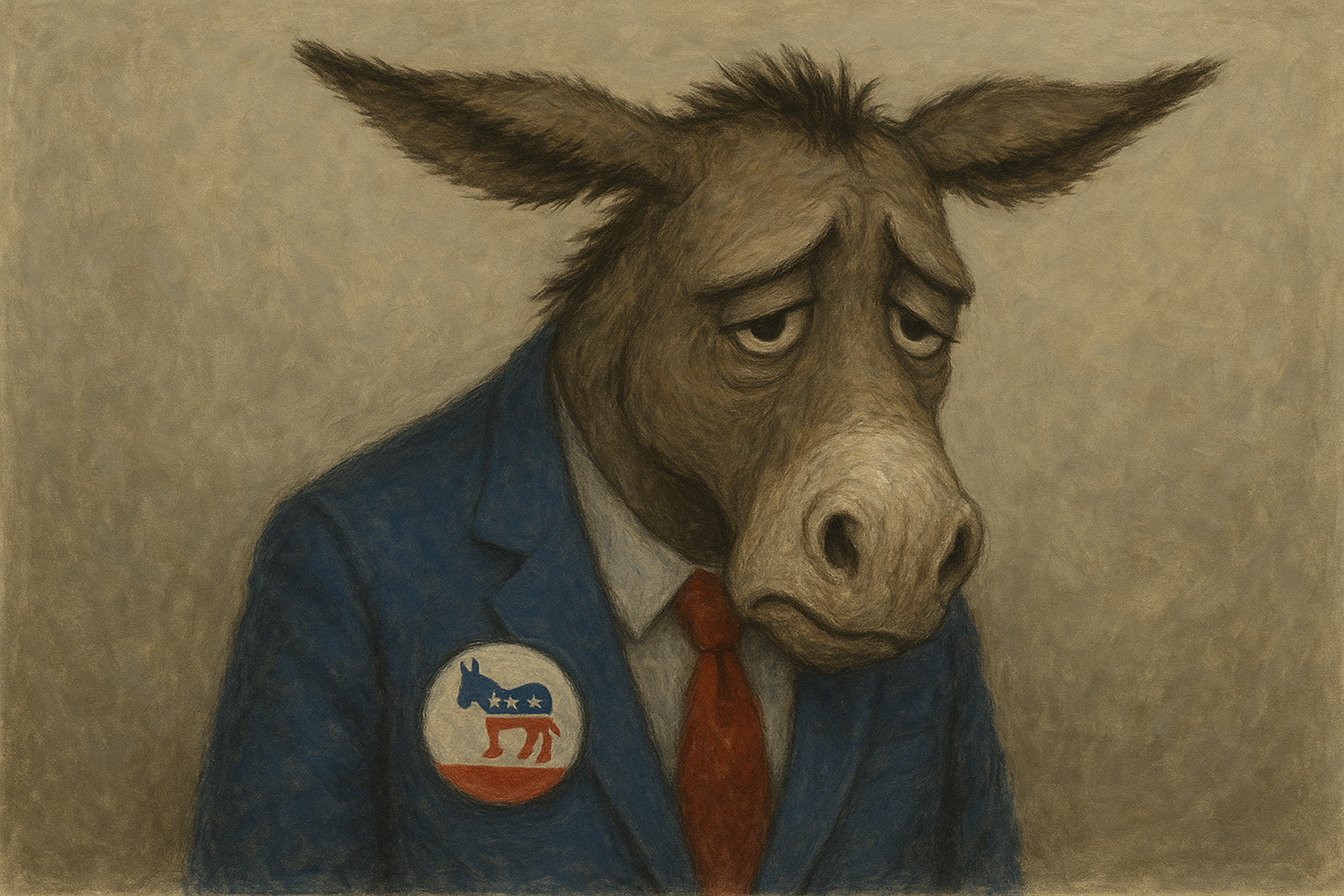
Democrats have entered the final stretch of the 2026 midterms without a domestic platform they can defend. Their campaign rests on opposition to Donald Trump, the promise of investigations, and a generic claim of “government corruption” that they have attached to the current administration. They name affordability as a problem and then decline to offer a remedy that survives contact with either the record of the last Democrat administration or the proposals still endorsed by their candidates. The structure is familiar. It is the same structure that failed the out-party in 1998 and again in 2002.
The Pattern That Failed Before
In 1998 Republicans treated the Lewinsky matter as sufficient. They nationalized the midterms around scandal and the expectation that the out-party gains seats. The base that wanted investigations did not expand. As a result, Republicans lost seats.
In 2002 Democrats treated a mild recession at the end of the tech boom and a series of corporate scandals as sufficient. House Minority Leader Richard Gephardt told senior Democrats that the party could pick up as many as 40 House seats if the scandals remained on the political radar through November. A Democrat operative added that for every 100-point drop in the stock market, Democrats could pick up four seats. The market declined. The scandals continued. Nevertheless, Democrats lost seats in the House and lost the Senate. They had named the economic condition and the scandals. They had not supplied an affirmative domestic alternative that voters preferred to the security and recovery narrative then in place.
The Same Structure in 2026
The 2026 Democrat campaign follows the same pattern. The content is “Trump Trump Trump,” the threat of investigations if Democrats retake Congress, and warnings to young conservatives that public service under a Republican administration carries personal risk. Affordability appears in the rhetoric. Concrete proposals that address costs, beyond the recycled demand for higher taxes on upper-income households and a return to the structure of the Affordable Care Act, do not.
When candidates are pressed for a domestic agenda, the remaining offer is the progressive set that has not been withdrawn: Medicare for All, wealth taxes, and related measures. The campaign treats opposition as the platform. History indicates that opposition alone does not reliably produce midterm gains when the opposing party holds the presidency.
What the Corruption Ranking Measures
Recent polls have elevated “government corruption” to the top of issue rankings. CNBC’s final All-America Economic Survey found 36 percent of registered voters naming government corruption as one of the most important issues facing the country, ahead of food and grocery costs. A Fox News poll recorded 88 percent of respondents as extremely or very concerned about corruption in government. Gallup reported that 89 percent of Americans now say government corruption is widespread, a record in the firm’s tracking and a ten-point increase from the prior year. Change Research’s August survey had 40 percent of voters placing government corruption among their top three political issues. The concern is cross-partisan.
Democrat messaging and the coverage that accompanies the polls treat the term as an indictment of the current administration. The spending on anti-corruption advertising has been heavily Democrat. The stories attached to the numbers are Trump-family crypto ventures, alleged personal enrichment, and related controversies. Pollsters have not required respondents to distinguish those claims from systemic fraud, waste, and abuse of taxpayer programs.
Open-ended responses show that voters use the word for different things. Some register the program-integrity concerns that have produced concrete enforcement actions and public attention for months. Others map the word onto the personal-enrichment narrative. The generic label absorbs both. Democrats claim the ranking as evidence of anti-Trump sentiment. Yet the ranking does not compel that reading. It permits the projection.
The Domestic Offer That Remains
The domestic proposal that remains available when the oppositional message is set aside is Medicare for All. The major bills that carry the name eliminate private and employer-sponsored coverage, including the negotiated plans held by many union households. Workers who like their current insurance cannot keep it under the proposal as written. The trade-off does not require new ten-year cost estimates. It requires only the statement that the coverage currently held by those households would be replaced by a single government plan whose design, provider participation, and financing are not the coverage those households already selected through bargaining or employment.
Michael Barone noted the exposure in a recent commentary: the absence of an articulate domestic platform leaves Democrats open to Democratic Socialists of America pressure for measures under which workers who like their health insurance cannot keep it. The observation appeared after the horse-race reading of the polls. It is the usable point.
The Audience That Already Has Coverage
Union households are the sharpest practical audience for the distinction. The health plan is often one of the most visible and valued elements of the contract. Members know the deductibles, the networks, and the fact that the plan was won at the table. Replacing it with a national single-payer design is a concrete exchange. Some union leaders have endorsed the concept in principle because it removes the employer from future bargaining. Rank-and-file members who already hold strong plans face a different calculation. They have secured the coverage. The proposal asks them to surrender it.
The Contrast Already on the Table
The remaining affirmative issues for Republicans are the ones that have been available for nationalization throughout the cycle: crime, immigration, and fraud. Each has recent, specific examples and Democrat policy associations that have not been renounced. The final two weeks are late for the introduction of new topics. They are sufficient for a direct contrast on the proposals Democrats have already endorsed or declined to abandon. Candidates who force the Medicare for All trade-off in plain language, re-center fraud as the content of the corruption ranking rather than personal enrichment, and maintain the crime and immigration frame are working with material the Democrat campaign has already placed in public view.
The 1998 and 2002 campaigns demonstrate that an oppositional message centered on the other side’s scandals or an economic condition, without an affirmative offer that voters can accept, does not automatically produce midterm gains. In 2026 the Democrat campaign has the same structure. Trump and investigations supply the primary content. A generic corruption label is claimed as anti-Trump. The remaining domestic proposal ends the health plans many of the party’s own voters currently hold. Republicans who treat the closing days as an opportunity to state those facts are not inventing a new argument. They are using the one the Democrat campaign has left on the table.
