
A Father’s Heart, a Mother’s Stand, and the Sanctity of Every Life
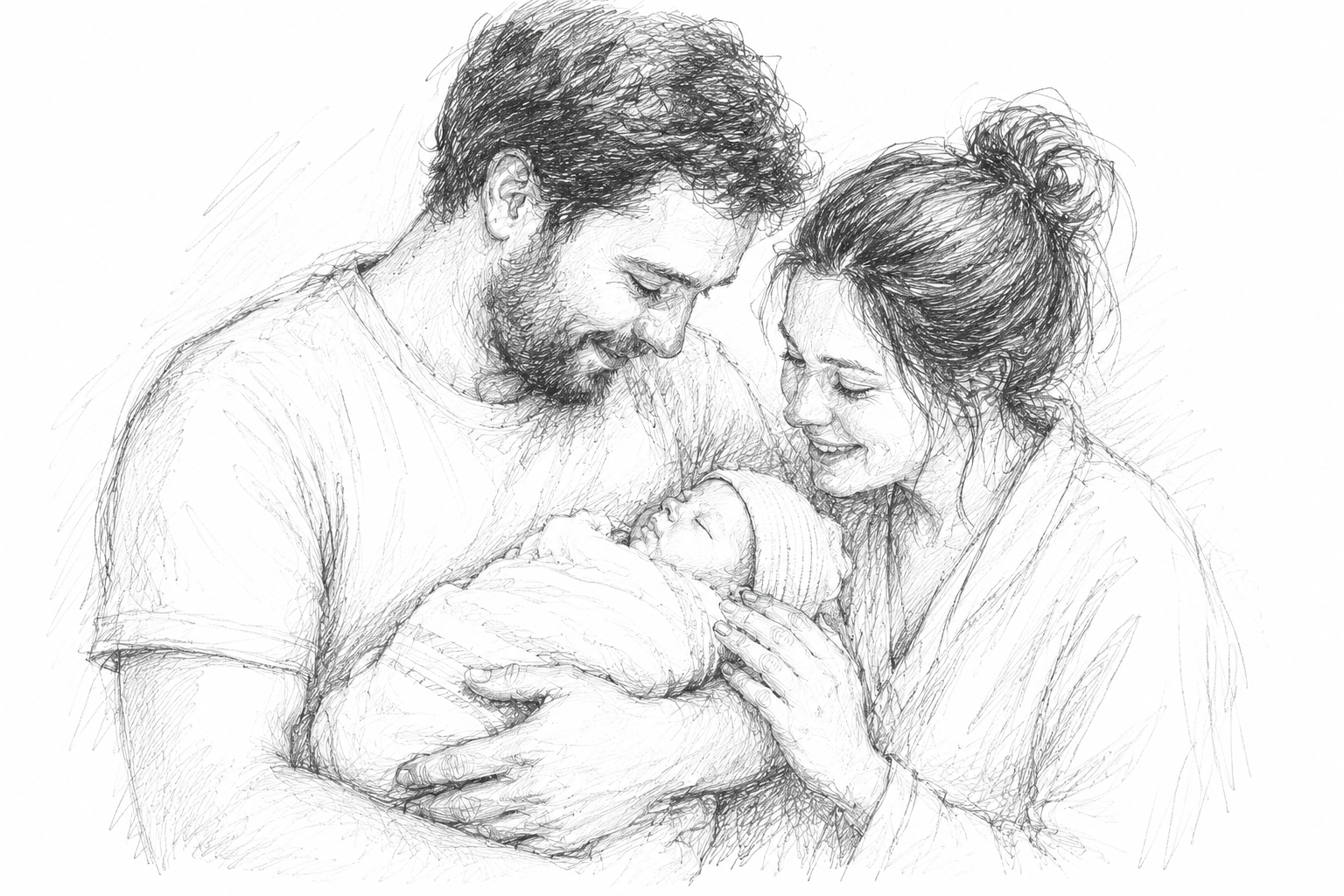
I need to talk about this raw, the way I write when the curtain gets yanked all the way back. No polish for the sake of comfort. No slogans that let us off the hook. Just the naked testimony of a father who has walked the road the culture now debates in headlines and Instagram Stories.
When Jesse and Ashley Ridgway, the YouTubers behind McJuggerNuggets, announced they had terminated their pregnancy after learning their child had Trisomy 21—Down syndrome—they described the condition as “objectively s—ty from a health perspective.” They called the decision “extremely traumatic” but ultimately “beneficial for our family.” They laid out the probabilities: heart defects, developmental delays, lifelong needs. They noted the high termination rates after such diagnoses and said they hoped for a “better outcome” next time. Glenn Beck, a man who has raised a daughter with cerebral palsy through his own valleys, pushed back hard. He spoke from the other side of the ledger—the side where disruption becomes the soil for deeper joy and meaning.
Their story stopped me cold because my wife and I lived the heavier version years earlier. And we chose differently.
As a father of a child with cerebral palsy, I was greatly disturbed by the story of the YouTuber couple who aborted their baby with Down Syndrome. They didn’t say the child was not a baby. They said it was not a life worth living, and not a life worth disrupting their own.
— Glenn Beck (@glennbeck) June 5, 2026
I know from personal experience, IT IS A LIFE WORTH LIVING. And my daughter was SO worth disrupting my plans. When I became a father of a child with special needs, I had countless plans. Since then, I’ve learned, my own plans only made me miserable. The real moments of happiness came from my family.
Raising my children was BY FAR the hardest thing I have ever done. But I wouldn’t trade it for the world. Cherish your family. Don’t kill it.
Our Daughter Poppy
Our fourth child was a little girl. We called her Poppy as a placeholder while we prayed and waited on the name God would settle on our hearts. She was due November 29, 2017. The genetic testing came back with Trisomy 13—Patau syndrome. Doctors spoke in the language of probabilities and grim realities: profound disabilities, heart defects, brain and facial abnormalities, organ complications, the kind of diagnosis often labeled “incompatible with life.” Most pregnancies with Trisomy 13 end in miscarriage or stillbirth. Those that reach term face short, complicated lives. The medical folder they handed us was heavy with warnings.
Many parents in that moment are offered abortifacients to hasten the end and “manage” the process. My wife refused them. She made it unmistakably clear: we would not intervene to end our daughter’s life. She carried Poppy naturally, letting the miscarriage unfold on its own timeline, however God allowed it. She held out every single shred of hope until the very last moment. No concessions. No calculations about whether this child fit our plans or our bandwidth. We were for life, and we would never concede it.
I would gladly have raised a child with an extra chromosome—Trisomy 13 or otherwise—and counted myself a blessed father. The projected hardships, the medical realities, the likelihood of brief time on this earth—none of it changed the central truth: Poppy was our daughter. A soul. A life entrusted to us, not ours to curate or discard based on a spreadsheet of “quality.” I still mean every word of that. Nine years later, the ache to hold her, even for one single moment, rises up without warning. I would give anything for it.
On May 17th, God called her home. We lost Poppy. The grief was quiet and profound. There was no dramatic birth story to share, no nursery to finish, no first cries to record. Just the empty place where a future with our little girl should have been. Yet even in that loss, there has been no regret over the stand we took. Only the deep peace that comes from knowing we remained faithful to what we believe about the value of every human life.
The Naked Truth and the Cultural Ledger
This is the naked part. I’m not writing this to condemn the Ridgways in their grief or to pretend our choice was easy. The fear, the sorrow, the rearranging of dreams—these are real. I have walked enough valleys to know that. But their public reasoning reveals how normalized the sorting has become. Technology gives us earlier windows into our children’s genetics. The culture supplies the ledger: weigh the burdens, project the disruptions, calculate the cost to your ambitions, your marriage, your other children, your lifestyle. If the numbers don’t add up, there’s a compassionate out.
We stared at a prognosis statistically far worse than Trisomy 21, and we still said yes. My wife’s refusal of the abortifacients wasn’t passive. It was a deliberate, courageous stand for the sanctity of that particular life. We carried Poppy with open hands and steadfast hearts. We were for life, and we would never concede it.
This conviction flows from the same well I’ve drawn from in these pages before: fatherhood as stewardship, not ownership. The “Appropriate Forum” tension between adult freedoms and the sacred claims of the vulnerable. The Texas soil that taught me to value the melting pot of human dignity, not sort neighbors by perceived desirability. Every life bears the image of God—Psalm 139 kind of knitting in the womb—not because it meets our metrics of productivity or ease, but because it exists.
Poppy’s Enduring Testimony
Poppy’s short life did not end in vain. It has shaped me as a husband, as a father to our son and daughters, and as a writer. It sharpens why I speak out on protecting childhood innocence, on the cultural incentives that devalue the inconvenient, on the quiet eugenic logic that asks “Is this life worth it?” before the child even draws breath. Suffering and limitation are real. Disability brings hardship. But neither erases sacred worth. Many families who have walked similar roads testify to unexpected joy, deepened faith, and love that recalibrates everything. Beck’s witness with his own daughter echoes that truth.
We will see Poppy again someday. Gloriously formed, whole, radiant in the presence of her Creator. No extra chromosome, no pain, no brevity—only the fullness of the life God intended for her from the beginning. Until that day, her story stands as testimony.
To every parent facing a diagnosis right now: You are not alone. The culture may whisper calculations, but there is another way. To the Ridgways and others who chose differently: I pray God’s comfort in your grief. But the principle remains. Every life has value. Not the wanted ones. Not the healthy ones. Not the convenient ones. Every one.
We were for life, and we would never concede it.
My wife and I still are.
