Why the Hormuz Blockade Targets Beijing Too
In the desert of the Middle East, oil is the spice. Control its flow and you control the game. Right now, the Iranian regime is learning that lesson the hard way.
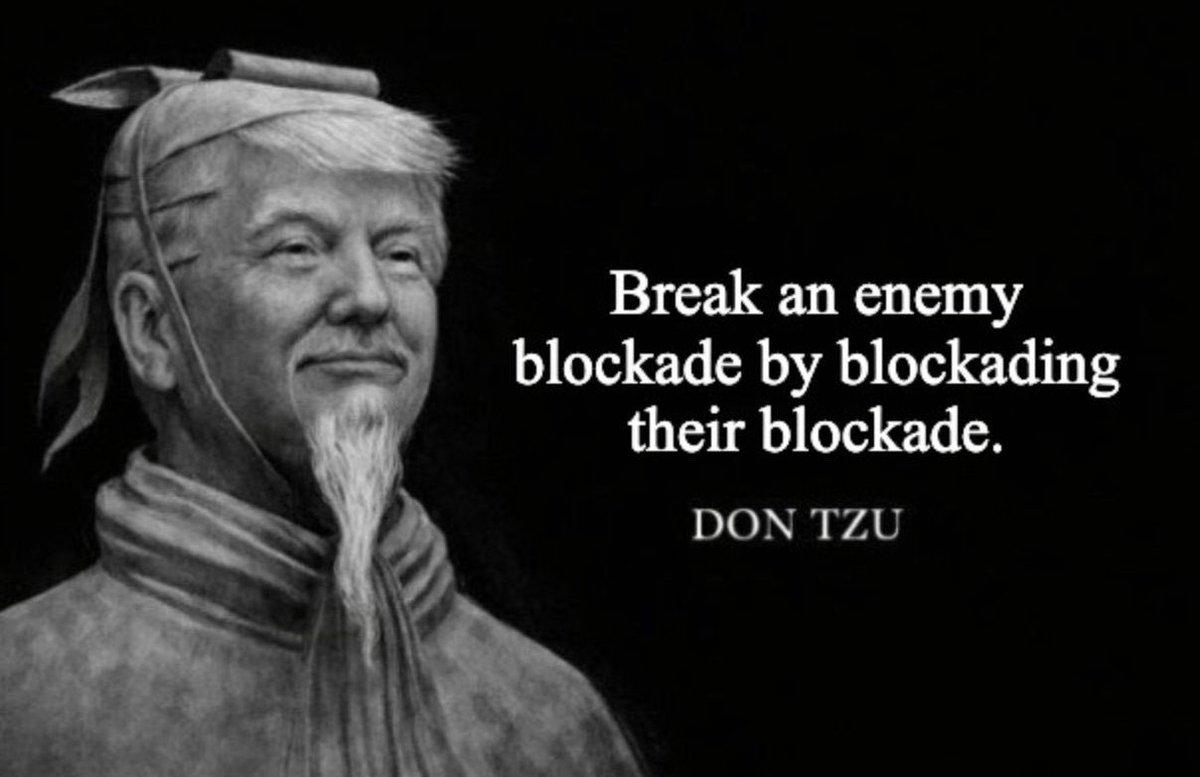
After the talks in Pakistan collapsed without a nuclear deal, Iran figured they still held the whip hand over the Strait of Hormuz. They thought they could keep disrupting shipping, demand concessions, and keep the oil money flowing to fund their missiles, their proxies, and their march toward a nuclear weapon. Instead, President Trump did what smart leaders do: he flipped the script. He ordered a naval blockade — not a total shutdown of the strait, but a precise quarantine on all maritime traffic entering or exiting Iranian ports and coastal areas, with Kharg Island squarely in the crosshairs.
After nearly thirty years in information security, I’ve learned one thing the hard way: half-measures get you hacked. The same rule applies in statecraft. This blockade is genius because it doesn’t have to be linked to any ceasefire. It can — and should — continue long after the current pause expires. It buys us time to reload while it squeezes the regime’s wallet. And quietly, it sends a message to the real long-term strategic target: Beijing.
Why This Blockade Beats the Old Playbook
Let’s be clear about what we’re not doing. We’re not repeating the old, failed playbook. We’re not sending Obama-style cash pallets to Tehran in the dead of night. We’re not launching another Bush-era ground invasion with American boots slogging through the sands. And we’re sure as hell not going back to the endless dithering and wishful diplomacy that gave Iran 47 years to build its terror network and enrich uranium to near-weapons grade.
Instead, this is the method of JFK during the Cuban Missile Crisis — a quarantine that refuses to abandon the goal while minimizing the risk to U.S. soldiers. Mark Penn put it well the other day: this is the careful choice that learns from history. It’s calibrated pressure designed to force regime modification, not regime change on our timeline. And as Duane “Generalissimo” Patterson noted in a Hot Air it’s the classic “Wabbit Season” reversal. Iran thought they controlled the strait. Now they’re the ones watching their tankers sit idle while the U.S. Navy enforces the rules.
At the heart of this strategy is Kharg Island. That offshore terminal handles about 90 percent of Iran’s crude oil exports. No half-measures here. We intercept and quarantine the traffic — full stop. Let the tankers sit, let the wells back up from pressure buildup, and let the revenue stream dry up. This isn’t about closing the strait to the world. It’s about closing Iran’s wallet. Every day those loadings are blocked is another day the regime has less hard currency to pay the IRGC, fund its nuclear sites, or keep its people quiet with subsidies.
The Ceasefire Window Is for Winners
The current two-week ceasefire gives us exactly the operational breathing room we need. While the pause holds — at least nominally — we should use every hour of it. Replenish ordnance stocks that got drawn down in earlier exchanges. Stage every option the President might want at his disposal: additional naval assets, deeper strike contingencies, even plans for seizing Kharg outright if the regime refuses to bend. Maintenance cycles, resupply chains, intelligence fusion — all of it. This isn’t weakness. This is how winners prepare.
And here’s the masterstroke: the blockade isn’t hostage to the ceasefire. When April 22 rolls around, or whenever the pause ends, the quarantine can simply continue. Or tighten. Iran can hunker down and hope shadow fleets and Chinese middlemen save them, but the math doesn’t lie. Something will have to break. The spice must flow — just not into the regime’s coffers to bankroll more missiles and terror.
The Real Target Is Beijing
Because make no mistake, while Iran is the immediate problem, the long-term strategic target is China. Eighty to ninety percent of those Iranian barrels have been going to Chinese teapot refiners at deep discounts, often settled in yuan as part of Beijing’s slow-motion effort to chip away at dollar dominance. Cut that flow and Beijing feels the ripple — higher costs, squeezed margins, and a very public reminder that the United States still controls the chokepoints when it chooses to.
That’s where our trade leverage comes in. President Trump has already put the world on notice: supply military aid or heavy smuggling support to Iran and face 50 percent tariffs. No exemptions. At the same time, America’s energy overcapacity — and offers of discounted U.S. or Venezuelan crude — gives us the ability to offer China real alternatives. This is how you play great-power competition with realism, not slogans. You degrade the proxy, constrain the patron, and do it without a single American boot on Iranian sand. It’s conservative principle in action: strength through economic reality and naval superiority, not endless foreign aid or forever wars.
Risks, Realism, and the Path Forward
Of course, no strategy is risk-free. Oil prices have already pushed above a hundred dollars a barrel. Iran may test the blockade with proxies, mines, or fast-attack boats. China could try to facilitate more workarounds. But half-measures and wishful diplomacy have already failed for 47 years. We’ve seen what happens when we pay ransoms or pretend the regime will suddenly become reasonable. This approach is scalable, sustainable, and reversible only on our terms — verifiable limits on enrichment, curbs on ballistic missiles, and an end to the terrorism sponsorship that has cost American lives.
A Final Thought
In the end, this is leadership that actually learns from history instead of repeating it. The regime can bluster and call it “piracy,” but the clock is ticking on their revenue and their options. Democrats in Congress would do well to follow Mark Penn’s lead and show some national unity here. After nearly five decades of Iranian threats, hostage-taking, and deaths to our soldiers, enough is enough.
The spice must flow. Right now, we’re holding the valve. And we should keep it closed until the regime understands the new reality — or until something finally breaks.
